Kirjojen hintavertailu. Mukana 11 342 296 kirjaa ja 12 kauppaa.

Kirjahaku

Etsi kirjoja tekijän nimen, kirjan nimen tai ISBN:n perusteella.

1000 tulosta hakusanalla Margaret Oliphant

Merkland: or, Self sacrifice. By: Margaret Oliphant. A NOVEL (World's Classics): Margaret Oliphant Wilson Oliphant (nee Margaret
Margaret Oliphant Wilson Oliphant (n e Margaret Oliphant Wilson) (4 April 1828 - 25 June 1897), was a Scottish novelist and historical writer, who usually wrote as Mrs. Oliphant. Her fictional works encompass "domestic realism, the historical novel and tales of the supernatural". The daughter of Francis W. Wilson (c.1788-1858), a clerk, and his wife, Margaret Oliphant (c.1789-1854), she was born at Wallyford, near Musselburgh, East Lothian, and spent her childhood at Lasswade (near Dalkeith), Glasgow and Liverpool. As a girl, she constantly experimented with writing. In 1849 she had her first novel published: Passages in the Life of Mrs. Margaret Maitland. This dealt with the Scottish Free Church movement, with which Mr. and Mrs. Wilson both sympathised, and met with some success. It was followed by Caleb Field in 1851, the year in which she met the publisher William Blackwood in Edinburgh and was invited to contribute to the famous Blackwood's Magazine. The connection was to last for her whole lifetime, during which she contributed well over 100 articles, including a critique of the character of Arthur Dimmesdale in Nathaniel Hawthorne's The Scarlet Letter. In May 1852, she married her cousin, Frank Wilson Oliphant, at Birkenhead, and settled at Harrington Square in London. An artist working mainly in stained glass, her husband had delicate health, and three of their six children died in infancy, while the father himself developed alarming symptoms of tuberculosis, then known as consumption. For the sake of his health they moved in January 1859 to Florence, and then to Rome, where Frank Oliphant died. His wife, left almost entirely without resources, returned to England and took up the burden of supporting her three remaining children by her own literary activity.She had now become a popular writer, and worked with amazing industry to sustain her position. Unfortunately, her home life was full of sorrow and disappointment. In January 1864 her only remaining daughter Maggie died in Rome, and was buried in her father's grave. Her brother, who had emigrated to Canada, was shortly afterwards involved in financial ruin, and Mrs. Oliphant offered a home to him and his children, and added their support to her already heavy responsibilities. In 1866 she settled at Windsor to be near her sons who were being educated at Eton. That year, her second cousin, Annie Louisa Walker, came to live with her as a companion-housekeeper. 3] This was her home for the rest of her life, and for more than thirty years she pursued a varied literary career with courage scarcely broken by a series of the gravest troubles. The ambitions she cherished for her sons were unfulfilled. Cyril Francis, the elder, died in 1890, leaving a Life of Alfred de Musset, incorporated in his mother's Foreign Classics for English Readers, The younger, Francis (whom she called "Cecco"), collaborated with her in the Victorian Age of English Literature and won a position at the British Museum, but was rejected by Sir Andrew Clark, a famous physician. Cecco died in 1894. With the last of her children lost to her, she had but little further interest in life. Her health steadily declined, and she died at Wimbledon, London, on 25 June 1897.In the 1880s she was the literary mentor of the Irish novelist Emily Lawless. During this time Oliphant wrote several works of supernatural fiction, including the long ghost story A Beleaguered City (1880) and several short tales, including "The Open Door" and "Old Lady Mary"...........
Memoirs and resolutions of Adam Graeme of Mossgray. Including some chronicles of: the borough of Fendie (1852). By: Margaret Oliphant, (Volume 1).Orig
Margaret Oliphant Wilson Oliphant (n e Margaret Oliphant Wilson) (4 April 1828 - 25 June 1897), was a Scottish novelist and historical writer, who usually wrote as Mrs. Oliphant. Her fictional works encompass "domestic realism, the historical novel and tales of the supernatural". *Life* The daughter of Francis W. Wilson (c.1788-1858), a clerk, and his wife, Margaret Oliphant (c.1789-1854), she was born at Wallyford, near Musselburgh, East Lothian, and spent her childhood at Lasswade (near Dalkeith), Glasgow and Liverpool. As a girl, she constantly experimented with writing. In 1849 she had her first novel published: Passages in the Life of Mrs. Margaret Maitland. This dealt with the Scottish Free Church movement, with which Mr. and Mrs. Wilson both sympathised, and met with some success. It was followed by Caleb Field in 1851, the year in which she met the publisher William Blackwood in Edinburgh and was invited to contribute to the famous Blackwood's Magazine. The connection was to last for her whole lifetime, during which she contributed well over 100 articles, including a critique of the character of Arthur Dimmesdale in Nathaniel Hawthorne's The Scarlet Letter. In May 1852, she married her cousin, Frank Wilson Oliphant, at Birkenhead, and settled at Harrington Square in London. An artist working mainly in stained glass, her husband had delicate health, and three of their six children died in infancy, while the father himself developed alarming symptoms of tuberculosis, then known as consumption. For the sake of his health they moved in January 1859 to Florence, and then to Rome, where Frank Oliphant died. His wife, left almost entirely without resources, returned to England and took up the burden of supporting her three remaining children by her own literary activity.She had now become a popular writer, and worked with amazing industry to sustain her position. Unfortunately, her home life was full of sorrow and disappointment. In January 1864 her only remaining daughter Maggie died in Rome, and was buried in her father's grave. Her brother, who had emigrated to Canada, was shortly afterwards involved in financial ruin, and Mrs. Oliphant offered a home to him and his children, and added their support to her already heavy responsibilities.In 1866 she settled at Windsor to be near her sons who were being educated at Eton. That year, her second cousin, Annie Louisa Walker, came to live with her as a companion-housekeeper. 3] This was her home for the rest of her life, and for more than thirty years she pursued a varied literary career with courage scarcely broken by a series of the gravest troubles. The ambitions she cherished for her sons were unfulfilled. Cyril Francis, the elder, died in 1890, leaving a Life of Alfred de Musset, incorporated in his mother's Foreign Classics for English Readers, The younger, Francis (whom she called "Cecco"), collaborated with her in the Victorian Age of English Literature and won a position at the British Museum, but was rejected by Sir Andrew Clark, a famous physician. Cecco died in 1894. With the last of her children lost to her, she had but little further interest in life. Her health steadily declined, and she died at Wimbledon, London, on 25 June 1897.In the 1880s she was the literary mentor of the Irish novelist Emily Lawless. During this time Oliphant wrote several works of supernatural fiction, including the long ghost story A Beleaguered City (1880) and several short tales, including "The Open Door" and "Old Lady Mary".
Memoirs and resolutions of Adam Graeme of Mossgray. Including some chronicles of: the borough of Fendie (1852). By: Margaret Oliphant, (Volume 3).Orig
Margaret Oliphant Wilson Oliphant (n e Margaret Oliphant Wilson) (4 April 1828 - 25 June 1897), was a Scottish novelist and historical writer, who usually wrote as Mrs. Oliphant. Her fictional works encompass "domestic realism, the historical novel and tales of the supernatural". *Life* The daughter of Francis W. Wilson (c.1788-1858), a clerk, and his wife, Margaret Oliphant (c.1789-1854), she was born at Wallyford, near Musselburgh, East Lothian, and spent her childhood at Lasswade (near Dalkeith), Glasgow and Liverpool. As a girl, she constantly experimented with writing. In 1849 she had her first novel published: Passages in the Life of Mrs. Margaret Maitland. This dealt with the Scottish Free Church movement, with which Mr. and Mrs. Wilson both sympathised, and met with some success. It was followed by Caleb Field in 1851, the year in which she met the publisher William Blackwood in Edinburgh and was invited to contribute to the famous Blackwood's Magazine. The connection was to last for her whole lifetime, during which she contributed well over 100 articles, including a critique of the character of Arthur Dimmesdale in Nathaniel Hawthorne's The Scarlet Letter. In May 1852, she married her cousin, Frank Wilson Oliphant, at Birkenhead, and settled at Harrington Square in London. An artist working mainly in stained glass, her husband had delicate health, and three of their six children died in infancy, while the father himself developed alarming symptoms of tuberculosis, then known as consumption. For the sake of his health they moved in January 1859 to Florence, and then to Rome, where Frank Oliphant died. His wife, left almost entirely without resources, returned to England and took up the burden of supporting her three remaining children by her own literary activity.She had now become a popular writer, and worked with amazing industry to sustain her position. Unfortunately, her home life was full of sorrow and disappointment. In January 1864 her only remaining daughter Maggie died in Rome, and was buried in her father's grave. Her brother, who had emigrated to Canada, was shortly afterwards involved in financial ruin, and Mrs. Oliphant offered a home to him and his children, and added their support to her already heavy responsibilities.In 1866 she settled at Windsor to be near her sons who were being educated at Eton. That year, her second cousin, Annie Louisa Walker, came to live with her as a companion-housekeeper. 3] This was her home for the rest of her life, and for more than thirty years she pursued a varied literary career with courage scarcely broken by a series of the gravest troubles. The ambitions she cherished for her sons were unfulfilled. Cyril Francis, the elder, died in 1890, leaving a Life of Alfred de Musset, incorporated in his mother's Foreign Classics for English Readers, The younger, Francis (whom she called "Cecco"), collaborated with her in the Victorian Age of English Literature and won a position at the British Museum, but was rejected by Sir Andrew Clark, a famous physician. Cecco died in 1894. With the last of her children lost to her, she had but little further interest in life. Her health steadily declined, and she died at Wimbledon, London, on 25 June 1897.In the 1880s she was the literary mentor of the Irish novelist Emily Lawless. During this time Oliphant wrote several works of supernatural fiction, including the long ghost story A Beleaguered City (1880) and several short tales, including "The Open Door" and "Old Lady Mary".
The laird of Norlaw. A Scottish story. By: Margaret Oliphant: Scotland -- Fiction

The laird of Norlaw. A Scottish story. By: Margaret Oliphant: Scotland -- Fiction

Margaret Oliphant

Createspace Independent Publishing Platform
2016
nidottu
Margaret Oliphant Wilson Oliphant (n e Margaret Oliphant Wilson) (4 April 1828 - 25 June 1897), was a Scottish novelist and historical writer, who usually wrote as Mrs. Oliphant. Her fictional works encompass "domestic realism, the historical novel and tales of the supernatural". *Life* The daughter of Francis W. Wilson (c.1788-1858), a clerk, and his wife, Margaret Oliphant (c.1789-1854), she was born at Wallyford, near Musselburgh, East Lothian, and spent her childhood at Lasswade (near Dalkeith), Glasgow and Liverpool. As a girl, she constantly experimented with writing. In 1849 she had her first novel published: Passages in the Life of Mrs. Margaret Maitland. This dealt with the Scottish Free Church movement, with which Mr. and Mrs. Wilson both sympathised, and met with some success. It was followed by Caleb Field in 1851, the year in which she met the publisher William Blackwood in Edinburgh and was invited to contribute to the famous Blackwood's Magazine. The connection was to last for her whole lifetime, during which she contributed well over 100 articles, including a critique of the character of Arthur Dimmesdale in Nathaniel Hawthorne's The Scarlet Letter. In May 1852, she married her cousin, Frank Wilson Oliphant, at Birkenhead, and settled at Harrington Square in London. An artist working mainly in stained glass, her husband had delicate health, and three of their six children died in infancy, while the father himself developed alarming symptoms of tuberculosis, then known as consumption. For the sake of his health they moved in January 1859 to Florence, and then to Rome, where Frank Oliphant died. His wife, left almost entirely without resources, returned to England and took up the burden of supporting her three remaining children by her own literary activity.She had now become a popular writer, and worked with amazing industry to sustain her position. Unfortunately, her home life was full of sorrow and disappointment. In January 1864 her only remaining daughter Maggie died in Rome, and was buried in her father's grave. Her brother, who had emigrated to Canada, was shortly afterwards involved in financial ruin, and Mrs. Oliphant offered a home to him and his children, and added their support to her already heavy responsibilities.In 1866 she settled at Windsor to be near her sons who were being educated at Eton. That year, her second cousin, Annie Louisa Walker, came to live with her as a companion-housekeeper. 3] This was her home for the rest of her life, and for more than thirty years she pursued a varied literary career with courage scarcely broken by a series of the gravest troubles. The ambitions she cherished for her sons were unfulfilled. Cyril Francis, the elder, died in 1890, leaving a Life of Alfred de Musset, incorporated in his mother's Foreign Classics for English Readers, The younger, Francis (whom she called "Cecco"), collaborated with her in the Victorian Age of English Literature and won a position at the British Museum, but was rejected by Sir Andrew Clark, a famous physician. Cecco died in 1894. With the last of her children lost to her, she had but little further interest in life. Her health steadily declined, and she died at Wimbledon, London, on 25 June 1897.In the 1880s she was the literary mentor of the Irish novelist Emily Lawless. During this time Oliphant wrote several works of supernatural fiction, including the long ghost story A Beleaguered City (1880) and several short tales, including "The Open Door" and "Old Lady Mary".
Margaret Oliphant, best novels

Margaret Oliphant, best novels

Margaret Oliphant

Createspace Independent Publishing Platform
2017
nidottu
Margaret Oliphant Wilson Oliphant (1828 -1897), was a Scottish novelist and historical writer, who usually wrote as Mrs. Oliphant. Her fictional works encompass "domestic realism, the historical novel and tales of the supernatural". Oliphant, during an often difficult life, wrote more than 120 works, including novels, books of travel and description, histories, and volumes of literary criticism. In this book: Miss Marjoribanks The Marriage of Elinor
Autobiography of Margaret Oliphant

Autobiography of Margaret Oliphant

Margaret Oliphant

Broadview Press Ltd
2002
nidottu
After the death of Margaret Oliphant - the prolific nineteenth century novelist, biographer, essayist, reviewer, and prominent voice on the "woman question" - two well-intending relatives took the autobiographical manuscripts she composed over a thirty-year period, and recomposed them to suit the model of a conventional memoir. In the process, they suppressed more than a quarter of the material. Based on the original manuscripts, the Broadview edition now makes available the missing text in its original order, and the restored Autobiogrpahy of Margaret Oliphant portrays a woman of scathing irony, anger and grief.Part of Broadview's Nineteenth-Century British Autobiographies series, this edition also includes extensive excerpts from Oliphant's diaries.
Jeanne D'Arc: her life and death (1896). By: Margaret Oliphant: Jeanne D'Arc is considered a heroine of France for her role during t
Joan of Arc (French: Jeanne d'Arc 6 January c. 1412 - 30 May 1431), nicknamed "The Maid of Orl ans" (French: La Pucelle d'Orl ans), is considered a heroine of France for her role during the Lancastrian phase of the Hundred Years' War and was canonized as a Roman Catholic saint. Joan of Arc was born to Jacques d'Arc and Isabelle Rom e, a peasant family, at Domr my in north-east France. Joan said she received visions of the Archangel Michael, Saint Margaret, and Saint Catherine of Alexandria instructing her to support Charles VII and recover France from English domination late in the Hundred Years' War. The uncrowned King Charles VII sent Joan to the siege of Orl ans as part of a relief mission. She gained prominence after the siege was lifted only nine days later. Several additional swift victories led to Charles VII's coronation at Reims. This long-awaited event boosted French morale and paved the way for the final French victory.On 23 May 1430, she was captured at Compi gne by the Burgundian faction, which was allied with the English. She was later handed over to the English and put on trial by the pro-English Bishop of Beauvais Pierre Cauchon on a variety of charges. After Cauchon declared her guilty she was burned at the stake on 30 May 1431, dying at about nineteen years of age. In 1456, an inquisitorial court authorized by Pope Callixtus III examined the trial, debunked the charges against her, pronounced her innocent, and declared her a martyr. In the 16th century she became a symbol of the Catholic League, and in 1803 she was declared a national symbol of France by the decision of Napoleon Bonaparte.She was beatified in 1909 and canonized in 1920. Joan of Arc is one of the nine secondary patron saints of France, along with Saint Denis, Saint Martin of Tours, Saint Louis, Saint Michael, Saint R mi, Saint Petronilla, Saint Radegund and Saint Th r se of Lisieux. Joan of Arc has remained a popular figure in literature, painting, sculpture, and other cultural works since the time of her death, and many famous writers, filmmakers and composers have created works about her. Cultural depictions of her have continued in films, theater, television, video games, music, and performances to this day........................................... Margaret Oliphant Wilson Oliphant (born Margaret Oliphant Wilson) (4 April 1828 - 20 June 1897), was a Scottish novelist and historical writer, who usually wrote as Mrs. Oliphant. Her fictional works encompass "domestic realism, the historical novel and tales of the supernatural". Life: The daughter of Francis W. Wilson (c. 1788 - 1858), a clerk, and his wife, Margaret Oliphant (c. 1789 - 17 September 1854), 3] she was born at Wallyford, near Musselburgh, East Lothian, and spent her childhood at Lasswade (near Dalkeith), Glasgow and Liverpool. As a girl, she constantly experimented with writing. In 1849 she had her first novel published: Passages in the Life of Mrs. Margaret Maitland. This dealt with the Scottish Free Church movement, with which her parents had sympathised, and which had met with some success. It was followed by Caleb Field in 1851, the year in which she met the publisher William Blackwood in Edinburgh and was invited to contribute to Blackwood's Magazine. The connection would last for her lifetime, during which she contributed well over 100 articles, including a critique of the character of Arthur Dimmesdale in Nathaniel Hawthorne's The Scarlet Letter. In May 1852, she married her cousin, Frank Wilson Oliphant, at Birkenhead, and settled at Harrington Square, now in Camden, London. Her husband was an artist working mainly in stained glass. Three of their six children died in infancy. The father himself developed alarming symptoms of consumption (tuberculosis). For the sake of his health they moved in January 1859 to Florence, and then to Rome, where he died....
Margaret Oliphant

Margaret Oliphant

Valerie Sanders

Edward Everett Root
2020
nidottu
This concise new book provides close readings of both canonical and less familiar novels and articles by the novelist Margaret Oliphant (1828-97). They show how she maintained a spirited dialogue with her age, confronting its ingrained prejudices, while reinforcing some of them herself. / A prolific novelist, auto/biographer, and periodical writer, Mrs. Oliphant was also a highly contradictory figure. Not just for her apparently anti-feminist standpoint on many issues, but also for her disparaging dismissal of the 'sensation' novel of the 1860s, while freely adopting some of its features in her own writing (including supernatural tales). / This study argues that Oliphant's outlook on nineteenth-century culture was both provocative and unpredictable. Her best novels are witty, acerbic, and deeply ironic as she dismantles the sacred assumptions of the Victorian middle classes, and updates her chronicles of judgemental communities to tackle the extremes of idealism and inertia. / Oliphant was a keen observer of dysfunctional families, male professionals, and religious snobbery. She notices bodies and clothes, the touch of hands, unflattering complexions, loud colours, and limp muslins. Her widows refuse to retire into the shadows, while her men are notoriously inept and lethargic. This thorough reappraisal of the most controversial areas of her writing draws on fresh critical approaches, from clothes history to theories of embodied subjectivity, as well as the rich field of journalism studies. / Contents provisional]: Ch.1. Margaret Oliphant: 'One of those difficult cases for criticism'; Ch.2, 'General utility woman' or Critic of the Age?; Ch.3. Mothers, Daughters, Wives, Widows; Ch. 4. Mrs Oliphant's Clothes and Bodies; Ch.5. 'Only a Man': Oliphant's Masculinities; Ch.6. The Sensational and Supernatural; Ch.7. Conclusion.
Margaret Oliphant

Margaret Oliphant

Valerie Sanders

Edward Everett Root
2020
sidottu
This concise new book provides close readings of both canonical and less familiar novels and articles by the novelist Margaret Oliphant (1828-97). They show how she maintained a spirited dialogue with her age, confronting its ingrained prejudices, while reinforcing some of them herself. / A prolific novelist, auto/biographer, and periodical writer, Mrs. Oliphant was also a highly contradictory figure. Not just for her apparently anti-feminist standpoint on many issues, but also for her disparaging dismissal of the 'sensation' novel of the 1860s, while freely adopting some of its features in her own writing (including supernatural tales). / This study argues that Oliphant's outlook on nineteenth-century culture was both provocative and unpredictable. Her best novels are witty, acerbic, and deeply ironic as she dismantles the sacred assumptions of the Victorian middle classes, and updates her chronicles of judgemental communities to tackle the extremes of idealism and inertia. / Oliphant was a keen observer of dysfunctional families, male professionals, and religious snobbery. She notices bodies and clothes, the touch of hands, unflattering complexions, loud colours, and limp muslins. Her widows refuse to retire into the shadows, while her men are notoriously inept and lethargic. This thorough reappraisal of the most controversial areas of her writing draws on fresh critical approaches, from clothes history to theories of embodied subjectivity, as well as the rich field of journalism studies. / Contents provisional]: Ch.1. Margaret Oliphant: 'One of those difficult cases for criticism'; Ch.2, 'General utility woman' or Critic of the Age?; Ch.3. Mothers, Daughters, Wives, Widows; Ch. 4. Mrs Oliphant's Clothes and Bodies; Ch.5. 'Only a Man': Oliphant's Masculinities; Ch.6. The Sensational and Supernatural; Ch.7. Conclusion.
Margaret Oliphant’s Curative Gothic Literature

Margaret Oliphant’s Curative Gothic Literature

Katerina García-Walsh

TAYLOR FRANCIS LTD
2025
sidottu
Prolific Scottish novelist Margaret Oliphant (1828-1897), remembered chiefly for her realist fiction and biting literary criticism of contemporary authors, also wrote nineteen supernatural tales. This monograph offers a comprehensive exploration of Oliphant’s Gothic literature, in the light of her religious beliefs, cultural context and experiences of death and mourning, as she survived her husband and all six of her children.Oliphant’s stories set in the afterlife depict the dead as inhabiting a new existence characterised by spiritual growth, while her tales set on earth attempt contact between the mortal and immortal planes. García-Walsh illustrates Oliphant’s unique theological conception of “afterliving”, which ultimately seeks to eradicate the divide between the living and their deceased loved ones, reimagining death as a liminal passage toward God and divine self-development. This book thus suggests a new direction for Gothic studies by showing how Oliphant’s supernatural fiction provided a means of “curative” writing, transforming the traumatic reality of death into a source of hope. The volume is suited for students, researchers and academics in the disciplines of literature and history, particularly the fields of nineteenth-century studies, Victorian studies and Gothic studies with an interest in women’s writing, theology and mental health/trauma studies.
Margaret Oliphant, Collection novels

Margaret Oliphant, Collection novels

Mrs Margaret Oliphant; Margaret Oliphant

Createspace Independent Publishing Platform
2014
nidottu
Margaret Oliphant Wilson Oliphant (1828 -1897), was a Scottish novelist and historical writer, who usually wrote as Mrs. Oliphant. Her fictional works encompass "domestic realism, the historical novel and tales of the supernatural". Oliphant, during an often difficult life, wrote more than 120 works, including novels, books of travel and description, histories, and volumes of literary criticism. In this book: Miss Marjoribanks The Marriage of Elinor Old Lady Mary The Perpetual Curate The Open Door, and the Portrait. Stories of the Seen and the Unseen.
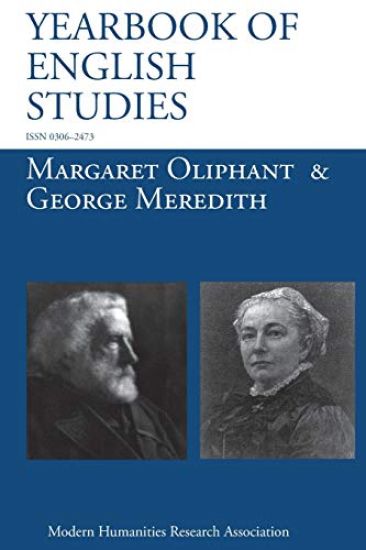
Margaret Oliphant and George Meredith (Yearbook of English Studies (49) 2019)
The Yearbook of English Studies for 2019, edited by Rebecca N. Mitchell, brings together two quintessentially Victorian writers, Margaret Oliphant (1828-1897) and George Meredith (1828-1909). The two authors share a birth year and an extraordinary writerly range -- as well as being successful novelists, both worked as publishers' readers, art and book reviewers, and essayists -- though their personal lives rarely intersected. Both also share the distinction of falling out of scholarly favour through much of the twentieth century, despite their significant popular and critical success in their own lifetimes. This volume leverages recently renewed interest and increased access to Oliphant's and Meredith's oeuvres evidenced by, for example, the publication of Routledge's twenty-five volume Selected Works of Margaret Oliphant (2011-16) and the first academic conference devoted entirely to Meredith, held in 2015. The ten essays gathered here expand our understanding of both by situating them within a fuller range of contemporary contexts and detailing their often prescient engagement with nascent forms and themes. With an especial interest in understudied texts, including Oliphant's journalism, literary criticism and fin-de-si cle novels, and Meredith's early poems, along with the novels One of Our Conquerors, Rhoda Fleming, and The Shaving of Shagpat, contributors show that both authors' publications manifest the governing social concerns of their time, even as they served as an active force in shaping developing conceptions of art, medicine, gender and authorship itself. What emerges is a revisionary account of Oliphant's and Meredith's work, arising from and contributing to a more nuanced understanding of the Victorian era.
Margaret Oliphant's Carlingford Series

Margaret Oliphant's Carlingford Series

Birgit Kaemper

Peter Lang AG
2001
nidottu
Nineteenth-century observers of social and religious life in England felt that religion, class and gender were frameworks that previous generations had taken for granted but that were becoming more and more problematic as the century progressed. An analysis of Margaret Oliphant's Chronicles of Carlingford in the context of contemporary fiction and nonfiction demonstrates the extent to which these novels contributed to the contemporary debate. Oliphant offers a comprehensive and uncommonly balanced picture of the most visible parties in English religious life in the 1860s and '70s and draws attention to the arbitrariness and power of social signifying practices. She questions traditional gender roles by portraying talented and self-confident female characters whose superficial conformity to societal conventions can hardly disguise their determination to take control both of their own lives and of the lives of others.
The Quiet Heart. by the Author of "Katie Stewart" [I.E. Margaret Oliphant]. Second Edition.

The Quiet Heart. by the Author of "Katie Stewart" [I.E. Margaret Oliphant]. Second Edition.

Margaret Wilson Oliphant

British Library, Historical Print Editions
2011
pokkari
Title: The quiet heart. By the author of "Katie Stewart" i.e. Margaret Oliphant]. Second edition.Publisher: British Library, Historical Print EditionsThe British Library is the national library of the United Kingdom. It is one of the world's largest research libraries holding over 150 million items in all known languages and formats: books, journals, newspapers, sound recordings, patents, maps, stamps, prints and much more. Its collections include around 14 million books, along with substantial additional collections of manuscripts and historical items dating back as far as 300 BC.The FICTION & PROSE LITERATURE collection includes books from the British Library digitised by Microsoft. The collection provides readers with a perspective of the world from some of the 18th and 19th century's most talented writers. Written for a range of audiences, these works are a treasure for any curious reader looking to see the world through the eyes of ages past. Beyond the main body of works the collection also includes song-books, comedy, and works of satire. ++++The below data was compiled from various identification fields in the bibliographic record of this title. This data is provided as an additional tool in helping to insure edition identification: ++++ British Library Oliphant, Mrs; 1854. 320 p.; 20 cm. 12629.b.4.
Memoirs and resolutions of Adam Graeme of Mossgray. Including some chronicles of: the borough of Fendie (1852). By: Margaret Oliphant, (Complete set V
Memoirs and resolutions of Adam Graeme of Mossgray. Including some chronicles of the borough of Fendie (1852). By: Margaret Oliphant, (Complete set Volume 1,2 and 3).Original Classics Margaret Oliphant Wilson Oliphant (n e Margaret Oliphant Wilson) (4 April 1828 - 25 June 1897), was a Scottish novelist and historical writer, who usually wrote as Mrs. Oliphant. Her fictional works encompass "domestic realism, the historical novel and tales of the supernatural". *Life* The daughter of Francis W. Wilson (c.1788-1858), a clerk, and his wife, Margaret Oliphant (c.1789-1854), she was born at Wallyford, near Musselburgh, East Lothian, and spent her childhood at Lasswade (near Dalkeith), Glasgow and Liverpool. As a girl, she constantly experimented with writing. In 1849 she had her first novel published: Passages in the Life of Mrs. Margaret Maitland. This dealt with the Scottish Free Church movement, with which Mr. and Mrs. Wilson both sympathised, and met with some success. It was followed by Caleb Field in 1851, the year in which she met the publisher William Blackwood in Edinburgh and was invited to contribute to the famous Blackwood's Magazine. The connection was to last for her whole lifetime, during which she contributed well over 100 articles, including a critique of the character of Arthur Dimmesdale in Nathaniel Hawthorne's The Scarlet Letter. In May 1852, she married her cousin, Frank Wilson Oliphant, at Birkenhead, and settled at Harrington Square in London. An artist working mainly in stained glass, her husband had delicate health, and three of their six children died in infancy, while the father himself developed alarming symptoms of tuberculosis, then known as consumption. For the sake of his health they moved in January 1859 to Florence, and then to Rome, where Frank Oliphant died. His wife, left almost entirely without resources, returned to England and took up the burden of supporting her three remaining children by her own literary activity.She had now become a popular writer, and worked with amazing industry to sustain her position. Unfortunately, her home life was full of sorrow and disappointment. In January 1864 her only remaining daughter Maggie died in Rome, and was buried in her father's grave. Her brother, who had emigrated to Canada, was shortly afterwards involved in financial ruin, and Mrs. Oliphant offered a home to him and his children, and added their support to her already heavy responsibilities.In 1866 she settled at Windsor to be near her sons who were being educated at Eton. That year, her second cousin, Annie Louisa Walker, came to live with her as a companion-housekeeper. 3] This was her home for the rest of her life, and for more than thirty years she pursued a varied literary career with courage scarcely broken by a series of the gravest troubles. The ambitions she cherished for her sons were unfulfilled. Cyril Francis, the elder, died in 1890, leaving a Life of Alfred de Musset, incorporated in his mother's Foreign Classics for English Readers, The younger, Francis (whom she called "Cecco"), collaborated with her in the Victorian Age of English Literature and won a position at the British Museum, but was rejected by Sir Andrew Clark, a famous physician. Cecco died in 1894. With the last of her children lost to her, she had but little further interest in life. Her health steadily declined, and she died at Wimbledon, London, on 25 June 1897.In the 1880s she was the literary mentor of the Irish novelist Emily Lawless. During this time Oliphant wrote several works of supernatural fiction, including the long ghost story A Beleaguered City (1880) and several short tales, including "The Open Door" and "Old Lady Mary".
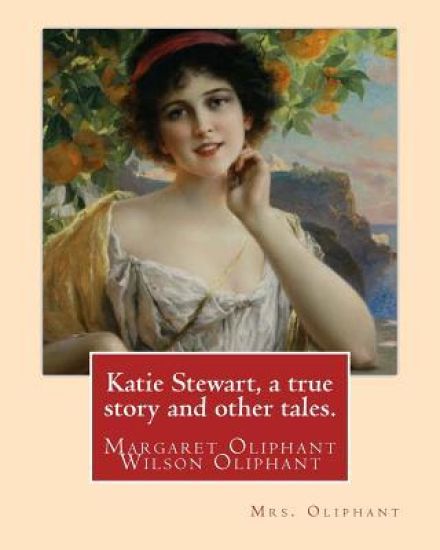
Katie Stewart, a true story and other tales. By: Mrs. Oliphant (Margaret): Margaret Oliphant Wilson Oliphant (née Margaret Oliphant Wilson) (4 April 1
Margaret Oliphant Wilson Oliphant (n e Margaret Oliphant Wilson) (4 April 1828 - 25 June 1897), was a Scottish novelist and historical writer, who usually wrote as Mrs. Oliphant. Her fictional works encompass "domestic realism, the historical novel and tales of the supernatural". *Life* The daughter of Francis W. Wilson (c.1788-1858), a clerk, and his wife, Margaret Oliphant (c.1789-1854), she was born at Wallyford, near Musselburgh, East Lothian, and spent her childhood at Lasswade (near Dalkeith), Glasgow and Liverpool. As a girl, she constantly experimented with writing. In 1849 she had her first novel published: Passages in the Life of Mrs. Margaret Maitland. This dealt with the Scottish Free Church movement, with which Mr. and Mrs. Wilson both sympathised, and met with some success. It was followed by Caleb Field in 1851, the year in which she met the publisher William Blackwood in Edinburgh and was invited to contribute to the famous Blackwood's Magazine. The connection was to last for her whole lifetime, during which she contributed well over 100 articles, including a critique of the character of Arthur Dimmesdale in Nathaniel Hawthorne's The Scarlet Letter. In May 1852, she married her cousin, Frank Wilson Oliphant, at Birkenhead, and settled at Harrington Square in London. An artist working mainly in stained glass, her husband had delicate health, and three of their six children died in infancy, while the father himself developed alarming symptoms of tuberculosis, then known as consumption. For the sake of his health they moved in January 1859 to Florence, and then to Rome, where Frank Oliphant died. His wife, left almost entirely without resources, returned to England and took up the burden of supporting her three remaining children by her own literary activity.She had now become a popular writer, and worked with amazing industry to sustain her position. Unfortunately, her home life was full of sorrow and disappointment. In January 1864 her only remaining daughter Maggie died in Rome, and was buried in her father's grave. Her brother, who had emigrated to Canada, was shortly afterwards involved in financial ruin, and Mrs. Oliphant offered a home to him and his children, and added their support to her already heavy responsibilities.In 1866 she settled at Windsor to be near her sons who were being educated at Eton. That year, her second cousin, Annie Louisa Walker, came to live with her as a companion-housekeeper. 3] This was her home for the rest of her life, and for more than thirty years she pursued a varied literary career with courage scarcely broken by a series of the gravest troubles. The ambitions she cherished for her sons were unfulfilled. Cyril Francis, the elder, died in 1890, leaving a Life of Alfred de Musset, incorporated in his mother's Foreign Classics for English Readers, The younger, Francis (whom she called "Cecco"), collaborated with her in the Victorian Age of English Literature and won a position at the British Museum, but was rejected by Sir Andrew Clark, a famous physician. Cecco died in 1894. With the last of her children lost to her, she had but little further interest in life. Her health steadily declined, and she died at Wimbledon, London, on 25 June 1897.In the 1880s she was the literary mentor of the Irish novelist Emily Lawless. During this time Oliphant wrote several works of supernatural fiction, including the long ghost story A Beleaguered City (1880) and several short tales, including "The Open Door" and "Old Lady Mary".
Madonna Mary a novel. By: Mrs. Oliphant (World's Classics): Margaret Oliphant Wilson Oliphant (née Margaret Oliphant Wilson) (4 April 1828 - 25
Margaret Oliphant Wilson Oliphant (n e Margaret Oliphant Wilson) (4 April 1828 - 25 June 1897), was a Scottish novelist and historical writer, who usually wrote as Mrs. Oliphant. Her fictional works encompass "domestic realism, the historical novel and tales of the supernatural". *Life* The daughter of Francis W. Wilson (c.1788-1858), a clerk, and his wife, Margaret Oliphant (c.1789-1854), she was born at Wallyford, near Musselburgh, East Lothian, and spent her childhood at Lasswade (near Dalkeith), Glasgow and Liverpool. As a girl, she constantly experimented with writing. In 1849 she had her first novel published: Passages in the Life of Mrs. Margaret Maitland. This dealt with the Scottish Free Church movement, with which Mr. and Mrs. Wilson both sympathised, and met with some success. It was followed by Caleb Field in 1851, the year in which she met the publisher William Blackwood in Edinburgh and was invited to contribute to the famous Blackwood's Magazine. The connection was to last for her whole lifetime, during which she contributed well over 100 articles, including a critique of the character of Arthur Dimmesdale in Nathaniel Hawthorne's The Scarlet Letter. In May 1852, she married her cousin, Frank Wilson Oliphant, at Birkenhead, and settled at Harrington Square in London. An artist working mainly in stained glass, her husband had delicate health, and three of their six children died in infancy, while the father himself developed alarming symptoms of tuberculosis, then known as consumption. For the sake of his health they moved in January 1859 to Florence, and then to Rome, where Frank Oliphant died. His wife, left almost entirely without resources, returned to England and took up the burden of supporting her three remaining children by her own literary activity.She had now become a popular writer, and worked with amazing industry to sustain her position. Unfortunately, her home life was full of sorrow and disappointment. In January 1864 her only remaining daughter Maggie died in Rome, and was buried in her father's grave. Her brother, who had emigrated to Canada, was shortly afterwards involved in financial ruin, and Mrs. Oliphant offered a home to him and his children, and added their support to her already heavy responsibilities.In 1866 she settled at Windsor to be near her sons who were being educated at Eton. That year, her second cousin, Annie Louisa Walker, came to live with her as a companion-housekeeper. 3] This was her home for the rest of her life, and for more than thirty years she pursued a varied literary career with courage scarcely broken by a series of the gravest troubles. The ambitions she cherished for her sons were unfulfilled. Cyril Francis, the elder, died in 1890, leaving a Life of Alfred de Musset, incorporated in his mother's Foreign Classics for English Readers, The younger, Francis (whom she called "Cecco"), collaborated with her in the Victorian Age of English Literature and won a position at the British Museum, but was rejected by Sir Andrew Clark, a famous physician. Cecco died in 1894. With the last of her children lost to her, she had but little further interest in life. Her health steadily declined, and she died at Wimbledon, London, on 25 June 1897.In the 1880s she was the literary mentor of the Irish novelist Emily Lawless. During this time Oliphant wrote several works of supernatural fiction, including the long ghost story A Beleaguered City (1880) and several short tales, including "The Open Door" and "Old Lady Mary".