Kirjojen hintavertailu. Mukana 11 342 296 kirjaa ja 12 kauppaa.

Kirjahaku

Etsi kirjoja tekijän nimen, kirjan nimen tai ISBN:n perusteella.

1000 tulosta hakusanalla Margaret P. Nelson

Managing Diversity in Corporate America

Managing Diversity in Corporate America

Jefferson P. Marquis; Nelson Lim; Lynn Scott; Margaret C. Harrell; Jennifer Kavanagh

RAND
2008
pokkari
This book develops a fact-based approach to modeling diversity management in U.S. corporations, analyzes the strategies pursued by 14 large U.S. companies recognized for their diversity or human resource achievements, and compares a number of company characteristics. Firms recognized for diversity are distinguished by a core set of motives and practices, but best practices per se may not enable a company to achieve a high level of diversity.It develops a fact-based approach to diversity management in U.S. corporations and uses it to compare corporate practices.
Dear Dad: Love, Nelson

Dear Dad: Love, Nelson

Margarett McBride

TEACHER CREATED MATERIALS, INC
2023
sidottu
A boy's letters to his incarcerated father help them stay connected even while they're apart.Dear Dad: Love, Nelson is a glimpse into the life, family, struggles, hopes, and questions of Nelson—and the more than five million other children in the US who have experienced parental incarceration. Told through letters he writes his father, Nelson shares his feelings, thoughts, wishes, and happenings, from the celebrations they've had to the progress Nelson has made on the car they were fixing to how excited he is to have Dad coming home.The author, who's had several family members impacted by the criminal legal system, was inspired to write this warm and inviting story to build awareness of parental incarceration and increase empathy for people who have an incarcerated loved one. Dear Dad: Love, Nelson is told in Nelson's vibrant, curious, and compassionate voice, with his love for his dad and his family shining through.Dear Dad: Love, Nelson can open doors of conversation about many significant topics, including:different emotional responses to parental incarcerationthe school-to-prison pipelinedifferences in celebrations without a parentthe importance of keeping in contactthe expectations of the court and the experience of visitationthe anticipation of reentryA section at the back of the book offers discussion questions for exploring the story and the topic with children, along with more information on guiding children to write letters as a way of staying in touch with an incarcerated loved one.
Working Hard and Making Do

Working Hard and Making Do

Margaret K. Nelson; Joan Smith

University of California Press
1999
pokkari
The economic recovery of the 1990s brought with it a surge of new jobs, but the prospects for most working Americans improved little. Family income rose only slightly and the period witnessed a significant degradation of the quality of work as well as in what people could expect from their waged employment. In this book, Margaret K. Nelson and Joan Smith take a look inside the households of working-class Americans to consider how they are coping with large-scale structural changes in the economy, specifically how the downgrading of jobs has affected survival strategies, gender dynamics, and political attitudes. Drawing on both randomly distributed telephone surveys and in-depth interviews, Nelson and Smith explore the differences in the survival strategies of two groups of working-class households in a rural county: those in which at least one family member has been able to hold on to good work (a year-round, full-time job that carries benefits) and those in which nobody has been able to secure or retain steady employment. They find that households with good jobs are able to effectively use all of their labor power--they rely on two workers; they engage in on-the-side businesses; and they barter with friends and neighbors. In contrast, those living in families without at least one good job find themselves considerably less capable of deploying a complex, multi-faceted survival strategy. The authors further demonstrate that this difference between the two sets of households is accompanied by differences in the gender division of labor within the household and the manner in which individuals make sense of, and respond to, their employment.
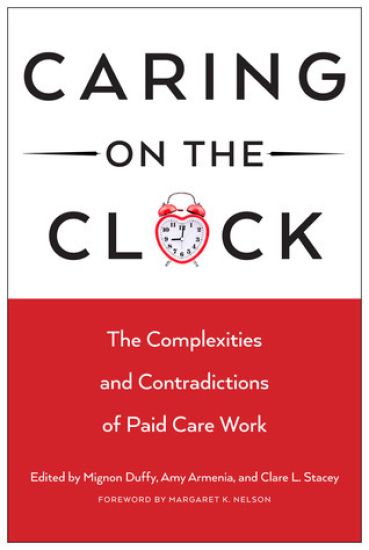
Caring on the Clock

Caring on the Clock

Margaret K. Nelson

Rutgers University Press
2015
nidottu
A nurse inserts an I.V. A personal care attendant helps a quadriplegic bathe and get dressed. A nanny reads a bedtime story to soothe a child to sleep. Every day, workers like these provide critical support to some of the most vulnerable members of our society. Caring on the Clock provides a wealth of insight into these workers, who take care of our most fundamental needs, often at risk to their own economic and physical well-being. Caring on the Clock is the first book to bring together cutting-edge research on a wide range of paid care occupations, and to place the various fields within a comprehensive and comparative framework across occupational boundaries. The book includes twenty-two original essays by leading researchers across a range of disciplines—including sociology, psychology, social work, and public health. They examine the history of the paid care sector in America, reveal why paid-care work can be both personally fulfilling but also make workers vulnerable to burnout, emotional fatigue, physical injuries, and wage exploitation. Finally, the editors outline many innovative ideas for reform, including top-down and grassroots efforts to improve recognition, remuneration, and mobility for care workers. As America faces a series of challenges to providing care for its citizens, including the many aging baby boomers, this volume offers a wealth of information and insight for policymakers, scholars, advocates, and the general public.
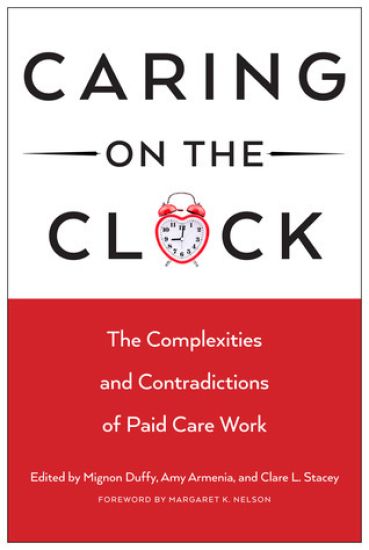
Caring on the Clock

Caring on the Clock

Margaret K. Nelson

Rutgers University Press
2015
sidottu
A nurse inserts an I.V. A personal care attendant helps a quadriplegic bathe and get dressed. A nanny reads a bedtime story to soothe a child to sleep. Every day, workers like these provide critical support to some of the most vulnerable members of our society. Caring on the Clock provides a wealth of insight into these workers, who take care of our most fundamental needs, often at risk to their own economic and physical well-being. Caring on the Clock is the first book to bring together cutting-edge research on a wide range of paid care occupations, and to place the various fields within a comprehensive and comparative framework across occupational boundaries. The book includes twenty-two original essays by leading researchers across a range of disciplines—including sociology, psychology, social work, and public health. They examine the history of the paid care sector in America, reveal why paid-care work can be both personally fulfilling but also make workers vulnerable to burnout, emotional fatigue, physical injuries, and wage exploitation. Finally, the editors outline many innovative ideas for reform, including top-down and grassroots efforts to improve recognition, remuneration, and mobility for care workers. As America faces a series of challenges to providing care for its citizens, including the many aging baby boomers, this volume offers a wealth of information and insight for policymakers, scholars, advocates, and the general public.

Like Family

Like Family

Margaret K. Nelson

Rutgers University Press
2020
nidottu
For decades, social scientists have assumed that “fictive kinship” is a phenomenon associated only with marginal peoples and people of color in the United States. In this innovative book, Nelson reveals the frequency, texture and dynamics of relationships which are felt to be “like family” among the white middle-class. Drawing on extensive, in-depth interviews, Nelson describes the quandaries and contradictions, delight and anxiety, benefits and costs, choice and obligation in these relationships. She shows the ways these fictive kinships are similar to one another as well as the ways they vary—whether around age or generation, co-residence, or the possibility of becoming “real” families. Moreover she shows that different parties to the same relationship understand them in some similar – and some very different – ways. Theoretically rich and beautifully written, the book is accessible to the general public while breaking new ground for scholars in the field of family studies.
Like Family

Like Family

Margaret K. Nelson

Rutgers University Press
2020
sidottu
For decades, social scientists have assumed that “fictive kinship” is a phenomenon associated only with marginal peoples and people of color in the United States. In this innovative book, Nelson reveals the frequency, texture and dynamics of relationships which are felt to be “like family” among the white middle-class. Drawing on extensive, in-depth interviews, Nelson describes the quandaries and contradictions, delight and anxiety, benefits and costs, choice and obligation in these relationships. She shows the ways these fictive kinships are similar to one another as well as the ways they vary—whether around age or generation, co-residence, or the possibility of becoming “real” families. Moreover she shows that different parties to the same relationship understand them in some similar – and some very different – ways. Theoretically rich and beautifully written, the book is accessible to the general public while breaking new ground for scholars in the field of family studies.
Parenting Out of Control

Parenting Out of Control

Margaret K. Nelson

New York University Press
2010
sidottu
They go by many names: helicopter parents, hovercrafts, PFHs (Parents from Hell). The news media is filled with stories of well-intentioned parents going to ridiculous extremes to remove all obstacles from their child's path to greatness . . . or at least to an ivy league school. From cradle to college, they remain intimately enmeshed in their children's lives, stifling their development and creating infantilized, spoiled, immature adults unprepared to make the decisions necessary for the real world. Or so the story goes. Drawing on a wealth of eye-opening interviews with parents across the country, Margaret K. Nelson cuts through the stereotypes and hyperbole to examine the realities of what she terms "parenting out of control." Situating this phenomenon within a broad sociological context, she finds several striking explanations for why today's prosperous and well-educated parents are unable to set realistic boundaries when it comes to raising their children. Analyzing the goals and aspirations parents have for their children as well as the strategies they use to reach them, Nelson discovers fundamental differences among American parenting styles that expose class fault lines, both within the elite and between the elite and the middle and working classes. Nelson goes on to explore the new ways technology shapes modern parenting. From baby monitors to cell phones (often referred to as the world's longest umbilical cord), to social networking sites, and even GPS devices, parents have more tools at their disposal than ever before to communicate with, supervise, and even spy on their children. These play important and often surprising roles in the phenomenon of parenting out of control. Yet the technologies parents choose, and those they refuse to use, often seem counterintuitive. Nelson shows that these choices make sense when viewed in the light of class expectations. Today's parents are faced with unprecedented opportunities and dangers for their children, and are evolving novel strategies to adapt to these changes. Nelson's lucid and insightful work provides an authoritative examination of what happens when these new strategies go too far.
Parenting Out of Control

Parenting Out of Control

Margaret K. Nelson

New York University Press
2012
pokkari
They go by many names: helicopter parents, hovercrafts, PFHs (Parents from Hell). The news media is filled with stories of well-intentioned parents going to ridiculous extremes to remove all obstacles from their child’s path to greatness . . . or at least to an ivy league school. From cradle to college, they remain intimately enmeshed in their children’s lives, stifling their development and creating infantilized, spoiled, immature adults unprepared to make the decisions necessary for the real world. Or so the story goes. Drawing on a wealth of eye-opening interviews with parents across the country, Margaret K. Nelson cuts through the stereotypes and hyperbole to examine the realities of what she terms “parenting out of control.” Situating this phenomenon within a broad sociological context, she finds several striking explanations for why today’s prosperous and well-educated parents are unable to set realistic boundaries when it comes to raising their children. Analyzing the goals and aspirations parents have for their children as well as the strategies they use to reach them, Nelson discovers fundamental differences among American parenting styles that expose class fault lines, both within the elite and between the elite and the middle and working classes. Nelson goes on to explore the new ways technology shapes modern parenting. From baby monitors to cell phones (often referred to as the world’s longest umbilical cord), to social networking sites, and even GPS devices, parents have more tools at their disposal than ever before to communicate with, supervise, and even spy on their children. These play important and often surprising roles in the phenomenon of parenting out of control. Yet the technologies parents choose, and those they refuse to use, often seem counterintuitive. Nelson shows that these choices make sense when viewed in the light of class expectations. Today’s parents are faced with unprecedented opportunities and dangers for their children, and are evolving novel strategies to adapt to these changes. Nelson’s lucid and insightful work provides an authoritative examination of what happens when these new strategies go too far.
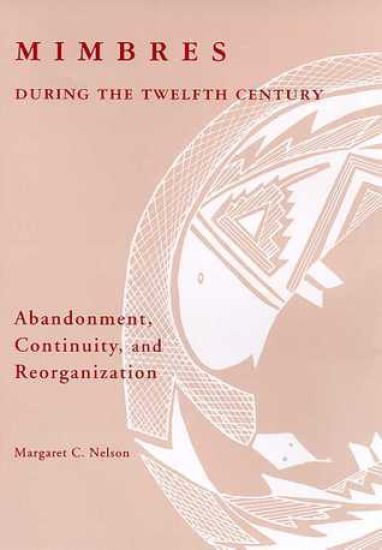
Mimbres during the Twelfth Century

Mimbres during the Twelfth Century

Margaret C. Nelson

University of Arizona Press
1999
sidottu
During the mid twelfth century, villages that had been occupied by the Mimbres people in what is now southwestern New Mexico were depopulated and new settlements were formed. While most scholars view abandonment in terms of failed settlements, Margaret Nelson shows that, for the Mimbres, abandonment of individual communities did not necessarily imply abandonment of regions. By examining the economic and social reasons for change among the Mimbres, Nelson reconstructs a process of shifting residence as people spent more time in field camps and gradually transformed them into small hamlets while continuing to farm their old fields. Challenging current interpretations of abandonment of the Mimbres area through archaeological excavation and survey, she suggests that agricultural practices evolved toward the farming of multiple fields among which families moved, with small social groups traveling frequently between small pueblos rather than being aggregated in large villages. Mimbres during the Twelfth Century is the first book-length contribution on this topic for the Classic Mimbres period and also addresses current debates on the role of Casas Grandes in these changes. By rethinking abandonment, Nelson shows how movement by prehistoric cultivators maintained continuity of occupation within a region and invites us to reconsider the dynamic relationship between people and their land.
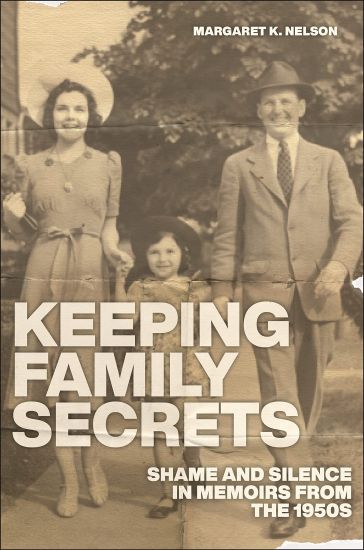
Keeping Family Secrets

Keeping Family Secrets

Margaret K. Nelson

NEW YORK UNIVERSITY PRESS
2022
sidottu
From teen pregnancy and gay sexuality to Communism and disability, the startling secrets that families kept during the Cold War era All families have secrets but the facts requiring secrecy change with time. Nowadays A lesbian partnership, a "bastard" son, an aunt who is a prostitute, or a criminal grandfather might be of little or no consequence but could have unraveled a family at an earlier moment in history. Margaret K. Nelson is interested in how families keep secrets from each other and from outsiders when to do otherwise would risk eliciting not only embarrassment or discomfort, but profound shame and, in some cases, danger. Drawing on over 150 memoirs describing childhoods in the period between the aftermath of World War II and the 1960s, Nelson highlights the importance of history in creating family secrets and demonstrates the use of personal stories to understand how people make sense of themselves and their social worlds. Keeping Family Secrets uncovers hidden stories of same-sex attraction among boys, unwed pregnancies among teenage girls, the institutionalization of children with mental and physical disabilities, participation in left-wing political activities, adoption, and Jewish ancestry. The members of ordinary families kept these issues secret to hide the disconnect between the reality of their own family and the prevailing ideals of what a family should be. Personal accounts reveal the costs associated with keeping family secrets, as family members lie, hurl epithets, inflict abuse, and even deny family membership to protect themselves from the shame and danger of public knowledge. Keeping Family Secrets sheds light not only on decades-old secrets but pushes us to confront what secrets our families keep today.
Sociology Meets Memoir

Sociology Meets Memoir

Margaret K. Nelson

NEW YORK UNIVERSITY PRESS
2024
sidottu
How sociologists can approach memoir in their writing, research, and in the classroom Memoirs attract millions of readers with their compelling life stories, vivid details, and often startling revelations. Beyond entertainment value, however, Margaret K. Nelson argues that memoirs hold potential as powerful resources for sociologists to engage with, analyze, and teach. Sociology Meets Memoir is a short and accessible guide to the significance of memoirs for the field of sociology, from their many possible uses to the numerous challenges they pose. This guide enables sociologists to learn about the different ways memoirs have been used as a medium through which to exercise and encourage the "sociological imagination." Nelson offers clear definitions of the various and nuanced terms associated with memoir and examples of how different types of stories have been effectively integrated into scholarly research. Readers will gain an understanding of the immense power of memoirs as sociological resources, offering unique access to voices from the past as well as voices from the present which are traditionally marginalized. Nelson also focuses on the genre's limitations and the difficult methodological questions that accompany their use in scholarly endeavors. Sociology Meets Memoir is a vital tool for all sociologists interested in this growing genre. By reading this guide, students and teachers alike will gain an understanding of how they might approach the current outpouring of memoirs and incorporate them into their teaching, learning, writing, and research.