Kirjojen hintavertailu. Mukana 12 353 430 kirjaa ja 12 kauppaa.

Kirjahaku

Etsi kirjoja tekijän nimen, kirjan nimen tai ISBN:n perusteella.

1000 tulosta hakusanalla Margaret P. Waterman

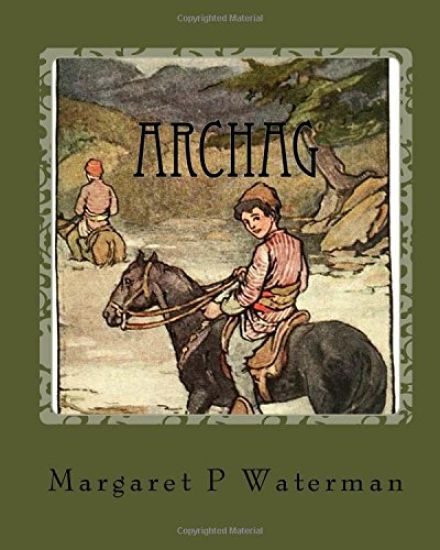
Archag: The Little Armenian

Archag: The Little Armenian

Margaret P. Waterman

Createspace Independent Publishing Platform
1920
nidottu
This new story in our series is about a people whose name you heard often during the Great War; perhaps you even sent some of your own pennies across the ocean to help them; for no one, not gallant little Belgium itself, suffered more in the war than did the Armenians. We sometimes think of them as the Belgians of the East, for their resistance delayed the advance of Turkish battalions, just as Belgium's brave stand prevented the first onrush of the Germans; and the Turkish revenge has been more horrible than the German. The bulletins of the Near East Relief Committee, which raised money for food and clothing and medicine and helpers in Western Asia, tell us how the Turks tried to annihilate the Armenians, and how, among the four million Armenians, Syrians, Jews, Greeks, and Persians who survived, four hundred thousand were orphans. In those first four months after the armistice, they were still dying every day, by hundreds, of starvation and disease, they were homeless and naked. Miss B. S. Papazian, an Armenian, has written a little book about her people, "The Tragedy of Armenia," in which she says: "The Armenians of Turkey to the number of about a million, old and young, rich and poor, and of both sexes, had been collectively drowned, burned, bayoneted, starved, bastinadoed, or otherwise tortured to death, or else deported on foot, penniless and without food, to the burning Arabian deserts."
Philip's Phoenix

Philip's Phoenix

Margaret P. Hannay

Oxford University Press Inc
1990
sidottu
Although previous studies have portrayed Mary Sidney as a demure, retiring woman, Hannay, basing her work on primary sources (account books, legal documents, diaries, family letters), has discovered that she was brilliant, learned, witty, articulate, and adept at self-presentation. Married to the wealthy Earl of Pembroke, she ruled over her little court at Wilton just as Elizabeth ruled in London. Her wisdom, poetry, and scholarship were extravagantly praised by those who sought to gain her favour. When Philip, her older brother, died fighting for the Protestant cause, she moved to London to take up his literary activities, publishing his writings, writing and translating works of which he would have approved, assuming his role as literary patron and supporting the Protestant cause for which he died. All the literary work for which she is celebrated took place between her return to London in 1588 and her husband's death in 1601. While previous biographers contended that her widowhood was quiet and uneventful, Hannay shows, via court cases, that her final years were colourful indeed, as, administering the properties she retained, she contended with jewel thieves, pirates, and murderers, finally bringing them to trial after complex legal and political manoeuvres.
Drugs and Justice

Drugs and Justice

Margaret P. Battin; Erik Luna; Arthur G. Lipman; Paul M. Gahlinger; Douglas E. Rollins; Jeanette C. Roberts; Troy L. Booher

Oxford University Press Inc
2008
sidottu
This compact and innovative book tackles one of the central issues in drug policy: the lack of a coherent conceptual structure for thinking about drugs. Drugs generally fall into one of seven categories: prescription, over the counter, alternative medicine, common-use drugs like alcohol, tobacco and caffeine; religious-use, sports enhancement; and of course illegal street drugs like cocaine and marijuana. Our thinking and policies varies wildly from one to the other, with inconsistencies that derive more from cultural and social values than from medical or scientific facts. Penalties exist for steroid use, while herbal remedies or cold medication are legal. Native Americans may legally use peyote, but others may not. Penalties may vary for using different forms of the same drug, such as crack vs. powder cocaine. Herbal remedies are unregulated by the FDA; but medical marijuana is illegal in most states. Battin and her contributors lay a foundation for a wiser drug policy by promoting consistency and coherency in the discussion of drug issues and by encouraging a unique dialogue across disciplines. The contributors are an interdisciplinary group of scholars mostly based at the University of Utah, and include a pharmacologist, a psychiatrist, a toxicologist, a trial court judge, a law professor, an attorney, a diatary specialist, a physician, a health expert on substance abuse, and Battin herself who is a philosopher. They consider questions like the historical development of current policy and the rationales for it; scientific views on how drugs actually cause harm; how to define the key notions of harm and addiction; and ways in which drug policy can be made more consistent. They conclude with an examination of the implications of a consistent policy for various disciplines and society generally. The book is written accessibly with little need for expert knowledge, and will appeal to a diverse audience of philosophers, bioethicists, clinicians, policy makers, law enforcement, legal scholars and practitioners, social workers, and general readers, as well as to students in areas like pharmacy, medicine, law, nursing, sociology, social work, psychology, and bioethics.
Drugs and Justice

Drugs and Justice

Margaret P. Battin; Erik Luna; Arthur G. Lipman; Paul M. Gahlinger; Douglas E. Rollins; Jeanette C. Roberts; Troy L. Booher

Oxford University Press Inc
2008
nidottu
This compact and innovative book tackles one of the central issues in drug policy: the lack of a coherent conceptual structure for thinking about drugs. Drugs generally fall into one of seven categories: prescription, over the counter, alternative medicine, common-use drugs like alcohol, tobacco and caffeine; religious-use, sports enhancement; and of course illegal street drugs like cocaine and marijuana. Our thinking and policies varies wildly from one to the other, with inconsistencies that derive more from cultural and social values than from medical or scientific facts. Penalties exist for steroid use, while herbal remedies or cold medication are legal. Native Americans may legally use peyote, but others may not. Penalties may vary for using different forms of the same drug, such as crack vs. powder cocaine. Herbal remedies are unregulated by the FDA; but medical marijuana is illegal in most states. Battin and her contributors lay a foundation for a wiser drug policy by promoting consistency and coherency in the discussion of drug issues and by encouraging a unique dialogue across disciplines. The contributors are an interdisciplinary group of scholars mostly based at the University of Utah, and include a pharmacologist, a psychiatrist, a toxicologist, a trial court judge, a law professor, an attorney, a diatary specialist, a physician, a health expert on substance abuse, and Battin herself who is a philosopher. They consider questions like the historical development of current policy and the rationales for it; scientific views on how drugs actually cause harm; how to define the key notions of harm and addiction; and ways in which drug policy can be made more consistent. They conclude with an examination of the implications of a consistent policy for various disciplines and society generally. The book is written accessibly with little need for expert knowledge, and will appeal to a diverse audience of philosophers, bioethicists, clinicians, policy makers, law enforcement, legal scholars and practitioners, social workers, and general readers, as well as to students in areas like pharmacy, medicine, law, nursing, sociology, social work, psychology, and bioethics.
The Patient as Victim and Vector, New Edition

The Patient as Victim and Vector, New Edition

Margaret P. Battin

Oxford University Press Inc
2021
nidottu
This book-first published a decade before the COVID-19 pandemic erupted-is the first authored volume on ethical issues in infectious disease, "monumental" for its competence and comprehensiveness. It is augmented here with a new Preface on COVID-19. The book develops an ethical framework for exploring contagious infectious disease, the patient-as-victim-and-vector view, grounded in the biological fact that a person with a communicable infectious disease is not only a victim of that disease, but at the same time also a potential vector. The patient may be both threatened, someone made ill or facing death, but also a threat, someone who may transmit an illness that will sicken or kill others. Clinical medicine has tended to see one part of this duality and public health the other; the victim-AND-vector view insists on both, at one and the same time. Against a background of methods from the long human history of contagious infectious disease-quarantine, isolation, cordon sanitaire, surveillance and contact tracing, testing by both archaic and modern methods, lockdown, and immunization-the victim-and-vector view spotlights ethical challenges for clinical medicine, research, public health, and health policy. These insights are probed in the new Preface on COVID-19 and are essential in our continuing struggle to address not only the current coronavirus pandemic, but the next, and the next after that.
Caliban in Exile

Caliban in Exile

Margaret P. Joseph

Praeger Publishers Inc
1992
sidottu
The Caliban-Prospero encounter in Shakespeare's The Tempest has evolved as a metaphor for the colonial experience. The present study utilizes the Caliban symbol in examining the influence of colonialism in Caribbean literature, focusing on the works of three major writers from the Caribbean islands: Jean Rhys, of British descent from Dominica; George Lamming, of African origin from Barbados; and Sam Selvon, of mixed Indian and Scottish heritage from Trinidad. The works chosen are set in England where the writers and their characters experience a double displacement, the alienation of the exiled in the country that once colonized their own islands. They are outsiders: unwelcome in Prospero's home country.The novels dramatize the theme of physical and psychological exile. Rhys's characters need mirrors in which they search for an assurance of identity; Lamming's are torn by the conflict inherent in the tragic sense of life; and Selvon's ironic language expresses the deepest sense of exile: exile from one's own self. Other Caribbean writers are included in the analysis, and the volume concludes by examining contemporary writers for whom Caliban's role in literature appears to be changing. Novelists like Earl Lovelace and Jamaica Kincaid demonstrate that it is possible to be an outsider in one's own country, and that issues of class can be as corrosive as issues of race. The focus has moved beyond physical exile, but the spirit and strength of Caliban continue to pervade the new literature. In giving expression to their anguish, both the earlier and new Caribbean writers have created highly interesting and successful fiction. This well crafted thematic study of Caribbean literature will be of great value to students, teachers, scholars, and readers of Third World, post-colonial, and multicultural literature.
International Sanctions in Contemporary Perspective

International Sanctions in Contemporary Perspective

Margaret P. Doxey

Palgrave Macmillan
1996
sidottu
This important book presents a comprehensive and up-to-date introduction to the subject of international sanctions. It provides summaries of fourteen major cases, including South Africa, Iraq and Serbia, and analysis of the complex political and economic problems which sanctions pose for governments of sender states as well as for targets. Goals, costs, vulnerability and humanitarian considerations are examined in the light of 20th-century experience and the enhanced role of the United Nations since the end of the Cold War receives detailed consideration.
Physician Assisted Suicide

Physician Assisted Suicide

Margaret P. Battin; Rosamond Rhodes; Anita Silvers

Routledge
1998
sidottu
Physician Assisted Suicide is a cross-disciplinary collection of essays from philosophers, physicians, theologians, social scientists, lawyers and economists. As the first book to consider the implications of the Supreme Court decisions in Washington v. Glucksburg and Vacco v. Quill concerning physician-assisted suicide from a variety of perspectives, this collection advances informed, reflective, vigorous public debate.
Physician Assisted Suicide

Physician Assisted Suicide

Margaret P. Battin; Rosamond Rhodes; Anita Silvers

Routledge
1998
nidottu
Physician Assisted Suicide is a cross-disciplinary collection of essays from philosophers, physicians, theologians, social scientists, lawyers and economists. As the first book to consider the implications of the Supreme Court decisions in Washington v. Glucksburg and Vacco v. Quill concerning physician-assisted suicide from a variety of perspectives, this collection advances informed, reflective, vigorous public debate.
Mary Sidney, Lady Wroth

Mary Sidney, Lady Wroth

Margaret P. Hannay

Ashgate Publishing Limited
2010
sidottu
Despite her fascinating life and her importance as a writer, until now Lady Mary Wroth has never been the subject of a full-length biography. Margaret Hannay's reliance on primary sources results in some corrections, as well as additions, to our knowledge of Wroth's life, including Hannay's discovery of the career of her son William, the marriages of her daughter Katherine, her grandchildren, her last years, the date of her death, and the subsequent history of her manuscripts. This biography situates Lady Mary Wroth in her family and court context, emphasizing the growth of the writer's mind in the sections on her childhood and youth, with particular attention to her learned aunt, Mary Sidney Herbert, Countess of Pembroke, as literary mentor, and to her Continental connections, notably Louise de Coligny, Princess of Orange, and her stepson Prince Maurice. Subsequent chapters of the biography treat her experience at the court of Queen Anne, her relationships with parents and siblings, her love for her cousin William Herbert, her marriage to Robert Wroth, the birth and early death of her only legitimate child, her finances and properties, her natural children, her grandchildren, and her last years in the midst of England's civil wars. Throughout the biography attention is paid to the complex connections between Wroth's life and work. The narrative is enhanced with a chronology; family trees for the Sidneys and Wroths; a map of Essex, showing where Wroth lived; a chart of family alliances; portraits; and illustrations from her manuscripts.
Every Day is a Gift

Every Day is a Gift

Margaret P McEwan; John F McEwan

SDP Publishing Solutions, LLC
2018
pokkari
John McEwan and his wife, Margaret, chose to face John's cancer diagnosis with a positive outlook and realistic vision. "Every Day Is a Gift" chronicles their family's experience through Margaret's recollection of events, her e-mail updates to family and friends, and John's letters written throughout his five-year cancer journey. In this poignant memoir, Margaret McEwan honors her late husband by providing readers with insights and opportunities for finding hope.
Mary Sidney, Lady Wroth

Mary Sidney, Lady Wroth

Margaret P. Hannay

TAYLOR FRANCIS LTD
2024
nidottu
Despite her fascinating life and her importance as a writer, until now Lady Mary Wroth has never been the subject of a full-length biography. Margaret Hannay's reliance on primary sources results in some corrections, as well as additions, to our knowledge of Wroth's life, including Hannay's discovery of the career of her son William, the marriages of her daughter Katherine, her grandchildren, her last years, the date of her death, and the subsequent history of her manuscripts. This biography situates Lady Mary Wroth in her family and court context, emphasizing the growth of the writer's mind in the sections on her childhood and youth, with particular attention to her learned aunt, Mary Sidney Herbert, Countess of Pembroke, as literary mentor, and to her Continental connections, notably Louise de Coligny, Princess of Orange, and her stepson Prince Maurice. Subsequent chapters of the biography treat her experience at the court of Queen Anne, her relationships with parents and siblings, her love for her cousin William Herbert, her marriage to Robert Wroth, the birth and early death of her only legitimate child, her finances and properties, her natural children, her grandchildren, and her last years in the midst of England's civil wars. Throughout the biography attention is paid to the complex connections between Wroth's life and work. The narrative is enhanced with a chronology; family trees for the Sidneys and Wroths; a map of Essex, showing where Wroth lived; a chart of family alliances; portraits; and illustrations from her manuscripts.