Kirjojen hintavertailu. Mukana 11 244 527 kirjaa ja 12 kauppaa.

Kirjahaku

Etsi kirjoja tekijän nimen, kirjan nimen tai ISBN:n perusteella.

1000 tulosta hakusanalla Marguerite Blessington

The Travel Writings of Marguerite Blessington
This book derives from the conviction that Marguerite Blessington (1788–1849) merits scholarly attention as a travel writer, and thus offers the first detailed analysis of Blessington’s four travel books: ‘A Tour in The Isle of Wight, in the Autumn of 1820’ (1822), ‘Journal of a Tour through the Netherlands to Paris in 1821’ (1822), ‘The Idler in Italy’ (1839) and ‘The Idler in France’ (1841). It argues that travelling and travel writing provided Blessington with endless opportunities to reshape her public personae, demonstrating that her predilection for self-fashioning was related to the various tendencies in tourism and literature as well as the changing aesthetic and social trends in the first half of the nineteenth century.
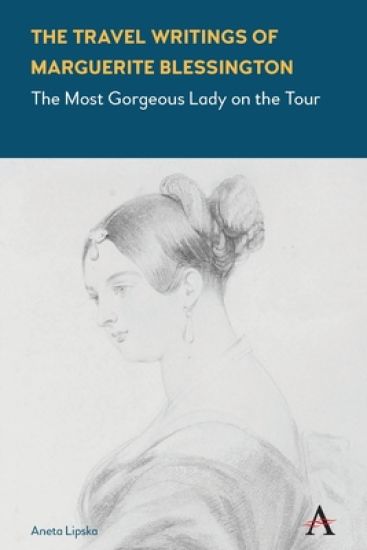
The Travel Writings of Marguerite Blessington
This book derives from the conviction that Marguerite Blessington (1788–1849) merits scholarly attention as a travel writer, and thus offers the first detailed analysis of Blessington’s four travel books: ‘A Tour in The Isle of Wight, in the Autumn of 1820’ (1822), ‘Journal of a Tour through the Netherlands to Paris in 1821’ (1822), ‘The Idler in Italy’ (1839) and ‘The Idler in France’ (1841). It argues that travelling and travel writing provided Blessington with endless opportunities to reshape her public personae, demonstrating that her predilection for self-fashioning was related to the various tendencies in tourism and literature as well as the changing aesthetic and social trends in the first half of the nineteenth century.
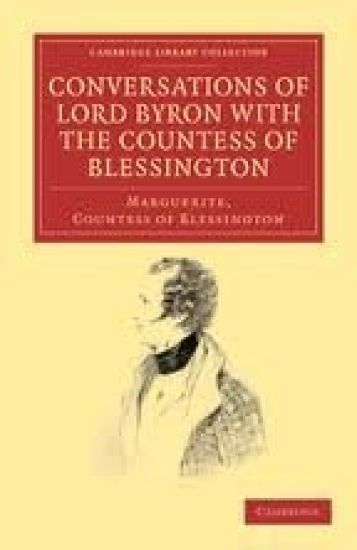
Conversations of Lord Byron with the Countess of Blessington

Conversations of Lord Byron with the Countess of Blessington

Marguerite Blessington

Cambridge University Press
2011
pokkari
When the Countess of Blessington (1789–1849) met the poet Lord Byron (1788–1824) in Genoa in 1823 she noted that 'the impression of the first few minutes disappointed me'. Despite this precarious start, they struck up a friendship and met nearly every day for two months. Byron had been living in the Italian port city since the previous autumn and Blessington and her family had arrived in April 1823. Her account of their conversations was not published until 1834, a decade after Byron's death. Blessington expresses candid opinions about the poet in this work, writing that Byron 'is a strange mélange of good and evil, the predominancy of either depending wholly on the humour he may happen to be in'. Through her frankness, the author - herself a well-known writer who hosted a distinguished literary salon - also reveals much about herself and the literary world she and Byron inhabited.
The Literary Life and Correspondence of the Countess of Blessington

The Literary Life and Correspondence of the Countess of Blessington

Madden Richard Robert; Marguerite Blessington

Cambridge University Press
2012
pokkari
Following her advantageous second marriage, the famous beauty Marguerite, Countess of Blessington (1789–1849), presided over one of London's most glittering salons, variously attended by Thomas Moore, Disraeli, Bulwer Lytton and Dickens. After her husband's death in 1829, she augmented her income by writing, most notably her Conversations with Lord Byron, which recounted her acquaintance with the poet in Genoa. Despite considerable success, her debt-ridden establishment collapsed in 1849 and Lady Blessington fled to Paris, where she died. This 1855 biography and letters, in three volumes was edited by R. R. Madden (1798–1886), colonial administrator and Fellow of the Royal College of Surgeons, who had first met the Blessingtons in Naples in 1821. It illuminates the role of the salon hostess and its many financial and emotional pressures. Volume 1 includes an account of her life and literary career, and a brief life of the Count d'Orsay, her long-term companion.
The Literary Life and Correspondence of the Countess of Blessington

The Literary Life and Correspondence of the Countess of Blessington

Madden Richard Robert; Marguerite Blessington

Cambridge University Press
2012
pokkari
Following her advantageous second marriage, the famous beauty Marguerite, Countess of Blessington (1789–1849), presided over one of London's most glittering salons, variously attended by Thomas Moore, Disraeli, Bulwer Lytton and Dickens. After her husband's death in 1829, she augmented her income by writing, most notably her Conversations with Lord Byron, which recounted her acquaintance with the poet in Genoa. Despite considerable success, her debt-ridden establishment collapsed in 1849 and Lady Blessington fled to Paris, where she died. This 1855 biography and letters, in three volumes was edited by R. R. Madden (1798–1886), colonial administrator and Fellow of the Royal College of Surgeons, who had first met the Blessingtons in Naples in 1821. It illuminates the intriguing social role of the salon hostess and its many financial and emotional pressures. Volume 2 contains brief biographies of her various correspondents, followed by their letters.
The Literary Life and Correspondence of the Countess of Blessington

The Literary Life and Correspondence of the Countess of Blessington

Madden Richard Robert; Marguerite Blessington

Cambridge University Press
2012
pokkari
Following her advantageous second marriage, the famous beauty Marguerite, Countess of Blessington (1789–1849), presided over one of London's most glittering salons, variously attended by Thomas Moore, Disraeli, Bulwer Lytton, and Dickens. After her husband's death in 1829, she augmented her income by writing, most notably her Conversations with Lord Byron, which recounted her acquaintance with the poet in Genoa. Despite considerable success, her debt-ridden establishment collapsed in 1849 and Lady Blessington fled to Paris, where she died. This 1855 biography and letters, in three volumes was edited by R. R. Madden (1798–1886), colonial administrator and Fellow of the Royal College of Surgeons, who had first met the Blessingtons in Naples in 1821. It illuminates the intriguing social role of the salon hostess and its many financial and emotional pressures. Volume 3 contains further brief biographies of her various correspondents, followed by their letters.
The Idler in France

The Idler in France

Marguerite Blessington

Cambridge University Press
2012
pokkari
Marguerite Gardiner, Countess of Blessington (1789–1849), was famous for her charm, wit, and beauty, the latter reflected in Sir Thomas Lawrence's famous portrait of her in 1822. Blessington had an unhappy childhood, and was forced into her first marriage at the age of fourteen, but had developed a love of reading and story-telling. With her second husband Charles John Gardiner, first Earl of Blessington, she lived for several years in France and Italy. In this work, originally published in two volumes in 1841, the author describes her impressions of nature, people and daily life in different French localities (Nîmes, Arles, St Rémy) with enthusiasm and good humour. Blessington writes especially about Paris, her permanent residence during 1828–30, describing the world of the British expatriate community as well as the cultural life and recent political upheavals which had brought Louis-Philippe to the throne.
The Idler in Italy

The Idler in Italy

Marguerite Blessington

Cambridge University Press
2012
pokkari
Marguerite Gardiner, countess of Blessington (1789–1849), was famous for her charm, wit and beauty, the latter reflected in Sir Thomas Lawrence's famous portrait of her in 1822. Blessington had an unhappy childhood, and was forced into her first marriage at the age of fourteen, but had developed a love of reading and story-telling. With her second husband Charles John Gardiner, first Earl of Blessington, she lived for several years in France and Italy. This three-volume work, first published 1839–40, contains Blessington's humorous account of living abroad. She gives detailed descriptions of her time in Italian cities such as Florence, Rome and Naples, drawing attention to 'the odour of the cuisine', the beautiful surroundings and weather, inspiring encounters with artists, and daily visits to art galleries. Volume 1 describes travelling around Switzerland and France, and ends with the author's encounter with Lord Byron in Genoa in 1823.