Kirjojen hintavertailu. Mukana 11 342 296 kirjaa ja 12 kauppaa.

Kirjahaku

Etsi kirjoja tekijän nimen, kirjan nimen tai ISBN:n perusteella.

1000 tulosta hakusanalla Maria Eugenia Bagnulo

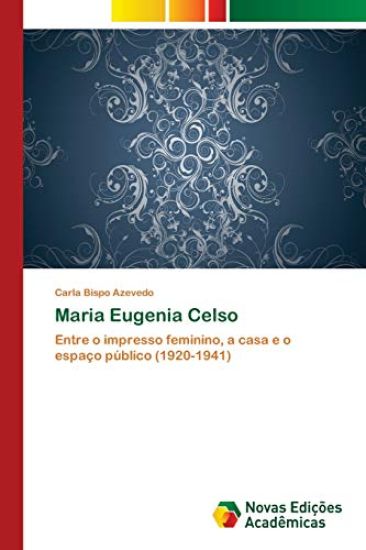
Maria Eugenia Celso

Maria Eugenia Celso

Carla Bispo Azevedo

Novas Edicoes Academicas
2018
pokkari
Este livro se situa no campo de estudos da Hist ria da Educa o e privilegia o per odo compreendido entre 1920 e 1941, com vistas a destacar a dimens o educativa dos escritos de Maria Eugenia Celso em di logo com estudos sobre a hist ria das mulheres no Brasil e no ocidente, com a quest o de g nero. Para dar tratamento a esse prop sito, investe-se nas possibilidades de pesquisa do texto jornal stico e liter rio de Maria Eugenia Celso, elencando-se seus escritos na coluna Pagina de Eva do peri dico Revista da Semana, reportagens em prol da Federa o Brasileira pelo Progresso Feminino publicados pelo Jornal do Brasil e documentos desta entidade, bem como o livro Di rio de Ana L cia. A escolha pelos referidos escritos justifica-se pela presen a de discursos que encaminham para uma educa o da mulher. Nesta perspectiva, busca-se lan ar luz sobre a trajet ria da escritora, para que suas obras tenham mais visibilidade. Almeja-se, da mesma forma, possibilitar uma leitura mais aprofundada da sociedade poca tanto quanto da dimens o educativa do impresso para a hist ria das mulheres brasileiras. Neste estudo, destaco a mulher presente no espa o dom stico e no espa o p blico.
Mejor Sola: La Historia de Maria Eugenia

Mejor Sola: La Historia de Maria Eugenia

Veronica Solorzano Athanasiou

Createspace Independent Publishing Platform
2016
nidottu
Maria Eugenia es la menor de cuatro amigas que crecieron juntas en el Oriana II, un edificio en la ciudad imaginaria de Golencia, en un bello pa s tropical. Como en toda la serie, la historia de Mar a Eugenia resalta como es importante estar en paz consigo mismo para poder ser feliz. La autora emplea im genes del recuerdo de su pa s natal Venezuela y utiliza experiencias de personas que ha conocido a lo largo de su vida para presentar un desenlace feliz a situaciones que no son tan ideales.
Die politische Verkündigung von Cambiemos am Beispiel von María Eugenia Vidal
Im Jahr 2015 kam in Argentinien eine neue politische Identit t an die Macht, die tiefgreifende politische und soziale Ver nderungen bewirkte. Die Einzigartigkeit der diesj hrigen Wahlen liegt darin, dass eine neue Rechtspartei an die Macht kam, die au erhalb der traditionellen Parteien (Peronismus/Radikalismus) und der ideologischen Trennlinien (links/rechts) entstand, ohne B ndnisse mit diktatorischen Regierungen und mit gro er Unterst tzung der Bev lkerung. In diesem Rahmen wird postuliert, dass die symbolische Ebene ein konstitutiver Bestandteil aller sozialen Ph nomene ist und als privilegierter Zugang zu deren Untersuchung verstanden werden kann. Mittels Diskursanalyse und aus einer sozio-semiotischen Perspektive, die sich mit der symbolischen Strukturierung sozialer Ph nomene besch ftigt, wird die Cambiemos-Koalition analysiert. Um diese historische Neuheit zu verstehen, wird der Wahlkontext von 2015 als Schl sselmoment dargestellt. Unser Thema ist also die Konfiguration der neuen Verk ndigungsfiguren, die in der aktuellen politischen Diskursivit t auftauchen, wobei wir auf die Operationen achten, durch die die Figur von Mar a Eugenia Vidal als legitime Verk ndigerin von Cambiemos konstruiert wird.
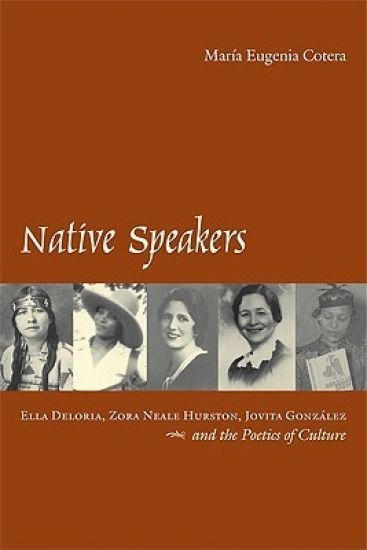
Native Speakers

Native Speakers

María Eugenia Cotera

University of Texas Press
2008
pokkari
Gloria Anzaldua Book Prize, National Women's Studies Association, 2009 In the early twentieth century, three women of color helped shape a new world of ethnographic discovery. Ella Cara Deloria, a Sioux woman from South Dakota, Zora Neale Hurston, an African American woman from Florida, and Jovita GonzÁlez, a Mexican American woman from the Texas borderlands, achieved renown in the fields of folklore studies, anthropology, and ethnolinguistics during the 1920s and 1930s. While all three collaborated with leading male intellectuals in these disciplines to produce innovative ethnographic accounts of their own communities, they also turned away from ethnographic meaning making at key points in their careers and explored the realm of storytelling through vivid mixed-genre novels centered on the lives of women. In this book, Cotera offers an intellectual history situated in the "borderlands" between conventional accounts of anthropology, women's history, and African American, Mexican American and Native American intellectual genealogies. At its core is also a meditation on what it means to draw three women-from disparate though nevertheless interconnected histories of marginalization-into conversation with one another. Can such a conversation reveal a shared history that has been erased due to institutional racism, sexism, and simple neglect? Is there a mode of comparative reading that can explore their points of connection even as it remains attentive to their differences? These are the questions at the core of this book, which offers not only a corrective history centered on the lives of women of color intellectuals, but also a methodology for comparative analysis shaped by their visions of the world.
Class, Gender and Migration

Class, Gender and Migration

María Eugenia D’Aubeterre Buznego; Alison Elizabeth Lee; María Leticia Rivermar Pérez

Routledge
2022
nidottu
Using a gender-sensitive political economy approach, this book analyzes the emergence of new migration patterns between Central Mexico and the East Coast of the United States in the last decades of the twentieth century, and return migration during and after the global economic crisis of 2007.Based on ethnographic research carried out over a decade, details of the lives of women and men from two rural communities reveal how neoliberal economic restructuring led to the deterioration of livelihoods starting in the 1980s. Similar restructuring processes in the United States opened up opportunities for Mexican workers to labor in US industries that relied heavily on undocumented workers to sustain their profits and grow. When the Great Recession hit, in the context of increasingly restrictive immigration policies, some immigrants were more likely to return to Mexico than others. This longitudinal study demonstrates how the interconnections among class and gender are key to understanding who stayed and who returned to Mexico during and after the global economic crisis. Through these case studies, the authors comment more widely on how neoliberalism has affected the livelihoods and aspirations of the working classes.This book will be of key interest to scholars, students and practitioners in migration studies, gender studies/politics, and more broadly to international relations, anthropology, development studies, and human geography.
Class, Ethnicity, Gender and Latino Entrepreneurship
Drawing on surveys and in-depth interviews, this book examines the social and economic relations of first-generation Latino entrepreneurs. Verdaguer explores social patterns between and within groups, situating immigrant entrepreneurship within concrete geographical, demographic and historical spaces. Her study not only reveals that Latinos' strategies for access to business ownership and for business development are cut across class, ethnic and gender lines, but also that immigrants' options, practices, and social spaces remain largely shaped by patriarchal gender relations within the immigrant family, community and economy. This book is a necessary addition to the literature on immigration, class, gender relations, and the intersectionality of these issues.
Class, Ethnicity, Gender and Latino Entrepreneurship
Drawing on surveys and in-depth interviews, this book examines the social and economic relations of first-generation Latino entrepreneurs. Verdaguer explores social patterns between and within groups, situating immigrant entrepreneurship within concrete geographical, demographic and historical spaces. Her study not only reveals that Latinos' strategies for access to business ownership and for business development are cut across class, ethnic and gender lines, but also that immigrants' options, practices, and social spaces remain largely shaped by patriarchal gender relations within the immigrant family, community and economy. This book is a necessary addition to the literature on immigration, class, gender relations, and the intersectionality of these issues.