Kirjojen hintavertailu. Mukana 11 342 296 kirjaa ja 12 kauppaa.

Kirjahaku

Etsi kirjoja tekijän nimen, kirjan nimen tai ISBN:n perusteella.

1000 tulosta hakusanalla Maria Nikolaeva; Atma Ananda

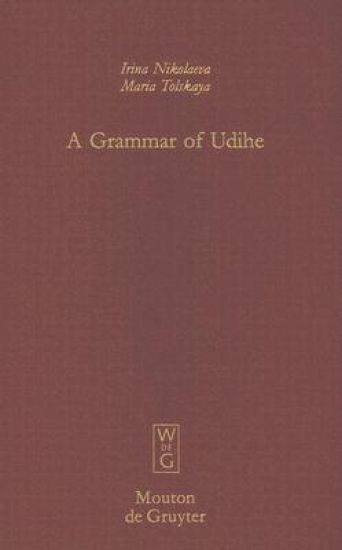
A Grammar of Udihe

A Grammar of Udihe

Irina Nikolaeva; Maria Tolskaya

De Gruyter Mouton
2001
sidottu
The series builds an extensive collection of high quality descriptions of languages around the world. Each volume offers a comprehensive grammatical description of a single language together with fully analyzed sample texts and, if appropriate, a word list and other relevant information which is available on the language in question. There are no restrictions as to language family or area, and although special attention is paid to hitherto undescribed languages, new and valuable treatments of better known languages are also included. No theoretical model is imposed on the authors; the only criterion is a high standard of scientific quality. To discuss your book idea or submit a proposal, please contact Birgit Sievert.
Tvoj eksperiment. Sdelaj to, chto nikogda ne delal, i poluchi to, chto nikogda ne imel
Eksperiment - eto prostaja, no uvlekatelnaja vozmozhnost izmenit zhizn k luchshemu. Ego mozhno primenjat v ljuboj sfere vashej zhizni, bud to rabota, otnoshenija, semja, telo, dom ili ljubaja drugaja. Provodja eksperiment, vy vsegda vyigryvaete. V sluchae polozhitelnogo rezultata mozhno znachitelno uluchshit kachestvo svoej zhizni, a esli eksperiment ne prines zhelaemykh uluchshenij, to eto dast vam ponimanie, kuda dvigatsja dalshe. Vnutri vy najdete sekrety provedenija effektivnogo eksperimenta, uprazhnenija, kotorye vy smozhete srazu zhe nachat ispolzovat, i vdokhnovites opytom realnykh ljudej, kotorym udalos kardinalno izmenit svoju zhizn! Provela bolee 200 eksperimentov. Zhena, mama troikh detej. Katerina Nikolaeva - magistr psikhologii, psikholog-konsultant po pozitivnoj psikhologii, biznes-psikholog, chlen Assotsiatsii biznes-psikhologov Rossii. Avtor innovatsionnoj metodiki profilaktiki emotsionalnogo vygoranija, ekspert v oblasti emotsionalnogo blagopoluchija. Uchreditel Blagotvoritelnogo fonda pomoschi vzroslym s tjazhelymi zabolevanijami "LJUDI - LJUDJAM".
Power, Voice and Subjectivity in Literature for Young Readers
This book considers one of the most controversial aspects of children’s and young adult literature: its use as an instrument of power. Children in contemporary Western society are oppressed and powerless, yet they are allowed, in fiction written by adults for the enlightenment and enjoyment of children, to become strong, brave, rich, powerful, and independent -- on certain conditions and for a limited time. Though the best children’s literature offers readers the potential to challenge the authority of adults, many authors use artistic means such as the narrative voice and the subject position to manipulate the child reader. Looking at key works from the eighteenth century to the present, Nikolajeva explores topics such as genre, gender, crossvocalization, species, and picturebook images. Contemporary power theories including social and cultural studies, carnival theory, feminism, postcolonial and queer studies, and narratology are also considered, in order to demonstrate how a balance is maintained between the two opposite inherent goals of children’s literature: to empower and to educate the child.
Power, Voice and Subjectivity in Literature for Young Readers
This book considers one of the most controversial aspects of children’s and young adult literature: its use as an instrument of power. Children in contemporary Western society are oppressed and powerless, yet they are allowed, in fiction written by adults for the enlightenment and enjoyment of children, to become strong, brave, rich, powerful, and independent -- on certain conditions and for a limited time. Though the best children’s literature offers readers the potential to challenge the authority of adults, many authors use artistic means such as the narrative voice and the subject position to manipulate the child reader. Looking at key works from the eighteenth century to the present, Nikolajeva explores topics such as genre, gender, crossvocalization, species, and picturebook images. Contemporary power theories including social and cultural studies, carnival theory, feminism, postcolonial and queer studies, and narratology are also considered, in order to demonstrate how a balance is maintained between the two opposite inherent goals of children’s literature: to empower and to educate the child.
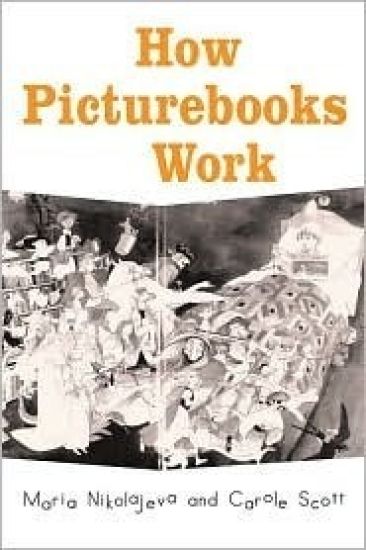
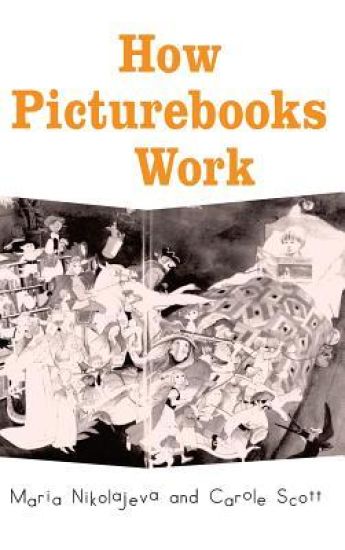
How Picturebooks Work

How Picturebooks Work

Maria Nikolajeva; Carole Scott

Routledge
2006
nidottu
How Picturebooks Work is an innovative and engaging look at the interplay between text and image in picturebooks. The authors explore picturebooks as a specific medium or genre in literature and culture, one that prepares children for other media of communication, and they argue that picturebooks may be the most influential media of all in the socialization and representation of children. Spanning an international range of children's books, this book examine such favorites as Curious George and Frogand Toad Are Friends, along with the works of authors and illustrators including Maurice Sendak and Tove Jansson, among others. With 116 illustrations, How PicturebooksWork offers the student of children's literature a new methodology, new theories, and a new set of critical tools for examining the picturebook form.
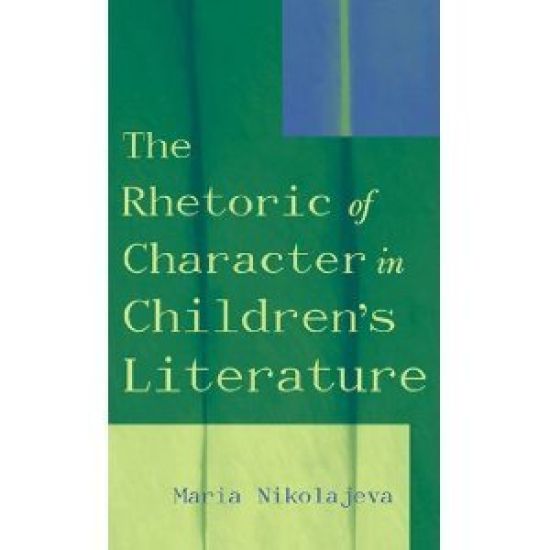
The Rhetoric of Character in Children's Literature
Now available in paperback! Until now, there was no theoretical research of character in children's fiction and very few comprehensive theoretical studies of literary characters in general. In her latest intellectual foray, the author of From Mythic to Linear ponders the art of characterization. Through a variety of critical perspectives, she uncovers the essential differences between story ('what we are told') and discourse ('how we are told'), and carefully distinguishes between how these are employed in children's fiction and in general fiction. Yet another masterful work by a leading figure in contemporary criticism.
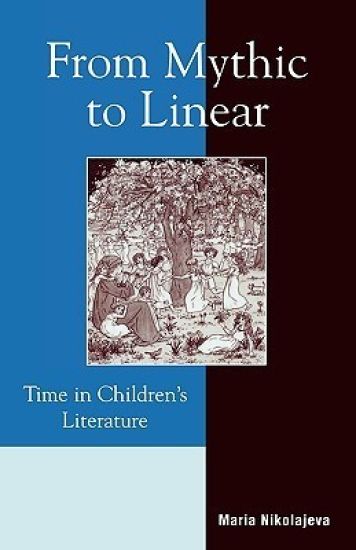
From Mythic to Linear

From Mythic to Linear

Maria Nikolajeva

Scarecrow Press
1991
nidottu
Now available in paperback! In this radically new approach to text typology, Maria Nikolajeva examines the depiction of time in literature for children. Nikolajeva identifies a continuum of texts ranging from those that depict non-linear time, typical of archaic, or mythical, thought, to those that express linearity, typical of contemporary mainstream literature. The author argues that literature is a deconstruction, a displacement, of myth, and that it depicts a symbolic coming-of-age process rather than a strictly representational reflection of a concrete "reality." The texts are categorized by the degree to which the coming-of-age process is accomplished; the movement is from an initial condition of primary harmony (Arcadia, Paradise, Utopia) through different stages toward either a successful or a failed passage. From Mythic to Linear is a broad study, encompassing a number of children's novels from different epochs and countries: Scandinavian, British, American, Canadian, Australian, South African, and East European. The international character contributes a better knowledge of children's literature from different parts of the world—widening the horizons of children's literature research too often confined to one particular country. Nikolajeva's unique approach allows her to disregard the traditional, and some would argue obsolete, division of children's novels into realism and fantasy. With its unique approach and broad international scope, From Mythic to Linear will be of interest to all those interested in children's literature and in comparative literature in general. Includes bibliography and footnotes.
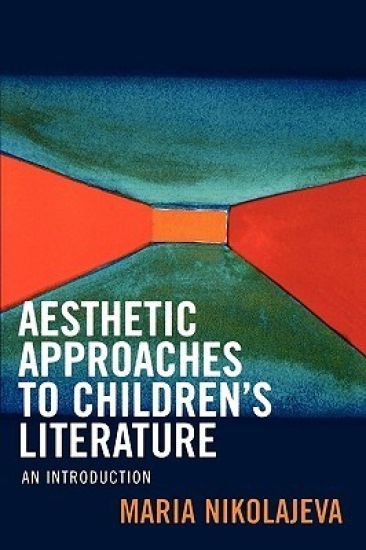
Aesthetic Approaches to Children's Literature

Aesthetic Approaches to Children's Literature

Maria Nikolajeva

Scarecrow Press
2005
nidottu
As undergraduate and graduate courses in children's literature become more established and numerous, there is an intense need for a textbook that offers aesthetic rather than educational approaches to children's literature. This work fills that void by providing students of children's literature with a comprehensible and easy-to-use analytical tool kit, showing through concrete demonstration how each tool might best be used. The chapters are organized around familiar and easily recognized features of literary texts (e.g. author, genre, character). Theoretical issues are illustrated by specific texts from the North American children's literature canon. The book explores the particular aesthetics of children's fiction and the ways critical theory may be applied to children's texts, while remaining accessible to a college readership without prior specialized knowledge of literary theory. Each chapter includes a short introduction to a specific theoretical approach (e.g. semiotics, feminist, psychoanalytic), an example of its application to a literary text, a number of activities (study questions, reading exercises), and suggestions for further explorations.
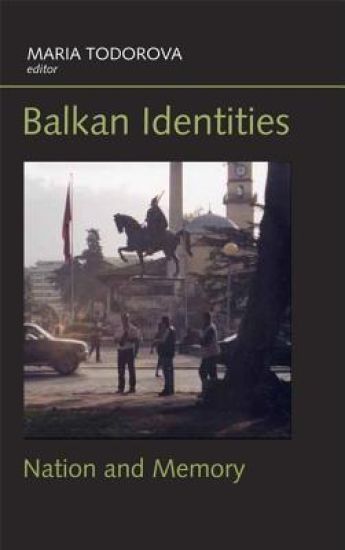
Balkan Identities

Balkan Identities

Mariia Nikolaeva (EDT) Todorova

New York University Press
2004
sidottu
Balkan Identities brings together historians, anthropologists, and literary scholars all working under the shared conviction that the only way to overcome history is to intimately understand it. The contributors of Balkan Identities focus on historical memory, collective national memory, and the political manipulation of national identities. They refine our understanding of memory and identity in general and explore and assess the significance of particular manifestations of Balkan national identities and national memories in the region. The essays in Balkan Identities grapple with three major problems: the construction of historical memory, sites of national memory, and the mobilization of national identities. While most essays focus on a single country (e.g. Croatia, Romania, Turkey, Cyprus, Albania, Serbia, Bulgaria, Greece, Macedonia), they are in dialogue with each other and share an opposition to rigid isolationist identities. Illuminating and challenging, Balkan Identities demonstrates the ever-changing nature of a troubled and culturally vibrant region.
How Picturebooks Work

How Picturebooks Work

Maria Nikolajeva; Carole Scott

Routledge
2015
sidottu
How Picturebooks Work is an innovative and engaging look at the interplay between text and image in picturebooks. The authors explore picturebooks as a specific medium or genre in literature and culture, one that prepares children for other media of communication, and they argue that picturebooks may be the most influential media of all in the socialization and representation of children. Spanning an international range of children's books, this book examine such favorites as Curious George and Frogand Toad Are Friends, along with the works of authors and illustrators including Maurice Sendak and Tove Jansson, among others. With 116 illustrations, How PicturebooksWork offers the student of children's literature a new methodology, new theories, and a new set of critical tools for examining the picturebook form.
Children's Literature Comes of Age

Children's Literature Comes of Age

Maria Nikolajeva

Routledge
2015
sidottu
Originally published in 1996. A detailed analysis of the art of children's literature covering world literature for children, children's literature as a canonical art form, the history of children's literature from a semiotic perspective, and epic, polyphony, chronotope, intertextuality, and metafiction in children's literature.
Children's Literature Comes of Age

Children's Literature Comes of Age

Maria Nikolajeva

Routledge
2017
nidottu
Originally published in 1996. A detailed analysis of the art of children's literature covering world literature for children, children's literature as a canonical art form, the history of children's literature from a semiotic perspective, and epic, polyphony, chronotope, intertextuality, and metafiction in children's literature.