Kirjojen hintavertailu. Mukana 11 238 394 kirjaa ja 12 kauppaa.

Kirjahaku

Etsi kirjoja tekijän nimen, kirjan nimen tai ISBN:n perusteella.

1000 tulosta hakusanalla Maria R. Riegger

Acceptable Misconduct

Acceptable Misconduct

Maria R. Riegger

Maria Riegger
2017
nidottu
Antagonistic Washington DC law student Isabel must face her unsettled past and navigate the final weeks of the semester while figuring out fellow student Tarek's feelings for her before he slips away.
Thunderstruck

Thunderstruck

Maria R. Riegger Esq

Eighth House Press, LLC
2019
nidottu
They're opposing candidates in a contentious election who have a scandalous past. Years ago, Monica and Brian had an intense affair, which ended in heartbreak. Years later, Monica ends up facing Brian in a congressional campaign on the outskirts of Washington, DC. Old sentiments resurface, threatening to derail Monica's political plans. And when everything becomes public, Monica turns into a woman with nothing to lose. She's determined to win the election at any cost, despite whatever she may be feeling for her opponent. As Brian deals with his feelings for the only woman who ever really understood him, he is forced to make a decision about revealing information that could help him, but destroy her. As oversized egos and the desire to win an election threaten the bond slowly forming between these two political opponents, they end up discovering that they may have more in common than they originally thought.
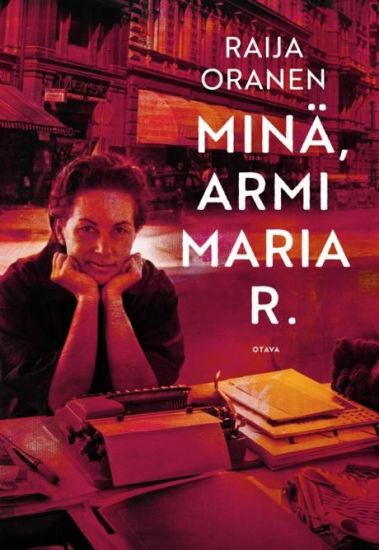
Minä, Armi Maria R.

Minä, Armi Maria R.

Raija Oranen

Otava
2023
sidottu
Säkenöivä romaani kunnianhimosta, yrityselämän kiemuroista ja mahtavasta liikenaisesta Marimekon takana. Marimekon perustaja Armi Ratia oli kuuluisa paitsi tinkimättömästä johtamistyylistään, myös oikuistaan ja lukuisista miessuhteistaan, joista tunnetuin oli Urho Kekkonen. Aviomies Viljo Ratia pysyi Armin vierellä korvaamattomana tukijana - kunnes hänen mittansa täyttyi.Tästä kaikesta Raija Oranen kertoo jäljittelemättömällä tyylillään, värikkäästi ja mukaansatempaavasti. Hän näyttää vaikutusvaltaisen liikenaisen loisteliaan uran, joka vaati ankaraa työtä, ponnistuksia ja paljon samppanjaa. Samalla Armi Ratian tarina läpivalaisee maamme lähihistoriaa pettämättömällä tarkkuudella.
Minä, Armi Maria R.

Minä, Armi Maria R.

Raija Oranen

Otava
2024
pokkari
Säkenöivä romaani kunnianhimosta, yrityselämän kiemuroista ja mahtavasta liikenaisesta Marimekon takana. Marimekon perustaja Armi Ratia oli kuuluisa paitsi tinkimättömästä johtamistyylistään, myös oikuistaan ja lukuisista miessuhteistaan, joista tunnetuin oli Urho Kekkonen. Aviomies Viljo Ratia pysyi Armin vierellä korvaamattomana tukijana - kunnes hänen mittansa täyttyi.Tästä kaikesta Raija Oranen kertoo jäljittelemättömällä tyylillään, värikkäästi ja mukaansatempaavasti. Hän näyttää vaikutusvaltaisen liikenaisen loisteliaan uran, joka vaati ankaraa työtä, ponnistuksia ja paljon samppanjaa. Samalla Armi Ratian tarina läpivalaisee maamme lähihistoriaa pettämättömällä tarkkuudella.
The Contemplative Poetry of Gerard Manley Hopkins

The Contemplative Poetry of Gerard Manley Hopkins

Maria R. Lichtmann

Princeton University Press
2014
pokkari
In 1989, the centenary of his death, Gerard Manley Hopkins continues to provoke fundamental questions among scholars: what major poetic strategy informs his work and how did his reflections on the nature of poetry affect his writing? While form meant a great deal to Hopkins, it was never mere form. Maria Lichtmann demonstrates that the poet, a student of Scripture all his life, adopted Scripture's predominant form--parallelism--as his own major poetic strategy. Hopkins saw that parallelism struck deep into the heart and soul, tapping into unconscious rhythms and bringing about a healing response that he identified as contemplation. Parallelism was to him the perfect statement of the integrity of outward form and inner meaning. Other critics have seen the parallelism in Hopkins's poems only on the auditory level of alliterations and assonances. Lichtmann, however, builds on the views held by Hopkins himself, who spoke of a parallelism of words and of thought engendered by the parallelism of sound. She distinguishes the integrating Parmenidean parallelisms of resemblance from the disintegrating Heraclitean parallelisms of antithesis. The tension between Parmenidean unity and Heraclitean variety is resolved only in the wordless communion of contemplation. This emphasis on contemplation offers a corrective to the overly emphasized Ignatian interpretation of Hopkins's poetry as meditative poetry. The book also makes clear that Hopkins's preference for contemplation sharply differentiates him from his Romantic predecessors as well as from the structuralists who now claim him. Originally published in 1989. The Princeton Legacy Library uses the latest print-on-demand technology to again make available previously out-of-print books from the distinguished backlist of Princeton University Press. These editions preserve the original texts of these important books while presenting them in durable paperback and hardcover editions. The goal of the Princeton Legacy Library is to vastly increase access to the rich scholarly heritage found in the thousands of books published by Princeton University Press since its founding in 1905.
The Contemplative Poetry of Gerard Manley Hopkins

The Contemplative Poetry of Gerard Manley Hopkins

Maria R. Lichtmann

Princeton University Press
2016
sidottu
In 1989, the centenary of his death, Gerard Manley Hopkins continues to provoke fundamental questions among scholars: what major poetic strategy informs his work and how did his reflections on the nature of poetry affect his writing? While form meant a great deal to Hopkins, it was never mere form. Maria Lichtmann demonstrates that the poet, a student of Scripture all his life, adopted Scripture's predominant form--parallelism--as his own major poetic strategy. Hopkins saw that parallelism struck deep into the heart and soul, tapping into unconscious rhythms and bringing about a healing response that he identified as contemplation. Parallelism was to him the perfect statement of the integrity of outward form and inner meaning. Other critics have seen the parallelism in Hopkins's poems only on the auditory level of alliterations and assonances. Lichtmann, however, builds on the views held by Hopkins himself, who spoke of a parallelism of words and of thought engendered by the parallelism of sound. She distinguishes the integrating Parmenidean parallelisms of resemblance from the disintegrating Heraclitean parallelisms of antithesis. The tension between Parmenidean unity and Heraclitean variety is resolved only in the wordless communion of contemplation. This emphasis on contemplation offers a corrective to the overly emphasized Ignatian interpretation of Hopkins's poetry as meditative poetry. The book also makes clear that Hopkins's preference for contemplation sharply differentiates him from his Romantic predecessors as well as from the structuralists who now claim him. Originally published in 1989. The Princeton Legacy Library uses the latest print-on-demand technology to again make available previously out-of-print books from the distinguished backlist of Princeton University Press. These editions preserve the original texts of these important books while presenting them in durable paperback and hardcover editions. The goal of the Princeton Legacy Library is to vastly increase access to the rich scholarly heritage found in the thousands of books published by Princeton University Press since its founding in 1905.
Holistic Psoriasis Management and Nutrition Guide: Natural Solutions to Treat and Relieve Your Symptoms

Holistic Psoriasis Management and Nutrition Guide: Natural Solutions to Treat and Relieve Your Symptoms

Maria R Robinson; Mamina Turegano; Julie Greenberg; Kellie Blake

ROBERT ROSE INC
2025
nidottu
Unlock the Power of Integrative Healing for Psoriasis. While advancements in targeted medications have significantly improved symptom relief, psoriasis remains a chronic condition with no definitive cure. The Holistic Psoriasis Management and Nutrition Guide embraces both innovative treatments and time-tested holistic approaches, empowering you with an integrative strategy for managing psoriasis symptoms, including achieving clearer, healthier skin. Authored by leading experts in dermatology, naturopathy and functional nutrition, this comprehensive guide offers an extensive exploration of psoriasis and a holistic approach to its management. Inside This Guide: . Understanding Psoriasis: Delve into the genetic and environmental factors as well as common triggers contributing to psoriasis. . Psoriasis Symptoms: Know what to expect in skin changes and other associated chronic medical conditions. . Current Treatments and Medications: Gain a succinct overview of traditional treatments and common medications available for psoriasis and their effectiveness. . Integrative Approaches: Discover how combining conventional treatments with complementary and alternative therapies can enhance your management of psoriasis. . Diet and Nutrition: Discover an eating strategy for psoriasis. Access a curated selection of easy and delicious recipes designed to support skin health and a detailed 30-day meal plan tailored to reduce psoriasis symptoms. Whether you're seeking to complement traditional treatments or explore alternative therapies, this book provides all the insights and practical strategies you need. AUTHORS: Dr. Maria R. Robinson, MD is a practicing Dermatologist (Skin Specialist). She is Board-certified in Dermatology and Dermatopathology. Dr. Mamina Turegano, triple board-certified dermatologist, offering a refreshing approach to holistic skincare focusing on the connection between your mind, body, and skin health. Dr. Julie Greenberg, ND, RH(AHG), MBA, is a naturopathic doctor who specializes in dermatology. She is the founder of the Center of Integrative and Naturopathic dermatology and Root Cause Dermatology, a medical education website. Kellie Blake, RDN, LD, IFNCP is a registered dietitian specializing in integrative and functional nutrition. She's the co-owner of NutriSense Nutrition Consulting, LLC.
The Falcon of Palermo

The Falcon of Palermo

Maria R. Bordihn

Grove Press / Atlantic Monthly Press
2006
pokkari
The Falcon of Palermo opens with the nations of modern Europe just beginning to take shape, while the papacy clings to its temporal power. Into this era of shifting borders and alliances steps a leader who will become legendary ? the brilliant maverick, Frederick II. After losing his parents, Emperor Henry Hohenstaufen and Queen Constance, by age four, a young, neglected Frederick runs among the urchins in the Muslim quarter while German warlords overrun Sicily. To restore order the Pope sends Archbishop Berard, a warmhearted man who gradually develops a deep bond with the gifted boy. Fluent in Arabic and strongly influenced by Muslim culture, Frederick aims to return Sicily to her former glory. However, when elected Holy Roman Emperor in a surprise move by the German princes, his vision grows. Once established as the unchallenged ruler, Frederick works to create an empire equal to that of Rome. Marked by his struggle with the Papacy for the domination of Europe, his glorious feats in battle, his recapturing of the Holy Land, his falconry, and the passions that led him to wives, mistresses, and one enduring love, Frederick's life is a fascinating glimpse into a pivotal period in medieval history.
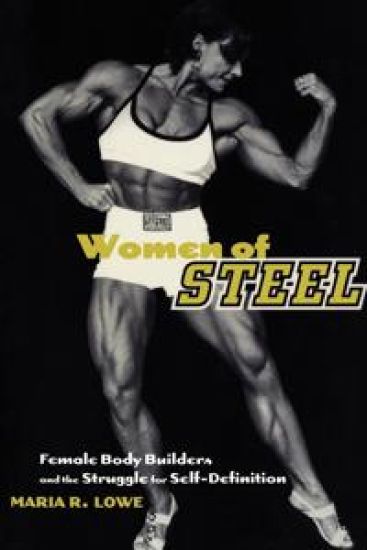
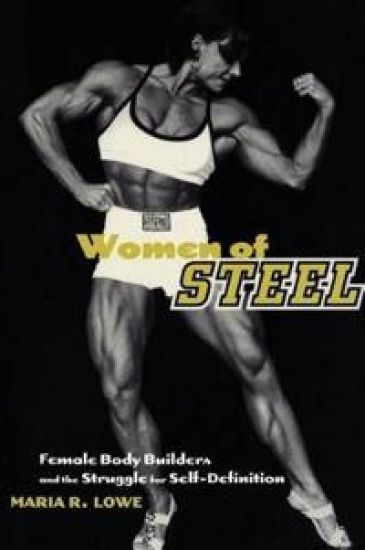
Women of Steel

Women of Steel

Maria R. Lowe

New York University Press
1998
sidottu
"A lot of people in the general public think female bodybuilding is gross and freaky . . . that that's not what a woman is supposed to look like." So says Michelle, a national bodybuilding judge. In fact, athletic women, especially those in sports where strength, muscle, and sweat feature prominently, are typically viewed by the public as being outside the boundaries of appropriate femininity. And perhaps no group of women athletes embodies this gender outlaw status more than female bodybuilders, who by their bulk and sheer strength challenge our very notions of what it means to be a woman. Why would women choose to look like that? And what does it take to get and stay so muscular? Maria R. Lowe has interviewed more than one hundred people connected with women's bodybuilding, from the bodybuilders themselves, to trainers, family members, spouses, judges, and sponsors. In Women of Steel, Lowe introduces us to a world where size and strength must be balanced with a nod toward grace and femininity. Lowe, who actually worked out with a couple of the bodybuilders she interviewed, gets at the heart of what it is to be a woman bodybuilder. We learn about "paying the price"--doing the necessary exercise, and sometimes drugs--that allows women to rise to the top of their profession. We follow their successes and failures, and discover the benefits-- including increased self-esteem and physical strength--as well as the sometimes unhealthy effects of their training regimen, from dehydration to baldness to rampant acne to high blood pressure. We travel with the women from competition to competition and find that judges' standards seem to vary alarmingly depending on momentary notions of what constitutes "the overall package"--that elusive perfect body that catches judges' eyes and wins competitions. Above all, Women of Steel is a keenly observant diary of life in women's bodybuilding, a must-read for people interested in sports, competition, physical culture, and gender.
Women of Steel

Women of Steel

Maria R. Lowe

New York University Press
1998
pokkari
"A lot of people in the general public think female bodybuilding is gross and freaky . . . that that's not what a woman is supposed to look like." So says Michelle, a national bodybuilding judge. In fact, athletic women, especially those in sports where strength, muscle, and sweat feature prominently, are typically viewed by the public as being outside the boundaries of appropriate femininity. And perhaps no group of women athletes embodies this gender outlaw status more than female bodybuilders, who by their bulk and sheer strength challenge our very notions of what it means to be a woman. Why would women choose to look like that? And what does it take to get and stay so muscular? Maria R. Lowe has interviewed more than one hundred people connected with women's bodybuilding, from the bodybuilders themselves, to trainers, family members, spouses, judges, and sponsors. In Women of Steel, Lowe introduces us to a world where size and strength must be balanced with a nod toward grace and femininity. Lowe, who actually worked out with a couple of the bodybuilders she interviewed, gets at the heart of what it is to be a woman bodybuilder. We learn about "paying the price"--doing the necessary exercise, and sometimes drugs--that allows women to rise to the top of their profession. We follow their successes and failures, and discover the benefits-- including increased self-esteem and physical strength--as well as the sometimes unhealthy effects of their training regimen, from dehydration to baldness to rampant acne to high blood pressure. We travel with the women from competition to competition and find that judges' standards seem to vary alarmingly depending on momentary notions of what constitutes "the overall package"--that elusive perfect body that catches judges' eyes and wins competitions. Above all, Women of Steel is a keenly observant diary of life in women's bodybuilding, a must-read for people interested in sports, competition, physical culture, and gender.
Crime and Punishment in Early Modern Germany
Frankfurt am Main, in common with other imperial German cities, enjoyed a large degree of legal autonomy during the early modern period, and produced a unique and rich body of criminal archives. In particular, Frankfurt’s Strafenbuch, which records all criminal sentences between 1562 and 1696, provides a fascinating insight into contemporary penal trends. Drawing on this and other rich resources, Dr. Boes reveals shifting and fluid attitudes towards crime and punishment and how these were conditioned by issues of gender, class, and social standing within the city’s establishment. She attributes a significant role in this process to the steady proliferation of municipal advocates, jurists trained in Roman Law, who wielded growing legal and penal prerogatives. Over the course of the book, it is demonstrated how the courts took an increasingly hard line with select groups of people accused of criminal behavior, and the open manner with which advocates exercised cultural, religious, racial, gender, and sexual-orientation repressions. Parallel with this, however, is identified a trend of marked leniency towards soldiers who enjoyed an increasingly privileged place within the judicial system. In light of this discrepancy between the treatment of civilians and soldiers, the advocates’ actions highlight the emergence and spread of a distinct military judicial culture and Frankfurt’s city council’s contribution to the quasi-militarization of a civilian court. By highlighting the polarized and changing ways the courts dealt with civilian and military criminals, a fuller picture is presented not just of Frankfurt’s sentencing and penal practices, but of broader attitudes within early modern Germany to issues of social position and cultural identity.
The Jewish Purging of a Small German Town

The Jewish Purging of a Small German Town

Maria R. Boes

BLOOMSBURY PUBLISHING PLC
2024
sidottu
Through the analysis of 10 oral witness testimonies of local residents and a previously undocumented letter correspondence between a Jewish Holocaust survivor and her gentile friend, The Jewish Purging of a Small German Town provides new insights into how the Nazi persecution of the Jewish people unfolded in small towns and communities around Germany. Incorporating her own personal reflections on growing up in Salmünster, Maria R. Boes uncovers the truth about the Jewish residents who lived there and what happened to them after the Nazis came to power in 1933 – a story which has been silenced and suppressed. Boes charts the town’s unsettling trajectory from a harmonious pre-Nazi local community to an environment where, after initial protracted local resistance, Jewish persecution escalated from the boycotting of stores to physical, fiscal and emotional acts against Jewish residents. The book reveals how this culminated in Jewish residents being purged from the town by 1937 without any paramilitary intervention or outside physical force, prior to the 1938 Kristallnacht and long before similar ousters occurred in big cities throughout the country. It also shows how Salmünster, like other neighbouring towns, continued to deny the rightful historical belonging of its Jewish residents long after the war was over and the Nazis had been defeated. This microhistory is an illuminating study of the momentous spectre of Germany’s small towns being at the forefront of successfully fulfilling Nazi aims to remove Jewish residents – driving them out of their homes with the ultimate goal of driving them out of existence.
Crime and Punishment in Early Modern Germany

Crime and Punishment in Early Modern Germany

Maria R. Boes

Ashgate Publishing Limited
2013
sidottu
Frankfurt am Main, in common with other imperial German cities, enjoyed a large degree of legal autonomy during the early modern period, and produced a unique and rich body of criminal archives. In particular, Frankfurt’s Strafenbuch, which records all criminal sentences between 1562 and 1696, provides a fascinating insight into contemporary penal trends. Drawing on this and other rich resources, Dr. Boes reveals shifting and fluid attitudes towards crime and punishment and how these were conditioned by issues of gender, class, and social standing within the city’s establishment. She attributes a significant role in this process to the steady proliferation of municipal advocates, jurists trained in Roman Law, who wielded growing legal and penal prerogatives. Over the course of the book, it is demonstrated how the courts took an increasingly hard line with select groups of people accused of criminal behavior, and the open manner with which advocates exercised cultural, religious, racial, gender, and sexual-orientation repressions. Parallel with this, however, is identified a trend of marked leniency towards soldiers who enjoyed an increasingly privileged place within the judicial system. In light of this discrepancy between the treatment of civilians and soldiers, the advocates’ actions highlight the emergence and spread of a distinct military judicial culture and Frankfurt’s city council’s contribution to the quasi-militarization of a civilian court. By highlighting the polarized and changing ways the courts dealt with civilian and military criminals, a fuller picture is presented not just of Frankfurt’s sentencing and penal practices, but of broader attitudes within early modern Germany to issues of social position and cultural identity.
Enslaved Archives

Enslaved Archives

Maria R. Montalvo

Johns Hopkins University Press
2024
sidottu
Explores the relationship between the production of enslaved property and the production of the past in the antebellum United States.It is extraordinarily difficult for historians to reconstruct the lives of individual enslaved people. Records—where they exist—are often fragmentary, biased, or untrue. In Enslaved Archives, Maria R. Montalvo investigates the legal records, including contracts and court records, that American antebellum enslavers produced and preserved to illuminate enslavers' capitalistic motivations for shaping the histories of enslaved people. The documentary archive was not simply a by-product of the business of slavery, but also a necessary tool that enslavers used to exploit the people they enslaved. Building on Montalvo's analysis of more than 18,000 sets of court records, Enslaved Archives is a close study of what we can and cannot learn about enslaved individuals from the written record. By examining five lawsuits in Louisiana, Montalvo deconstructs enslavers' cases—the legal arguments and rhetorical strategies they used to produce information and shape perceptions of enslaved people. Commodifying enslaved people was not simply a matter of effectively exploiting their labor. Enslavers also needed to control information about those people. Enslavers' narratives—carefully manipulated, prone to omissions, and sometimes false—often survive as the only account of an enslaved individual's life. In working to historicize the people at the center of enslavers' manipulations, Montalvo outlines the possibilities and limits of the archive, providing a glimpse of the historical and contemporary consequences of commodification. Enslaved Archives makes a significant intervention in the history of enslaved people, legal history, and the history of slavery and capitalism by adding a qualitative dimension to the analysis of how enslavers created and maintained power.