Dear Children and Their Grownups, Two of my people have created a book just for you- readers who long for a story of a different sort. In our tale there are no dragons for heroes to slay, or worlds for wizards to save. It's simply the story of how my pack and I came to realize we needed a school for all the animals on our farm who wanted to learn and teach from those great books of knowledge passed down to us through... Oh, sorry Marica says I run on sometimes. Back to our story. Mighty were the challenges we faced It's not easy starting a school. But in the end, teamwork, perseverance, and creative thinking paid off.I know you'll love our story We are an entertaining pack, and with our people, an endearing family. But I must warn you. Though Marica wants you to make new friends and enjoy our little adventures, she also wants you to learn a few things. You may have never heard of some of these, so she explains them along the way.I wish I could tell you more, but I must get back to that lesson plan for The Jungle Book. It's not writing itself, you know. See you inside Love, Missy
Dear Children and Their Grownups, Two of my people have created a book just for you- readers who long for a story of a different sort. In our tale there are no dragons for heroes to slay, or worlds for wizards to save. It's simply the story of how my pack and I came to realize we needed a school for all the animals on our farm who wanted to learn and teach from those great books of knowledge passed down to us through... Oh, sorry Marica says I run on sometimes. Back to our story. Mighty were the challenges we faced It's not easy starting a school. But in the end, teamwork, perseverance, and creative thinking paid off. I know you'll love our story We are an entertaining pack, and with our people, an endearing family. But I must warn you. Though Marica wants you to make new friends and enjoy our little adventures, she also wants you to learn a few things. You may have never heard of some of these, so she explains them along the way.I wish I could tell you more, but I must get back to that lesson plan for The Jungle Book. It's not writing itself, you know. See you inside Love, Missy
Though parity is still rare, presidential cabinets contain more women than ever before. Who are these women and what types of political capital resources do they bring to the administration? Are they new types of political players or very much like the men who have traditionally run the government? And once they gain office, are they treated equally in the cabinet? Do they have the capacity to be as effective as their male counterparts? Drawing on data from five presidential democracies -- Argentina, Chile, Colombia, Costa Rica, and the United States -- Women in Presidential Cabinets examines the backgrounds, connections and credentials of all full-rank cabinet ministers in presidential administrations over the course of two decades to determine if women and men bring similar numbers and diversity of political capital resources to the administration. Maria C. Escobar-Lemmon and Michelle M. Taylor-Robinson find that, with a few notable exceptions, presidents select men and women with similar work and education backgrounds, political experience, and linkages to related interest groups. There are, however, differences across types of posts and countries. They evaluate the treatment and effectiveness of similarly credentialed male and female ministers on four benchmarks. Specifically, they examine whether women with equal qualifications can really obtain all posts or whether glass ceilings persist in some areas. They then turn to the ability of women to hold onto a post, considering the nature and circumstances surrounding their departures from office and how long they remain in office. In doing so, they uncover evidence that female ministers in Latin America stand on an unequal playing field when it comes to the ability to enact policy through legislation. Ultimately, Escobar-Lemmon and Taylor-Robinson show conclusively that while women lack numerical equality, they are no longer tokens, instead appearing positioned to exercise power at the highest levels within the executive branch.
This book examines the factors that facilitate the inclusion of women on high courts, while recognizing that many courts have a long way to go before reaching gender parity. Why did women start appearing on high courts when they did? Where have women made the most significant strides? To address these questions, the authors built the first cross-national and longitudinal dataset on the appointment of women and men to high courts. In addition, they provide five in-depth country case studies us to unpack the selection of justices to high courts in Canada, Colombia, Ireland, South Africa, and the United States. The cross-national lens and combination of quantitative analyses and detailed country studies examines multiple influences across region and time. Focusing on three sets of explanations --pipelines to high courts, domestic institutions, and international influences- analyses reveal that women are more likely to first appear on their country's high court when traditional ideas about who can and should be a judge erode. In some countries, international treaties, regional emulation, and women's international NGOs play a role in disseminating and linking global norms of gender equality in decision-making. Importantly, while informal institutions and reliance on men-dominated networks can limit access, women are making substantial strides in their countries' highest courts where the supply grows, and often where selectors have incentives to select women. Further, sustained pressure from advocacy organizations-at the local, national, and global levels-contributes to some gains. Comparative Politics is a series for researchers, teachers, and students of political science that deals with contemporary government and politics. Global in scope, books in the series are characterized by a stress on comparative analysis and strong methodological rigour. The series is published in association with the European Consortium for Political Research. For more information visit www.ecprnet.eu The series is edited by Susan Scarrow, John and Rebecca Moores Professor of Political Science at the University of Houston, and Jonathan Slapin, Professor of Political Institutions and European Politics, Department of Political Science, University of Zurich.
Copper has long been known as essential to living systems, in part through its fundamental role in electron transport and respiration. Over the years into the present, its involvement in an ever increasing number of processes in all kinds of organisms has become apparent, and new and exciting vistas of its roles in such areas as the central nervous system, and in humoral functions, are appearing on the horizon. Although the biochemistry of this element has not been studied nearly as much as that of many others, a for midable amount of work has been carried out. It has thus been a challenge to produce a summary of what has been found that provides both breadth and depth. My goal has been to try to be as comprehensive as possible, within some limitations. I have tried to provide basic information and basic data that should continue to be useful for a long time. The goal has also been to interpret where we currently stand in our knowledge of the structure, function, regulation, and metabolism of Cu-dependent processes and sub stances, especially proteins. Thus, I have tried to make this a source book for historic as well as current information on all aspects of copper bio chemistry, and a summary of our current knowledge of copper-dependent proteins and processes. Most of the research on copper has been carried out on vertebrates, especially mammals. This has played a role in the organization of the book.
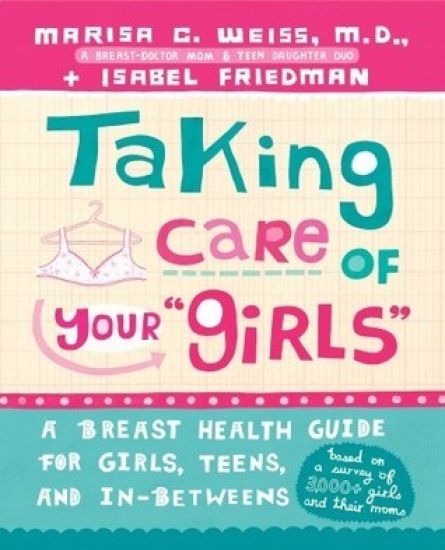
The real facts about your "girls" and how to take care of them "Well, all my friends think they will never have breasts--and it's not funny--because a lot of girls feel this way." --Elena, 13 "I went up two sizes over summer break I started seventh grade with a 'C' cup. Then my breasts got weird pink stripes on the side. What happened?" --Veronica, 12 Girls are as anxious and confused about their breasts as ever. That's why Marisa Weiss, M.D., an oncologist and breast health specialist, and her teenage daughter, Isabel, decided to create Taking Care of Your "Girls." Together, they polled more than three thousand girls and their moms and came up with a surprisingly huge list of worries and misconceptions. Based on their research, you'll get answers to questions like: - How do I know when I need to get my first bra--and what kind should I get?- Do big breasts have a higher risk of breast cancer than small ones?- How do I get rid of stretch marks?- When will my breasts stop growing?- How do I examine my own breasts?- Will the size of my breasts even out?- Do tanning, antiperspirants, wearing a bra at night, and talking on a cell phone cause breast cancer? A groundbreaking book for both mothers and daughters, Taking Care of Your "Girls" is a practical guide to breast care and a girl-to-girl conversation about the feelings and emotions that come with the territory. "This all-in-one, indispensable breast health guide captures exactly what teen girls and their moms really need: practical, easy-to-read, great advice. It's one of the best gifts you can give to your girl."--Harvey Karp, M.D., F.A.A.P., author of The Happiest Toddler on the Block, board member of Healthy Child, Healthy World
In this book, the author challenges the notion that French Realist fiction is peculiarly and intrinsically hostile to female freedom, arguing that it is criticism itself that has marginalized Stendhal's noncompliant heroines and condemned them as self-centred.
According to Vygotsky (1986), The decreasing vocalization of egocentric speech denotes a developing abstraction from sound, the child's new faculty to "think words" instead of pronouncing them. This is the positive meaning of the sinking coefficient of egocentric speech. The downward curve indicates development toward inner speech, (p. 230) The purpose of this volume is to explore the faculty to "think words," not as the ability to mentally evoke words in the native (or first) language (LI) but as the faculty 1 to conjure up in the mind words in a second language (L2). To think words rather than to pronounce them is possible through inner speech, a function that humans develop in the course of childhood as they internalize the speech of the social group among which they grow. This means internalizing and being able to conduct inner speech in a particular linguistic code, the LI. But humans, at a very early or more mature age, may also come into contact and interact verbally with speakers of other languages, in classrooms or natural settings. The possibility thus emerges of internalizing an L2 in such a way that inner speech in the L2 might evolve. In this book, it is argued that, given certain conditions of L2 learning, it is possible for learners to attain inner speech in the L2. This book examines the distinctive nature of L2 inner speech and the processes that engender it and characterize its development.
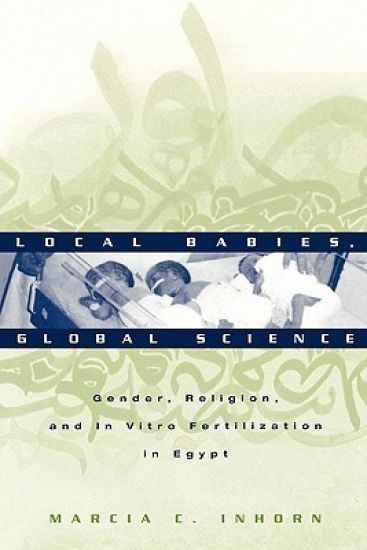
In the late 1990s, Egypt experienced a boom period in in vitro fertilization (IVF) technology and now boasts more IVF clinics than neighboring Israel. In this book, Marcia Inhorn writes of her fieldwork among affluent, elite couples who sought in vitro fertilization in Egypt, a country which is not only at the forefront of IVF technology in the Middle East, but also a center of Islamic education in the region. Inhorn examines the gender, scientific, religious and cultural ramifications of the transfer of IVF technology from Euro-American points of origin to Egypt - showing how cultural ideas reshape the use of this technology and in turn, how the technology is reshaping cultural ideas in Egypt.
In the late 1990s, Egypt experienced a boom period in in vitro fertilization (IVF) technology and now boasts more IVF clinics than neighboring Israel. In this book, Marcia Inhorn writes of her fieldwork among affluent, elite couples who sought in vitro fertilization in Egypt, a country which is not only at the forefront of IVF technology in the Middle East, but also a center of Islamic education in the region. Inhorn examines the gender, scientific, religious and cultural ramifications of the transfer of IVF technology from Euro-American points of origin to Egypt - showing how cultural ideas reshape the use of this technology and in turn, how the technology is reshaping cultural ideas in Egypt.
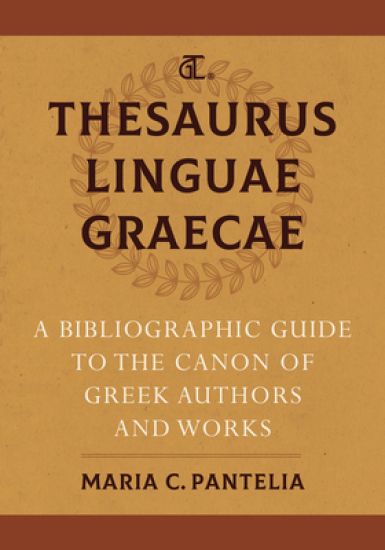
The Thesaurus Linguae Graecae: A Bibliographic Guide to the Canon of Greek Authors and Works (TLG®) is a comprehensive catalog of the authors and works that have survived in Greek from antiquity (eighth century BCE) to the present era and have been collected and digitized by the TLG® in its fifty-year history. It provides biographical information about each author, such as dates, place of birth, and literary activity, as well as a list of their extant works and print publications. This volume encompasses more than 4,400 authors and 17,000 individual works. It offers a concise and authoritative literary history of Greek literature and is an indispensable reference source for its study.
Middle Eastern Muslim men have been widely vilified as terrorists, religious zealots, and brutal oppressors of women. The New Arab Man challenges these stereotypes with the stories of ordinary Middle Eastern men as they struggle to overcome infertility and childlessness through assisted reproduction. Drawing on two decades of ethnographic research across the Middle East with hundreds of men from a variety of social and religious backgrounds, Marcia Inhorn shows how the new Arab man is self-consciously rethinking the patriarchal masculinity of his forefathers and unseating received wisdoms. This is especially true in childless Middle Eastern marriages where, contrary to popular belief, infertility is more common among men than women. Inhorn captures the marital, moral, and material commitments of couples undergoing assisted reproduction, revealing how new technologies are transforming their lives and religious sensibilities. And she looks at the changing manhood of husbands who undertake transnational "egg quests"--set against the backdrop of war and economic uncertainty--out of devotion to the infertile wives they love. Trenchant and emotionally gripping, The New Arab Man traces the emergence of new masculinities in the Middle East in the era of biotechnology.
Maria Scott's study of the operation of irony in Baudelaire's Le Spleen de Paris contends that the principal target of the collection's spleen is its own readership. Baudelaire, as one of the most perceptive cultural commentators of the nineteenth century, was naturally very keenly aware of the growing dominance of the bourgeoisie in France, not least as a market for art and literature. Despite being dependent on this market for his own writing, the poet was highly critical of bourgeois values and attitudes. Scott builds on existing criticism of the collection to argue that these are indirectly mocked in Le Spleen de Paris, often in the person of the poet's supposed textual alter ego. The contention is that the prose poems betray the trust of readers by way of an apparent transparency of meaning that functions to blind us to their embedded irony. Though focused on Le Spleen de Paris, Scott's study engages with the full range of Baudelaire's writings, including his art and literary criticism. Her book will be of interest not only to Baudelaire scholars but also to those engaged more generally with nineteenth-century French culture.
Part of "ASPA Classics" series, this book compiles various contributions to the theory and practice of performance measurement that have been published in various journals affiliated with the American Society for Public Administration. This book includes methods and techniques for developing effective performance measurement systems.