
Kirjahaku
Etsi kirjoja tekijän nimen, kirjan nimen tai ISBN:n perusteella.
1000 tulosta hakusanalla Marilyn Chin

A Study Guide for Marilyn Chin's "How I Got That Name"
Cengage Learning Gale
Gale, Study Guides
2017
pokkari
A Study Guide for Marilyn Chin's "The Floral Apron"
Cengage Learning Gale
Gale, Study Guides
2017
pokkari

'Oh Lord! Here come the Double Happiness Twins . . .'The Double Happiness Twins are Moonie and Mei Ling. The Double Happiness is the Chinese restaurant in California where they help out their meat-cleaver-wielding grandmother - when they're not causing uproar and mayhem. And Revenge of the Mooncake Vixen is the story of the sisters, their Grandma, a lot of animals and the topsy-turvy, surreal experience of being a pair of strangers in a very, very strange land indeed.
This book is the first in English to consider women's movements and feminist discourses in twentieth-century Taiwan. Doris T. Chang examines the way in which Taiwanese women in the twentieth century selectively appropriated Western feminist theories to meet their needs in a modernizing Confucian culture. She illustrates the rise and fall of women's movements against the historical backdrop of the island's contested national identities, first vis-à-vis imperial Japan (1895-1945) and later with postwar China (1945-2000). In particular, during periods of soft authoritarianism in the Japanese colonial era and late twentieth century, autonomous women's movements emerged and operated within the political perimeters set by the authoritarian regimes. Women strove to replace the "Good Wife, Wise Mother" ideal with an individualist feminism that meshed social, political, and economic gender equity with the prevailing Confucian family ideology. However, during periods of hard authoritarianism from the 1930s to the 1960s, the autonomous movements collapsed. The particular brand of Taiwanese feminism developed from numerous outside influences, including interactions among an East Asian sociopolitical milieu, various strands of Western feminism, and Marxist-Leninist women's liberation programs in Soviet Russia. Chinese communism appears not to have played a significant role, due to the Chinese Nationalists' restriction of communication with the mainland during their rule on post-World War II Taiwan. Notably, this study compares the perspectives of Madame Chiang Kai-shek, whose husband led as the president of the Republic of China on Taiwan from 1949 to 1975, and Hsiu-lien Annette Lu, Taiwan's vice president from 2000 to 2008. Delving into period sources such as the highly influential feminist monthly magazine Awakening as well as interviews with feminist leaders, Chang provides a comprehensive historical and cross-cultural analysis of the struggle for gender equality in Taiwan.
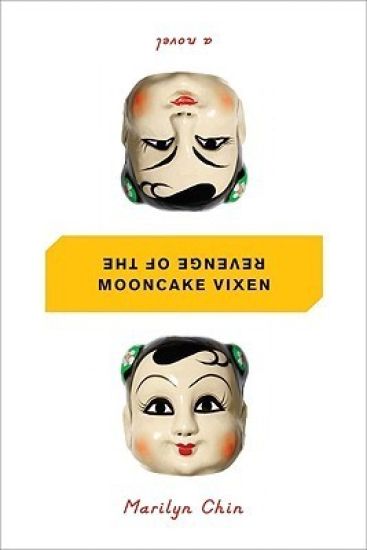
Raucous twin sisters Moonie and Mei Ling Wong are known as the double happiness Chinese food delivery girls. Each day they load up a crappy donkey-van and deliver Americanized ( bad ) Chinese food to homes throughout their southern California neighborhood. United in their desire to blossom into somebodies, the Wong girls fearlessly assert their intellect and sexuality, even as they come of age under the care of their dominating, cleaver-wielding grandmother from Hong Kong. They transform themselves from food delivery girls into accomplished women, but along the way they wrestle with the influence and continuity of their Chinese heritage. Marilyn Chin s prose waxes and wanes between satire and metaphorical lyric, referencing classical Chinese tales and ghost stories that are at turns sensual, lurid, hilarious, shocking, and surreal."
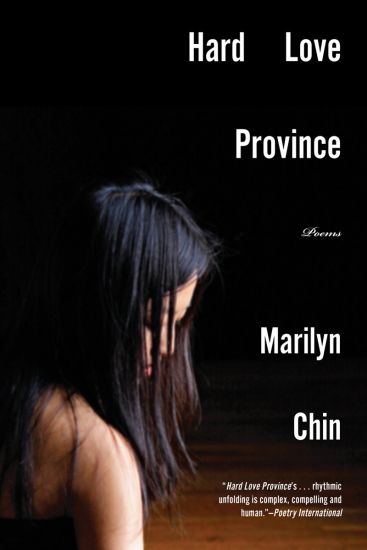
Marilyn Chin is a poet acclaimed by Adrienne Rich for her "powerful, uncompromised, and unerring" poems. Dancing brilliantly between Eastern and Western forms, fusing ancient Chinese history and contemporary American popular culture, she is one of the most celebrated Asian-American poets writing today.Chin's fourth volume of poems, Hard Love Province, is composed of erotic elegies in which the speaker grieves for the loss of her beloved. In "Void" she writes with the imagistic, distilled quietude of a solitary mourner: "It's not that you are rare / Nor are you extraordinary // O lone wren sobbing on the bodhi tree / You are simple and sincere." In "Formosan Elegy," by contrast, she is that mourner, beyond simplicity or quietude, crying out for a lover: "I sing for you but my tears have dried in my gullet / Walk the old dog give the budgies a cool bath / Cut a tender melon let it bleed into memory."Here, too, are poems inspired by Chin's poetic forbearers and mentors--Dickinson, Plath, Ai, Gwendolyn Brooks, Tu Fu, Adrienne Rich, and others--honoring their work and descrying the global injustice they addressed. "Whose life is it anyway?" she asks in a poem for Rich, "She born of chrysalis and shit / Or she born of woman and pain?"Emotionally nuanced and electric with high-flying verbal experimentation, image after image, line by line, Chin's spectacular reinventions, her quatrains, sonnets, allegories, and elegies, are unforgettable.
A Portrait of the Self as Nation: New and Selected Poems
Marilyn Chin
W. W. Norton Company
2020
nidottu
Spanning thirty years of dazzling work--from luminous early love lyrics to often-anthologized Asian American identity anthems, from political and subversive hybrid forms to feminist manifestos--A Portrait of the Self as Nation is a selection from one of America's most original and vital voices. Marilyn Chin's passionate, polyphonic poetry is deeply engaged with the complexities of cultural assimilation, feminism, and the Asian American experience; she spins precise, beautiful metaphors as she illuminates hard-hitting truths.
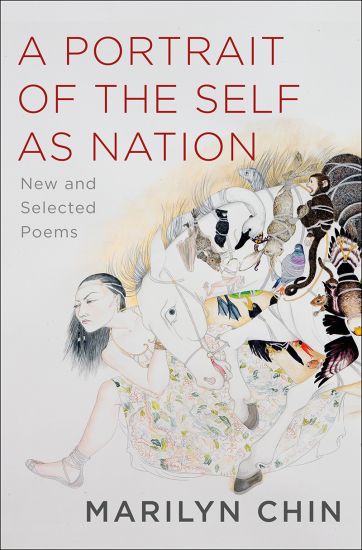
Spanning thirty years of dazzling work--from luminous early love lyrics to often-anthologized Asian American identity anthems, from political and subversive hybrid forms to feminist manifestos--A Portrait of the Self as Nation is a selection from one of America's most original and vital voices. Marilyn Chin's passionate, polyphonic poetry travels freely from the personal to the mythic, from the political to the spiritual. Deeply engaged with the complexities of cultural assimilation, feminism, and the Asian American experience, she spins precise, beautiful metaphors as she illuminates hard-hitting truths.A Portrait of the Self as Nation celebrates Chin's innovative activist poetry: her fearless and often confrontational early collections, Dwarf Bamboo and The Phoenix Gone, the Terrace Empty; the rebellious, vivid language of Rhapsody in Plain Yellow; and the erotic elegies of Hard Love Province. Also included are excerpts from Chin's daring novel, Revenge of the Mooncake Vixen, and a vibrant chapter of new poems and translations.In poems that are direct and passionately charged, Marilyn Chin raises her voice against systems of oppression even as her language shines with devastating power and beauty. Image after image, line by line, Chin's masterfully reinvented quatrains, sonnets, allegories, and elegies are unforgettable.
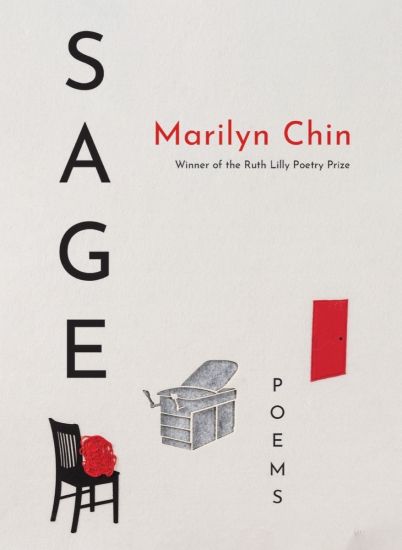
In her galvanizing sixth collection of poems, Marilyn Chin once again turns moral outrage into unforgettable art. A rambunctious take on our contemporary condition, Sage shifts skillfully in tone and register from powerful poems on social justice and the pandemic to Daoist wild girl satire.A self-described "activist-subversive-radical-immigrant-feminist-transnational-Buddhist-neoclassical-nerd poet," Chin is always reinventing herself. In Sage, she sings fearless identity anthems, pulls farcical details from an old diary, and confronts the disturbing rise in violence against Asian Americans. Leaping between colloquialisms and vivid imagery, anger and humor, she merges the personal and political with singular, resilient spirit.Whether she is spinning tall tales, mixing Chinese poems with hip-hop rhymes, reinventing lovelorn folk songs with a new-world anxiety, or penning a raucous birthday poem, a heartrending elegy, or an "un-gratitude" prayer, Chin offers dazzling surprises at every turn.
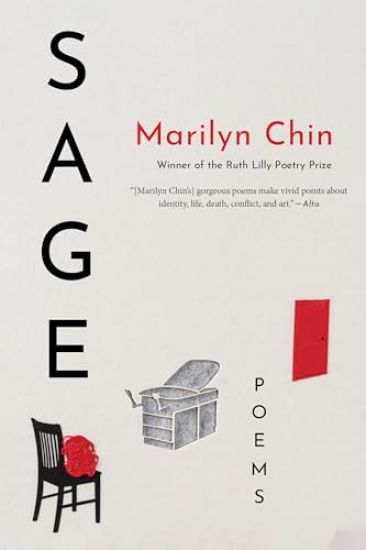
In her galvanizing sixth collection of poems, Marilyn Chin once again turns moral outrage into unforgettable art. A rambunctious take on our contemporary condition, Sage shifts skillfully in tone and register from powerful poems on social justice and the pandemic to Daoist wild girl satire.A self-described "activist-subversive-radical-immigrant-feminist-transnational-Buddhist-neoclassical-nerd poet," Chin is always reinventing herself. In Sage, she sings fearless identity anthems, pulls farcical details from an old diary, and confronts the disturbing rise in violence against Asian Americans. Leaping between colloquialisms and vivid imagery, anger and humor, she merges the personal and political with singular, resilient spirit.Whether she is spinning tall tales, mixing Chinese poems with hip-hop rhymes, reinventing lovelorn folk songs with a new-world anxiety, or penning a raucous birthday poem, a heartrending elegy, or an "un-gratitude" prayer, Chin offers dazzling surprises at every turn.

In the 15 years since this book came out, Marilyn Chin has been widely recognized as a consummate poet of the hybrid experience, blending East and West, popular and high culture, personal and political. Praised for its streetwise lyricism, this groundbreaking volume captures a young immigrant woman's perspective as she encounters the nexus of tradition and commercialism in modern, diverse, and urban California. With this new edition, a modern classic is reintroduced to a new generation of readers.
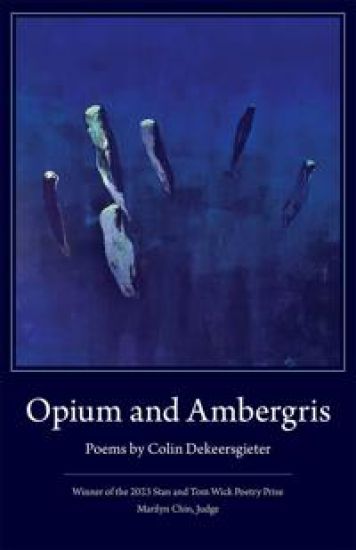
Winner of the 2023 Stan and Tom Wick Poetry PrizeOpium and Ambergris is the haunting debut collection by poet Colin Dekeersgieter, whose lyric poems scrutinize a family's history with addiction, death, and mental illness.Reeling from the loss of his brother to a heroin overdose, Dekeersgieter grieves while doing his best to keep his suicidal mother alive and raise his family. As a result, these poems shift between historical retellings and urgent examinations of love. In the title poem, "opium" is associated with death and "ambergris"—a substance formed in sperm whales' digestive tracts and valued by many cultures for over one thousand years—is associated with love. As family history, death, trauma, and duty become entwined with the acts of living, suffering, growing, and writing, these metaphorical categories become essentially interchangeable. Opium comes from the beautiful poppy; ambergris is an ingredient still used in high-end perfumes to help the fragrance last longer, yet it is extracted from dead whales. Thus, "opium" and "ambergris" come to represent the possible coexistence of love and loss.With many poems written in emergency departments, behavioral wards, and intensive care units, Dekeersgieter does not just honestly chronicle a family crisis but seeks to survive through poetry.
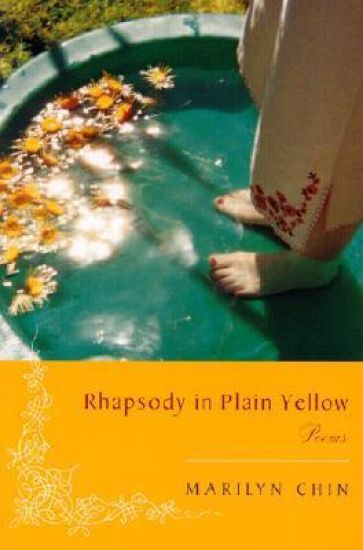
Marilyn Chin, with her multilayered, multidimensional, intercultural singing, elegizes the loss of her mother and maternal grandmother and tries to unravel the complexities of her family's past. She tells of the trials of immigration, of exile, of thwarted interracial love, and of social injustice. Some poems recall the Confucian "Book of Songs," while others echo the African American blues tradition and Western railroad ballads. The title poem references the Han Dynasty rhapsody but is also a wild, associative tour de force. Political allegories sing out with personal revelations. Personal revelations open up to a universal cry for compassion and healing. These songs emerge as a powerful and elegant collection: sophisticated yet moving, hard-hitting yet refined.
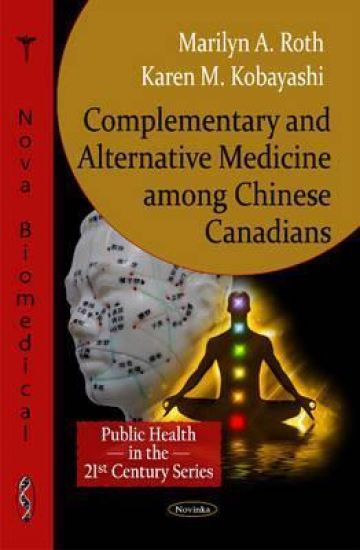
Complementary & Alternative Medicine among Chinese Canadians
Marilyn A Roth; Karen M Kobayashi
Nova Science Publishers Inc
2011
nidottu
This book examines the relationship between Chinese Canadian ethnicity and the use of complementary and alternative medicine (CAM) and explores some of the factors that contribute to CAM use among this visible minority group. Using data from the 2003 Canadian Community Health Survey, multivariate logistic regression techniques are used herein to investigate the extent to which CAM use varies among Chinese Canadians and non-Chinese Canadians. Two three-way interactions, which demonstrate how the combination of certain identity markers increases their predictive value within the model, are also examined. The results indicate that use of complementary and alternative medicine varies according to ethnicity, with Chinese Canadians being more likely to use than non-Chinese Canadians.

Since the publication of earlier editions of this book, China's political and economic landscapes have changed dramatically, with the rise of new leadership, evolving alliances, tariff wars, educational policies and technological advancements. Focusing on Chinese-American ventures, this expanded and revised edition chronicles the investments that have marked China's astonishing growth in the 21st century. Adding another dimension to the exploration of Chinese-American commerce, this edition discusses China's roots in Confucian identity and its effect on modern business culture. Case studies of American businesses that have been successful in China are included. Reflecting upon the changing nature of Chinese consumerism and international corporate behavior, the authors close with specific suggestions for those interested in doing business in China.
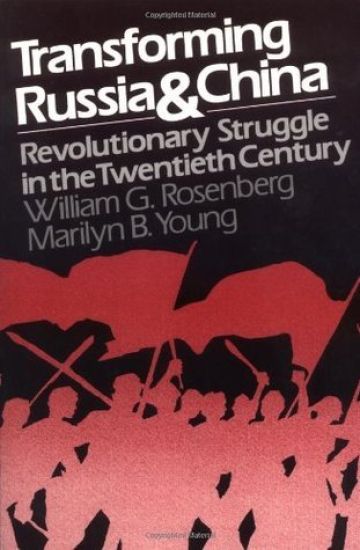
Transforming Russia and China
William G. Rosenberg; Marilyn B. Young
Oxford University Press Inc
1982
nidottu
In the best tradition of historical writing, this fascinating study concentrates on the distinguishing characteristics of the Russian and Chinese experiences of revolution during the same time period. Using quotations, anecdotes, and colorful descriptive material, the authors unravel the tangle of people, places, and events central to understanding the nature of revolutionary change.