Kirjojen hintavertailu. Mukana 11 244 527 kirjaa ja 12 kauppaa.

Kirjahaku

Etsi kirjoja tekijän nimen, kirjan nimen tai ISBN:n perusteella.

1000 tulosta hakusanalla Marilyn Reizbaum

James Joyce's Judaic Other

James Joyce's Judaic Other

Marilyn Reizbaum

Stanford University Press
1999
sidottu
How does recent scholarship on ethnicity and race speak to the Jewish dimension of James Joyce's writing? What light has Joyce himself already cast on the complex question of their relationship? This book poses these questions in terms of models of the other drawn from psychoanalytic and cultural studies and from Jewish cultural studies, arguing that in Joyce the emblematic figure of otherness is "the Jew." The work of Emmanuel Levinas, Sander Gilman, Gillian Rose, Homi Bhabha, among others, is brought to bear on the literature, by Jews and non-Jews alike, that has forged the representation of Jews and Judaism in this century. Joyce was familiar with this literature, like that of Theodor Herzl. Joyce sholarship has largely neglected even these sources, however, including Max Nordau, who contributed significantly to the philosophy of Zionism, and the literature on the "psychobiology" of race—so prominent in the fin de siècle—all of which circulates around and through Joyce's depictions of Jews and Jewishness. Several Joyce scholars have shown the significance of the concept of the other for Joyce's work and, more recently, have employed a variety of approaches from within contemporary deliberations of the ideology of race, gender, and nationality to illuminate its impact. The author combines these approaches to demonstrate how any modern characterization of otherness must be informed by historical representations of "the Jew" and, consequently, by the history of anti-Semitism. She does so through a thematics and poetics of Jewishness that together form a discourse and method for Joyce's novel.
James Joyce’s Judaic Other

James Joyce’s Judaic Other

Marilyn Reizbaum

Stanford University Press
1999
pokkari
How does recent scholarship on ethnicity and race speak to the Jewish dimension of James Joyce’s writing? What light has Joyce himself already cast on the complex question of their relationship? This book poses these questions in terms of models of the other drawn from psychoanalytic and cultural studies and from Jewish cultural studies, arguing that in Joyce the emblematic figure of otherness is “the Jew.” The work of Emmanuel Levinas, Sander Gilman, Gillian Rose, Homi Bhabha, among others, is brought to bear on the literature, by Jews and non-Jews alike, that has forged the representation of Jews and Judaism in this century. Joyce was familiar with this literature, like that of Theodor Herzl. Joyce sholarship has largely neglected even these sources, however, including Max Nordau, who contributed significantly to the philosophy of Zionism, and the literature on the “psychobiology” of race—so prominent in the fin de siècle—all of which circulates around and through Joyce’s depictions of Jews and Jewishness. Several Joyce scholars have shown the significance of the concept of the other for Joyce’s work and, more recently, have employed a variety of approaches from within contemporary deliberations of the ideology of race, gender, and nationality to illuminate its impact. The author combines these approaches to demonstrate how any modern characterization of otherness must be informed by historical representations of “the Jew” and, consequently, by the history of anti-Semitism. She does so through a thematics and poetics of Jewishness that together form a discourse and method for Joyce’s novel.
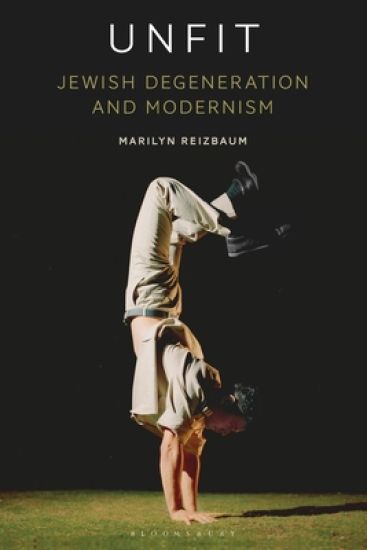
Unfit: Jewish Degeneration and Modernism

Unfit: Jewish Degeneration and Modernism

Marilyn Reizbaum

Bloomsbury Academic
2019
sidottu
An obsession with “degeneration” was a central preoccupation of modernist culture at the start of the 20th century. Less attention has been paid to the fact that many of the key thinkers in “degeneration theory” – including Cesare Lombroso, Max Nordau, and Magnus Hirschfeld – were Jewish. Unfit: Jewish Degeneration and Modernism is the first in-depth study of the Jewish cultural roots of this strand of modernist thought and its legacies for modernist and contemporary culture. Marilyn Reizbaum explores how literary works from Bram Stoker’s Dracula, through James Joyce’s Ulysses to Pat Barker’s Regeneration trilogy, the crime movies of Mervyn LeRoy, and the photography of Claude Cahun and Adi Nes manifest engagements with ideas of degeneration across the arts of the 20th century. This is a major new study that sheds new light on modernist thought, art and culture.
Unfit: Jewish Degeneration and Modernism

Unfit: Jewish Degeneration and Modernism

Marilyn Reizbaum

Bloomsbury Academic
2021
nidottu
An obsession with “degeneration” was a central preoccupation of modernist culture at the start of the 20th century. Less attention has been paid to the fact that many of the key thinkers in “degeneration theory” – including Cesare Lombroso, Max Nordau, and Magnus Hirschfeld – were Jewish. Unfit: Jewish Degeneration and Modernism is the first in-depth study of the Jewish cultural roots of this strand of modernist thought and its legacies for modernist and contemporary culture. Marilyn Reizbaum explores how literary works from Bram Stoker’s Dracula, through James Joyce’s Ulysses to Pat Barker’s Regeneration trilogy, the crime movies of Mervyn LeRoy, and the photography of Claude Cahun and Adi Nes manifest engagements with ideas of degeneration across the arts of the 20th century. This is a major new study that sheds new light on modernist thought, art and culture.
Marilyn

Marilyn

Norman Mailer

Ebury Press
2012
pokkari
'Genius' The New York TimesIn 1973, Norman Mailer published Marilyn, his celebrated in-depth account of the life of Marilyn Monroe, as a glossy, fully illustrated coffee-table tome.
Marilyn

Marilyn

Dick Martin

Prmuseum Press, LLC
2020
sidottu
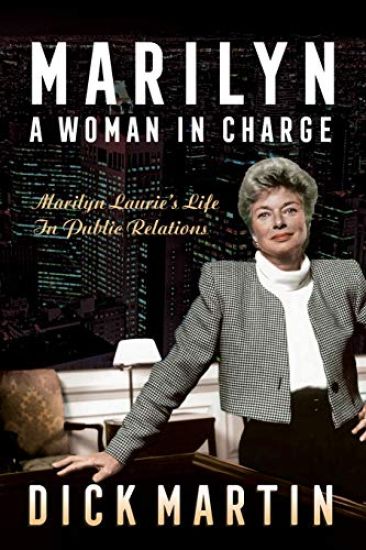
Marilyn Laurie was a self-described "little Jewish girl from the Bronx" who became one of the world's top public relations counselors and the first woman in the top policy-making councils of a Fortune 10 company.Her career mirrored the social and political upheaval of the 20th century's last three decades. After helping launch Earth Day in 1970, she was hired by AT&T to encourage employee recycling. Marilyn: A Woman In Charge tells the behind-the-scenes story of how she who worked her way from that humble assignment into the corridors of power. When she died in 2010, Marilyn had received practically every award available to public relations practitioners. But few knew the tortuous path she journeyed to the top of her field. In a career bookended by systemic sexism and gender stereotyping, she refused to stay in the lane assigned to her by gender. When others dodged and weaved to avoid conflict, she ran towards problems, even at the risk of becoming associated with them.Her life story is a lesson in public relations leadership at the highest levels. It's a story of chance and cunning, of heady highs and humbling lows, and the gift of grace and resilience.A second-generation immigrant, Marilyn was raised in the Bronx and never lost the flat accents and directness of its streets and alleyways. She attended Barnard College in the second half of the 1950's, where she learned that women need not live their lives solely through husband and children. She graduated intending to apply her full capacities to meaningful goals outside herself.She first found goals worthy of her full capacities in environmentalism. Then, almost by accident, she found such goals at AT&T. When she joined the company, it was literally "The Telephone Company," handling more than nine out of ten phone calls in the U. S. For nearly a century, its mission had been to put a telephone within an arm's reach of every household. A regulated monopoly, its very existence depended on earning and keeping the public's trust, a goal she believed depended more on what the company did than what it said. She was also there when AT&T lost its footing in the wake of technological, social, and political change, and she worked just as hard to help it regain its balance.Based on the author's first-hand experience, archival files, and interviews with friends, colleagues, and family members, Marilyn: A Woman In Charge reveals the behind-the-scenes story of a woman who broke through the proverbial glass ceiling within a great American company. It describes how she won and kept a seat at the policy-making table, how she defined the role of public relations, and how she dealt with crises arising both from the company's missteps and from the agendas of special interests.
Marilyn

Marilyn

The Lyons Press
2018
sidottu
From the beginning of her modeling career in 1944 as Norma Jeane Mortensen to her death as the voluptuous Hollywood icon in 1962, Marilyn Monroe posed for thousands of modeling and publicity photos, scores of which have long been forgotten or abandoned in neglected studio archives. This book collects 100 of the rarest of the rare, seldom previously seen images of her brief modeling career, early days on the 20th Century Fox lot, then in candids between scene takes and traveling as a public figure as the wife of Arthur Miller and Joe DiMaggio. For the Monroe fans who think that they have seen it all, this book will provide a new lens on a beloved American icon.
Marilyn

Marilyn

Anatoly Bezkorovainy

Authors' Tranquility Press
2021
pokkari
This book is concerned basically with Marilyn Grib's biography, who became the author's wife in 1964 and passed away in 2020. If anyone wants to read the author's life's story, he has written a book entitled "All Was Not Lost," by Tranquility Press, Marietta, GA. Marilyn was 82 years old when she passed away, and Anatoly, her husband was 85; and he started writing this story a year ago, on March 21, 2021. Marilyn suffered from her illness, Parkinson's Disease, because of her Belorus ancestry, who brought this disease to America. She Suffered from this illness for 8+ years, which is a long time most of its patients pass away 2 to 5 years after diagnosis. Her uncle has lived for four years. And professorial colleague. Dr. Gavrilin from Riga University died two years after diagnosis. So the Lord allowed Marilyn to live much longer, thanks be to God for His gift Marilyn's adopted mother, her uncle's sister from the same family, did not get this awful disease and died in the upper 90's without inheriting it. Incidentally, neither Marilyn nor Anatoly were aware of the fact that her family had Parkinson's' genetics.