Kirjahaku
Etsi kirjoja tekijän nimen, kirjan nimen tai ISBN:n perusteella.
1000 tulosta hakusanalla Marilyn Sachs
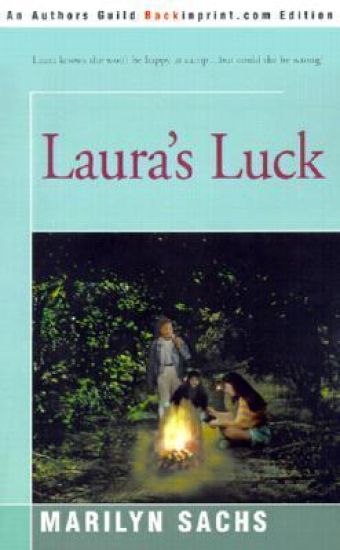


Nicole Nieman has never really thought about being Jewish. Now, with the Nazis occupying France, it is the only thing on her mind. An almost endless stream of refugees comes to stay at their house, and her parents wonder if they too ought to escape over the border to switzerland or take the chance and wait it out. Then one awful day Nicole comes home from school to find her parents and her sister gone. The Nazis who have taken them are still looking for her. Where can Nicole hide? And will she ever see her family again? "A significant addition to the growing collection of children's books dealing with World War II." --"The Boston Globe


Jeff Lyons, a high school senior, becomes obsessed with creating a new, beautiful, person out of an unhappy fat girl, but when she begins to think independently, he loses control of the situation. An ALA Best Book for Young Adults. Reissue.


Zum Identitatswandel Der Siebenburger Sachsen: Eine Kulturanthropologische Studie
Marilyn McArthur
Vandenhoeck Ruprecht
1990
sidottu

For a century now, scholars have searched for the “source” of Marcel Proust’s startlingly innovative novel À la recherche du temps perdu. Some have pointed to Henri Bergson, Sigmund Freud, or Paul Sollier. Others have referenced the novels of Henry James. But no one has focused on the more significant influence of the writings of Henry’s older brother, the psychologist and Harvard professor William James. A close comparison reveals the degree to which Proust’s novel stems from James’s psychological and philosophical theories. William James was a prominent member of the scientific, medical and philosophical communities in Proust’s Paris and was close friends with two men well known to Proust. His works were translated into French and reviewed in French journals and newspapers. This book discloses how Proust likely became familiar with William James and illustrates how James’s writings were key to Proust’s ability to craft the book he had been trying to write, extending even to his use of similar language and imagery and a narrative schema that arguably mimics James’s descriptions of consciousness, perception, and memory. Proust’s hero assiduously explores the vague, uncertain, relational aspects of experience, the trials and comforts of habit, the salvational potential of memory, the “moral” aspects of personal history teeming with impression and desire—these are the truths of human psychology and behavior theorized by William James and made fictional flesh in Proust’s rendition of lived experience.

For a century now, scholars have searched for the “source” of Marcel Proust’s startlingly innovative novel À la recherche du temps perdu. Some have pointed to Henri Bergson, Sigmund Freud, or Paul Sollier. Others have referenced the novels of Henry James. But no one has focused on the more significant influence of the writings of Henry’s older brother, the psychologist and Harvard professor William James. A close comparison reveals the degree to which Proust’s novel stems from James’s psychological and philosophical theories. William James was a prominent member of the scientific, medical and philosophical communities in Proust’s Paris and was close friends with two men well known to Proust. His works were translated into French and reviewed in French journals and newspapers. This book discloses how Proust likely became familiar with William James and illustrates how James’s writings were key to Proust’s ability to craft the book he had been trying to write, extending even to his use of similar language and imagery and a narrative schema that arguably mimics James’s descriptions of consciousness, perception, and memory. Proust’s hero assiduously explores the vague, uncertain, relational aspects of experience, the trials and comforts of habit, the salvational potential of memory, the “moral” aspects of personal history teeming with impression and desire—these are the truths of human psychology and behavior theorized by William James and made fictional flesh in Proust’s rendition of lived experience.
Researching Literacy Lives
Teresa Cremin; Marilyn Mottram; Fiona M. Collins; Sacha Powell; Rose Drury
Routledge
2014
sidottu
?A ground-breaking book. For years educationists have sought evidence of genuine partnerships between schools and homes ? reciprocal partnerships where schools are as keen to foster home practices relating to literacy and learning as they are to tell families ?this is what we do? and ask that they should do the same.? Eve Bearne, Cambridge Un
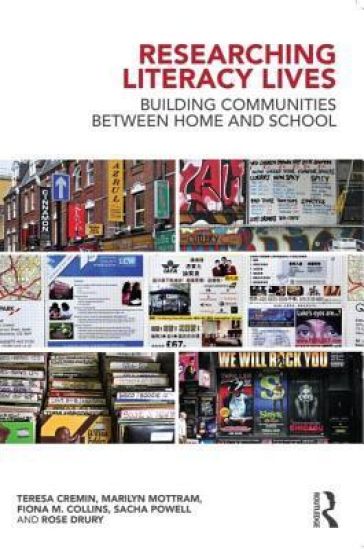
Researching Literacy Lives
Teresa Cremin; Marilyn Mottram; Fiona M. Collins; Sacha Powell; Rose Drury
Routledge
2014
nidottu
?A ground-breaking book. For years educationists have sought evidence of genuine partnerships between schools and homes ? reciprocal partnerships where schools are as keen to foster home practices relating to literacy and learning as they are to tell families ?this is what we do? and ask that they should do the same.? Eve Bearne, Cambridge Un
Building Communities of Engaged Readers
Teresa Cremin; Marilyn Mottram; Fiona M. Collins; Sacha Powell; Kimberly Safford
Routledge
2014
sidottu
Reading for pleasure urgently requires a higher profile to raise attainment and increase children’s engagement as self-motivated and socially interactive readers. Building Communities of Engaged Readers highlights the concept of ‘Reading Teachers’ who are not only knowledgeable about texts for children, but are aware of their own reading identities and prepared to share their enthusiasm and understanding of what being a reader means. Sharing the processes of reading with young readers is an innovative approach to developing new generations of readers.Examining the interplay between the ‘will and the skill’ to read, the book distinctively details a reading for pleasure pedagogy and demonstrates that reader engagement is strongly influenced by relationships between children, teachers, families and communities. Importantly it provides compelling evidence that reciprocal reading communities in school encompass:a shared concept of what it means to be a reader in the 21st centuryconsiderable teacher and child knowledge of children’s literature and other textspedagogic practices which acknowledge and develop diverse reader identitiesspontaneous ‘inside-text talk’ on the part of all membersa shift in the focus of control and new social spaces that encourage choice and children’s rights as readersWritten by experts in the literacy field and illustrated throughout with examples from the project schools, it is essential reading for all those concerned with improving young people’s enjoyment of and attainment in reading.

Building Communities of Engaged Readers
Teresa Cremin; Marilyn Mottram; Fiona M. Collins; Sacha Powell; Kimberly Safford
Routledge
2014
nidottu
Reading for pleasure urgently requires a higher profile to raise attainment and increase children’s engagement as self-motivated and socially interactive readers. Building Communities of Engaged Readers highlights the concept of ‘Reading Teachers’ who are not only knowledgeable about texts for children, but are aware of their own reading identities and prepared to share their enthusiasm and understanding of what being a reader means. Sharing the processes of reading with young readers is an innovative approach to developing new generations of readers.Examining the interplay between the ‘will and the skill’ to read, the book distinctively details a reading for pleasure pedagogy and demonstrates that reader engagement is strongly influenced by relationships between children, teachers, families and communities. Importantly it provides compelling evidence that reciprocal reading communities in school encompass:a shared concept of what it means to be a reader in the 21st centuryconsiderable teacher and child knowledge of children’s literature and other textspedagogic practices which acknowledge and develop diverse reader identitiesspontaneous ‘inside-text talk’ on the part of all membersa shift in the focus of control and new social spaces that encourage choice and children’s rights as readersWritten by experts in the literacy field and illustrated throughout with examples from the project schools, it is essential reading for all those concerned with improving young people’s enjoyment of and attainment in reading.

'Genius' The New York TimesIn 1973, Norman Mailer published Marilyn, his celebrated in-depth account of the life of Marilyn Monroe, as a glossy, fully illustrated coffee-table tome.

Marilyn Laurie was a self-described "little Jewish girl from the Bronx" who became one of the world's top public relations counselors and the first woman in the top policy-making councils of a Fortune 10 company.Her career mirrored the social and political upheaval of the 20th century's last three decades. After helping launch Earth Day in 1970, she was hired by AT&T to encourage employee recycling. Marilyn: A Woman In Charge tells the behind-the-scenes story of how she who worked her way from that humble assignment into the corridors of power. When she died in 2010, Marilyn had received practically every award available to public relations practitioners. But few knew the tortuous path she journeyed to the top of her field. In a career bookended by systemic sexism and gender stereotyping, she refused to stay in the lane assigned to her by gender. When others dodged and weaved to avoid conflict, she ran towards problems, even at the risk of becoming associated with them.Her life story is a lesson in public relations leadership at the highest levels. It's a story of chance and cunning, of heady highs and humbling lows, and the gift of grace and resilience.A second-generation immigrant, Marilyn was raised in the Bronx and never lost the flat accents and directness of its streets and alleyways. She attended Barnard College in the second half of the 1950's, where she learned that women need not live their lives solely through husband and children. She graduated intending to apply her full capacities to meaningful goals outside herself.She first found goals worthy of her full capacities in environmentalism. Then, almost by accident, she found such goals at AT&T. When she joined the company, it was literally "The Telephone Company," handling more than nine out of ten phone calls in the U. S. For nearly a century, its mission had been to put a telephone within an arm's reach of every household. A regulated monopoly, its very existence depended on earning and keeping the public's trust, a goal she believed depended more on what the company did than what it said. She was also there when AT&T lost its footing in the wake of technological, social, and political change, and she worked just as hard to help it regain its balance.Based on the author's first-hand experience, archival files, and interviews with friends, colleagues, and family members, Marilyn: A Woman In Charge reveals the behind-the-scenes story of a woman who broke through the proverbial glass ceiling within a great American company. It describes how she won and kept a seat at the policy-making table, how she defined the role of public relations, and how she dealt with crises arising both from the company's missteps and from the agendas of special interests.



Marilyn
The Lyons Press
2018
sidottu
From the beginning of her modeling career in 1944 as Norma Jeane Mortensen to her death as the voluptuous Hollywood icon in 1962, Marilyn Monroe posed for thousands of modeling and publicity photos, scores of which have long been forgotten or abandoned in neglected studio archives. This book collects 100 of the rarest of the rare, seldom previously seen images of her brief modeling career, early days on the 20th Century Fox lot, then in candids between scene takes and traveling as a public figure as the wife of Arthur Miller and Joe DiMaggio. For the Monroe fans who think that they have seen it all, this book will provide a new lens on a beloved American icon.