Kirjojen hintavertailu. Mukana 12 016 292 kirjaa ja 12 kauppaa.

Kirjahaku

Etsi kirjoja tekijän nimen, kirjan nimen tai ISBN:n perusteella.

1000 tulosta hakusanalla Mario Vargas Llosa

Mario Vargas Llosa

Mario Vargas Llosa

University of Texas Press
1978
nidottu
The Peruvian Mario Vargas Llosa has been acclaimed throughout the literary world as one of Latin America's finest writers, yet until recently little has been written about his work in English. While his work has the subject of an increasing flow of critical commentary in Spanish and his major novels have been translated into English, this is the first full-scale critical treatment of Vargas Llosa published in the English language. These articles by a number of established writers and critics appraise Vargas Llosa's individual novels as well as the body of his work. The Time of the Hero, The Green House, Conversation in The Cathedral, and Pantaleón y las visitadoras are examined in order of publication, A second group of more general essays ranges across Vargas Llosa's work and explores pervasive themes and concerns. Two pieces by José Miguel Oviedo serve as a coda. In a bilingual interview, Oviedo and Vargas Llosa discuss Vargas Llosa's novel La tía Julia y el escribidor. Oviedo concludes with a critical discussion of that novel. A Vargas Llosa chronology compiled by the editors is also included. Most of these essays originally appeared in 1977 as a special issue of Texas Studies in Literature and Language. The concluding essay by Oviedo was prepared especially for this edition.
Mario Vargas Llosa

Mario Vargas Llosa

Raymond Leslie Williams

University of Texas Press
2014
sidottu
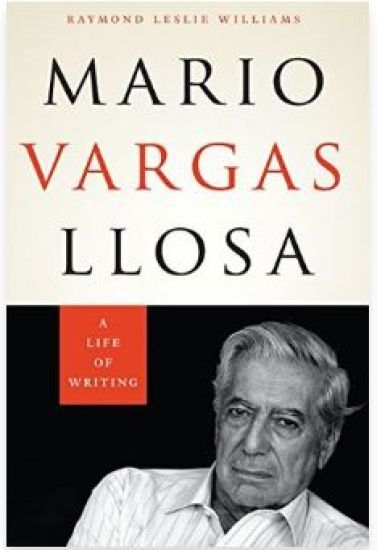
Awarded the Nobel Prize in 2010 at the age of seventy-four, Peruvian writer Mario Vargas Llosa has held pivotal roles in the evolution and revolutions of modern Latin American literature. Perhaps surprisingly, no complete history of Vargas Llosa’s works, placed in biographical and historical context, has been published-until now. A masterwork from one of America’s most revered scholars of Latin American fiction, Mario Vargas Llosa: A Life of Writing provides a critical overview of Vargas Llosa’s numerous novels while reinvigorating debates regarding conventional interpretations of the work.Weaving analysis with discussions of the writer’s political commentary, Raymond Leslie Williams traces the author’s youthful identity as a leftist student of the 1960s to a repudiation of some of his earlier ideas beginning in the 1980s. Providing a unique perspective on the complexity, nuance, and scope of Vargas Llosa’s lauded early novels and on his passionate support of indigenous populations in his homeland, Williams then turns his eye to the recent works, which serve as a bridge between the legacies of the Boom and the diverse array of contemporary Latin American fiction writers at work today. In addition, Williams provides a detailed description of Vargas Llosa’s traumatic childhood and its impact on him-seen particularly in his lifelong disdain for authority figures-as well as of the authors who influenced his approach, from Faulkner to Flaubert. Culminating in reflections drawn from Williams’s formal interviews and casual conversations with the author at key phases of both men’s careers, this is a landmark publication that will spark new lines of inquiry into an intricate body of work.
Mario Vargas Llosa

Mario Vargas Llosa

Juan E. De Castro

University of Arizona Press
2011
sidottu
An examination of the Peruvian novelist, polemical champion of the free market, and eventual winner of a Nobel Prize for literature, this biography argues that understanding Vargas Llosa's political thought is of more than biographical interest - it is a key to understanding the social and cultural shifts that have taken place not only in Peru but throughout Latin America.
Mario Vargas Llosa

Mario Vargas Llosa

Raymond Leslie Williams

University of Texas Press
2014
nidottu
Awarded the Nobel Prize in 2010 at the age of seventy-four, Peruvian writer Mario Vargas Llosa has held pivotal roles in the evolution and revolutions of modern Latin American literature. Perhaps surprisingly, no complete history of Vargas Llosa’s works, placed in biographical and historical context, has been published-until now. A masterwork from one of America’s most revered scholars of Latin American fiction, Mario Vargas Llosa: A Life of Writing provides a critical overview of Vargas Llosa’s numerous novels while reinvigorating debates regarding conventional interpretations of the work.Weaving analysis with discussions of the writer’s political commentary, Raymond Leslie Williams traces the author’s youthful identity as a leftist student of the 1960s to a repudiation of some of his earlier ideas beginning in the 1980s. Providing a unique perspective on the complexity, nuance, and scope of Vargas Llosa’s lauded early novels and on his passionate support of indigenous populations in his homeland, Williams then turns his eye to the recent works, which serve as a bridge between the legacies of the Boom and the diverse array of contemporary Latin American fiction writers at work today. In addition, Williams provides a detailed description of Vargas Llosa’s traumatic childhood and its impact on him-seen particularly in his lifelong disdain for authority figures-as well as of the authors who influenced his approach, from Faulkner to Flaubert. Culminating in reflections drawn from Williams’s formal interviews and casual conversations with the author at key phases of both men’s careers, this is a landmark publication that will spark new lines of inquiry into an intricate body of work.
Mario Vargas Llosa

Mario Vargas Llosa

Grey House Publishing Inc
2014
sidottu
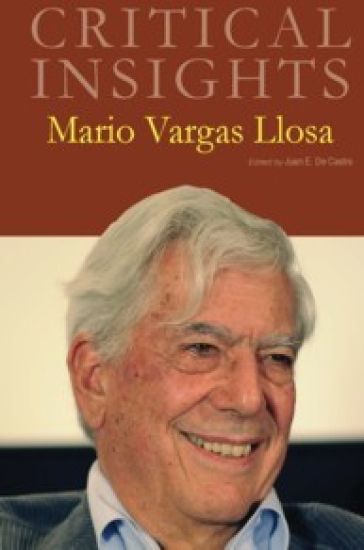
Unarguably the greatest active Spanish language novelist, Mario Vargas Llosa was rewarded with the Nobel Prize in 2010 for, in the Swedish Academy’s words, ""for his cartography of structures of power and his trenchant images of the individual's resistance, revolt, and defeat.” Beginning with Time of the Hero (1963), the searing virtuoso modernist portrayal of the Leoncio Prado military school, which he had in fact attended, to the recent El héroe discreto (The Discrete Hero) (2013), which presents an optimistic vision of his contemporary native Peru, Vargas Llosa has created an unusually vivid and complex fresco of his country’s twentieth and twenty first century’s political and social evolution. Vargas Llosa has also compellingly portrayed a peasant rebellion in 19th century Brazil in his masterwork The War of the End of the World (1983), the brutal regime of Dominican dictator Rafael Trujillo in his The Feast of the Goat (2000), Flora Tristan’s and her grandson Paul Gauguin’s search for political and artistic utopias in The Way to Paradise (2003), and the personal and political struggles of English diplomat and Irish independence activist Roger Casement in The Dream of the Celt (2010).This volume, edited by Juan E De Castro, Associate Professor at Eugene Lang College, The New School for Liberal Arts, includes essays by some of the best-known Vargas Llosa scholars. The articles not only provide an introduction to the Nobel Prize winner’s novels and essays, they also trace his artistic and political evolution, and place his works in their historical and cultural context. The contributors are respected Vargas Llosa scholars and include Mark D. Anderson, Gene Bell-Villada, Nicholas Birns, Jeffrey Browitt, Sara Castro-Klarén, Will H. Corral, Alonso Cueto, Carlos Granés, Ignacio López-Calvo, Jean O’Bryan-Knight, Miguel Rivera-Taupier, Haqing Sun, and Raymond L. Williams.Each essay is 2,500 to 5,000 words in length, and all essays conclude with a list of ""Works Cited,"" along with endnotes. Finally, the volume's appendixes offer a section of useful reference resources: A chronology of the author's life A complete list of the author's works and their original dates of publication A general bibliography A detailed paragraph on the volume's editor A detailed paragraph on the volume's editor Notes on the individual chapter authors A subject index
Mario Vargas Llosa/Josef Skvorecky, Vol. 17, No. 1
Dane Johnson, Introduction: Chased by Life, Politics, Demons: Flying to Fiction/Luis Rebaza-Soraluz, Demons and Lies: Motivation and Form in Mario Vargas Llosa/Mario Vargas Llosa, The Trumpet of Deya/Mario Vargas Llosa, A Bullfight in the Andes/Efrain Kristal, Captain Pantoja and the Special Service: A Transitional Novel/Elizabeth Dipple, Outside Looking In: Aunt Julia and Vargas Llosa/Alex Zisman, Out of Failure Comes Success: Autobiography and Testimony in A Fish in the Water/Alex Zisman, A Mario Vargas Llosa Checklist/Steve Horowitz, Introduction: The Bittersweet Vision of Josef Skvorecky and a Selected Bibliography of Works by and about Him/Sam Solecki, The Last Decade: An Interview with Josef Skvorecky/Josef Skvorecky, Three Bachelors in a Fiery Furnace, a short story/Josef Skvorecky, Authors, Critics, Reviewers, a lecture/Josef Skvorecky, Keynote Address on Eastern European Literature in Transition/Lubomir Doruzka, A Genial Gossipmonger/Mila Sakova-Pierce, The Cowards: Josef Skvorecky and His Contributions to Czech Humorist Literature/Josef Jarab, This Thing, The Bass Saxophone, Is Anything But Ordinary/Edward Galligan, The Engineer of Human Souls: Skvorecky's Comic Vision/James Grove, Place and Placelessness in Josef Skvorecky's Dvorak in Love/Helena Kosek, American Themes in Skvorecky's Work: The Bride from Texas/Maria Nemcova Banerjee, Josef Skvorecky's Variation on American Themes: The Bride from Texas/Robert L.McLaughlin, A Josef Skvorecky Checklist/Margaret Wehr, The Culture of Everyday Venality: Or a Life in the Book Industry
Mario Vargas Llosa: A Life

Mario Vargas Llosa: A Life

Gerald Martin

BLOOMSBURY PUBLISHING
2026
sidottu
The long-awaited first biography of Mario Vargas Llosa, Latin America's greatest contemporary writer, from acclaimed biographer Gerald Martin. Mario Vargas Llosa is often considered not only the greatest contemporary writer from his continent but the most influential intellectual in the entire Hispanic world. This is the first authoritative and comprehensive biography of the brilliant author of Conversation in the Cathedral, Aunt Julia and the Scriptwriter, and The Feast of the Goat, a man who ran for the presidency of Peru in 1990 and in 2010 won the Nobel Prize for Literature. The long life of Vargas Llosa is one of variety and eccentricity. He has never stopped writing and traveling, and he has certainly never been far from political controversy. Handsome, elegant, and debonair, Vargas Llosa not only is a giant of social influence and literature but has been on a political journey that has taken him across the spectrum. But behind his compelling public story, his personal life is one of deep intrigue. This captivating biography will be the first to unveil the mystery surrounding the personal, literary, and political relationships between Vargas Llosa and the public, his family, and his contemporaries-confidantes and enemies alike-including Gabriel Garc a M rquez. With privileged access to Vargas Llosa's archives and papers, Gerald Martin brings meticulous research, scrupulous attention to detail, and narrative verve to bear on a life that has towered over global literature for decades.
The Cambridge Companion to Mario Vargas Llosa
One of the major novelists in world literature over the last five decades, Mario Vargas Llosa (b. 1936) is also one of Latin America's most engaging public intellectuals, a critic of art and culture, and a playwright of distinction. This Companion's chapters chart the development of Vargas Llosa's writings from his rise to prominence in the early 1960s to the award of the Nobel Prize for Literature in 2010. The volume traces the development of his literary trajectory and the ways in which he has re-invented himself as a writer. His vast output of narrative fiction is the main focus, but the connections between his concerns as a creative writer and his rich career as a cultural and political figure are also teased out in this engaging, informative book.
The Cambridge Companion to Mario Vargas Llosa
One of the major novelists in world literature over the last five decades, Mario Vargas Llosa (b. 1936) is also one of Latin America's most engaging public intellectuals, a critic of art and culture, and a playwright of distinction. This Companion's chapters chart the development of Vargas Llosa's writings from his rise to prominence in the early 1960s to the award of the Nobel Prize for Literature in 2010. The volume traces the development of his literary trajectory and the ways in which he has re-invented himself as a writer. His vast output of narrative fiction is the main focus, but the connections between his concerns as a creative writer and his rich career as a cultural and political figure are also teased out in this engaging, informative book.
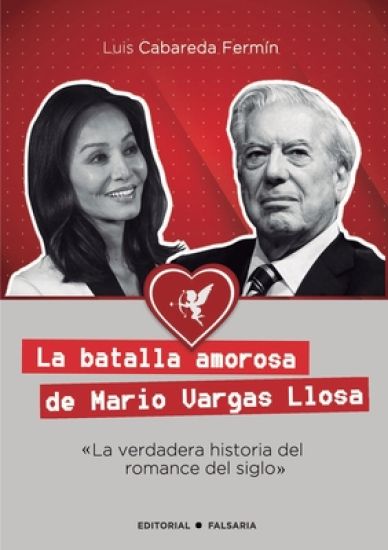
La Batalla Amorosa De Mario Vargas Llosa

La Batalla Amorosa De Mario Vargas Llosa

Luis Cabareda Fermin

Lulu.com
2015
nidottu
Treinta anos ha...!La lujuria estalla! -!Don Mario, le ruego me perdone, debo ir al bano...estoy humeda! -exclamo Isabel perturbada y sudorosa, levantandose del sofa y colocando el microfono en la pequena mesa de marmol blanco que le servia de apoyo en la entrevista que, para la revista espanola !HOLA!, le hacia a don Mario en la ciudad de Saint Louis, Misuri. Don Mario sonrio socarronamente, se retorcio lentamente mientras cruzaba sus piernas y penso: "!Caspita!...!Yo tambien Isabel!".
Talking Books with Mario Vargas Llosa

Talking Books with Mario Vargas Llosa

University of Nebraska Press
2020
sidottu
The essays included in Talking Books with Mario Vargas Llosa celebrate Mario Vargas Llosa’s visits to the City College of New York, the creation of the CÁtedra Vargas Llosa in his honor, and the interests of the Peruvian author in reading and books. This volume contains previously unpublished material by Vargas Llosa himself, as well as by novelists and literary critics associated with the CÁtedra. This collection offers readers an opportunity to learn about Vargas Llosa’s body of work through multiple perspectives: his own and those of eminent fiction writers and important literary critics. The book offers significant analysis and rich conversation that bring to life many of the Nobel Laureate’s characters and provide insights into his writing process and imagination. As the last surviving member of the original group of writers of the Latin American Boom-which included Gabriel GarcÍa MÁrquez, Carlos Fuentes, and Julio CortÁzar-Vargas Llosa endures as a literary icon because his fiction has remained fresh and innovative. His prolific works span many different themes and subgenres. A combination of literary analyses and anecdotal contributions in this volume reveal the little-known human and intellectual dimensions of Vargas Llosa the writer and Vargas Llosa the man.
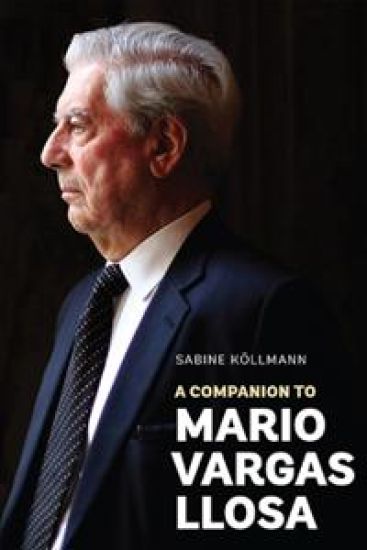
A Companion to Mario Vargas Llosa

A Companion to Mario Vargas Llosa

Sabine Köllmann

Tamesis Books
2014
sidottu
This Companion offers an overview and assessment of Mario Vargas Llosa's large body of work, tracing his development as a writer and intellectual in his essays, critical studies, journalism, and theatrical works, but above all inhis novels. This companion to the work of Peruvian Nobel Laureate Mario Vargas Llosa traces his fictional and non-fictional writing throughout the different phases of a career spanning more than fifty years. His lifelong dedication to literature goes hand in hand with his commitment as a public intellectual, a role that frequently involves him in controversy. Against the backdrop of Vargas Llosa's political and intellectual development, this study brings out the continuities and interrelations that give unity and coherence to a diverse body of work. It highlights the thematic concerns that re-emerge at different points in his writing and link Vargas Llosa's journalism and essays with his fiction: the effects of social ills on the individual, the nature of fiction, and the importance of literature for society. The novels at the centre of his work combine passionate storytelling with technical complexity and an often playful experimentation with genres. This book not only provides a comprehensive overview of Vargas Llosa's writing in the context of his intellectual biography, but looks in detail at each individual work, summarizing contents and analyzing the interplay of form, language, and meaning. A bibliography and suggestions for further reading complement this Companion, which will serve the general reader as much as the undergraduate and scholar. Sabine Köllmann is an independent academic writer living in London.