Over its long history, the concept of ideology has acquired a vast and at times incommensurable roster of meanings: positive and negative, analytic and critical, philosophical, psychological and scientific. But how precisely should we understand and study ideology today? What is its connection to key issues in social life and social research, such as capitalism and class, democracy and partisanship, nationality, sex and gender, race and ethnicity? In this book, Marius S. Ostrowski navigates a path through the complex maze of ideology’s rival interpretations, tracing the shifting fortunes of ideology analysis from its classical origins to its recent renaissance. The result is a concise interdisciplinary overview of how ideologies combine and arrange ideas and how they manifest in our psychology and behaviour. Drawing on a wide array of examples from across the world, the book outlines the historical preconditions that allowed modern ideologies to emerge and illuminates how we experience ideology’s influence in our day-to-day lives. Ideology will be an indispensable resource for students and scholars across the social sciences and anyone seeking to understand the way ideology shapes how we understand the world around us.
Over its long history, the concept of ideology has acquired a vast and at times incommensurable roster of meanings: positive and negative, analytic and critical, philosophical, psychological and scientific. But how precisely should we understand and study ideology today? What is its connection to key issues in social life and social research, such as capitalism and class, democracy and partisanship, nationality, sex and gender, race and ethnicity? In this book, Marius S. Ostrowski navigates a path through the complex maze of ideology’s rival interpretations, tracing the shifting fortunes of ideology analysis from its classical origins to its recent renaissance. The result is a concise interdisciplinary overview of how ideologies combine and arrange ideas and how they manifest in our psychology and behaviour. Drawing on a wide array of examples from across the world, the book outlines the historical preconditions that allowed modern ideologies to emerge and illuminates how we experience ideology’s influence in our day-to-day lives. Ideology will be an indispensable resource for students and scholars across the social sciences and anyone seeking to understand the way ideology shapes how we understand the world around us.
This work outlines a strategy for how the contemporary left should build progressive alliances. It takes a ‘drawing lessons from history’ approach, focusing especially on the exchanges of ideas that took place among European progressive movements and authors between WW1 and WW2. These exchanges bridged ideological and partisan divides between socialists and liberals of various stripes, and included prominent British figures—e.g., John Maynard Keynes, Clement Attlee, John A. Hobson, G.D.H. Cole, and Ramsay MacDonald— as well as their contemporaries in Austria, the Benelux, and Weimar Germany. This work seeks to connect these interwar debates to the questions raised by the current crisis in social democracy, and the somewhat contrasting backdrop this provides to the Labour party’s recent electoral and polling positions. Rather than letting the relationship between ‘radicals’ and ‘moderates’ on the left in current political discourse be defined by the ‘reformist’ or ‘revolutionary’ nature of their aims, the work makes the case for today’s social democrats to adopt a cross-party and cross-class ‘unity strategy’.
This book presents two major texts and selected shorter writings by the social-democratic thinker and politician Eduard Bernstein, translated into English in full for the first time: The German Revolution: A History of the Emergence and First Working Period of the German Republic; How A Revolution Perished; and articles from Vorwärts and other socialist periodicals. Written in the aftermath of the 1918 German Revolution and the end of WWI, they address the overthrow of autocratic rule in Germany, and provide a live chronicle and retrospective assessment of the Weimar Republic’s foundation. Bernstein gives a detailed chronology of the German Revolution and its intellectual, economic, and political context, and offers a historical analogy in his account of the 1848 French Revolution, which differs in key respects from that of Karl Marx in The Eighteenth Brumaire of Louis Napoleon. Drawing on his own experience of the events he describes, he revisits the socialist debate over ‘reform or revolution’ that he himself had provoked at the turn of the 20th century, and consciously seeks to wrest ownership of the Revolution’s legacy away from the Spartacist and communist left. In these works, Bernstein exhorts social democrats to rally behind the nascent Republic and resist the siren-calls of its militant opponents on radical left and right, and he engages with themes of party unity, political violence, democracy, and the role of ideology that have echoed through left theory and strategy ever since.
This book presents two major texts and selected shorter writings by the social-democratic thinker and politician Eduard Bernstein, translated into English in full for the first time: The German Revolution: A History of the Emergence and First Working Period of the German Republic; How A Revolution Perished; and articles from Vorwärts and other socialist periodicals. Written in the aftermath of the 1918 German Revolution and the end of WWI, they address the overthrow of autocratic rule in Germany, and provide a live chronicle and retrospective assessment of the Weimar Republic’s foundation. Bernstein gives a detailed chronology of the German Revolution and its intellectual, economic, and political context, and offers a historical analogy in his account of the 1848 French Revolution, which differs in key respects from that of Karl Marx in The Eighteenth Brumaire of Louis Napoleon. Drawing on his own experience of the events he describes, he revisits the socialist debate over ‘reform or revolution’ that he himself had provoked at the turn of the 20th century, and consciously seeks to wrest ownership of the Revolution’s legacy away from the Spartacist and communist left. In these works, Bernstein exhorts social democrats to rally behind the nascent Republic and resist the siren-calls of its militant opponents on radical left and right, and he engages with themes of party unity, political violence, democracy, and the role of ideology that have echoed through left theory and strategy ever since.
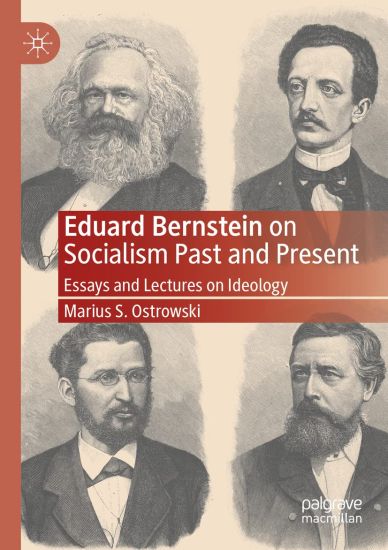
This book presents six major texts and selected shorter writings by the social-democratic thinker and politician Eduard Bernstein, translated into English for the first time: Socialism Past and Present; The Social Doctrine of Anarchism; Social Liberalism or Collectivism?; How is Scientific Socialism Possible?; What is Socialism?; The Socialisation of Enterprises; and articles from the periodicals Neue Zeit and Sozialistische Monatshefte alongside several unpublished manuscripts. Written over the period 1893 to 1931, these works focus on socialism as an ideology, and trace debates about ethics, social science, and class struggle that preoccupied the early-20th-century socialist movement. Bernstein carefully demarcates the boundaries between socialism and its ideological rivals, contrasting its communitarian aspirations with individualistic liberalism and anarchism, and itsadherence to democratic methods with the totalitarian violence of communism and fascism. He revisits the intellectual canon of socialist thought, recentring contributions by Ferdinand Lassalle, Karl Rodbertus, and other neglected figures alongside those of Karl Marx and Friedrich Engels. Urging socialists to seize the opportunities afforded by their growing political representation, Bernstein addresses the strategies needed to achieve progressive policy reforms, including the prospects for realising socialism with the foundation of the Weimar Republic. 'In this illuminating collection, Marius Ostrowski brings together several essays by Eduard Bernstein, spanning a forty-year period of activity and addressing the question of “what is socialism”. At a time of renewed reflection on the foundation and value of social democracy, engaging with the thought of one of its founding fathers will be immeasurably valuable for both supporters and critics.' —ProfessorLea Ypi, London School of Economics, UK 'During his long life, Eduard Bernstein made a contribution of great significance to both the theoretical and political development of the left, emerging as a founding figure of European social democracy. In this splendid volume, Marius Ostrowski presents Bernstein’s writing in its full richness and complexity, bringing together his lucid translations into English of some of the major theoretical works published by Bernstein during the years of the Weimar Republic. This book makes a valuable contribution to our understanding of the development of the socialist tradition during a period of great political turmoil, and gives us a three-dimensional understanding of Bernstein’s contributions to socialism and social democracy.' — Dr Martin O’Neill, University of York, UK
This book presents six major texts and selected shorter writings by the social-democratic thinker and politician Eduard Bernstein, translated into English for the first time: Socialism Past and Present; The Social Doctrine of Anarchism; Social Liberalism or Collectivism?; How is Scientific Socialism Possible?; What is Socialism?; The Socialisation of Enterprises; and articles from the periodicals Neue Zeit and Sozialistische Monatshefte alongside several unpublished manuscripts. Written over the period 1893 to 1931, these works focus on socialism as an ideology, and trace debates about ethics, social science, and class struggle that preoccupied the early-20th-century socialist movement. Bernstein carefully demarcates the boundaries between socialism and its ideological rivals, contrasting its communitarian aspirations with individualistic liberalism and anarchism, and itsadherence to democratic methods with the totalitarian violence of communism and fascism. He revisits the intellectual canon of socialist thought, recentring contributions by Ferdinand Lassalle, Karl Rodbertus, and other neglected figures alongside those of Karl Marx and Friedrich Engels. Urging socialists to seize the opportunities afforded by their growing political representation, Bernstein addresses the strategies needed to achieve progressive policy reforms, including the prospects for realising socialism with the foundation of the Weimar Republic. 'In this illuminating collection, Marius Ostrowski brings together several essays by Eduard Bernstein, spanning a forty-year period of activity and addressing the question of “what is socialism”. At a time of renewed reflection on the foundation and value of social democracy, engaging with the thought of one of its founding fathers will be immeasurably valuable for both supporters and critics.' —ProfessorLea Ypi, London School of Economics, UK 'During his long life, Eduard Bernstein made a contribution of great significance to both the theoretical and political development of the left, emerging as a founding figure of European social democracy. In this splendid volume, Marius Ostrowski presents Bernstein’s writing in its full richness and complexity, bringing together his lucid translations into English of some of the major theoretical works published by Bernstein during the years of the Weimar Republic. This book makes a valuable contribution to our understanding of the development of the socialist tradition during a period of great political turmoil, and gives us a three-dimensional understanding of Bernstein’s contributions to socialism and social democracy.' — Dr Martin O’Neill, University of York, UK
The debate over Universal Basic Income (UBI) has spanned political ideologies and policy issues. What arguments for and against UBI are important to different progressive political ideologies? This book answers this question from an interdisciplinary perspective, incorporating insights from policy analysis, political theory, and philosophy.
During the last two decades, the European Union has come under increasing existential threat. Successive historic crises have called into question the EU's ability to meet the needs of its citizens, and effectively navigate the emerging challenges of the 21st century. From sovereign debt, Mediterranean migration, and Brexit to climate change, the Covid-19 pandemic, and spiralling conflicts just beyond its borders, the EU has struggled to carve out a meaningful path forward. Worse, through action or inaction, it has often failed to live up to the lofty ideals of its foundation. In response, the EU has faced a growing tide of Europhobic dissent, driven by insurgent populism and nationalism. Left unanswered, this tide promises to overwhelm the EU and irretrievably damage the legitimacy of its institutions--or see them coopted into the chauvinist projects of a new and emboldened 'authoritarian international'. In light of this, progressive forces who value the positive role the EU can play in the world face a stark and urgent choice. They can give the EU a new fundamental vision, centred on elevating the situation of the worst-off in all corners of European society. Or they must reconcile themselves to losing it permanently as a force for freedom and equality, justice, solidarity, and pluralism across the European continent and beyond. A Radical Bargain for Europe makes an impassioned case for the first of these two choices. It argues that social policy is the site where this new vision must be developed, as the live frontier of the latest debates over the course of European integration. And it presents the concept of a basic income as a concrete step towards fulfilling the promise of a 'social Europe'--folding in one of the greatest questions of modern social policy debates in many national contexts. This book presents an outline of what a European basic income (EUBI) would look like. It argues that, in its fundamental form, an EUBI has its attractions to a wide range of progressive ideologies, from the far left, greens, and social democracy to liberalism and Christian democracy. Each of these ideologies adds its own unique colour to the shape an EUBI could take, in principle and in practice. Yet all of them must work together in a broad 'agenda coalition' to take the next step towards European social integration, embrace an EUBI, and realise the EU's radical potential.
Facharbeit (Schule) aus dem Jahr 2013 im Fachbereich Theologie - Religion als Schulfach, Sprache: Deutsch, Abstract: Auch wenn ich mir anfangs kaum vorstellen konnte, wo und wie man gute und wertvolle Informationen ber Scientology erh lt, so kann ich mich mittlerweile vor der Menge der Informationen kaum noch retten (rund 400 DIN A4-Seiten). Die Quellen zu Scientology sind - auch wenn man es schwer glauben kann - nahezu unersch pflich, sofern man Zugang zum Internet (= weltweites System vernetzter Computer, dessen Gr e das gesamte Wissen des 19. Jh. bersteigt) hat. Gibt man so z.B. nur einmal in eine der unz hligen Suchmaschinen (z.B. Excite - http: //www.excite.com) den Suchbegriff Scientology ein, so erh lt man insgesamt ber 7000 ( ) Internet-Seiten. Zum Gl ck liefert nicht jede Suchmaschine so viele Seiten, aber trotzdem f llt einem die Auswahl der richtigen Materialien teilweise sehr schwer.
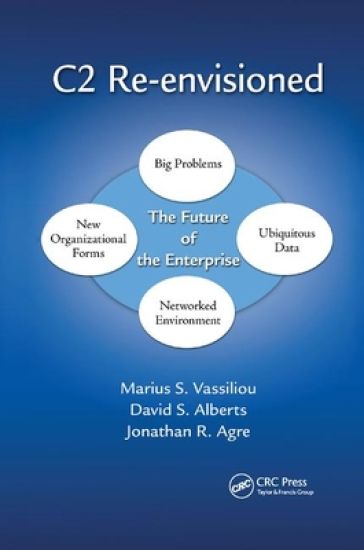
Command and Control (C2) is the set of organizational and technical attributes and processes by which an enterprise marshals and employs human, physical, and information resources to solve problems and accomplish missions.C2 Re-envisioned: The Future of the Enterprise identifies four interrelated megatrends that are individually and collectively shaping the state of the art and practice of C2 as well as the mission challenges we face. These megatrends the book examines are: Big Problems—manifested in part as increasing complexity of both endeavors and enterprises, as military establishments form coalitions with each other, and partnerships with various civilian agencies and non-governmental organizations Robustly Networked Environments—enabled by the extremely broad availability of advanced information and communications technologies (ICT) that place unprecedented powers of information creation, processing, and distribution in the hands of almost anyone who wants them—friend and foe alike Ubiquitous Data—the unprecedented volumes of raw and processed information with which human actors and C2 systems must contend Organizational alternatives—as decentralized, net-enabled approaches to C2 have been made more feasible by technology. The book analyzes historical examples and experimental evidence to determine the critical factors that make C2 go wrong and how to get it right. Successful enterprises in the future will be those that can reconfigure their approaches in an agile manner. Offering fresh perspectives on this subject of critical importance, this book provides the understanding you will need to choose your organizational approaches to suit the mission and the conditions at hand.
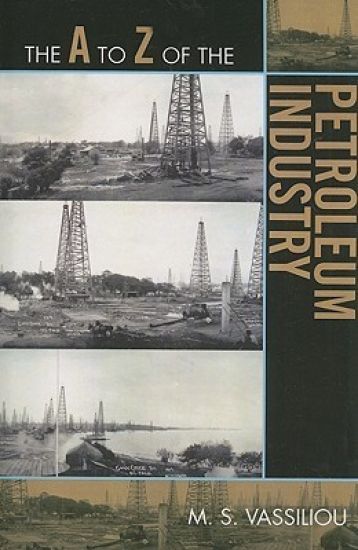
The world as we have known it for the past century would have been very different without petroleum. Petroleum, particularly in the form of crude oil and its refined products, has been central to all aspects of modern industrial society and has been a major strategic geopolitical objective for nations. The 20th century was the age of oil, and at least part of the 21st century will be as well. Petroleum is used as an energy source and as a raw material for the production of an immense variety of chemicals and synthetic materials. Almost all the world's food relies on petroleum for fertilizer, pesticides, cultivation, or transport. Petroleum has been particularly dominant as a source of transportation fuels, an application for which cost-effective substitutes will be especially difficult to find. The A to Z of the Petroleum Industry presents a concise but complete one-volume reference on the history of the petroleum industry from pre-modern times to the present day. This is done through a chronology, an introductory essay, and over 400 cross-referenced dictionary entries on companies, people, places, events, technologies, and phenomena related to the history of the world's petroleum industry. Anyone interested in the history, status, and outlook for the petroleum industry will find this book a uniquely valuable source.
Command and Control (C2) is the set of organizational and technical attributes and processes by which an enterprise marshals and employs human, physical, and information resources to solve problems and accomplish missions.C2 Re-envisioned: The Future of the Enterprise identifies four interrelated megatrends that are individually and collectively shaping the state of the art and practice of C2 as well as the mission challenges we face. These megatrends the book examines are: Big Problems—manifested in part as increasing complexity of both endeavors and enterprises, as military establishments form coalitions with each other, and partnerships with various civilian agencies and non-governmental organizations Robustly Networked Environments—enabled by the extremely broad availability of advanced information and communications technologies (ICT) that place unprecedented powers of information creation, processing, and distribution in the hands of almost anyone who wants them—friend and foe alike Ubiquitous Data—the unprecedented volumes of raw and processed information with which human actors and C2 systems must contend Organizational alternatives—as decentralized, net-enabled approaches to C2 have been made more feasible by technology. The book analyzes historical examples and experimental evidence to determine the critical factors that make C2 go wrong and how to get it right. Successful enterprises in the future will be those that can reconfigure their approaches in an agile manner. Offering fresh perspectives on this subject of critical importance, this book provides the understanding you will need to choose your organizational approaches to suit the mission and the conditions at hand.
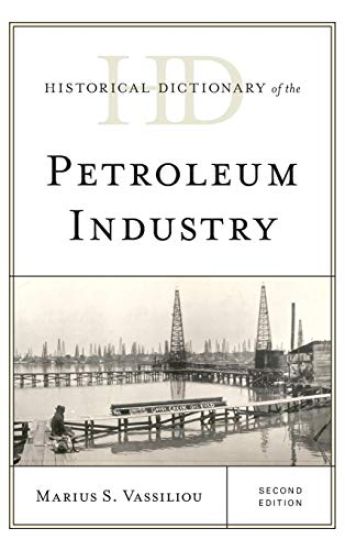
The petroleum industry is unique: it is an industry without which modern civilization would collapse. Despite the advances in alternative energy, petroleum’s role is still central. Petroleum still drives economics, geopolitics, and sometimes war. The history of petroleum is, to some measure, the history of the modern world. This book represents a concise but complete one-volume reference on the history of the petroleum industry from pre-modern times to the present day, covering all aspects of business, technology, and geopolitics. The book also presents an analysis of the future of petroleum, and a highly useful set of statistical graphs. Anyone interested in the history, status, and outlook for petroleum will find this book a uniquely valuable first place to look. This new second edition incorporates all the revolutionary changes in the petroleum landscape since the first edition was published, including the boom in extraction of oil and gas from shale formations using techniques such as fracking and horizontal drilling. This second edition of Historical Dictionary of the Petroleum Industry contains a chronology, an introduction, appendixes, and an extensive bibliography. The dictionary section has over 500 cross-referenced entries on companies, people, events, technologies, countries, provinces, cities, and regions related to the history of the world’s petroleum industry. This book is an excellent resource for students, researchers, and anyone wanting to know more about the petroleum industry.
The nineteenth century was an exciting and dynamic era of rapid progress in industry and technology. One of the most vigorous of the new industries was petroleum. It first transformed the way people lit their houses, displacing whale oil and other substitutes, and then revolutionized the entire field of energy and helped create the modern world. During the nineteenth century, oil was overwhelmingly dominated by the United States and the Russian Empire, together responsible for 97% of the world’s production; and over the course of the century, nearly all the Russian Empire’s oil came from the territory that is now the independent state of Azerbaijan. Many people don’t know that the world’s first industrial oil well was drilled in Azerbaijan in 1846, thirteen years before Drake’s celebrated well in Pennsylvania. This book covers oil in the United States and Azerbaijan, in all its dynamism, from its earliest beginnings to the turn of the twentieth century. It treats both business and technology, from the early wildcatters to Standard Oil and the Nobel Brothers (yes, that remarkable family created more than a famous prize!). The book echoes into the present day; for good or ill, oil still moves the world.
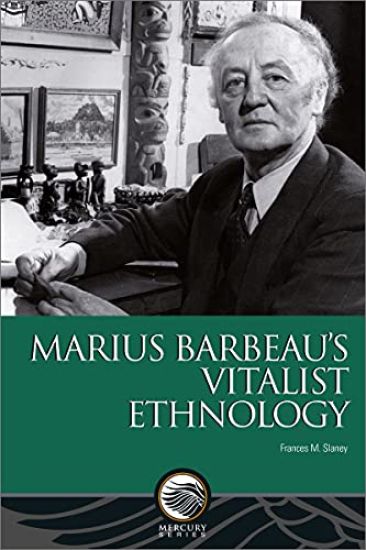
This book examines Marius Barbeau’s career at Canada’s National Museum (now the Canadian Museum of History), in light of his education at Oxford and in Paris (1907–1911)._x000D_ _x000D_ Based on archival research in England, France and Canada, Marius Barbeau’s Vitalist Ethnology presents Barbeau’s anthropological training at Oxford through his meticulous course notes, as well as archival photographs at the Pitt Rivers Museum and the Bibliothèque et Archives nationales du Québec. It also draws upon Barbeau’s professional correspondence at Library and Archives Canada, the BC Archives, and, above all, the National Museum, where he worked for over four decades._x000D_ _x000D_ The author, Frances M. Slaney, sheds light on the professional life of this founder of Canadian anthropology, exploring his difficult working relationships with Edward Sapir, his collaborations with Franz Boas, and his outstanding fieldwork in rural Quebec and with Indigenous communities on British Columbia’s Northwest Coast._x000D_ _x000D_ Barbeau penned over 1,000 books and articles, in addition to curating innovative museum exhibitions and art shows. He invited Group of Seven artists into his field sites, convinced that their works could better capture the “vitality” of Quebec’s rural culture than his own abundant photographs. _x000D_ _x000D_ For these—and many other—contributions, the Historic Sites and Monuments Board of Canada recognized him as a “person of national historic importance” in 1985.
The year is 1996 in the green town of Shorehall, New York. There roams a wild group of teenagers, notoriously nicknamed as The Pack. Two months pass when one of these teenagers, Colson Eden, goes missing without a trace, and after these two months comes a series of strange happenings. When one night bids the graduation of a Pack member, free of high school, there calls for a party. Reuniting with their old ways, they unsuspectedly reunite their encounters. And they all share common ground. Most of them don't know about the entity stalking behind the trees, feeding on their paranoia. The year was 1996 in the haunted town of Shorehall, New York, when the Wendigo reigned its legend once more.