Kirjojen hintavertailu. Mukana 11 342 296 kirjaa ja 12 kauppaa.

Kirjahaku

Etsi kirjoja tekijän nimen, kirjan nimen tai ISBN:n perusteella.

1000 tulosta hakusanalla Mark Button; Branislav Hock; David Shepherd

Economic Crime

Economic Crime

Mark Button; Branislav Hock; David Shepherd

TAYLOR FRANCIS LTD
2022
sidottu
This book is the first attempt to establish 'economic crime' as a new sub-discipline within criminology. Fraud, corruption, bribery, money laundering, price-fixing cartels and intellectual property crimes pursued typically for financial and professional gain, have devastating consequences for the prosperity of economic life. While most police forces in the UK and the USA have an ‘economic crime’ department, and many European bodies such as Europol use the term and develop strategies and structures to deal with it, it is yet to grain traction as a widely used term in the academic community. Economic Crime: From Conception to Response aims to change that and covers: definitions of the key premises of economic crime as the academic sub-discipline within criminology; an overview of the key research on each of the crimes associated with economic crime; public, private and global responses to economic crime across its different forms and sectors of the economy, both within the UK and globally. This book is an essential resource for students, academics and practitioners engaged with aspects of economic crime, as well as the related areas of financial crime, white-collar crime and crimes of the powerful.

Economic Crime

Economic Crime

Mark Button; Branislav Hock; David Shepherd

TAYLOR FRANCIS LTD
2022
nidottu
This book is the first attempt to establish 'economic crime' as a new sub-discipline within criminology. Fraud, corruption, bribery, money laundering, price-fixing cartels and intellectual property crimes pursued typically for financial and professional gain, have devastating consequences for the prosperity of economic life. While most police forces in the UK and the USA have an ‘economic crime’ department, and many European bodies such as Europol use the term and develop strategies and structures to deal with it, it is yet to grain traction as a widely used term in the academic community. Economic Crime: From Conception to Response aims to change that and covers: definitions of the key premises of economic crime as the academic sub-discipline within criminology; an overview of the key research on each of the crimes associated with economic crime; public, private and global responses to economic crime across its different forms and sectors of the economy, both within the UK and globally. This book is an essential resource for students, academics and practitioners engaged with aspects of economic crime, as well as the related areas of financial crime, white-collar crime and crimes of the powerful.

Security Officers and Policing

Security Officers and Policing

Mark Button

Ashgate Publishing Limited
2006
sidottu
This volume examines how and to what extent security officers make use of`legal tools. The work identifies these tools and draws on two case-study sites to illustrate how security officers make use of them as well as how they fit in broader security systems to secure compliance. The study also examines the occupational culture of security officers and links them into the broader systems of security that operate to police nodes of governance. The book provides insights for researchers and policy-makers seeking to develop policy for the expanding private security industry.
Private Policing

Private Policing

Mark Button

CRC Press Inc
2019
sidottu
The second edition of Private Policing details the substantial involvement of private agents and organisations involved in policing beyond the public police. It develops a taxonomy of policing and explores in depth each of the main categories, examining the degree of privateness, amongst several other issues. The main categories include the public police; hybrid policing such as state policing bodies, specialised police forces and non-governmental organisations; voluntary policing; and the private security industry. This book explores how the public police and many other state bodies have significant degrees of privateness, from outright privatisation through to the serving of private interests. The book provides a theoretical framework for private policing, building upon the growing base of scholarship in this area. Fully revised, this new edition not only brings the old edition up to date with the substantial scholarship since 2002, but also provides more international context and several new chapters on: corporate security management, security officers, and private investigation. There is also a consideration of what the book calls the ‘new private security industry’ working largely in cyber-space. Bringing together research from a wide range of projects the author has been involved with, along with the growing body of private policing scholarship, the book shows the substantial involvement of non-public police bodies in policing and highlights a wide range of issues for debate and further research. Private Policing is ideal reading for students of policing and security courses, academics with an interest in private policing and security, and practitioners from security and policing.
Private Policing

Private Policing

Mark Button

CRC Press Inc
2019
nidottu
The second edition of Private Policing details the substantial involvement of private agents and organisations involved in policing beyond the public police. It develops a taxonomy of policing and explores in depth each of the main categories, examining the degree of privateness, amongst several other issues. The main categories include the public police; hybrid policing such as state policing bodies, specialised police forces and non-governmental organisations; voluntary policing; and the private security industry. This book explores how the public police and many other state bodies have significant degrees of privateness, from outright privatisation through to the serving of private interests. The book provides a theoretical framework for private policing, building upon the growing base of scholarship in this area. Fully revised, this new edition not only brings the old edition up to date with the substantial scholarship since 2002, but also provides more international context and several new chapters on: corporate security management, security officers, and private investigation. There is also a consideration of what the book calls the ‘new private security industry’ working largely in cyber-space. Bringing together research from a wide range of projects the author has been involved with, along with the growing body of private policing scholarship, the book shows the substantial involvement of non-public police bodies in policing and highlights a wide range of issues for debate and further research. Private Policing is ideal reading for students of policing and security courses, academics with an interest in private policing and security, and practitioners from security and policing.
Security Officers and Policing

Security Officers and Policing

Mark Button

Routledge
2016
nidottu
This volume examines how and to what extent security officers make use of`legal tools. The work identifies these tools and draws on two case-study sites to illustrate how security officers make use of them as well as how they fit in broader security systems to secure compliance. The study also examines the occupational culture of security officers and links them into the broader systems of security that operate to police nodes of governance. The book provides insights for researchers and policy-makers seeking to develop policy for the expanding private security industry.
Cyber Frauds, Scams and their Victims

Cyber Frauds, Scams and their Victims

Mark Button; Cassandra Cross

Routledge
2017
sidottu
Crime is undergoing a metamorphosis. The online technological revolution has created new opportunities for a wide variety of crimes which can be perpetrated on an industrial scale, and crimes traditionally committed in an offline environment are increasingly being transitioned to an online environment.This book takes a case study-based approach to exploring the types, perpetrators and victims of cyber frauds. Topics covered include:An in-depth breakdown of the most common types of cyber fraud and scams.The victim selection techniques and perpetration strategies of fraudsters.An exploration of the impact of fraud upon victims and best practice examples of support systems for victims.Current approaches for policing, punishing and preventing cyber frauds and scams.This book argues for a greater need to understand and respond to cyber fraud and scams in a more effective and victim-centred manner. It explores the victim-blaming discourse, before moving on to examine the structures of support in place to assist victims, noting some of the interesting initiatives from around the world and the emerging strategies to counter this problem. This book is essential reading for students and researchers engaged in cyber crime, victimology and international fraud.
Cyber Frauds, Scams and their Victims

Cyber Frauds, Scams and their Victims

Mark Button; Cassandra Cross

Routledge
2017
nidottu
Crime is undergoing a metamorphosis. The online technological revolution has created new opportunities for a wide variety of crimes which can be perpetrated on an industrial scale, and crimes traditionally committed in an offline environment are increasingly being transitioned to an online environment.This book takes a case study-based approach to exploring the types, perpetrators and victims of cyber frauds. Topics covered include:An in-depth breakdown of the most common types of cyber fraud and scams.The victim selection techniques and perpetration strategies of fraudsters.An exploration of the impact of fraud upon victims and best practice examples of support systems for victims.Current approaches for policing, punishing and preventing cyber frauds and scams.This book argues for a greater need to understand and respond to cyber fraud and scams in a more effective and victim-centred manner. It explores the victim-blaming discourse, before moving on to examine the structures of support in place to assist victims, noting some of the interesting initiatives from around the world and the emerging strategies to counter this problem. This book is essential reading for students and researchers engaged in cyber crime, victimology and international fraud.
The Accredited Counter Fraud Specialist Handbook

The Accredited Counter Fraud Specialist Handbook

Martin Tunley; Andrew Whittaker; Jim Gee; Mark Button

John Wiley Sons Inc
2014
nidottu
The most complete, step-by-step guide to the ACFS qualification The Accredited Counter Fraud Specialist Handbook is the only guide designed to support all mandatory elements of the ACFS qualification, in-depth and step-by-step. Written by recognized industry leaders, this book focuses specifically on the practitioner's role in fraud investigation in England and Wales, providing complete information about each stage in the investigative process. Readers gain access to all of the information needed to successfully complete the ACFS qualification, and to develop an awareness of the key skills required to undertake efficient, legally compliant, professional investigations. The book includes a Directory of Useful Information, featuring legislation, codes of practice, model forms, and more. As incidence of fraud continues to rise, many organisations are recruiting more Counter Fraud Specialists, and mandating Continuous Professional Development for established CFSs. The Accredited Counter Fraud Specialist (ACFS) is a recognized qualification in the field, and is mandatory for investigators in many organisations throughout the public and private sectors. The Accredited Counter Fraud Specialist Handbook is a complete guide to the qualification, both for CPD and first-time qualifiers. Gain a deeper understanding of the legislation related to fraud and investigationLearn the surveillance and intelligence gathering techniques that build a solid caseReview the rules of evidence and statement taking guidelinesFollow courtroom procedures and prepare a thorough prosecution file The professional qualification of ACFS, which is endorsed by the Counter Fraud Professional Accreditation Board, requires both practical and written assessments that demonstrate successful knowledge transfer and understanding of all key concepts of the investigative process. For anyone tasked with the responsibility of countering fraud, The Accredited Counter Fraud Specialist Handbook is a comprehensive guide to the investigative process.
The Button Man

The Button Man

Mark Pryor

Seventh Street Books
2014
pokkari
Hugo Marston has just joined the State Department as head of security at the US Embassy in London. His task is to protect a pair of spoiled movie stars, Dayton Harper and his wife Ginny Ferro, whose reckless driving killed a prominent landowner in rural England. The job turns from routine to disastrous almost immediately. Before Hugo has a chance to meet them, he finds out that Ferro has disappeared, and soon her body is found hanging from an oak tree in a London cemetery. Hours later a distraught Harper slips away from his protector, and Hugo has no idea where he's going. Teaming up with a secretive young lady named Merlyn, Hugo's search leads to a quaint English village. There, instead of finding Harper, another body turns up in the church graveyard. But now the killer knows he's being tailed. At one of England's most famous tourist spots, the self-appointed executioner prepares for the final act of his murderous spree. And Hugo arrives just in time to play his part...
Belly Button Fairy

Belly Button Fairy

Bobbie Hinman; Mark Wayne Adams

Best Fairy Books
2009
sidottu
This title includes a book & a CD. It is suitable for children of ages 3 to 5 years. Showing that everyone is perfect in their own way, this delightful tale introduces the Belly Button Fairy - a grandmotherly fairy responsible for making sure that every child has a belly button and that it's 'always in the middle'. Lively and enchanting, this story demonstrates that all children are equally beautiful, even though some have 'innies' and others have 'outies'. With captivating watercolour illustrations and rhyming verse, this magical fantasy sheds light on a less practical and more magical explanation for one of life's little mysteries. An audio CD of the story and an original fairy song is also included.
Political Vices

Political Vices

Mark E. Button

Oxford University Press Inc
2016
sidottu
Historically speaking, our vices, like our virtues, have come in two basic forms: intellectual and moral. One of the main purposes of this book is to analyze a set of specifically political vices that have not been given sufficient attention within political theory but that nonetheless pose enduring challenges to the sustainability of free and equitable political relationships of various kinds. Political vices like hubris, willful blindness, and recalcitrance are persistent dispositions of character and conduct that imperil both the functioning of democratic institutions and the trust that a diverse citizenry has in the ability of those institutions to secure a just political order of equal moral standing, reciprocal freedom, and human dignity. Political vices embody a repudiation of the reciprocal conditions of politics and, as a consequence of this, they represent a standing challenge to the principles and values of the mixed political regime we call liberal-democracy. Mark Button shows how political vices not only carry out discrete forms of injustice but also facilitate the habituation in and indifference toward systemic forms of social and political injustice. They do so through excesses and deficiencies in human sensory and communicative capacities relating to voice (hubris), vision (moral blindness), and listening (recalcitrance). Drawing on a wide range of intellectual resources, including ancient Greek tragedy, social psychology, moral epistemology, and democratic theory, Political Vices gives new consideration to a list of "deadly vices" that contemporary political societies can neither ignore as a matter of personal "sin" nor publicly disregard as a matter of mere bad choice, and it provides a democratic account that outlines how citizens can best contend with our most troubling political vices without undermining core commitments to liberalism or pluralism.
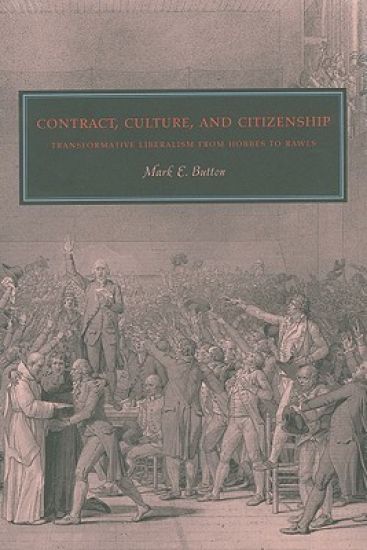
Contract, Culture, and Citizenship

Contract, Culture, and Citizenship

Mark E. Button

Pennsylvania State University Press
2008
sidottu
The idea of the social contract has typically been seen in political theory as legitimating the exercise of governmental power and creating the moral basis for political order. Mark Button wants to draw our attention to an equally crucial, but seldom emphasized, role for the social contract: its educative function in cultivating the habits and virtues that citizens need to fulfill the promises that the social contract represents. In this book, he retells the story of social contract theory as developed by some of its major proponents—Hobbes, Locke, Rousseau, and Rawls—highlighting this constructive feature of the theory in order to show that not only do citizens make the social contract, but the social contract also makes citizens. Button’s interest in recovering this theme from past political theory is not merely historical, however. He means to resurrect our concern for it so that we can better understand the political-institutional and cultural-ethical conditions necessary for balancing individual freedom and common citizenship in our modern world of moral pluralism. Drawing on the history of public reason, Button shows how political justification continues to depend upon an ethics of character formation and why this matters for citizens today.
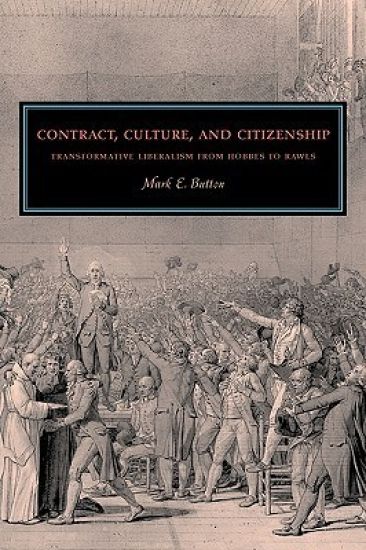
Contract, Culture, and Citizenship

Contract, Culture, and Citizenship

Mark E. Button

Pennsylvania State University Press
2010
pokkari
In a beautifully written, persuasively argued book, Button offers a new account of the modern liberal tradition of political thought. --D. Casson, Choice. ""Button argues that 'contract makes citizens,' rather than vice versa. He provides no less than a reexamination of the major texts in social contract theory--including those of Hobbes, Locke, and Rousseau--emphasizing the importance within this tradition of a 'transformative' and deeply educative project. An excellent book: fresh, original, clearly written and cogently argued, and based on an impressively wide array of sources. This book deserves a wide readership."" --Stephen Macedo, Princeton University.The idea of the social contract has typically been seen in political theory as legitimating the exercise of governmental power and creating the moral basis for political order. Mark Button wants to draw our attention to an equally crucial, but seldom emphasized, role for the social contract: its educative function in cultivating the habits and virtues that citizens need to fulfill the promises that the social contract represents. .In this book, he retells the story of social contract theory as developed by some of its major proponents--Hobbes, Locke, Rousseau, and Rawls--highlighting this constructive feature of the theory in order to show that not only do citizens make the social contract, but the social contract also makes citizens. .Button's interest in recovering this theme from past political theory is not merely historical, however. He means to resurrect our concern for it so that we can better understand the political-institutional and cultural-ethical conditions necessary for balancing individual freedom and common citizenship in our modern world of moral pluralism. Drawing on the history of public reason, Button shows how political justification continues to depend upon an ethics of character formation and why this matters for citizens today.
Deconstructing Ethnography

Deconstructing Ethnography

Graham Button; Andy Crabtree; Mark Rouncefield; Peter Tolmie

Springer International Publishing AG
2015
sidottu
This book aims to deconstruct ethnography to alert systems designers, and other stakeholders, to the issues presented by new approaches that move beyond the studies of ‘work’ and ‘work practice’ within the social sciences (in particular anthropology and sociology). The theoretical and methodological apparatus of the social sciences distort the social and cultural world as lived in and understood by ordinary members, whose common-sense understandings shape the actual milieu into which systems are placed and used.In Deconstructing Ethnography the authors show how ‘new’ calls are returning systems design to ‘old’ and problematic ways of understanding the social. They argue that systems design can be appropriately grounded in the social through the ordinary methods that members use to order their actions and interactions.This work is written for post-graduate students and researchers alike, as well as design practitioners who have an interest in bringing the social to bear on design in a systematic rather than a piecemeal way. This is not a ‘how to’ book, but instead elaborates the foundations upon which the social can be systematically built into the design of ubiquitous and interactive systems.
Deconstructing Ethnography

Deconstructing Ethnography

Graham Button; Andy Crabtree; Mark Rouncefield; Peter Tolmie

Springer International Publishing AG
2016
nidottu
This book aims to deconstruct ethnography to alert systems designers, and other stakeholders, to the issues presented by new approaches that move beyond the studies of ‘work’ and ‘work practice’ within the social sciences (in particular anthropology and sociology). The theoretical and methodological apparatus of the social sciences distort the social and cultural world as lived in and understood by ordinary members, whose common-sense understandings shape the actual milieu into which systems are placed and used.In Deconstructing Ethnography the authors show how ‘new’ calls are returning systems design to ‘old’ and problematic ways of understanding the social. They argue that systems design can be appropriately grounded in the social through the ordinary methods that members use to order their actions and interactions.This work is written for post-graduate students and researchers alike, as well as design practitioners who have an interest in bringing the social to bear on design in a systematic rather than a piecemeal way. This is not a ‘how to’ book, but instead elaborates the foundations upon which the social can be systematically built into the design of ubiquitous and interactive systems.