Kirjojen hintavertailu. Mukana 11 242 695 kirjaa ja 12 kauppaa.

Kirjahaku

Etsi kirjoja tekijän nimen, kirjan nimen tai ISBN:n perusteella.

1000 tulosta hakusanalla Mark C. Weber

Disability Harassment

Disability Harassment

Mark C. Weber

New York University Press
2007
sidottu
Building on the insights of both disability studies and civil rights scholars, Mark C. Weber frames his examination of disability harassment on the premise that disabled people are members of a minority group that must negotiate an artificial yet often damaging environment of physical and attitudinal barriers. The book considers courts' approaches to the problem of disability harassment, particularly the application of an analogy to race and sex harassment and the development of legal remedies and policy reforms under the Americans with Disabilities Act (ADA). While litigation under the ADA has addressed discrimination in public accommodations, employment, and education, Weber points out that the law has done little to combat disability harassment. He recommends that arguments based on unused provisions of the ADA should be developed and new legal remedies advanced to address the problem. Disability Harassment also draws on case law to explore special problems of harassment in the public schools, and closes with an appeal to judges and lawmakers for expanded legal protection against harassment.
The Polysynthesis Parameter

The Polysynthesis Parameter

Mark C. Baker

Oxford University Press Inc
1996
sidottu
Baker argues that polysynthetic languages - in which verbs are built up of many parts and where one verb can act as a whole sentence - are more than an accidental collection of morphological processes; rather they adopt a systematic way of representing predicate-argument relationships, parallel to but distinct from the system used for English.
The Polysynthesis Parameter

The Polysynthesis Parameter

Mark C. Baker

Oxford University Press Inc
1996
nidottu
Baker argues that polysynthetic languages - in which verbs are built up of many parts and where one verb can act as a whole sentence - are more than an accidental collection of morphological processes; rather they adopt a systematic way of representing predicate-argument relationships, parallel to but distinct from the system used for English. This idea has repercussions for many areas of syntax and morphology, resulting in a comprehensive picture of the grammar of polysynthetic languages.
Wind Talk for Woodwinds

Wind Talk for Woodwinds

Mark C Ely; Amy E. Van Deuren

Oxford University Press Inc
2009
sidottu
Wind Talk for Woodwinds provides instrumental music teachers, practitioners, and students with a handy, easy-to-use pedagogical resource for woodwind instruments found in school instrumental programs. With thorough coverage of the most common woodwind instruments - flute, oboe, clarinet, saxophone, and bassoon - the book offers the most topical and information necessary for effective teaching. This includes terminology, topics, and concepts associated with each specific instrument, along with teaching suggestions that can be applied in the classroom. Be sure to look to the back of the book for a "Practical Tips" section, which discusses common technical faults and corrections, common problems with sound (as well as their causes and solutions to them), fingering charts, literature lists (study materials, method books, and solos), as well as a list of additional resources relevant to teaching woodwind instruments (articles, websites, audio recordings). Without question, Wind Talk for Woodwinds stands alone as an invaluable resource for woodwinds!
Wind Talk for Woodwinds

Wind Talk for Woodwinds

Mark C Ely; Amy E. Van Deuren

Oxford University Press Inc
2009
nidottu
Wind Talk for Woodwinds provides instrumental music teachers, practitioners, and students with a handy, easy-to-use pedagogical resource for woodwind instruments found in school instrumental programs. With thorough coverage of the most common woodwind instruments - flute, oboe, clarinet, saxophone, and bassoon - the book offers the most topical and information necessary for effective teaching. This includes terminology, topics, and concepts associated with each specific instrument, along with teaching suggestions that can be applied in the classroom. Be sure to look to the back of the book for a "Practical Tips" section, which discusses common technical faults and corrections, common problems with sound (as well as their causes and solutions to them), fingering charts, literature lists (study materials, method books, and solos), as well as a list of additional resources relevant to teaching woodwind instruments (articles, websites, audio recordings). Without question, Wind Talk for Woodwinds stands alone as an invaluable resource for woodwinds!
Exploring Judicial Politics

Exploring Judicial Politics

Mark C. Miller

Oxford University Press Inc
2008
nidottu
This volume presents 20 original essays by political scientists and other judicial scholars on a variety of topics relative to the broad area of judicial politics. One theme of these essays is to explore the ways in which law and politics intertwine in the United States. Secondly, the essays provide insights into how scholars go about studying various judicial politics subjects such as the role of judges, lawyers, and juries in our political system. The essays explore issues at the trial court level, at the intermediate appellate court level, and at the U.S. Supreme Court. The essays look at the role of judges, juries, lawyers, interest groups, and other actors in the American legal system. Some of the essays look at the issues of judicial selection, while others look at how what we learn about the courts in the U.S. can help us better understand courts in other countries. Taken together, the essays reveal the broad range of issues that students of judicial politics will want to understand in order to appreciate the role of courts in our society.
America's New Vaccine Wars

America's New Vaccine Wars

Mark C. Navin; Katie Attwell

OXFORD UNIVERSITY PRESS INC
2023
sidottu
Bioethicist Mark Navin and policy scholar Katie Attwell explore the evolution of American childhood vaccination policy through the prism of political history, contemporary parenthood, and diverse governance strategies. America's New Vaccine Wars focuses on the origins and the outcomes of America's recent efforts to eliminate nonmedical exemptions to school and daycare vaccine mandates. These policy developments have increased immunization rates, but they have also ignited polarizing, nationwide debates about parents' rights, democracy, and the authority of the government to use coercion to promote health. This book explores the meaning of these battles for parents, doctors, the politics of public health, and the future of bioethics. Navin and Attwell ground the book with a case study of California's efforts to exclude unvaccinated children from school and daycare following the Disneyland Measles Outbreak of 2014. The authors use original interviews with key policymakers and activists to explain the development and execution of California's new vaccination policies, and they connect California's immunization policy developments to similar efforts across America and in other countries. America's New Vaccine Wars is a story about how political and community actors fought to exclude unvaccinated children from school in the face of significant opposition and failing public health institutions. The book unpacks the meaning and impact of these efforts for broader debates about America's immunization governance, including conflicts about coercive public health measures during the COVID-19 pandemic.
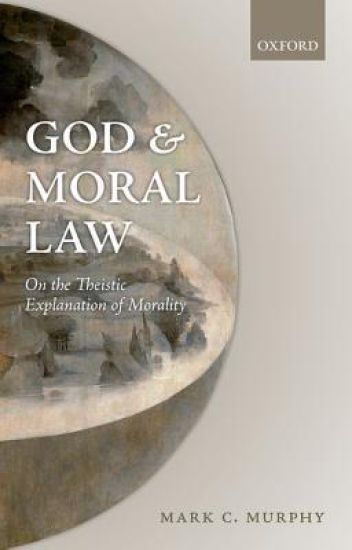
God and Moral Law

God and Moral Law

Mark C. Murphy

Oxford University Press
2016
nidottu
Does God's existence make a difference to how we explain morality? Mark C. Murphy critiques the two dominant theistic accounts of morality--natural law theory and divine command theory--and presents a novel third view. He argues that we can value natural facts about humans and their good, while keeping God at the centre of our moral explanations. The characteristic methodology of theistic ethics is to proceed by asking whether there are features of moral norms that can be adequately explained only if we hold that such norms have some sort of theistic foundation. But this methodology, fruitful as it has been, is one-sided. God and Moral Law proceeds not from the side of the moral norms, so to speak, but from the God side of things: what sort of explanatory relationship should we expect between God and moral norms given the existence of the God of orthodox theism? Mark C. Murphy asks whether the conception of God in orthodox theism as an absolutely perfect being militates in favor of a particular view of the explanation of morality by appeal to theistic facts. He puts this methodology to work and shows that, surprisingly, natural law theory and divine command theory fail to offer the sort of explanation of morality that we would expect given the existence of the God of orthodox theism. Drawing on the discussion of a structurally similar problem--that of the relationship between God and the laws of nature--Murphy articulates his new account of the relationship between God and morality, one in which facts about God and facts about nature cooperate in the explanation of moral law.
God's Own Ethics

God's Own Ethics

Mark C. Murphy

Oxford University Press
2017
sidottu
Every version of the argument from evil requires a premise concerning God's motivation - about the actions that God is motivated to perform or the states of affairs that God is motivated to bring about. The typical source of this premise is a conviction that God is, obviously, morally perfect, where God's moral perfection consists in God's being motivated to act in accordance with the norms of morality by which both we and God are governed. The aim of God's Own Ethics is to challenge this understanding by giving arguments against this view of God as morally perfect and by offering an alternative account of what God's own ethics is like. According to this alternative account, God is in no way required to promote the well-being of sentient creatures, though God may rationally do so. Any norms of conduct that favor the promotion of creaturely well-being that govern God's conduct are norms that are contingently self-imposed by God. This revised understanding of divine ethics should lead us to revise sharply downward our assessment of the force of the argument from evil while leaving intact our conception of God as an absolutely perfect being, supremely worthy of worship.
How to Succeed in Organic Chemistry

How to Succeed in Organic Chemistry

Mark C. Elliott

Oxford University Press
2020
nidottu
'How to succeed in organic chemistry' gives the reader a solid understanding of the principles of organic reaction mechanisms, such that they can draw structures, stereoisomers and reaction mechanisms with confidence. Throughout, the author speaks the language of students to build their confidence and interest. At heart, the book promotes active learning to ensure the necessary skills become so ingrained that they become something students simply cannot forget, and do not need to revise. As such, the book structures learning so that the reader encounters the right things at the right time, helping to 'internalise' key concepts. Concepts, explanations and examples are presented in short, easy-to-read chapters, each of which explores one of a number of themes, including 'Basics', 'Habits', 'Common error', 'Reaction detail', and 'Practice'. Digital formats and resources How to Succeed in Organic Chemistry is supported by online resources and is available for students and institutions to purchase in a variety of formats. - The e-book includes more than 60 author videos which are embedded in the text, and these discuss and offer solutions to problems posed in the text, providing a fully immersive experience and extra learning support. www.oxfordtextbooks.co.uk/ebooks - These videos are also available as a stand-alone online resource for use alongside the print book, where lecturers can also access the figures from the book for use in their teaching.
Divine Holiness and Divine Action

Divine Holiness and Divine Action

Mark C. Murphy

Oxford University Press
2021
sidottu
Holiness is the attribute most emphatically ascribed to God in Scripture, but there has been little attention devoted to characterizing and considering the entailments of divine holiness. In Divine Holiness and Divine Action, Mark C. Murphy defends an account of holiness indebted to Rudolf Otto's description of the experience of the holy as that of a mysterium tremendum et fascinans. God's being holy consists in God's being someone with whom intimate union is both extremely desirable for us and yet something for which we--and indeed any limited beings--are unfit. This notion of divine holiness is useful for addressing disputed theological questions regarding divine action. In contrast to standard accounts of divine action that begin with assumptions regarding God's moral perfection or God's maximal love, the appeal to divine holiness supports a rival framework for explaining and predicting divine action--the holiness framework--according to which God is motivated to act in ways that are a response to God's own value by keeping distance from that which is deficient, defective, or in any way limited in goodness. This study exhibits the fruitfulness of a reorientation from the morality and love frameworks to the holiness framework by showing how such a reorientation suggests distinct approaches to perennial problems of divine action regarding creation, incarnation, atonement, and salvation. From the treatment of these perennial problems, a general theme regarding divine action emerges: that God's interaction with the world exhibits a radical sort of humility.
God and Moral Law

God and Moral Law

Mark C. Murphy

Oxford University Press
2011
sidottu
Does God's existence make a difference to how we explain morality? Mark C. Murphy critiques the two dominant theistic accounts of morality--natural law theory and divine command theory--and presents a novel third view. He argues that we can value natural facts about humans and their good, while keeping God at the centre of our moral explanations. The characteristic methodology of theistic ethics is to proceed by asking whether there are features of moral norms that can be adequately explained only if we hold that such norms have some sort of theistic foundation. But this methodology, fruitful as it has been, is one-sided. God and Moral Law proceeds not from the side of the moral norms, so to speak, but from the God side of things: what sort of explanatory relationship should we expect between God and moral norms given the existence of the God of orthodox theism? Mark C. Murphy asks whether the conception of God in orthodox theism as an absolutely perfect being militates in favour of a particular view of the explanation of morality by appeal to theistic facts. He puts this methodology to work and shows that, surprisingly, natural law theory and divine command theory fail to offer the sort of explanation of morality that we would expect given the existence of the God of orthodox theism. Drawing on the discussion of a structurally similar problem--that of the relationship between God and the laws of nature--Murphy articulates his new account of the relationship between God and morality, one in which facts about God and facts about nature cooperate in the explanation of moral law.
Abiding Grace

Abiding Grace

Mark C. Taylor

University of Chicago Press
2018
sidottu
Post-war, post-industrialism, post-religion, post-truth, post-biological, post-human, post-modern. What succeeds the post- age? Mark C. Taylor returns here to some of his central philosophical preoccupations and asks: What comes after the end? Abiding Grace navigates the competing Hegelian and Kierkegaardian trajectories born out of the Reformation and finds Taylor arguing from spaces in between, showing how both narratives have shaped recent philosophy and culture. For Hegel, Luther’s internalization of faith anticipated the modern principle of autonomy, which reached its fullest expression in speculative philosophy. The closure of the Hegelian system still endures in the twenty-first century in consumer society, financial capitalism, and virtual culture. For Kierkegaard, by contrast, Luther’s God remains radically transcendent, while finite human beings and their world remain fully dependent. From this insight, Heidegger and Derrida developed an alternative view of time in which a radically open future breaks into the present to transform the past, demonstrating that, far from autonomous, life is a gift from an Other that can never be known. Offering an alternative genealogy of deconstruction that traces its pedigree back to readings of Paul by way of Luther, Abiding Grace presents a thoroughgoing critique of modernity and postmodernity’s will to power and mastery. In this new philosophical and theological vision, history is not over and the future remains endlessly open.
Abiding Grace

Abiding Grace

Mark C. Taylor

University of Chicago Press
2018
pokkari
Post-war, post-industrialism, post-religion, post-truth, post-biological, post-human, post-modern. What succeeds the post- age? Mark C. Taylor returns here to some of his central philosophical preoccupations and asks: What comes after the end? Abiding Grace navigates the competing Hegelian and Kierkegaardian trajectories born out of the Reformation and finds Taylor arguing from spaces in between, showing how both narratives have shaped recent philosophy and culture. For Hegel, Luther’s internalization of faith anticipated the modern principle of autonomy, which reached its fullest expression in speculative philosophy. The closure of the Hegelian system still endures in the twenty-first century in consumer society, financial capitalism, and virtual culture. For Kierkegaard, by contrast, Luther’s God remains radically transcendent, while finite human beings and their world remain fully dependent. From this insight, Heidegger and Derrida developed an alternative view of time in which a radically open future breaks into the present to transform the past, demonstrating that, far from autonomous, life is a gift from an Other that can never be known. Offering an alternative genealogy of deconstruction that traces its pedigree back to readings of Paul by way of Luther, Abiding Grace presents a thoroughgoing critique of modernity and postmodernity’s will to power and mastery. In this new philosophical and theological vision, history is not over and the future remains endlessly open.
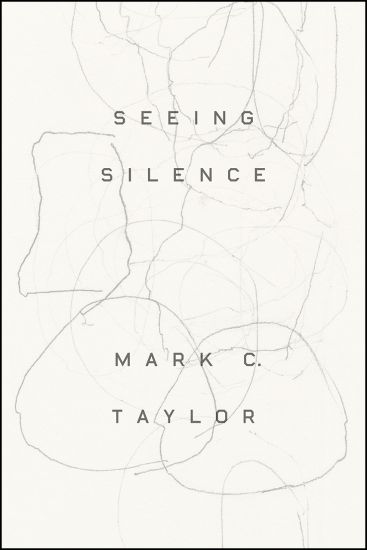
Seeing Silence

Seeing Silence

Mark C Taylor

University of Chicago Press
2020
sidottu
Mark C. Taylor's latest book is a philosophy of silence for our nervous, chattering age. How do we find silence--and more importantly, how do we understand it--amid the incessant buzz of the networks that enmesh us? Have we forgotten how to listen to each other, to recognize the virtues of modesty and reticence, and to appreciate the resonance of silence? Are we less prepared than ever for the ultimate silence that awaits us all? Taylor wants us to pause long enough to hear what is not said and to attend to what remains unsayable. In his account, our way to hearing silence is, paradoxically, to see it. Taylor explores the many variations of silence by considering the work of leading modern and postmodern visual artists, including Barnett Newman, Ad Reinhardt, James Turrell, and Anish Kapoor. Developing the insights of philosophers, theologians, writers, and composers, he weaves a rich narrative modeled on the Stations of the Cross. His chapter titles suggest our positions toward silence: Without. Before. From. Beyond. Against. Within. Around. Between. Toward. With. In. Recasting Hegel's phenomenology of spirit and Kierkegaard's stages on life's way, Taylor translates the traditional Via Dolorosa into a Nietzschean Via Jubilosa that affirms light in the midst of darkness. Seeing Silence is a thoughtful meditation that invites readers to linger long enough to see silence, and, in this way, perhaps to hear once again the wordless Word that once was named "God."
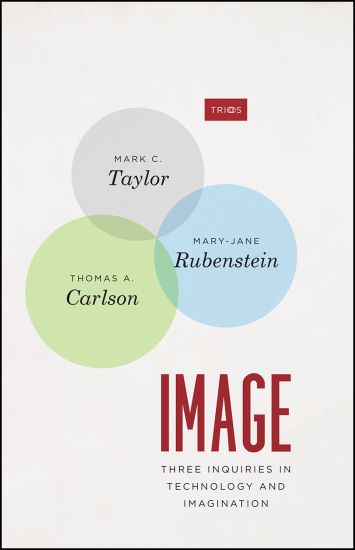
Image

Image

Mark C. Taylor; Mary-Jane Rubenstein; Thomas A. Carlson

University of Chicago Press
2021
sidottu
The three essays in Image, written by leading philosophers of religion, explore the modern power of the visual at the intersection of the human and the technological. Modern life is steeped in images, image-making, and attempts to control the world through vision. Mastery of images has been advanced by technologies that expand and reshape vision and enable us to create, store, transmit, and display images. The three essays in Image, written by leading philosophers of religion Mark C. Taylor, Mary-Jane Rubenstein, and Thomas A. Carlson, explore the power of the visual at the intersection of the human and the technological. Building on Heidegger’s notion that modern humanity aims to master the world by picturing or representing the real, they investigate the contemporary culture of the image in its philosophical, religious, economic, political, imperial, and military dimensions, challenging the abstraction, anonymity, and dangerous disconnection of contemporary images. Taylor traces a history of capitalism, focusing on its lack of humility, particularly in the face of mortality, and he considers art as a possible way to reconnect us to the earth. Through a genealogy of iconic views from space, Rubenstein exposes the delusions of conquest associated with extraterrestrial travel. Starting with the pressing issues of surveillance capitalism and facial recognition technology, Carlson extends Heidegger’s analysis through a meditation on the telematic elimination of the individual brought about by totalizing technologies. Together, these essays call for a consideration of how we can act responsibly toward the past in a way that preserves the earth for future generations. Attending to the fragility of material things and to our own mortality, they propose new practices of imagination grounded in love and humility.
Image

Image

Mark C. Taylor; Mary-Jane Rubenstein; Thomas A. Carlson

University of Chicago Press
2021
nidottu
The three essays in Image, written by leading philosophers of religion, explore the modern power of the visual at the intersection of the human and the technological. Modern life is steeped in images, image-making, and attempts to control the world through vision. Mastery of images has been advanced by technologies that expand and reshape vision and enable us to create, store, transmit, and display images. The three essays in Image, written by leading philosophers of religion Mark C. Taylor, Mary-Jane Rubenstein, and Thomas A. Carlson, explore the power of the visual at the intersection of the human and the technological. Building on Heidegger’s notion that modern humanity aims to master the world by picturing or representing the real, they investigate the contemporary culture of the image in its philosophical, religious, economic, political, imperial, and military dimensions, challenging the abstraction, anonymity, and dangerous disconnection of contemporary images. Taylor traces a history of capitalism, focusing on its lack of humility, particularly in the face of mortality, and he considers art as a possible way to reconnect us to the earth. Through a genealogy of iconic views from space, Rubenstein exposes the delusions of conquest associated with extraterrestrial travel. Starting with the pressing issues of surveillance capitalism and facial recognition technology, Carlson extends Heidegger’s analysis through a meditation on the telematic elimination of the individual brought about by totalizing technologies. Together, these essays call for a consideration of how we can act responsibly toward the past in a way that preserves the earth for future generations. Attending to the fragility of material things and to our own mortality, they propose new practices of imagination grounded in love and humility.
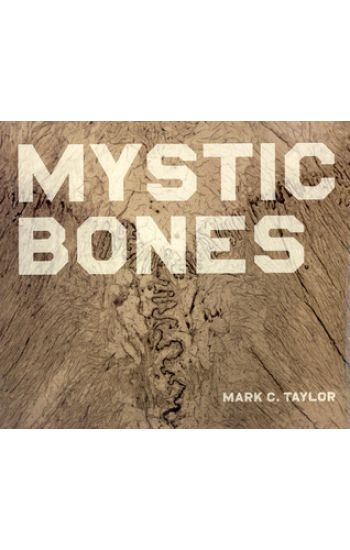
Mystic Bones

Mystic Bones

Mark C. Taylor

University of Chicago Press
2007
sidottu
The desert has long been a theme in Mark C. Taylor’s work, from his inquiries into the religious significance of Las Vegas to his writings on earthworks artist Michael Heizer. At once haunted by absence and loss, the desert, for Taylor, is a place of exile and wandering, of temptation and tribulation. Bones, in turn, speak to his abiding interest in remnants, ruins, ritual, and immanence. Taylor combines his fascination in the detritus of the desert and its philosophical significance with his work in photography in Mystic Bones. A collection of remarkably elegant close-up images of weathered bones—remains of cattle, elk, and deer skeletons gathered from the desert of the American West—Mystic Bones pairs each photograph with a philosophical aphorism. These images are buttressed by a major essay, “Rubbings of Reality,” in which Taylor explores the use of bones in the religious rituals of native inhabitants of the Western desert and, more broadly, the appearance of bones in myth and religious reality. Meditating on the way in which bones paradoxically embody both the personal and the impersonal—at one time they are our very substance, but eventually they become our last remnants, anonymous, memorializing oblivion—Taylor here suggests ways in which natural processes can be thought of as art, and bones as art objects. Bones, Taylor writes, “draw us elsewhere.” To follow their traces beyond the edge of the human is to wander into ageless times and open spaces where everything familiar becomes strange. By revealing beauty hidden in the most unexpected places, these haunting images refigure death in a way that allows life to be seen anew. A bold new work from a respected philosopher of religion, Mystic Bones is Taylor’s his most personal statement of after-God theology.
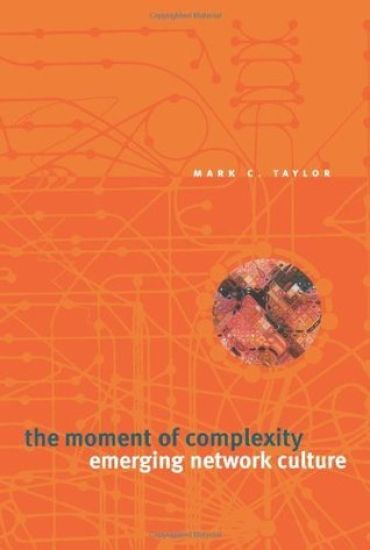
The Moment of Complexity

The Moment of Complexity

Mark C. Taylor

University of Chicago Press
2003
nidottu
We live in a moment of unprecedented complexity, an era in which change occurs faster than our ability to comprehend it. With "The Moment of Complexity", Mark C. Taylor offers a map for the unfamiliar terrain opening in our midst, unfolding an original philosophy of our time through a remarkable synthesis of science and culture. According to Taylor, complexity is not just a breakthrough scientific concept but the defining quality of the post-Cold War era. The flux of digital currents swirling around us, he argues, has created a new network culture with its own distinctive logic and dynamic. Drawing on resources from information theory and evolutionary biology, Taylor explains the operation of complex adaptive systems in natural, social and cultural processes. To appreciate the significance of emerging network culture, he claims, it is necessary not only to understand contemporary scientific and technological transformations, but also to explore the subtle influences of art, architecture, philosophy, religion and education. "The Moment of Complexity" is a remarkable work of cultural analysis on a scale rarely seen today. To follow its trajectory is to learn how we arrived at this critical moment in our culture, and to know where we might head in the 21st century.