Kirjojen hintavertailu. Mukana 12 016 292 kirjaa ja 12 kauppaa.

Kirjahaku

Etsi kirjoja tekijän nimen, kirjan nimen tai ISBN:n perusteella.

1000 tulosta hakusanalla Mark Crinson

Stirling and Gowan

Stirling and Gowan

Mark Crinson

Yale University Press
2012
sidottu
James Stirling (1924-1992) is acclaimed as the most influential and controversial modern British architect. His partnership with James Gowan (b. 1923) between 1956 and 1963 put postwar British architecture on the international map, and their Leicester University Engineering Building became an iconic monument for a new kind of modernism.Mark Crinson's book is the most thoroughly researched study of Stirling and Gowan's partnership to date. Based on extensive interviews and archival research, Crinson argues that their work was the product of two equally creative partners whose different concerns produced a dynamic aesthetic. He gives an in-depth account of their training and early careers, their relation to key architects and movements of the time, and the commissioning, design, and construction of their work. This critical reassessment dispels previous myths and inaccuracies regarding their partnership and analyzes how ideas about mannerism, modernism, nostalgia, community, consumerism, Victorian cities, and institutional typologies influenced their designs. Stirling and Gowan positions their avant-garde creations within a larger context as creative responses to Britain's postwar deindustrialization and the shift from austerity to affluence.Published for the Paul Mellon Centre for Studies in British Art
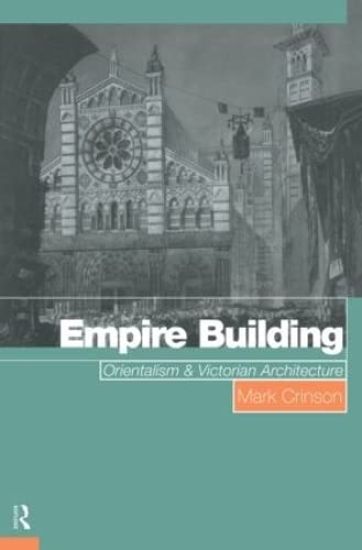
Empire Building

Empire Building

Mark Crinson

Routledge
1996
sidottu
The colonial architecture of the nineteenth century has much to tell us of the history of colonialism and cultural exchange. Yet, these buildings can be read in many ways. Do they stand as witnesses to the rapacity and self-delusion of empire? Are they monuments to a world of lost glory and forgotten convictions? Do they reveal battles won by indigenous cultures and styles? Or do they simply represent an architectural style made absurdly incongruous in relocation?Empire Building is a study of how and why Western architecture was exported to the Middle East and how Islamic and Byzantine architectural ideas and styles impacted on the West. The book explores how far racial theory and political and religious agendas guided British architects (and how such ideas were resisted when applied), and how Eastern ideas came to influence the West, through writers such as Ruskin and buildings such as the Crystal Palace. Beautifully written and lavishly illustrated, Empire Building takes the reader on an extraordinary postcolonial journey, backwards and forwards, into the heart and to the edge of empire.
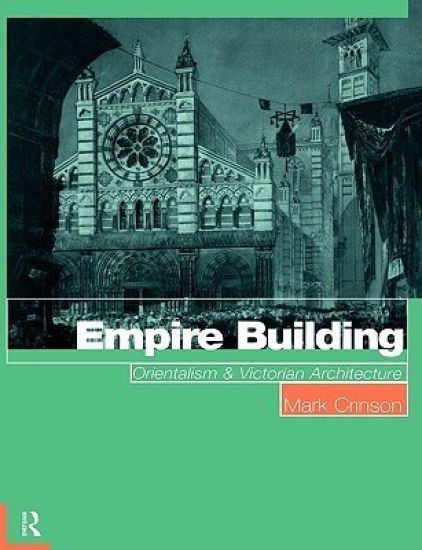
Empire Building

Empire Building

Mark Crinson

Routledge
1996
nidottu
The colonial architecture of the nineteenth century has much to tell us of the history of colonialism and cultural exchange. Yet, these buildings can be read in many ways. Do they stand as witnesses to the rapacity and self-delusion of empire? Are they monuments to a world of lost glory and forgotten convictions? Do they reveal battles won by indigenous cultures and styles? Or do they simply represent an architectural style made absurdly incongruous in relocation?Empire Building is a study of how and why Western architecture was exported to the Middle East and how Islamic and Byzantine architectural ideas and styles impacted on the West. The book explores how far racial theory and political and religious agendas guided British architects (and how such ideas were resisted when applied), and how Eastern ideas came to influence the West, through writers such as Ruskin and buildings such as the Crystal Palace. Beautifully written and lavishly illustrated, Empire Building takes the reader on an extraordinary postcolonial journey, backwards and forwards, into the heart and to the edge of empire.
Modern Architecture and the End of Empire
This title was first published in 2003: Modernist architecture claimed to be the 'international style' but the relationship between modernism and the new dispositions of nations and nationalities which have succeeded the old European empires remains obscure. In this, the first book to examine the interactions between modern architecture, imperialism and post-imperialism, Mark Crinson looks at the architecture of the last years of the British Empire, and during its prolonged dissolution and aftermath. Taking a number of case studies from Britain, Ghana, Hong Kong, Iran, India and Malaysia, he investigates the ambitions of the people who commissioned the buildings, the training and role of architects, and the interaction of the architecture and its changing social and cultural contexts. This book raises questions about the nature of modernism and its roles that look far beyond empire and towards the post-imperial.
Modern Architecture and the End of Empire
This title was first published in 2003: Modernist architecture claimed to be the 'international style' but the relationship between modernism and the new dispositions of nations and nationalities which have succeeded the old European empires remains obscure. In this, the first book to examine the interactions between modern architecture, imperialism and post-imperialism, Mark Crinson looks at the architecture of the last years of the British Empire, and during its prolonged dissolution and aftermath. Taking a number of case studies from Britain, Ghana, Hong Kong, Iran, India and Malaysia, he investigates the ambitions of the people who commissioned the buildings, the training and role of architects, and the interaction of the architecture and its changing social and cultural contexts. This book raises questions about the nature of modernism and its roles that look far beyond empire and towards the post-imperial.
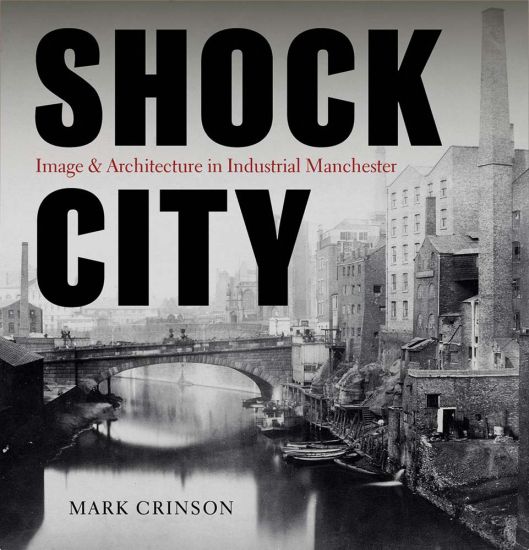
Shock City

Shock City

Mark Crinson

Paul Mellon Centre for Studies in British Art
2022
sidottu
A bold reassessment of the major architectural monuments and urban forms of the world’s first industrial city: Manchester From the mid-eighteenth century to the nineteen-twenties, from the birth of the Industrial Revolution to the height of Manchester’s global significance and the beginning of its decline, Shock City challenges the idea that Paris was the "capital of the nineteenth century." Mark Crinson reorients this issue around the development of industrial production, particularly cotton and its manufacture by means of steam power, offering a fascinating and accessibly written account of how new relations in the industrial economy were manifested through the spaces and representations of the first industrial city. Focusing on Manchester’s mills and warehouses, its main trading institution (the Royal Exchange), its magnificent Gothic Revival Town Hall, and its late Gothic Revival Rylands Library, this book explores these iconic buildings alongside paintings, prints, maps, and photographs of the city throughout the period. Crinson interweaves analysis of buildings and images, urban spaces and new institutions, technology and industrial pollution to show how these were all the products of Manchester’s newly emergent industrial middle classes, who remade the city in their image. Distributed for the Paul Mellon Centre for Studies in British Art
Aviationland

Aviationland

Mark Crinson

Paul Mellon Centre for Studies in British Art
2026
sidottu
How the UK’s largest international airport remade a local landscape Aviationland is the first critical study to examine how a major international airport takes shape on the ground, and what that means for the landscape around it. Focused on Heathrow airport, it traces how the area has been formed and reformed by overlapping systems of architecture, infrastructure and enclosure, from the common land of Hounslow Heath in the eighteenth century to the global transport hub of the present day. The book explores the different forces that have shaped the airport’s environment: the remaking of landforms, the design of terminal buildings, and the surrounding sprawl of hotels, schools, factories, and business parks. At the same time, it shows how the Heathrow area has been moulded by wider shifts in energy, mobility, and the economy, and how the airport has in turn left a lasting mark on its surroundings, both materially and ecologically. Drawing on previously unpublished material, Aviationland includes close studies of key sites, as well as figures who shaped how we see the airport today, including Richard Rogers, Patrick Abercrombie, and J. G. Ballard. Bringing together architectural, landscape, and infrastructural histories that are seldom read in tandem, this volume makes the case for Heathrow as a distinctively modern landscape. The result is a nuanced account of how local places become entangled within global systems, and what happens when they do.
The Architecture of Art History

The Architecture of Art History

Mark Crinson; Richard J. Williams

Bloomsbury Visual Arts
2018
sidottu
What is the place of architecture in the history of art? Why has it been at times central to the discipline, and at other times seemingly so marginal? What is its place now? Many disciplines have a stake in the history of architecture – sociology, anthropology, human geography, to name a few. This book deals with perhaps the most influential tradition of all – art history – examining how the relation between the disciplines of art history and architectural history has waxed and waned over the last one hundred and fifty years. In this highly original study, Mark Crinson and Richard J. Williams point to a decline in the importance attributed to the role of architecture in art history over the last century – which has happened without crisis or self-reflection. The book explores the problem in relation to key art historical approaches, from formalism, to feminism, to the social history of art, and in key institutions from the Museum of Modern Art, to the journal October. Among the key thinkers explored are Banham, Baxandall, Giedion, Panofsky, Pevsner, Pollock, Riegl, Rowe, Steinberg, Wittkower and Wölfflin. The book will provoke debate on the historiography and present state of the discipline of art history, and it makes a powerful case for the reconsideration of architecture.
The Architecture of Art History

The Architecture of Art History

Mark Crinson; Richard J. Williams

Bloomsbury Visual Arts
2019
nidottu
What is the place of architecture in the history of art? Why has it been at times central to the discipline, and at other times seemingly so marginal? What is its place now? Many disciplines have a stake in the history of architecture – sociology, anthropology, human geography, to name a few. This book deals with perhaps the most influential tradition of all – art history – examining how the relation between the disciplines of art history and architectural history has waxed and waned over the last one hundred and fifty years. In this highly original study, Mark Crinson and Richard J. Williams point to a decline in the importance attributed to the role of architecture in art history over the last century – which has happened without crisis or self-reflection. The book explores the problem in relation to key art historical approaches, from formalism, to feminism, to the social history of art, and in key institutions from the Museum of Modern Art, to the journal October. Among the key thinkers explored are Banham, Baxandall, Giedion, Panofsky, Pevsner, Pollock, Riegl, Rowe, Steinberg, Wittkower and Wölfflin. The book will provoke debate on the historiography and present state of the discipline of art history, and it makes a powerful case for the reconsideration of architecture.
Rebuilding Babel

Rebuilding Babel

Crinson Mark

I.B. Tauris
2017
sidottu
Much of modernist architecture was inspired by the emergence of internationalism: the ethics and politics of world peace, justice and unity through global collaboration. Mark Crinson here shows how the ideals represented by the Tower of Babel - built, so the story goes, by people united by one language - were effectively adapted by internationalist architecture, its styles and practices, in the modern period. Focusing particularly on the points of convergence between modernist and internationalist trends in the 1920s, and again in the immediate post-war years, he underlines how such architecture utilised the themes of a cooperative community of builders and a common language of forms.The 'International Style' was one manifestation of this new way of thinking, but Crinson shows how the aims of modernist architecture frequently engaged with the substance of an internationalist mindset in addition to sharing surface similarities. Bringing together the visionaries of internationalist projects - including Le Corbusier, Bruno Taut, Berthold Lubetkin, Walter Gropius and Mies van der Rohe - Crinson interweaves ideas of evolution, ecology, utopia, regionalism, socialism, free trade, and anti-colonialism to reveal the possibilities heralded by modernist architecture. Furthermore, he re-connects pivotal figures in architecture with a cast of polymath internationalists such as Patrick Geddes, Lewis Mumford, Julian Huxley, Rabindranath Tagore and H. G. Wells, to provide a richly detailed socio-cultural framework. This is a book crafted for students and scholars of architecture and art theory, as well as for those interested in the history of twentieth-century optimism about the world and its architecture.
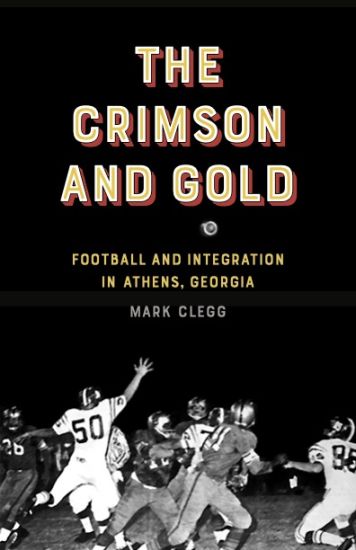
The Crimson and Gold

The Crimson and Gold

Mark Clegg

UNIVERSITY OF GEORGIA PRESS
2024
pokkari
The Crimson and Gold is a comprehensive narrative detailing the struggle for integration in Athens, Georgia, in the context of highly competitive football as experienced by athletes, their fellow students, teachers, journalists, and school administrators at (predominantly White) Athens High School and (African American) Burney-Harris High School and eventually Clarke Central High School—formed after the two legacy schools were forced to merge. The proud sports traditions of two high schools—both adored by their respective communities—eventually become inextricably linked with the larger battle for equal rights during the tumultuous 1960s and early 1970s. In addition to the relatively well-known stories of the University of Georgia’s integration in 1961, Mark Clegg details “Freedom of Choice” transfers in the early 1960s, desegregation of businesses like the iconic Varsity restaurant, the violence perpetrated by the local chapter of the KKK, the first athletic competitions between Burney-Harris and Athens High, the resistance by large portions of both the Black and White communities to the phasing out of their beloved schools, and the tense and often violent first several years of Clarke Central’s existence. Finally, Clegg recounts the Athens High football team’s remarkable state title run—in its last year of existence in 1969. Clegg conducted extensive interviews with a number of Black and White Athenians who lived through the era, including Horace King, Richard Appleby, and Clarence Pope (Burney-Harris and Clarke Central football players who were three of the first five Black football players at UGA); former Athens mayor and Athens and Clarke Central High School football player Doc Eldridge; current DeKalb County CEO and former Georgia labor commissioner (and Burney-Harris and Clarke Central football player) Michael Thurmond; the first Black scholarship athlete at UGA and Athens High School alumnus Maxie Foster; and local writer, journalist, and publisher (Flagpole magazine) Pete McCommons.
The Crimson Tide Football All-Time All-Stars

The Crimson Tide Football All-Time All-Stars

Mark Mayfield

ROWMAN LITTLEFIELD
2025
pokkari
Let’s say you’re the coach of the Alabama Crimson Tide, deciding which players should start in an NCAA football championship matchup against the toughest team in the country. But instead of choosing from the current roster, you have every player in the team’s 130-year history in your locker room. Who starts at quarterback: steady field general Bart Starr, gunslinger Joe Namath, Heisman Trophy winner Bryce Young, or cannon-armed Mac Jones? At featured running back, do you play bruising Derrick Henry, speedy Mark Ingram, or the punishing Johnny Musso? Which players get the call at linebacker: Butkus Award winner C.J. Mosley, Woodrow Lowe, Cornelius Bennet, or Lee Roy Jordan? Combining career stats, common sense, and a host of intangibles, veteran sportswriter Mark Mayfield imagines an embarrassment of riches and sets the all-time All-Star Crimson Tide lineup for the ages.
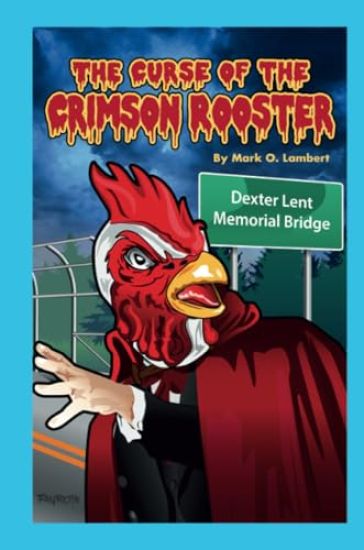
The Curse of the Crimson Rooster

The Curse of the Crimson Rooster

Mark O Lambert

Lulu.com
2025
pokkari
Fans of the pulp magazine hero Rock Ravage gather in a small Missouri town to celebrate the dedication of a bridge in honor of Dexter Lent, the author of those pulp stories. While there, the fans are searching for the never-published lost Rock Ravage novel, following clues left by the author 70 years ago when he hid it away. But a maniacal villain also seeks the lost novel and will stop at nothing to get it Will our heroes survive The Curse of the Crimson Rooster?
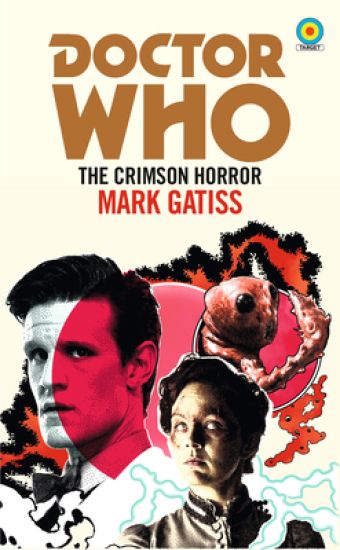
Doctor Who: The Crimson Horror
Catrin Stewart reads this brand new novelisation of an action-packed TV adventure for the Eleventh Doctor and Clara.'We must get to the bottom of this dark and queer business, no matter what the cost!'Something ghastly is afoot in Victorian Yorkshire. Something that kills. Bodies are washing up in the canal, their skin a waxy, glowing red... But just what is this crimson horror?Madam Vastra, Jenny and Strax are despatched to investigate the mystery. Strangely reluctant to assist their enquiries is Mrs Winifred Gillyflower, matriarch of 'Sweetville', a seemingly utopian workers' community.Why do all roads lead to the team's old friends, Clara and the Doctor?Who is Mrs Gillyflower's mysterious silent partner, Mr Sweet?And will the motley gang be in time to defeat the mysterious power that threatens all the world with its poison?Catrin Stewart, who played Jenny in the BBC TV series, is joined by Dan Starkey as Strax in this reading of Mark Gatiss's novelisation of his own 2013 TV script.(P) 2021 BBC Studios Distribution LtdReading produced by Neil GardnerSound design by Simon PowerExecutive producer: Michael Stevens
Doctor Who: The Crimson Horror (Target Collection)
‘We must get to the bottom of this dark and queer business, no matter what the cost!’ Something ghastly is afoot in Victorian Yorkshire. Something that kills. Bodies are washing up in the canal, their skin a waxy, glowing red… But just what is this crimson horror?Madam Vastra, Jenny and Strax are despatched to investigate the mystery. Strangely reluctant to assist their enquiries is Mrs Winifred Gillyflower, matriarch of ‘Sweetville’, a seemingly utopian workers’ community. Why do all roads lead to the team's old friends Clara and the Doctor?Who is Mrs Gillyflower's mysterious silent partner Mr Sweet? And will the motley gang be in time to defeat the mysterious power that threatens all the world with its poison?