

Kirjahaku
Etsi kirjoja tekijän nimen, kirjan nimen tai ISBN:n perusteella.
1000 tulosta hakusanalla Mark K Crawford

This story came from a piece of wood. I was hiking in the mountains on a trail that led around a swamp. Beside the trail was a piece of wood, gnawed on each end by beavers. It looked like a small football to me. I picked it up and took it to my classroom. When my students asked what it was, I told them that it was a Beaver Ball. Thus, Beaver Ball was born. I would like to acknowledge all of my students from that time, and hence, for their imagination.

The award-wining author of Second Acts and The Last Republicans draws on interviews and conversations with seven presidents to identify the essence of character, leadership and legacy that has defined each of them and the modern American presidency.Throughout his career as an author, journalist, television commentator, and head of a presidential library and foundation, Mark Updegrove has had the privilege of getting to know seven U.S. Presidents, from Gerald Ford to Barack Obama. In Make Your Mark, he offers incisive, compelling sketches of these modern presidents and the character trait that made each suited to his moment in the Oval Office and underlies his most significant accomplishments.Gerald Ford’s instinct to do the right thing in the wake of Watergate;Jimmy Carter’s mission to do good in the areas of peace and human rights during his presidency and throughout his post-presidency;Ronald Reagan’s optimism, restoring the nation’s confidence and pride after a sustained period of demoralizing national setbacks;George H.W. Bush’s humility, helping to ensure a peaceful end to the Cold War that had seethed between the superpowers for over forty years;Bill Clinton’s resilience and determination to keep working for the good of the American people in the face of political and personal obstacles;George W. Bush’s charge to give back as the deadly AIDS epidemic spread unchecked throughout much of the developing world;and Barack Obama’s grace as the first African American to hold the country’s highest office. Make Your Mark reveals that there is no one-size-fits-all model for leadership. We all have our own set of strengths and weaknesses. But drawing on these presidential examples, we can ask ourselves how our character reflects our leadership, and be inspired to find the very best in who we are to make own unique marks as leaders.
An historian's revealing and intimate portrait of George H. W. Bush and George W. Bush that explores their relationship as presidents and as father and son-the first major biographical treatment of these two consequential presidents and figures in American history. In 2016 the Republican base revolted against the GOP establishment that has become synonymous with the Bush name, choosing instead a political neophyte and anti-establishment outsider as the standard bearer of their party. Donald Trump's election marked the end not only of a presidential dynasty, but a rejection of the Republican principles and traditions the Bushes have long championed. Despite the Republicans' surprise victory in 2016, behind closed doors the party remains divided between traditional conservatives, populists, and radical ideologues, and faces an uncertain future. As presidential historian Mark K. Updegrove argues, Bush 41 and 43 are in effect, the "last Republicans." In this balanced, illuminating book, Updegrove tells the story of the Bushes' relationship from the birth of George W. through their post-presidential years and Jeb Bush's failed candidacy. Drawing on exclusive access and interviews with both presidents and the key people in their lives, Updegrove reveals the Bushes' views on the current state of the nation and the GOP, and how the party they both led and helped build is undergoing a radical transformation. At last, the famously circumspect Bushes offer unvarnished observations and revelations on everything from George W. Bush's youthful indiscretions to the influence and perspectives they had on each other's administration to their views on Donald Trump-and how they each voted in the 2016 election. A candid and often surprising portrait of two men, The Last Republicans is also an elegy for the party of Reagan and Bush-and for the many thoughtful and prudent individuals who made up the "establishment," and are conspicuously lacking in today's GOP. The Last Republicans contains 16 pages of black-and-white photographs.

A groundbreaking look at the lives of George H. W. Bush and George W. Bush, the most consequential father-son pair in American history, often in their own words. In this revealing, often poignant work, presidential historian Mark K. Updegrove tracks the two Bush presidents from their formative years through their post-presidencies and the failed presidential candidacy of Jeb Bush, derailing the Bush presidential dynasty. Drawing extensively on exclusive access and interviews with both Bush presidents, Updegrove reveals for the first time their influences and perspectives on each other’s presidencies; their views on family, public service, and America’s role in the world; and their unvarnished thoughts on Donald Trump and the radical transformation of the Republican Party he now leads.In 2016 George W. Bush lamented privately that he might be “the last Republican president.” Donald Trump’s election marked the end not only to the Bushes’ hold on the White House, but of a rejection of the Republican principles of civility and international engagement and leadership that the Bushes have long championed.The Last Republicans offers illuminating, moving portraits of the forty-first and forty-third presidents, as well as an elegy for the Republican “establishment,” which once stood for putting the interests of the nation over those of any single man.
This comprehensive and analytical history of American Jews and Judaism from the Colonial Era to the present explores the impact of America on Jews and of Jews on America.Covering more than four centuries from the Colonial Era forward, Jewish American Chronology offers an introduction to the history of American Jews and Judaism, using individual examples, personality profiles, and illustrations to bring fundamental patterns and major themes to life. Arranged chronologically, the entries illustrate how a variety of different Jewish groups and individuals have adapted to America, both changing in accordance with time and place and retaining tradition and culture, even as they became thoroughly American.Readers will learn how Jews have created community and institutions, confronted anti-Semitism, and interacted among themselves and with other groups. They will read about immigration, migration, and socioeconomic mobility. And they will discover how Jews have filled critical economic niches, contributed disproportionately in a variety of endeavors, and changed over time and in reaction to circumstances. In this wide-ranging work, Jewish Americans are depicted in a balanced and accurate manner, describing Nobel Prize winners and standout economic success stories as well as those who achieved fame and notoriety in other ways.
Thoracic surgery has evolved substantially in recent years, with tremendous advancements in minimally invasive surgical procedures, novel techniques for sublobar resection, perioperative management, and more. Thoracic Surgery Atlas, 2nd Edition, written by Dr. Mark K. Ferguson, brings you fully up to date with all aspects of this fast-changing field. Comprehensive and highly illustrated, this general thoracic surgery text covers procedures involving all chest organs (lungs, esophagus, trachea, mediastinum, chest wall, and diaphragm), offering authoritative guidance on virtually any thoracic operation you're likely to perform-from cancer surgery to management of a variety of benign conditions, including esophageal disorders, empyema, tracheal stricture, and much more. Includes authoritative, experience-based observations to help guide you through details of complex procedures, avoid common problems, and manage complications when they occur. Features numerous high-quality, original color and tone drawings that depict the relevant anatomy and steps associated with each procedure. Expands coverage to include new areas of thoracic surgery, new and updated illustrations, and new content and references throughout. Provides new information on ERAS protocol summaries for perioperative care, consensus guidelines for essential steps in minimally invasive lung resection, new surgical approaches to mediastinal abnormalities, increased focus on VATS and robotic operations including uniportal surgery, new methods of treating thoracic outlet syndrome, new approaches to managing malignant ventricular arrhythmias through sympathectomy, more advanced techniques for pleurectomy for mesothelioma, and descriptions of a variety of newer muscle flaps for reconstruction. An eBook version is included with purchase. The eBook allows you to access all of the text, figures, and references, with the ability to search, customize your content, make notes and highlights, and have content read aloud.
Despite being widely recognized as John Wesley’s key moment of Christian conversion, Aldersgate has continued to mystify regarding its exact meaning and significance to Wesley personally. This book brings clarity to the impact this event had on Wesley over the course of his lifetime by closely examining all of Wesley’s writings pertaining to Aldersgate and framing them within the wider context of contemporary conversion narratives. The central aim of this study is to establish Wesley’s interpretation of his Aldersgate experience as it developed from its initial impressions on the night of 24 May 1738 to its mature articulation in the 1770s. By paying close attention to the language of his diaries, letters, journals, sermons, tracts and other writings, fresh insights into Wesley‘s own perspective are revealed. When these insights are brought into wider context of other conversion narratives in the Christian milieu in which Wesley worked and wrote, this book demonstrates that this single event contributed in significant ways to the ethos of the Methodist movement, and many other denominations, even up to the present day.This is a unique study of the conversion of one of history’s most influential Christian figures, and the impact that such narratives still have on us today. As such, it will be of great use to scholars of Methodism, theology, religious history and religious studies more generally.

This book is about the Ainu, the indigenous people of Japan, living in and around Tokyo; it is, therefore, about what has been pushed to the margins of history. Customarily, anthropologists and public officials have represented Ainu issues and political affairs as limited to rural pockets of Hokkaido. Today, however, a significant proportion of the Ainu people live in and around major cities on the main island of Honshu, particularly Tokyo. Based on extensive original ethnographic research, this book explores this largely unknown diasporic aspect of Ainu life and society. Drawing from debates on place-based rights and urban indigeneity in the twenty-first century, the book engages with the experiences and collective struggles of Tokyo Ainu in seeking to promote a better understanding of their cultural and political identity and sense of community in the city. Looking in-depth for the first time at the urban context of ritual performance, cultural transmission and the construction of places or ‘hubs’ of Ainu social activity, this book argues that recent government initiatives aimed at fostering a national Ainu policy will ultimately founder unless its architects are able to fully recognize the historical and social complexities of the urban Ainu experience.

The Elysian Fields of Information Technology. A People Path to Technological Value.
MARK K. ALLEN
MARK K. ALLEN
2009
pokkari
A Must-Have Reference for both Business and IT Professionals! * Discover and Deal with how IT works in the real world * Understand Information People and what makes them tick * Build and maintain powerful and positive relationships between the Business and IT that move your Business forward * Create and manage effective IT teams that get the job done on time, within budget, and increase company revenue * Understand and manage the Business Politics of IT * Make sense of Business Technology and have it work for you * Get familiar with new methodologies that are influencing the future of technology * Learn to avoid the pitfalls that result in IT project failures and waste money * Inspire Business teams to focus on obtaining the unfair advantage in their industry through the intelligent and managed use of technology * Discover how to use meaningful technology to improve the quality of life of everyone who wants and needs it

A study of the ocean operations of the Confederate Navy will introduce you to issues and context not considered in land operations. The global reach of the Confederate Navy, and its success in completely reducing the maritime merchant shipping of the United States of America is a story not often told. The daring of Confederate naval commanders easily match the audacity of Generals Stuart, Forrest, and Morgan.But there are other stories; the exploitation of new technologies, the success of the South's blockade runners, and the complexities of international relations are all interesting aspects of the story. And there is the successful combined arms offensive operations to re-take the South's largest port west of the Mississippi, Galveston, which demonstrates Southern ingenuity. Lastly there are the stories of the ironclads, some operating as squadrons at Charleston, Mobile and Richmond.The story of the men who developed naval strategy, and built and served in the Confederate States Navy, (C.S.N.) is as inspirational as that of their brothers who brought glory to the Confederacy on thousands of battlefields. Like the land campaigns, there are endless stories of heroism, ingenuity, imagination, leadership and sacrifice connected with the Confederate Navy. In addition, the South made every effort to use technologies in an attempt to even the odds on the world's oceans and America's rivers. The story demonstrates a southern will to meet the challenges of fighting an enemy superior in material resources, with innovation, guile, courage and determination.
The Transfer of Cognitive Skill
Mark K. Singley; John R. Anderson
Harvard University Press
1989
sidottu
Does a knowledge of Latin facilitate the learning of computer programming? Does skill in geometry make it easier to learn music? The issue of the transfer of learning from one domain to another is a classic problem in psychology as well as an educational question of great importance, which this ingenious new book sets out to solve through a theory of transfer based on a comprehensive theory of skill acquisition.The question was first studied systematically at the turn of the century by the noted psychologist Edward L. Thorndike, who proposed a theory of transfer based on common elements in two different tasks. Since then, psychologists of different theoretical orientations—verbal learning, gestalt, and information processing—have addressed the transfer question with differing and inconclusive results. Mark Singley and John Anderson resurrect Thorndike’s theory of identical elements, but in a broader context and from the perspective of cognitive psychology. Making use of a powerful knowledge-representation language, they recast his elements into units of procedural and declarative knowledge in the ACT* theory of skill acquisition. One skill will transfer to another, they argue, to the extent that it involves the same productions or the same declarative precursors. They show that with production rules, transfer can be localized to specific components—in keeping with Thorndike’s theory—and yet still be abstract and mentalistic.The findings of this book have important implications for psychology and the improvement of teaching. They will interest cognitive scientists and educational psychologists, as well as computer scientists interested in artificial intelligence and cognitive modeling.

Colonel Wells investigates the nature of aerial warfare and the men who took part. The book analyzes aircrew selection, reaction to combat, adaptability to stress, morale, leadership and combat effectiveness, and compares the efforts of the US Eighth Air Force and RAF Bomber Command.

Colonel Wells investigates the nature of aerial warfare and the men who took part. The book analyzes aircrew selection, reaction to combat, adaptability to stress, morale, leadership and combat effectiveness, and compares the efforts of the US Eighth Air Force and RAF Bomber Command.
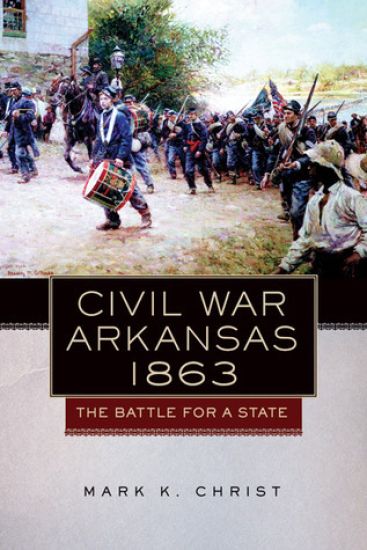
The Arkansas River Valley is one of the most fertile regions in the South. During the Civil War, the river also served as a vital artery for moving troops and supplies. In 1863 the battle to wrest control of the valley was, in effect, a battle for the state itself. In spite of its importance, however, this campaign is often overshadowed by the siege of Vicksburg. Now Mark K. Christ offers the first detailed military assessment of parallel events in Arkansas, describing their consequences for both Union and Confederate powers.Christ analyzes the campaign from military and political perspectives to show how events in 1863 affected the war on a larger scale. His lively narrative incorporates eyewitness accounts to tell how new Union strategy in the Trans-Mississippi theater enabled the capture of Little Rock, taking the state out of Confederate control for the rest of the war. He draws on rarely used primary sources to describe key engagements at the tactical level - particularly the battles at Arkansas Post, Helena, and Pine Bluff, which cumulatively marked a major turning point in the Trans-Mississippi.In addition to soldiers' letters and diaries, Christ weaves civilian voices into the story - especially those of women who had to deal with their altered fortunes - and so fleshes out the human dimensions of the struggle. Extensively researched and compellingly told, Christ's account demonstrates the war's impact on Arkansas and fills a void in Civil War studies.
A down-to-earth and deeply intimate portrait of Pope Francis and his faith, based on interviews with the men and women who knew him simply as Jorge Mario Bergoglio Early on the evening of March 13, 2013, the newly elected Pope Francis stepped out onto the balcony of St. Peter's Basilica and did something remarkable: Before he imparted his blessing to the crowd, he asked the crowd to bless him, then bowed low to receive this grace. In the days that followed, Mark K. Shriver--along with the rest of the world--was astonished to see a pope who paid his own hotel bill, eschewed limousines, and made his home in a suite of austere rooms in a Vatican guesthouse rather than the grand papal apartment in the Apostolic Palace. By setting an example of humility and accessibility, Francis breathed new life into the Catholic Church, attracting the admiration of Catholics and non-Catholics alike. In Pilgrimage, Shriver retraces Francis's personal journey, revealing the origins of his open, unpretentious style and explaining how it revitalized Shriver's own faith and renewed his commitment to the Church. To help us understand how Jorge Mario Bergoglio became Pope Francis, Shriver travels to Bergoglio's native Argentina to meet with the people who knew him as a child, as a young Jesuit priest, and as a reformist bishop. Shriver visits the confessional where Bergoglio first felt called to a faith-based life and takes us to the humble parish where the future pontiff's pastoral career began: in a church created from a converted vegetable shed in an area just outside the city of Buenos Aires. In these impoverished surroundings, Bergoglio answered Christ's call to feed the hungry, clothe the naked, and shelter the homeless, following the example set by his papal namesake, St. Francis of Assisi. In this deeply reported yet highly personal book, Mark K. Shriver explores how Francis's commitment has struck a chord in the hearts of millions who long to make faith, love, humility, and mercy part of their lives as they go out into the world to serve and learn from the most marginalized. Praise for Pilgrimage"Well-researched . . . Pilgrimage shines a light on Pope Francis's] unexplored aspects. . . . A very timely and important addition to the literature on the life and person and thinking of Pope Francis. Everybody interested in Pope Francis will enjoy reading this biography."--The Washington BookReview "Apt to stir the soul of readers . . . While this is a rich telling of Bergoglio's life and ascension to the papacy, it is more movingly a spiritual memoir that draws us deep into a knowing of this at once humble and soul-stirring rekindler of faith."--Chicago Tribune "A fascinating portrait of a man and a nourishing account of spiritual yearning."--Booklist "This fast-paced and fascinating tale takes us on Jorge Mario Bergoglio's pilgrimage from his grandmother's knee in the Italian-Argentine community, through years of success and sorrow in the tumultuous country that he loved, to his surprise election as Pope Francis."--Cokie Roberts, New York Times bestselling author of Capital Dames: The Civil War and the Women of Washington, 1848-1868 "All people of good faith, including those whose lives are not guided by religious beliefs, will be inspired and enlightened by the compelling manner in which Pilgrimage brings us closer to the heart and mind of Jorge Mario Bergoglio, Pope Francis. I highly recommend this book; it will make a difference in your life."--Cardinal Se n O'Malley, OFM Cap.

The Irreducibility of the Human Person
Mark K. Spencer
THE CATHOLIC UNIVERSITY OF AMERICA PRESS
2022
nidottu
Catholic philosophical anthropologists have defended views of the human person on which we are not reducible to anything non-personal. For example, it is not the case that we are nothing but matter, souls, or parts of society. Nevertheless, most Catholic anthropologies have been reductionistic in other ways. Mark K. Spencer presents a philosophical portrait of human persons on which we are entirely irreducible to anything non-personal, by synthesizing claims from many strands of the Catholic tradition. These include Thomism, Scotism, phenomenology, personalism, nouvelle théologie, analytic philosophy, Greek and Russian thought, and several others. It adjudicates among these traditions' claims by considering whether they are grounded in how we appear in experience and whether they are non-reductionistic. While many metaphysical claims about persons are defended, the picture that ultimately results is one on which persons are best grasped not through abstract concepts but through aesthetic perception, as unique kinds of beauty.This portrait also shows how we have many irreducible parts, principles, and powers. Various chapters explore the irreducibility of our subjectivity, senses, intellect, freedom, and affections, and of our souls, bodies, acts of existence, and activities. Readers will also find explorations of divine simplicity and causality, the nature of matter, organisms, and artifacts, all of which must be understood to fully grasp our own irreducibility. In considering how to synthesize various traditions' claims, the book also offers new solutions to a number of prominent debates in contemporary Catholic philosophy. These include debates over natural law, the natural desire to see God, the separated soul, the nature of gifts, integralism and personalism, idealist and realist phenomenology, and various scholastic accounts of the act of existence. The picture of persons thereby developed helps the reader to perceive persons more perfectly.

Riparian ecosystems are declining throughout the southwestern United States, where many have disappeared completely; yet progress toward checking their decline has been marginal, and the results of only a few recovery projects have been evaluated. In this guidebook, Mark K. Briggs has filled this gap in riparian conservation literature. Based on his experiences gleaned from evaluating the results of many riparian rehabilitation projects, Briggs presents these results in a manner that biologists, hydrologists, government planners, resource managers, and other concerned citizens can immediately apply toward developing site-specific recovery strategies. The book opens with a review of watershed characteristics and an examination of drainage systems, then proceeds to determining the causes of riparian decline. It introduces five factors that have a significant effect on the results of riparian rehabilitation--natural regeneration, water availability, channel stability, direct impacts such as livestock grazing and recreational activities, and soil salinity--and offers case studies that demonstrate how revegetation has been used both effectively and ineffectively. It also discusses strategies other than revegetation that may be effective in improving the ecological condition of a site. Many of the strategies presented are also relevant to nonarid climates and to urban areas. By emphasizing evaluation of riparian ecosystems, so that the causes of degradation can be understood, and by offering general approaches that can be tailored to specific situations, Riparian Ecosystem Recovery in Arid Lands takes a holistic approach to riparian recovery that will enable users to better judge whether recovery expenditures are likely to produce desired results. An unprecedented work, it will substantially add to efforts across the Southwest and elsewhere to restore these unique and priceless ecosystems. CONTENTS 1 An Overview: Background on Riparian Ecosystems / Lessons Learned from Past Riparian Recovery Efforts / An Evaluation Strategy / Defining Some Important Terms 2 Considering the Damaged Riparian Area from a Watershed Perspective: Case Study 1: Rincon Creek / Taking Advantage of Available Information / Getting to Know the Watershed / Getting to Know the Stream 3 Impacts within the Riparian Zone: Livestock / Case Study 2: Sheepshead Spring / Recreation / Competition from Nonnative Species / Wildlife 4 Natural Recovery in Riparian Ecosystems: Case Study 3: Aravaipa Creek / Factors Influencing Natural Recovery / Case Study 4: McEuen Seep / Autoecology of Selected Southwestern Riparian Tree Species / Case Study 5: Boulder Creek 5 Water Availability: Case Study 6: Box Bar / How Groundwater Decline Occurs / Evaluating Groundwater Conditions / Revegetating Riparian Ecosystems Characterized by Groundwater Decline 6 The Drainageway: Channel Instability and Riparian Ecosystems / Case Study 7: Babocomari River / Channel Dynamics / Strategies for Evaluating Channel Stability / Developing Recovery Projects along Unstable Alluvial Stream Channels 7 Soil Salinity and Riparian Ecosystems: Effects of Soil Salinity on Plant Growth / The Soil Survey / Soil Salinity and Revegetation 8 Developing the Recovery Plan: Developing Project Objectives / Selecting the Best Site / Local, State, and Federal Permit Requirements / Identifying Model Areas / Critical Components of the Recovery Plan / Community Involvement / Demonstration Sites / Postproject Evaluation and Monitoring
A New Vision of Southern Jewish History
Mark K. Bauman; Ronald H. Bayor
The University of Alabama Press
2019
sidottu
Essays from a prolific career that challenge and overturn traditional narratives of southern Jewish history. Mark K. Bauman, one of the foremost scholars of southern Jewish history working today, has spent much of his career, as he puts it, ""rewriting southern Jewish history"" in ways that its earliest historians could not have envisioned or anticipated, and doing so by specifically targeting themes and trends that might not have been readily apparent to those scholars. A New Vision of Southern Jewish History: Studies in Institution Building, Leadership, Interaction, and Mobility features essays collected from over a thirty-year career, including a never-before-published article. The prevailing narrative in southern Jewish history tends to emphasize the role of immigrant Jews as merchants in small southern towns and their subsequent struggles and successes in making a place for themselves in the fabric of those communities. Bauman offers assessments that go far beyond these simplified frameworks and draws upon varieties of subject matter, time periods, locations, tools, and perspectives over four decades of writing and scholarship. A New Vision of Southern Jewish History contains Bauman's studies of Jewish urbanization, acculturation and migration, intra- and inter-group relations, economics and business, government, civic affairs, transnational diplomacy, social services, and gender—all complicating traditional notions of southern Jewish identity. Drawing on role theory as informed by sociology, psychology, demographics, and the nature and dynamics of leadership, Bauman traverses a broad swath—often urban—of the southern landscape, from Savannah, Charleston, and Baltimore through Atlanta, New Orleans, Galveston, and beyond the country to Europe and Israel. Bauman's retrospective volume gives readers the opportunity to review a lifetime of work in a single publication as well as peruse newly penned introductions to his essays. The book also features an ""Additional Readings"" section designed to update the historiography in the essays and provide suggestions for further reading.