Kirjojen hintavertailu. Mukana 12 512 103 kirjaa ja 12 kauppaa.

Kirjahaku

Etsi kirjoja tekijän nimen, kirjan nimen tai ISBN:n perusteella.

1000 tulosta hakusanalla Mark Q. Sutton; E. N. Anderson

Introduction to Cultural Ecology

Introduction to Cultural Ecology

Mark Q. Sutton; E. N. Anderson

AltaMira Press,U.S.
2013
sidottu
All peoples and cultures face environmental issues—but as this accessible text shows, how they respond to such issues varies widely around the world and across human history. Introduction to Cultural Ecology, Third Edition, familiarizes students with the foundations of the field and provides a framework for exploring what other cultures can teach us about human/environment relationships. Drawing on both biological and cultural approaches, the authors first cover basic principles of cultural anthropology, environmental studies, and human biological adaptations to the environment. They then consider environmental concerns within the context of diverse means of making a living, from hunting and gathering to modern industrial societies; detailed case studies add depth and breadth to the discussion.
Introduction to Cultural Ecology

Introduction to Cultural Ecology

Mark Q. Sutton; E. N. Anderson

AltaMira Press,U.S.
2013
nidottu
All peoples and cultures face environmental issues—but as this accessible text shows, how they respond to such issues varies widely around the world and across human history. Introduction to Cultural Ecology, Third Edition, familiarizes students with the foundations of the field and provides a framework for exploring what other cultures can teach us about human/environment relationships. Drawing on both biological and cultural approaches, the authors first cover basic principles of cultural anthropology, environmental studies, and human biological adaptations to the environment. They then consider environmental concerns within the context of diverse means of making a living, from hunting and gathering to modern industrial societies; detailed case studies add depth and breadth to the discussion.
Our Traumatized Planet

Our Traumatized Planet

Mark Q. Sutton; E. N. Anderson

TAYLOR FRANCIS LTD
2024
nidottu
Our Traumatized Planet explores the state of the environment and some of the major issues faced today and asks what we can learn and apply from contemporary traditional peoples, ancient societies, and our own successes and failures.Providing straightforward information on some of the serious environmental issues we face so that non-scientists can understand them, this book explores what is at stake so that we can choose to make a difference. Combining the latest data from environmental, anthropological, and archaeological science allows for fresh perspectives and an empirical approach to describing these problems that eliminates hopeful denial, speculation, wishful thinking, and downright lies. Using archaeological data, the authors provide examples of success and failures in the past that could be used to make decisions about the future. They also highlight examples of how traditional peoples, past and present, have dealt with these same issues. Seeing the current crisis through the eyes of two experienced anthropologists broadens our understanding and allows us to set contemporary issues in the context of the past and traditional knowledge. However, this is not a book of easy solutions from the past to solve our future; rather, it is an impassioned plea to people today to read and understand what state the planet is in and encourage them to find the will to change.This book is for students of archaeology, anthropology, and environmental science and all those wanting to, in a clear and readable way, understand the fate of our planet.
Our Traumatized Planet

Our Traumatized Planet

Mark Q. Sutton; E. N. Anderson

TAYLOR FRANCIS LTD
2024
sidottu
Our Traumatized Planet explores the state of the environment and some of the major issues faced today and asks what we can learn and apply from contemporary traditional peoples, ancient societies, and our own successes and failures.Providing straightforward information on some of the serious environmental issues we face so that non-scientists can understand them, this book explores what is at stake so that we can choose to make a difference. Combining the latest data from environmental, anthropological, and archaeological science allows for fresh perspectives and an empirical approach to describing these problems that eliminates hopeful denial, speculation, wishful thinking, and downright lies. Using archaeological data, the authors provide examples of success and failures in the past that could be used to make decisions about the future. They also highlight examples of how traditional peoples, past and present, have dealt with these same issues. Seeing the current crisis through the eyes of two experienced anthropologists broadens our understanding and allows us to set contemporary issues in the context of the past and traditional knowledge. However, this is not a book of easy solutions from the past to solve our future; rather, it is an impassioned plea to people today to read and understand what state the planet is in and encourage them to find the will to change.This book is for students of archaeology, anthropology, and environmental science and all those wanting to, in a clear and readable way, understand the fate of our planet.
An Introduction to Cultural Ecology

An Introduction to Cultural Ecology

Mark Q. Sutton; E. N. Anderson

Berg Publishers
2004
sidottu
This contemporary introduction to the principles and research base of cultural ecology is the ideal textbook for advanced undergraduate and beginning graduate courses that deal with the intersection of humans and the environment in traditional societies. After introducing the basic principles of cultural anthropology, environmental studies, and human biological adaptations to the environment, the book provides a thorough discussion of the history of, and theoretical basis behind, cultural ecology. The bulk of the book outlines the broad economic strategies used by traditional cultures: hunting/gathering, horticulture, pastoralism, and agriculture. Fully explicated with cases, illustrations, and charts on topics as diverse as salmon ceremonies among Northwest Indians, contemporary Maya agriculture, and the sacred groves in southern China, this book gives a global view of these strategies. An important emphasis in this text is on the nature of contemporary ecological issues, how peoples worldwide adapt to them, and what the Western world can learn from their experiences. A perfect text for courses in anthropology, environmental studies, and sociology.
An Introduction to Cultural Ecology

An Introduction to Cultural Ecology

Mark Q. Sutton; E. N. Anderson

Berg Publishers
2004
nidottu
This contemporary introduction to the principles and research base of cultural ecology is the ideal textbook for advanced undergraduate and beginning graduate courses that deal with the intersection of humans and the environment in traditional societies. After introducing the basic principles of cultural anthropology, environmental studies, and human biological adaptations to the environment, the book provides a thorough discussion of the history of, and theoretical basis behind, cultural ecology. The bulk of the book outlines the broad economic strategies used by traditional cultures: hunting/gathering, horticulture, pastoralism, and agriculture. Fully explicated with cases, illustrations, and charts on topics as diverse as salmon ceremonies among Northwest Indians, contemporary Maya agriculture, and the sacred groves in southern China, this book gives a global view of these strategies. An important emphasis in this text is on the nature of contemporary ecological issues, how peoples worldwide adapt to them, and what the Western world can learn from their experiences. A perfect text for courses in anthropology, environmental studies, and sociology.
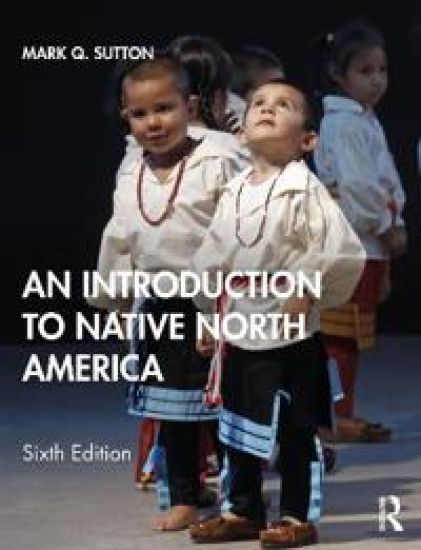
An Introduction to Native North America
An Introduction to Native North America provides a basic introduction to the Native peoples of North America, covering what are now the United States, northern Mexico, and Canada. In this updated and revised new edition, Mark Q. Sutton has expanded and improved the existing text, adding to the case studies, updating the text with the latest research, increasing the number of images, providing more coverage of the Arctic regions, and including new perspectives, particularly those of Native peoples. The book addresses the history of research, the European invasion, and the impact of Europeans on Native societies. A final chapter introduces contemporary Native Americans, discussing issues that affect them, including religion, health, and politics. The book retains a wealth of pedological features to aid and reinforce learning.Featuring case studies of many Native American groups, as well as some eighty-four maps and images, An Introduction to Native North America is an indispensable tool to those studying the history of North America and its Native peoples.
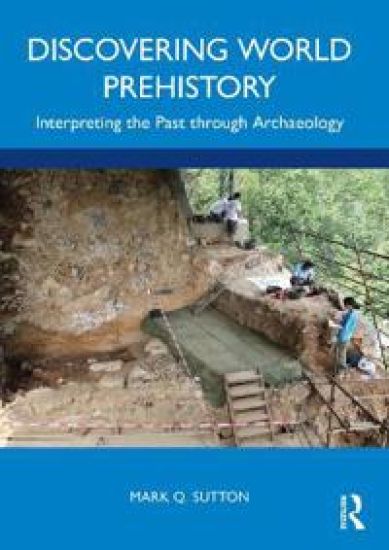
Discovering World Prehistory

Discovering World Prehistory

Mark Q. Sutton

TAYLOR FRANCIS LTD
2022
nidottu
Discovering World Prehistory introduces the general field of archaeology and highlights for students the difference between obtaining data (basic archaeology) and interpreting those data into a prehistory, a coherent model of the past.The opening section of the book covers the history, methods, and techniques of archaeology to provide a detailed examination of archaeological investigation. It highlights the excitement of archaeological discovery and how archaeologists analyze and interpret evidence. The second half covers global prehistory and shows how archaeological data is interpreted through theoretical frameworks to create a picture of the past. Starting with human evolution, chapters detail the key stages, from around the world, of prehistory, finishing with the transition to post-prehistoric societies.Including chapter overviews, highlight boxes, chapter summaries, key concepts, and suggested reading, Discovering World Prehistory is designed to support introductory courses in archaeology and allows students to experience both methods and interpretation, offering a perfect introduction to the discipline.
Discovering World Prehistory

Discovering World Prehistory

Mark Q. Sutton

TAYLOR FRANCIS LTD
2022
sidottu
Discovering World Prehistory introduces the general field of archaeology and highlights for students the difference between obtaining data (basic archaeology) and interpreting those data into a prehistory, a coherent model of the past.The opening section of the book covers the history, methods, and techniques of archaeology to provide a detailed examination of archaeological investigation. It highlights the excitement of archaeological discovery and how archaeologists analyze and interpret evidence. The second half covers global prehistory and shows how archaeological data is interpreted through theoretical frameworks to create a picture of the past. Starting with human evolution, chapters detail the key stages, from around the world, of prehistory, finishing with the transition to post-prehistoric societies.Including chapter overviews, highlight boxes, chapter summaries, key concepts, and suggested reading, Discovering World Prehistory is designed to support introductory courses in archaeology and allows students to experience both methods and interpretation, offering a perfect introduction to the discipline.
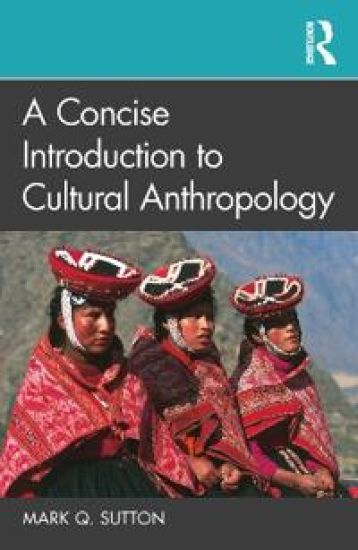
A Concise Introduction to Cultural Anthropology
This book offers a concise and accessible overview of cultural anthropology for those coming to the subject for the first time. It introduces key areas of the discipline and touches on its historical developments and applied aspects. As well as traditional topics such as social organization, politics, and economics, the book engages with important contemporary issues including race, gender, sexuality, and colonialism.In a beginner-friendly format, this book is ideal for students of anthropology, as well as for the interested reader as an introduction to the subject.
A Concise Introduction to Cultural Anthropology
This book offers a concise and accessible overview of cultural anthropology for those coming to the subject for the first time. It introduces key areas of the discipline and touches on its historical developments and applied aspects. As well as traditional topics such as social organization, politics, and economics, the book engages with important contemporary issues including race, gender, sexuality, and colonialism.In a beginner-friendly format, this book is ideal for students of anthropology, as well as for the interested reader as an introduction to the subject.
An Introduction to Native North America

An Introduction to Native North America

Mark Q. Sutton

TAYLOR FRANCIS LTD
2024
nidottu
An Introduction to Native North America provides a basic introduction to the Native peoples of North America, covering what are now the United States, northern Mexico, and Canada.In this updated and revised new edition, Mark Q. Sutton has expanded and improved the existing text, adding to the case studies, updating the text with the latest research, increasing the number of images, providing more coverage of the Arctic regions, and including new perspectives, particularly those of Native peoples. This book addresses the history of research, the European invasion, and the impact of Europeans on Native societies. A final chapter introduces contemporary Native Americans, discussing issues that affect them, including religion, health, and politics. The book retains a wealth of pedological features to aid and reinforce learning.Featuring case studies of many Native American groups, as well as some 87 maps and images, An Introduction to Native North America is an indispensable tool to those studying the history of North America and its Native peoples.
An Introduction to Native North America

An Introduction to Native North America

Mark Q. Sutton

TAYLOR FRANCIS LTD
2024
sidottu
An Introduction to Native North America provides a basic introduction to the Native peoples of North America, covering what are now the United States, northern Mexico, and Canada.In this updated and revised new edition, Mark Q. Sutton has expanded and improved the existing text, adding to the case studies, updating the text with the latest research, increasing the number of images, providing more coverage of the Arctic regions, and including new perspectives, particularly those of Native peoples. This book addresses the history of research, the European invasion, and the impact of Europeans on Native societies. A final chapter introduces contemporary Native Americans, discussing issues that affect them, including religion, health, and politics. The book retains a wealth of pedological features to aid and reinforce learning.Featuring case studies of many Native American groups, as well as some 87 maps and images, An Introduction to Native North America is an indispensable tool to those studying the history of North America and its Native peoples.
Archaeology

Archaeology

Mark Q. Sutton

TAYLOR FRANCIS LTD
2025
nidottu
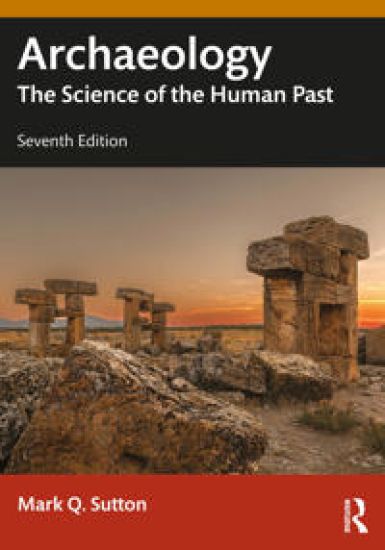
Archaeology: The Science of the Human Past introduces students to the wide-ranging and fascinating world of archaeology and provides them with a comprehensive understanding of fundamental archaeological concepts and methods.The seventh edition keeps pace with the developments in archaeological science with up-to-date information on dating, artifact analyses, and remote sensing. Theoretical developments in power, gender, and cognition are also included. Introducing the key components of archaeology, including sites, artifacts, ecofacts, remote sensing, and excavation, it discusses the ways archaeologists obtain, analyze, and interpret evidence. Varying perspectives are considered to provide holistic coverage of how archaeological techniques and methods are used to formulate and test models of what happened in the past. Cultural resource management and the laws and regulations that deal with archaeology around the world are described. Archaeology is placed in the context of current topics, from environmental problems to issues affecting Indigenous populations.Archaeology: The Science of the Human Past remains an ideal introduction to archaeology by offering students a broad and clear understanding of the theoretical and scientific aspects of archaeology and how various archaeological perspectives and techniques help us comprehend not just the past but the contemporary world as well.
Archaeology

Archaeology

Mark Q. Sutton

TAYLOR FRANCIS LTD
2025
sidottu
Archaeology: The Science of the Human Past introduces students to the wide-ranging and fascinating world of archaeology and provides them with a comprehensive understanding of fundamental archaeological concepts and methods.The seventh edition keeps pace with the developments in archaeological science with up-to-date information on dating, artifact analyses, and remote sensing. Theoretical developments in power, gender, and cognition are also included. Introducing the key components of archaeology, including sites, artifacts, ecofacts, remote sensing, and excavation, it discusses the ways archaeologists obtain, analyze, and interpret evidence. Varying perspectives are considered to provide holistic coverage of how archaeological techniques and methods are used to formulate and test models of what happened in the past. Cultural resource management and the laws and regulations that deal with archaeology around the world are described. Archaeology is placed in the context of current topics, from environmental problems to issues affecting Indigenous populations.Archaeology: The Science of the Human Past remains an ideal introduction to archaeology by offering students a broad and clear understanding of the theoretical and scientific aspects of archaeology and how various archaeological perspectives and techniques help us comprehend not just the past but the contemporary world as well.
Human Societies

Human Societies

Mark Q. Sutton

TAYLOR FRANCIS LTD
2025
nidottu
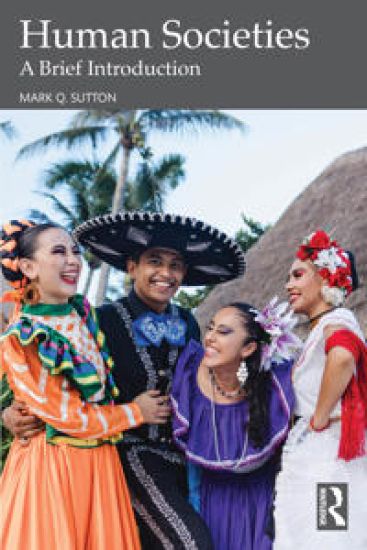
Human Societies: A Brief Introduction succinctly covers the basic concepts of cultural anthropology in a way that is relevant and engaging to the introductory student. Less time is spent on anthropological detail and more time on the relevance of anthropological understanding to the contemporary world.The issues facing the contemporary Western world are also confronting the thousands of other societies. The book deals with topics such as the variety of sexualities, the thousands of religions, how people adapt to their environments, the ways people organize themselves, the multitude of foods and cuisines, adaptations to climate change, refugees and migrants, and the many different approaches to reproduction; all topics to which students should already be generally aware. Included are succinct chapters discussing personality; adaptation; social, political, and economic organization; food and diet; sex and gender; religion and ritual; and change and development. The book also includes short “Spotlight” boxes that enlighten the reader about specific topics of interest, as well as chapter summaries, exercises, key terms, and a comprehensive glossary.Human Societies: A Brief Introduction is essential reading for undergraduate students taking their first steps into cultural and applied anthropology.
Human Societies

Human Societies

Mark Q. Sutton

TAYLOR FRANCIS LTD
2025
sidottu
Human Societies: A Brief Introduction succinctly covers the basic concepts of cultural anthropology in a way that is relevant and engaging to the introductory student. Less time is spent on anthropological detail and more time on the relevance of anthropological understanding to the contemporary world.The issues facing the contemporary Western world are also confronting the thousands of other societies. The book deals with topics such as the variety of sexualities, the thousands of religions, how people adapt to their environments, the ways people organize themselves, the multitude of foods and cuisines, adaptations to climate change, refugees and migrants, and the many different approaches to reproduction; all topics to which students should already be generally aware. Included are succinct chapters discussing personality; adaptation; social, political, and economic organization; food and diet; sex and gender; religion and ritual; and change and development. The book also includes short “Spotlight” boxes that enlighten the reader about specific topics of interest, as well as chapter summaries, exercises, key terms, and a comprehensive glossary.Human Societies: A Brief Introduction is essential reading for undergraduate students taking their first steps into cultural and applied anthropology.
Bioarchaeology

Bioarchaeology

Mark Q. Sutton

Routledge
2020
sidottu
Bioarchaeology covers the history and general theory of the field plus the recovery and laboratory treatment of human remains.Bioarchaeology is the study of human remains in context from an archaeological and anthropological perspective. The book explores, through numerous case studies, how the ways a society deals with their dead can reveal a great deal about that society, including its religious, political, economic, and social organizations. It details recovery methods and how, once recovered, human remains can be analyzed to reveal details about the funerary system of the subject society and inform on a variety of other issues, such as health, demography, disease, workloads, mobility, sex and gender, and migration. Finally, the book highlights how bioarchaeological techniques can be used in contemporary forensic settings and in investigations of genocide and war crimes.In Bioarchaeology, theories, principles, and scientific techniques are laid out in a clear, understandable way, and students of archaeology at undergraduate and graduate levels will find this an excellent guide to the field.
Bioarchaeology

Bioarchaeology

Mark Q. Sutton

Routledge
2020
nidottu
Bioarchaeology covers the history and general theory of the field plus the recovery and laboratory treatment of human remains.Bioarchaeology is the study of human remains in context from an archaeological and anthropological perspective. The book explores, through numerous case studies, how the ways a society deals with their dead can reveal a great deal about that society, including its religious, political, economic, and social organizations. It details recovery methods and how, once recovered, human remains can be analyzed to reveal details about the funerary system of the subject society and inform on a variety of other issues, such as health, demography, disease, workloads, mobility, sex and gender, and migration. Finally, the book highlights how bioarchaeological techniques can be used in contemporary forensic settings and in investigations of genocide and war crimes.In Bioarchaeology, theories, principles, and scientific techniques are laid out in a clear, understandable way, and students of archaeology at undergraduate and graduate levels will find this an excellent guide to the field.
Bioarchaeology

Bioarchaeology

Mark Q. Sutton; Eric J. Bartelink

TAYLOR FRANCIS LTD
2025
nidottu
Bioarchaeology covers the history and general theory of the field plus the recovery and laboratory treatment of human remains.Bioarchaeology is the study of human remains in context from an archaeological and anthropological perspective. The book explores, through numerous case studies, how the ways a society deals with their dead can reveal a great deal about that society, including its religious, political, economic, and social organizations. It details recovery methods and how, once recovered, human remains can be analyzed to reveal details about the funerary system of the subject society and inform on a variety of other issues, such as health, demography, disease, workloads, mobility, sex and gender, and migration. Finally, the book highlights how bioarchaeological techniques can be used in contemporary forensic settings and in investigations of genocide and war crimes.In Bioarchaeology, theories, principles, and scientific techniques are laid out in a clear, understandable way, and students of archaeology at undergraduate and graduate levels will find this an excellent guide to the field.