Kirjahaku
Etsi kirjoja tekijän nimen, kirjan nimen tai ISBN:n perusteella.
1000 tulosta hakusanalla Martha Smith
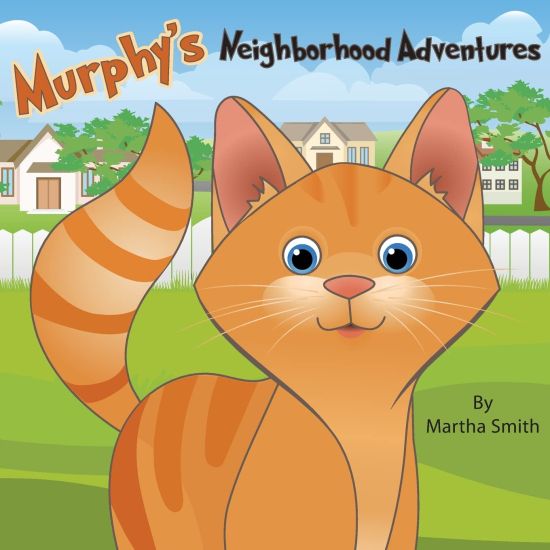
Murphy the cat became bored indoors. His owner let him outdoors. A unique sound led Murphy to a garage full of amazing things. Popsy watched Murphy explore. Each day Murphy visited Popsy, watched him work, and disappeared. One day Murphy felt brave and let Popsy rub his head. No collar. No tags.Popsy worried about Murphy. He drove the cat to the animal shelter to search for a microchip. Read the story to discover whether Popsy adopted Murphy.
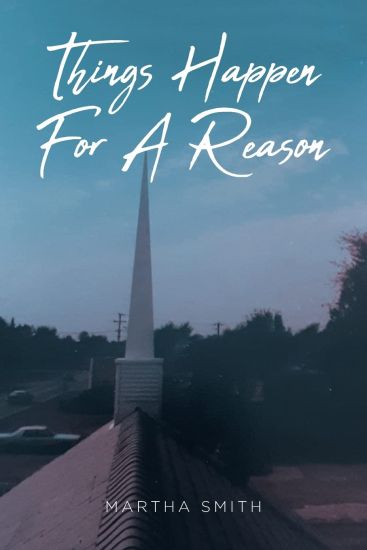
This is a true story of mercy, healing, and deliverance. Ellis Shortridge was born and raised in Grundy, Virginia, in 1917. When Ellis was just a young man, he came to know Jesus, and his whole life was changed. As he read his Bible, he claimed all the promises. Ellis knew and believed God could do anything. He was called to a ministry of healing and deliverance, and God used him in a great way. At that time, there was not a Pentecostal Church anywhere in the county where Ellis lived. After holding meetings in people's homes, God blessed Ellis and his two brothers, Hassel and Ed, to build the first church there. God supplied all the land and material to build it. Today it has grown to become a large church and is still doing work for God.

Domination and Resistance illuminates the twin themes of superpower domination and indigenous resistance in the central Pacific during the Cold War, with a compelling historical examination of the relationship between the United States and the Republic of the Marshall Islands. For decision makers in Washington, the Marshall Islands represented a strategic prize seized from Japan near the end of World War II. In the postwar period, under the auspices of a United Nations Trusteeship Agreement, the United States reinforced its control of the Marshall Islands and kept the Soviet Union and other Cold War rivals out of this Pacific region. The United States also used the opportunity to test a vast array of powerful nuclear bombs and missiles in the Marshalls, even as it conducted research on the effects of human exposure to radioactive fallout.Although these military tests and human experiments reinforced the US strategy of deterrence, they also led to the displacement of several atoll communities, serious health implications for the Marshallese, and widespread ecological degradation. Confronted with these troubling conditions, the Marshall Islanders utilized a variety of political and legal tactics—petitions, lawsuits, demonstrations, and negotiations—to draw American and global attention to their plight. In response to these indigenous acts of resistance, the United States strengthened its strategic interests in the Marshalls but made some concessions to the islanders. Under the Compact of Free Association (COFA) and related agreements, the Americans tightened control over the Kwajalein Missile Range while granting the Marshallese greater political autonomy, additional financial assistance, and a mechanism to settle nuclear claims.Martha Smith-Norris argues that despite COFA's implementation in 1986 and Washington's pivot toward the Asia-Pacific region in the post–Cold War era, the United States has yet to provide adequate compensation to the Republic of the Marshall Islands for the extensive health and environmental damages caused by the US testing programs.
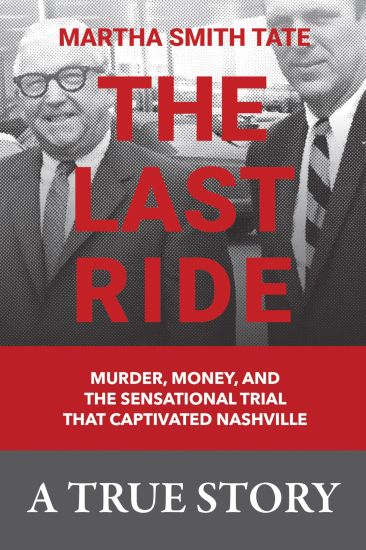
The Last Ride: Murder, Money, and the Sensational Trial That Captivated Nashville
Martha Smith Tate
Archway Publishing
2023
sidottu
The Cultural and Economic Context of Maternal Infanticide
Martha Smithey
Emerald Publishing Limited
2020
nidottu
Almost every story of maternal infanticide starts with 'the baby wouldn't stop crying'. But the story is more than' just bad or mentally ill mothers who lethally assault their baby. The story is about how hard it is to be a good mother in a society where women are expected to raise their children in their spare time and with their spare change. This expectation is grounded in a modern mothering ideology of unclear, overwhelming gender socialized expectations of what good mothers are supposed to be and do and assumes mothers have access to the economic and support resources necessary for this monumental job. The struggle of being a 'good mother' is common to all mothers and requires much more time and resources than most mothers have available to them. In today's society, almost all mothers must have a paying job just to make ends meet. Their job takes up most of their day and leaves little time for the demands of parenting. Gender segregated jobs and economic inequality of women leave mothers with pay checks that are insufficient for homecare, childcare, and healthcare and leaves them eking out basic goods such as food, diapers, and medicine. And they are powerless to change their situation. For some mothers, like the ones discussed in this book, the struggle overwhelms them and they commit a terrible, heavily-regretted act that costs them their child's life, their family, their freedom, and their piece of mind for the rest of their lives. This book examines the social, economic and cultural conditions and stressors under which mothers commit infanticide, and shows how these conditions affect the ability to meet societal and self-perceived expectations of 'good' mothering. As mothers perceive that they are failing to meet these expectations, the likelihood of violence toward the infant increases. This failure is the result of cultural and economic inequalities that are situated in the context of increasingly anomic, unrealistic expectations of mothering and decreasing social support and economic resources necessary for fulfilling the role identity of mother.
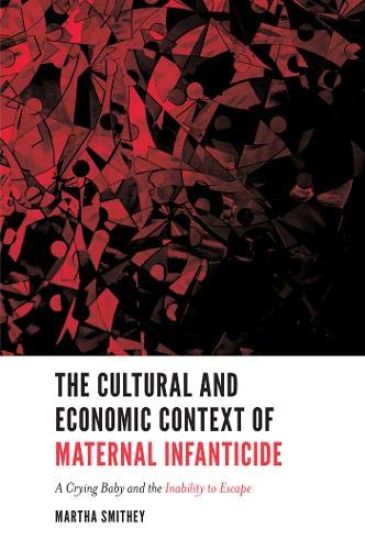
The Cultural and Economic Context of Maternal Infanticide
Martha Smithey
Emerald Publishing Limited
2018
sidottu
Almost every story of maternal infanticide starts with 'the baby wouldn't stop crying'. But the story is more than' just bad or mentally ill mothers who lethally assault their baby. The story is about how hard it is to be a good mother in a society where women are expected to raise their children in their spare time and with their spare change. This expectation is grounded in a modern mothering ideology of unclear, overwhelming gender socialized expectations of what good mothers are supposed to be and do and assumes mothers have access to the economic and support resources necessary for this monumental job. The struggle of being a 'good mother' is common to all mothers and requires much more time and resources than most mothers have available to them. In today's society, almost all mothers must have a paying job just to make ends meet. Their job takes up most of their day and leaves little time for the demands of parenting. Gender segregated jobs and economic inequality of women leave mothers with pay checks that are insufficient for homecare, childcare, and healthcare and leaves them eking out basic goods such as food, diapers, and medicine. And they are powerless to change their situation. For some mothers, like the ones discussed in this book, the struggle overwhelms them and they commit a terrible, heavily-regretted act that costs them their child's life, their family, their freedom, and their piece of mind for the rest of their lives. This book examines the social, economic and cultural conditions and stressors under which mothers commit infanticide, and shows how these conditions affect the ability to meet societal and self-perceived expectations of 'good' mothering. As mothers perceive that they are failing to meet these expectations, the likelihood of violence toward the infant increases. This failure is the result of cultural and economic inequalities that are situated in the context of increasingly anomic, unrealistic expectations of mothering and decreasing social support and economic resources necessary for fulfilling the role identity of mother.
Boost Your STEAM Program with Great Literature and Activities
Liz Knowles; Martha Smith
Libraries Unlimited Inc
2018
nidottu
You've created a STEAM program in your library, but how do you work literacy into the curriculum? With this collection of resource recommendations, direction for program development, and activities, you'll have students reading proficiently in no time.Many schools and libraries are implementing STEAM programs in the school library makerspace to promote problem solving by allowing students to create their own solutions to a problem through trial and error. In order to enhance literacy development in the STEAM program, however, they need resources for integrating literature into the curriculum. In this collection of resources for doing just that, veteran education professionals and practiced coauthors Liz Knowles and Martha Smith bring readers over eight hundred recommended and annotated books and web resources, selected based on research on successfully integrating STEAM and literacy programs and organized by the five STEAM areas. Titles are complemented by discussion questions and problem-solving activities that will aid educators in both adding and using the best literature to their STEAM programs for encouraging learning. In addition to promoting literacy, these resources will help to develop creativity, lateral thinking skills, and confidence in students.
Establishing a book club is a great way to involve parents in promoting literacy to young readers. This book shows you how to start a book club in your school or community, and it provides bibliographies of literature resources for children. Suggested topics and sample book club sessions help you get started, and an extensive bibliography, arranged by genre, guides teachers, parents, and students in selecting reading material. Chapters cover read-alouds, picture books, horror stories, multicultural literature, poetry, science fiction, nonfiction and reference, bibliotherapy and problem novels, award-winning books, biographies, and books in a series. For each genre the authors offer a general overview, suggest discussion questions, provide a bibliography, and list resources for further reading. Helpful Internet addresses and additional topics are included in the concluding chapter.

Here are more great topics and sample book club sessions to help you start a book club and keep it going! Chapters in this volume cover humor, families, social issues, folklore and mythology, sports, magazines, picture books as art, censorship, the Internet, middle school readers, gender bias, booktalks, and the arts. For each genre, the authors offer a general overview, discussion questions, a bibliography, resources for further reading, and appropriate Web sites. If you want to promote literacy and involve parents in the reading program, you'll love this book and its companion, The Reading Connection.
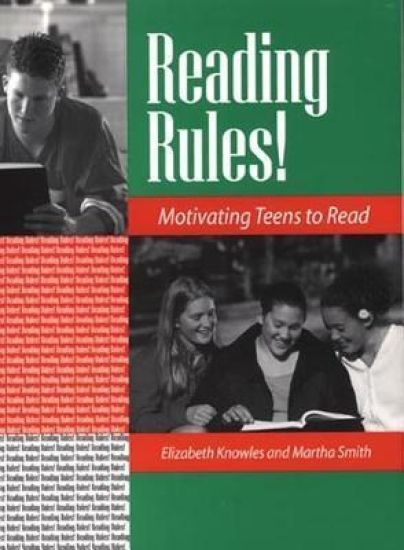
Discusses how teachers can motivate teenagers to read, covering such topics as creating a conducive reading environment at school and the use of interactive activities to interest students.

Book clubs, literature circles, and reading groups are great ways to promote literacy and books to young readers. This new guide provides everything you need to run a dynamic, no-fuss book discussion group with elementary and middle school students. Featuring 15 titles of diverse genres, it offers discussion topics and activity ideas for some of the best new reads for kids. Brought to you by the authors of the highly acclaimed Reading Rules! Motivating Teens to Read, this guide is an outstanding resource for starting and running a stellar literary discussion group—whether it's in a school, public library, or community center. Grades 4-8.

This book by well-known authors Liz Knowles and Martha Smith (Boys and Literacy, Reading Rules!, etc.) fills the need for a K-12 resource for teachers and librarians searching for materials and activity ideas for character education at all grade levels. It consists of 12 chapters—one on each virtue: empathy, respect, courage, humor, responsibility, perseverance, loyalty, honesty, cooperation, tolerance, citizenship, and forgiveness. Each chapter has a listing of related virtues, a definition, several useful famous quotes, listings of people and organizations who have demonstrated the virtue, related topics for further curricular exploration and discussion questions. There is also a complete listing of annotated titles divided into five sections: picture books, primary (gr. 1-3), intermediate (gr. 3-5), middle school (gr. 5-8) and young adult (gr. 8-12).This book by well-known authors Liz Knowles and Martha Smith (Boys and Literacy, Reading Rules!, etc.) fills the need for a K-12 resource for teachers and librarians searching for materials and activity ideas at all grade levels. It consists of 12 chapters—one on each virtue: empathy, respect, courage, humor, responsibility, perseverance, loyalty, honesty, cooperation, tolerance, citizenship, and forgiveness. Each chapter has a listing of related virtues, a definition, several useful famous quotes, listings of people and organizations who have demonstrated the virtue, related topics for further curricular exploration and discussion questions. There is also a complete listing of annotated titles divided into five sections: picture books, primary (gr. 1-3), intermediate (gr. 3-5), middle school (gr. 5-8) and young adult (gr. 8-12). In addition, Knowles and Smith offer lists of other good professional books and Web sites to consult in building your school's character education program. A unique feature of this book is a section in each chapter called, in action in which the authors offer ideas to share with students such as Empathy in action: Be polite in the cafeteria, Be kind and helpful to those with mental and physical challenges, Share your supplies with those who have none. Grades K-12.

The Common Core Approach to Building Literacy in Boys
Liz Knowles; Martha Smith
Libraries Unlimited Inc
2014
nidottu
Written with a focus on the English Language Arts Common Core Standards, this book provides a complete plan for developing a literacy program that focuses on boys pre-K through grade 12.Despite the fact that reading and literacy among boys has been an area of concern for years, this issue remains unresolved today. Additionally, the emphasis and focus have changed due to the implementation of the English Language Arts Common Core Standards. How can educators best encourage male students to read, and what new technologies and techniques can serve this objective? The Common Core Approach to Building Literacy in Boys is an essential resource and reference for teachers, librarians, and parents seeking to encourage reading in boys from preschool to 12th grade.Providing a wide array of useful, up-to-date information that emphasizes the English Language Arts Common Core Standards, the bibliographies and descriptions of effective strategies in this book will enable you to boost reading interest and performance in boys. The chapters cover 16 different topics of interest to boys, all accompanied by a complete bibliography for each subject area, discussion questions, writing connections, and annotated new and classic nonfiction titles. Information on specific magazines, annotated professional titles, books made into film, websites, and apps that will help you get boys interested in reading is also included.
Investigating Animal Abuse Crime Scenes
Virginia M. Maxwell; Martha Smith-Blackmore
TAYLOR FRANCIS LTD
2023
sidottu
Animal abuse is well established as a gateway crime linked to other forms of antisocial behaviors and broader criminal violence. Increased awareness of the link between animal abuse and criminal behavior has led many states to mandate cross-reporting between agencies overseeing the welfare of families and of animals. Investigating Animal Abuse Crime Scenes: A Field Guide is designed for first responders—such as animal control officers and police officers—as well as forensic scientists and other criminal justice professionals who are tasked with processing and analyzing animal crime scenes and evidence. The book serves equally as a useful resource for those in the field and laboratory, in addition to those professionals who are further along in the investigative and judicial process. The book addresses the key areas that must be considered in a thorough investigation of an animal abuse crime. This starts with general crime scene procedures that include securing and releasing the scene, search and seizure issues, chain of custody, documentation, searching for evidence and the use of enhancement technologies. While many readers may already be familiar with such concepts, they are addressed in the context of unique factors relating to animals and animal abuse cases. The book then addresses the recognition, collection and preservation of different types of evidence that may be located at animal abuse scenes, with examples of the most important evidence for specific case types.The critical role of the veterinarian, and the key aspects of veterinary forensic medicine, receives in-depth consideration. This includes issues such as examining animal victims of crime; determining cause of injury or death through the forensic clinical exam or necropsy; and techniques for evidence documentation, collection, and preservation. The physical and emotional abuse of animals is outlined throughout a series of chapters focused on specific types of animal abuse. Finally, report writing and testimony, from the perspectives of both the crime scene investigator and forensic veterinarian, are addressed. Further, three appendices provide useful checklists and templates for all animal abuse crime scene responders and veterinarians.Investigating Animal Abuse Crime Scenes fills the growing need for a handy, comprehensive field reference that specifically focuses on the crime scene processing, investigation, analysis of evidence, and the subsequent adjudication of animal abuse cases within the court system.
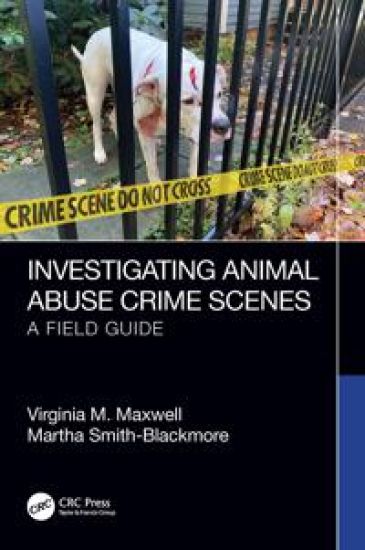
Investigating Animal Abuse Crime Scenes
Virginia M. Maxwell; Martha Smith-Blackmore
TAYLOR FRANCIS LTD
2023
nidottu
Animal abuse is well established as a gateway crime linked to other forms of antisocial behaviors and broader criminal violence. Increased awareness of the link between animal abuse and criminal behavior has led many states to mandate cross-reporting between agencies overseeing the welfare of families and of animals. Investigating Animal Abuse Crime Scenes: A Field Guide is designed for first responders—such as animal control officers and police officers—as well as forensic scientists and other criminal justice professionals who are tasked with processing and analyzing animal crime scenes and evidence. The book serves equally as a useful resource for those in the field and laboratory, in addition to those professionals who are further along in the investigative and judicial process. The book addresses the key areas that must be considered in a thorough investigation of an animal abuse crime. This starts with general crime scene procedures that include securing and releasing the scene, search and seizure issues, chain of custody, documentation, searching for evidence and the use of enhancement technologies. While many readers may already be familiar with such concepts, they are addressed in the context of unique factors relating to animals and animal abuse cases. The book then addresses the recognition, collection and preservation of different types of evidence that may be located at animal abuse scenes, with examples of the most important evidence for specific case types.The critical role of the veterinarian, and the key aspects of veterinary forensic medicine, receives in-depth consideration. This includes issues such as examining animal victims of crime; determining cause of injury or death through the forensic clinical exam or necropsy; and techniques for evidence documentation, collection, and preservation. The physical and emotional abuse of animals is outlined throughout a series of chapters focused on specific types of animal abuse. Finally, report writing and testimony, from the perspectives of both the crime scene investigator and forensic veterinarian, are addressed. Further, three appendices provide useful checklists and templates for all animal abuse crime scene responders and veterinarians.Investigating Animal Abuse Crime Scenes fills the growing need for a handy, comprehensive field reference that specifically focuses on the crime scene processing, investigation, analysis of evidence, and the subsequent adjudication of animal abuse cases within the court system.

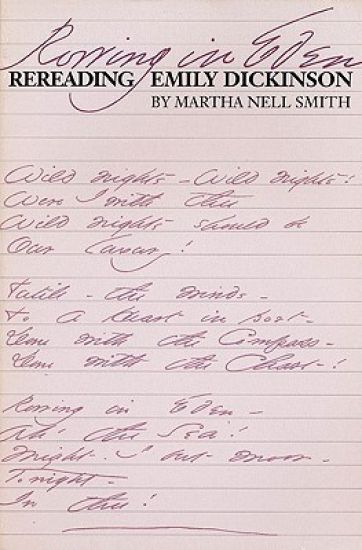
Emily Dickinson wrote a "letter to the world" and left it lying in her drawer more than a century ago. This widely admired epistle was her poems, which were never conventionally published in book form during her lifetime. Since the posthumous discovery of her work, general readers and literary scholars alike have puzzled over this paradox of wanting to communicate widely and yet apparently refusing to publish. In this pathbreaking study, Martha Nell Smith unravels the paradox by boldly recasting two of the oldest and still most frequently asked questions about Emily Dickinson: Why didn't she publish more poems while she was alive? and Who was her most important contemporary audience?Regarding the question of publication, Smith urges a reconception of the act of publication itself. She argues that Dickinson did publish her work in letters and in forty manuscript books that circulated among a cultured network of correspondents, most important of whom was her sister-in-law, Susan Huntington Gilbert Dickinson. Rather than considering this material unpublished because unprinted, Smith views its alternative publication as a conscious strategy on the poet's part, a daring poetic experiment that also included Dickinson's unusual punctuation, line breaks, stanza divisions, calligraphic orthography, and bookmaking-all the characteristics that later editors tried to standardize or eliminate in preparing the poems for printing.Dickinson's relationship with her most important reader, Sue Dickinson, has also been lost or distorted by multiple levels of censorship, Smith finds. Emphasizing the poet-sustaining aspects of the passionate bonds between the two women, Smith shows that their relationship was both textual and sexual. Based on study of the actual holograph poems, Smith reveals the extent of Sue Dickinson's collaboration in the production of poems, most notably "Safe in Their Alabaster Chambers." This finding will surely challenge the popular conception of the isolated, withdrawn Emily Dickinson.Well-versed in poststructuralist, feminist, and new textual criticism, Rowing in Eden uncovers the process by which the conventional portrait of Emily Dickinson was drawn and offers readers a chance to go back to original letters and poems and look at the poet and her work through new eyes. It will be of great interest to a wide audience in literary and feminist studies.

Everywoman Her Own Theology
Martha Nell Smith; Julie R. Enszer
The University of Michigan Press
2018
nidottu
Alicia Ostriker’s artistic and intellectual productions as a poet, critic, and essayist over the past 50 years are protean and have been profoundly influential to generations of readers, writers, and critics. In all her writings, both the feminist and the human engage fiercely with the material and metaphysical world. Ostriker is a poet concerned with questions of social justice, equality, religion, and how to live in a world marked by both beauty and tragedy.Everywoman Her Own Theology: On the Poetry of Alicia Suskin Ostriker engages Ostriker’s poetry from throughout her career, including her first volume Songs, her award-winning collection The Imaginary Lover, and her more recent work in the collections No Heaven, the volcano sequence, The Old Woman, the Tulip, and the Dog, and Waiting for the Light. Like her literary criticism and essays, Ostriker’s poetry explores themes of feminism, Jewish life, family, and social justice. With insightful essays—some newly written for this collection—poets and literary critics including Toi Derricotte, Daisy Fried, Cynthia Hogue, Tony Hoagland, and Eleanor Wilner illuminate and open new pathways for critical engagement with Alicia Ostriker’s lifetime of poetic work.