
Kirjahaku
Etsi kirjoja tekijän nimen, kirjan nimen tai ISBN:n perusteella.
1000 tulosta hakusanalla Martin Hellawell

A history of U.S. public health emergencies and how we can turn the tide. Despite enormous advances in medical science and public health education over the last century, access to health care remains a dominant issue in American life. U.S. health care is often hailed as the best in the world, yet the public health emergencies of today often echo the public health emergencies of yesterday: consider the Great Influenza Pandemic of 1918–19 and COVID-19, the displacement of the Dust Bowl and the havoc of Hurricane Maria, the Reagan administration’s antipathy toward the AIDS epidemic and the lack of accountability during the water crisis in Flint, Michigan. Spanning the period from the presidency of Woodrow Wilson to that of Donald Trump, American Health Crisis illuminates how—despite the elevation of health care as a human right throughout the world—vulnerable communities in the United States continue to be victimized by structural inequalities across disparate geographies, income levels, and ethnic groups. Martin Halliwell views contemporary public health crises through the lens of historical and cultural revisionings, suturing individual events together into a narrative of calamity that has brought us to our current crisis in health politics. American Health Crisis considers the future of public health in the United States and, presenting a reinvigorated concept of health citizenship, argues that now is the moment to act for lasting change.
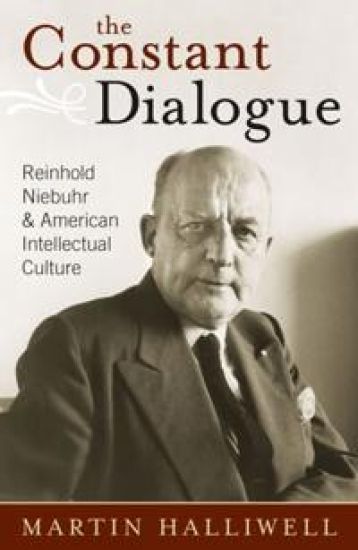
In this important new work, Martin Halliwell focuses on the tensions between the two dimensions of Reinhold Niebuhr's thought: his political role as a radical social critic and the conservative drift of his religious beliefs. Halliwell concentrates particularly on his attempts to justify the role of the religious critic in a secular age by tracing his thought back to European and American traditions of religious individualism. In order to better examine Niebuhr's philosophy, Halliwell positions him in a series of debates on political, religious, ethical, and cultural themes with other public intellectuals such as John Dewey, Paul Tillich, W. H. Auden, George Kennan, and Martin Luther King, Jr. In doing so, the book reassesses the role of "dialogue" in Reinhold Niebuhr's thought and the important contributions that Reinhold Niebuhr made to twentieth century American culture.

This distinctive reappraisal of humanism argues that humanist thought is a diverse tradition which cannot be reduced to current conceptions of it. By considering humanism via the categories of Romantic, Existential, Dialogic, Civic, Spiritual, Pagan, Pragmatic and Technological Humanisms, Halliwell and Mousley propose that the critical edge of humanist thought can be rescued from its popular view as intellectually redundant. They also argue that because these humanisms contain within them anti-humanist perspectives, it is possible to counter the charge that humanism is based upon an unquestioned image of human nature. The book focuses on the thought of twenty-four mainly European and North American thinkers, ranging historically from the Renaissance to postmodernism. It discusses foundational writers (some of whom have been claimed as anti-humanists) such as Marx, Nietzsche, Freud, Dewey and Sartre as well as the contemporary thinkers Habermas, Cixous, Rorty, Hall and Haraway, to construct a series of provocative dialogues which suggest the ongoing relevance of humanism to issues of ethics, art, science, selfhood, gender, citizenship and religion.Given the range and originality of the book's approach, Critical Humanisms will be an invaluable resource for students and researchers in the Humanities, particularly English, American studies, cultural studies, modern languages, philosophy and sociology.
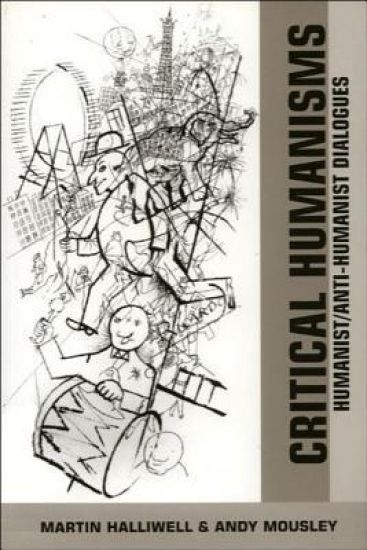
This distinctive reappraisal of humanism argues that humanist thought is a diverse tradition which cannot be reduced to current conceptions of it. By considering humanism via the categories of Romantic, Existential, Dialogic, Civic, Spiritual, Pagan, Pragmatic and Technological Humanisms, Halliwell and Mousley propose that the critical edge of humanist thought can be rescued from its popular view as intellectually redundant. They also argue that because these humanisms contain within them anti-humanist perspectives, it is possible to counter the charge that humanism is based upon an unquestioned image of human nature. The book focuses on the thought of twenty-four mainly European and North American thinkers, ranging historically from the Renaissance to postmodernism. It discusses foundational writers (some of whom have been claimed as anti-humanists) such as Marx, Nietzsche, Freud, Dewey and Sartre as well as the contemporary thinkers Habermas, Cixous, Rorty, Hall and Haraway, to construct a series of provocative dialogues which suggest the ongoing relevance of humanism to issues of ethics, art, science, selfhood, gender, citizenship and religion. Given the range and originality of the book's approach, Critical Humanisms will be an invaluable resource for students and researchers in the Humanities, particularly English, American studies, cultural studies, modern languages, philosophy and sociology.

This book provides a stimulating account of the dominant cultural forms of 1950s America: fiction and poetry; theatre and performance; film and television; music and radio; and the visual arts. Through detailed commentary and focused case studies of influential texts and events -- from Invisible Man to West Side Story, from Disneyland to the Seattle World's Fair, from Rear Window to The Americans -- the book examines the way in which modernism and the cold war offer two frames of reference for understanding the trajectory of postwar culture. The two core aims of this volume are to chart the changing complexion of American culture in the years following World War II and to provide readers with a critical investigation of 'the 1950s'. The book provides an intellectual context for approaching 1950s American culture and considers the historical impact of the decade on recent social and cultural developments. Key Features: * Focused case studies featuring key texts, genres, writers, artists and cultural trends * Chronology of 1950s American Culture * Bibliographies for each chapter * over twenty illustrations
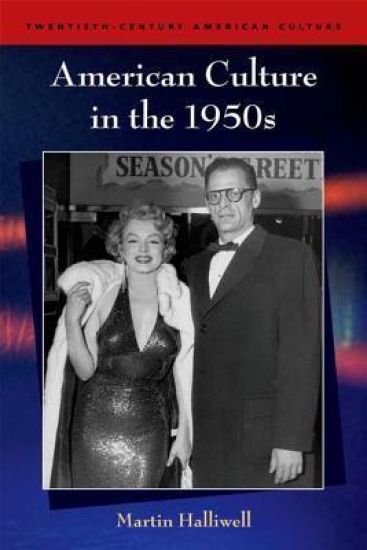
This book provides a stimulating account of the dominant cultural forms of 1950s America: fiction and poetry; theatre and performance; film and television; music and radio; and the visual arts. Through detailed commentary and focused case studies of influential texts and events -- from Invisible Man to West Side Story, from Disneyland to the Seattle World's Fair, from Rear Window to The Americans -- the book examines the way in which modernism and the cold war offer two frames of reference for understanding the trajectory of postwar culture. The two core aims of this volume are to chart the changing complexion of American culture in the years following World War II and to provide readers with a critical investigation of 'the 1950s'. The book provides an intellectual context for approaching 1950s American culture and considers the historical impact of the decade on recent social and cultural developments. Key Features: * Focused case studies featuring key texts, genres, writers, artists and cultural trends * Chronology of 1950s American Culture * Bibliographies for each chapter * over twenty illustrations
Transatlantic Modernism traces the intersection of artistic and moral ideas in European and American literary modernism. Rather than reading modernism as a complete rejection of social morality, this perceptive study shows how early twentieth-century writers such as Conrad, Faulkner, Gide, Kafka, Mann and Stein devised new aesthetic techniques to address ethical problems. By focusing on a range of decadent, naturalist, avant-garde and expatriate writers between the 1890s and 1940s, this book reassesses the moral trajectory of fiction on both sides of the Atlantic. The book is divided into four parts - Part I deals with Decadence and Naturalism, Part II with Symbolic Centres of Modernism, Part III with Sexual and Cultural Difference, and Part IV with Modernist Trickery - to discuss how modernist writers forged creative, but sometimes dangerous, links between personal and social morality. The chapters alternate between considering broad literary trends, such as the European avant-garde, American writers in Paris and the modernist picaresque, and the close study of influential texts, includingThe Immoralist, Death in Venice, The Secret Agent, The Sound and the Fury, Amerika and Mephisto. In response to the recent emergence of ethical theory in the humanities and the shifting parameters of national morality in the early twentieth-first century, Halliwell's book provides a fresh and timely analysis of the ways in which transatlantic modernists used fiction as a testing-ground for moral possibility. This new paperback edition contains an updated conclusion which explores modernist continuities in the early twenty-first century, literary responses to September 11 and the shifting parameters of national morality. Key Features: * Offers a fresh look at American and European Modernism * Discusses a wide range of important Modernist writers and texts including Wilde, Wharton, Conrad, Faulkner, Stein, Hemmingway, Kafka, Roth and Mann * Explores the role of ethics in literature in new and innovative ways * Introduces the historical and theoretical issues involved in ethical criticism using a broad range of examples
This book traces the concept of idiocy as it has developed in fiction and film in the nineteenth and twentieth centuries. It focuses particularly on visual images of idiocy and argues that writers as diverse as Gustave Flaubert, Fyodor Dostoevsky, Joseph Conrad, John Steinbeck, Flannery O'Connor and Rohinton Mistry, and filmmakers such as Jean Renoir, Akira Kurosawa, Alfred Hitchcock, Werner Herzog and John Huston have all been attracted to idiot figures as a way of thinking through issues of language acquisition, intelligence, creativity, disability, religion and social identity. Martin Halliwell provides a lively and detailed discussion of the most significant literary and cinematic uses of idiocy, arguing that scientific conceptions of the term as a classifiable medical condition are much too narrow. With the explosion of interest in idiocy among American and European filmmakers in the 1990s and the growing interest in its often overlooked history, this book offers a timely reassessment of idiocy and its distinctive place at the intersection of science and culture.

Therapeutic Revolutions examines the evolving relationship between American medicine, psychiatry, and culture from World War II to the dawn of the 1970s. In this richly layered intellectual history, Martin Halliwell ranges from national politics, public reports, and healthcare debates to the ways in which film, literature, and the mass media provided cultural channels for shaping and challenging preconceptions about health and illness.Beginning with a discussion of the profound impact of World War II and the Cold War on mental health, Halliwell moves from the influence of work, family, and growing up in the Eisenhower years to the critique of institutional practice and the search for alternative therapeutic communities during the 1960s. Blending a discussion of such influential postwar thinkers as Erich Fromm, William Menninger, Erving Goffman, Erik Erikson, and Herbert Marcuse with perceptive readings of a range of cultural text that illuminate mental health issues--among them Spellbound, Shock Corridor, Revolutionary Road, and I Never Promised You a Rose Garden--this compelling study argues that the postwar therapeutic revolutions closely interlink contrasting discourses of authority and liberation.
This dynamic and richly layered account of mental health in the late twentieth century interweaves three important stories: the rising political prominence of mental health in the United States since 1970; the shifting medical diagnostics of mental health at a time when health activists, advocacy groups, and public figures were all speaking out about the needs and rights of patients; and the concept of voice in literature, film, memoir, journalism, and medical case study that connects the health experiences of individuals to shared stories. Together, these three dimensions bring into conversation a diverse cast of late-century writers, filmmakers, actors, physicians, politicians, policy-makers, and social critics. In doing so, Martin Halliwell’s Voices of Mental Health breaks new ground in deepening our understanding of the place, politics, and trajectory of mental health from the moon landing to the millennium.
This book traces the concept of idiocy as it has developed in fiction and film in the nineteenth and twentieth centuries. It focuses particularly on visual images of idiocy and argues that writers as diverse as Gustave Flaubert, Fyodor Dostoevsky, Joseph Conrad, John Steinbeck, Flannery O'Connor and Rohinton Mistry, and filmmakers such as Jean Renoir, Akira Kurosawa, Alfred Hitchcock, Werner Herzog and John Huston have all been attracted to idiot figures as a way of thinking through issues of language acquisition, intelligence, creativity, disability, religion and social identity. Martin Halliwell provides a lively and detailed discussion of the most significant literary and cinematic uses of idiocy, arguing that scientific conceptions of the term as a classifiable medical condition are much too narrow. With the explosion of interest in idiocy among American and European filmmakers in the 1990s and the growing interest in its often overlooked history, this book offers a timely reassessment of idiocy and its distinctive place at the intersection of science and culture.
First published in 1999, this volume follows the work of five influential figures in twentieth-century transatlantic intellectual history. The work forms the basis for this engaging interdisciplinary study of romantic science. In this book, Martin Halliwell constructs a tradition of romantic science by indicating points of theoretical intersection in the thought of William James (American philosopher); Otto Rank (Austrian psychoanalyst); Erik Erikson (Danish/German psychologist); and Oliver Sacks (British neurologist). Beginning with the ferment of intellectual activity in late eighteenth-century German Romanticism, Halliwell argues that only with William James’ theory of pragmatism early in the twentieth century did romantic science become a viable counter-tradition to strictly empirical science. Stimulated by recent debates over rival models of consciousness and renewed interest in theories of the self, Halliwell reveals that in their challenge to Freud’s adoption of ideas from nineteenth-century natural science, these thinkers have enlarged the possibilities of romantic science for bridging the perceived gulf between the arts and sciences.
First published in 1999, this volume follows the work of five influential figures in twentieth-century transatlantic intellectual history. The work forms the basis for this engaging interdisciplinary study of romantic science. In this book, Martin Halliwell constructs a tradition of romantic science by indicating points of theoretical intersection in the thought of William James (American philosopher); Otto Rank (Austrian psychoanalyst); Erik Erikson (Danish/German psychologist); and Oliver Sacks (British neurologist). Beginning with the ferment of intellectual activity in late eighteenth-century German Romanticism, Halliwell argues that only with William James’ theory of pragmatism early in the twentieth century did romantic science become a viable counter-tradition to strictly empirical science. Stimulated by recent debates over rival models of consciousness and renewed interest in theories of the self, Halliwell reveals that in their challenge to Freud’s adoption of ideas from nineteenth-century natural science, these thinkers have enlarged the possibilities of romantic science for bridging the perceived gulf between the arts and sciences.

First published in 1999, this engaging interdisciplinary study of romantic science focuses on the work of five influential figures in twentieth-century transatlantic intellectual history. In this book, Martin Halliwell constructs an innovative tradition of romantic science by indicating points of theoretical and historical intersection in the thought of William James (American philosopher); Otto Rank (Austrian psychoanalyst); Ludwig Binswanger (Swiss psychiatrist); Erik Erikson (Danish/German psychologist); and Oliver Sacks (British neurologist). Beginning with the ferment of intellectual activity in late eighteenth-century German Romanticism, Halliwell argues that only with William James’ theory of pragmatism early in the twentieth century did romantic science become a viable counter-tradition to strictly empirical science. Stimulated by debates over rival models of consciousness and renewed interest in theories of the self, Halliwell reveals that in their challenge to Freud’s adoption of ideas from nineteenth-century natural science, these thinkers have enlarged the possibilities of romantic science for bridging the perceived gulf between the arts and sciences.
First published in 1999, this engaging interdisciplinary study of romantic science focuses on the work of five influential figures in twentieth-century transatlantic intellectual history. In this book, Martin Halliwell constructs an innovative tradition of romantic science by indicating points of theoretical and historical intersection in the thought of William James (American philosopher); Otto Rank (Austrian psychoanalyst); Ludwig Binswanger (Swiss psychiatrist); Erik Erikson (Danish/German psychologist); and Oliver Sacks (British neurologist). Beginning with the ferment of intellectual activity in late eighteenth-century German Romanticism, Halliwell argues that only with William James’ theory of pragmatism early in the twentieth century did romantic science become a viable counter-tradition to strictly empirical science. Stimulated by debates over rival models of consciousness and renewed interest in theories of the self, Halliwell reveals that in their challenge to Freud’s adoption of ideas from nineteenth-century natural science, these thinkers have enlarged the possibilities of romantic science for bridging the perceived gulf between the arts and sciences.
Transformed States offers a timely history of the politics, ethics, medical applications, and cultural representations of the biotechnological revolution, from the Human Genome Project to the COVID-19 pandemic. In exploring the entanglements of mental and physical health in an age of biotechnology, it views the post–Cold War 1990s as the horizon for understanding the intersection of technoscience and culture in the early twenty-first century. The book draws on original research spanning the presidencies of George H. W. Bush and Joe Biden to show how the politics of science and technology shape the medical uses of biotechnology. Some of these technologies reveal fierce ideological conflicts in the arenas of cloning, reproduction, artificial intelligence, longevity, gender affirmation, vaccination and environmental health. Interweaving politics and culture, the book illustrates how these health issues are reflected in and challenged by literary and cinematic texts, from Oryx and Crake to Annihilation, and from Gattaca to Avatar. By assessing the complex relationship between federal politics and the biomedical industry, Transformed States develops an ecological approach to public health that moves beyond tensions between state governance and private enterprise. To that end, Martin Halliwell analyzes thirty years that radically transformed American science, medicine, and policy, positioning biotechnology in dialogue with fears and fantasies about an emerging future in which health is ever more contested. Along with the two earlier books, Therapeutic Revolutions (2013) and Voices of Mental Health (2017), Transformed States is the final volume of a landmark cultural and intellectual history of mental health in the United States, journeying from the combat zones of World War II to the global emergency of COVID-19.
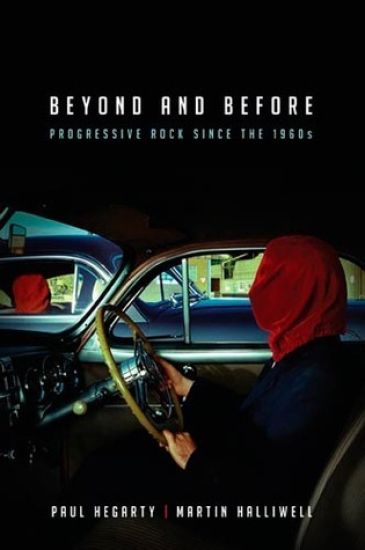
This is a brilliant new survey of progressive rock, from its roots through to more contemporary artists who share similar traits including Sonic Youth and Radiohead. A sleeping new study, "Beyond and Before" considers the high period of the early to mid-1970s, where there was widespread acceptance of the 'progressive' approach of detailed instrumentation, extended tracks and conceptual linkage and development across albums. Hegarty and Halliwell assess the roots of progressive rock, arguing convincingly that a fusion of styles, approaches and genres defined the 1970s period, and the authors develop tools to assess other, later progressive musics. Each set of connections are justified and grounded by close textual readings of musical works, a consideration of their material presentation, and an examination of performance and cultural contexts. Through close analysis, the authors show that something 'progressive' underpins many subgenres of rock. Featuring discussions not just of the obvious subjects and albums, but also of music by artists as diverse as Kate Bush, Talk Talk, Mars Volta, Tortoise, Joanna Newsom, Sonic Youth and Radiohead, "Beyond and Before" is ideal reading for anyone who's interested in exploring the history and meaning of progressive rock in all its forms.
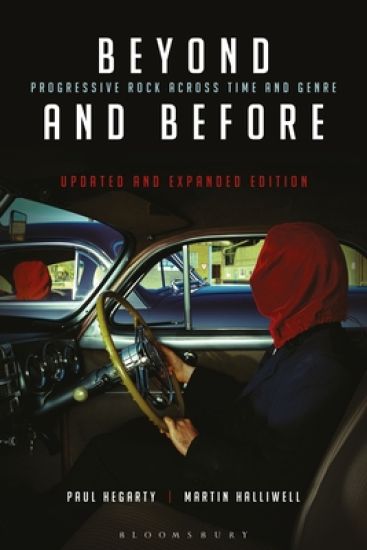
Beyond and Before, Updated and Expanded Edition
Paul Hegarty; Martin Halliwell
Bloomsbury Academic USA
2021
sidottu
The original edition of Beyond and Before extends an understanding of “progressive rock” by providing a fuller definition of what progressive rock is, was and can be. Called by Record Collector “the most accomplished critical overview yet” of progressive rock and one of their 2011 books of the year, Beyond and Before moves away from the limited consensus that prog rock is exclusively English in origin and that it was destroyed by the advent of punk in 1976. Instead, by tracing its multiple origins and complex transitions, it argues for the integration of jazz and folk into progressive rock and the extension of prog in Kate Bush, Radiohead, Porcupine Tree and many more. This 10-year anniversary revised edition continues to further unpack definitions of progressive rock and includes a brand new chapter focusing on post-conceptual trends in the 2010s through to the contemporary moment. The new edition discusses the complex creativity of progressive metal and folk in greater depth, as well as new fusions of genre that move across global cultures and that rework the extended form and mission of progressive rock, including in recent pop concept albums. All chapters are revised to keep the process of rethinking progressive rock alive and vibrant as a hybrid, open form.
Beyond and Before, Updated and Expanded Edition
Paul Hegarty; Martin Halliwell
Bloomsbury Academic USA
2022
nidottu
The original edition of Beyond and Before extends an understanding of “progressive rock” by providing a fuller definition of what progressive rock is, was and can be. Called by Record Collector “the most accomplished critical overview yet” of progressive rock and one of their 2011 books of the year, Beyond and Before moves away from the limited consensus that prog rock is exclusively English in origin and that it was destroyed by the advent of punk in 1976. Instead, by tracing its multiple origins and complex transitions, it argues for the integration of jazz and folk into progressive rock and the extension of prog in Kate Bush, Radiohead, Porcupine Tree and many more. This 10-year anniversary revised edition continues to further unpack definitions of progressive rock and includes a brand new chapter focusing on post-conceptual trends in the 2010s through to the contemporary moment. The new edition discusses the complex creativity of progressive metal and folk in greater depth, as well as new fusions of genre that move across global cultures and that rework the extended form and mission of progressive rock, including in recent pop concept albums. All chapters are revised to keep the process of rethinking progressive rock alive and vibrant as a hybrid, open form.