Kirjojen hintavertailu. Mukana 11 244 527 kirjaa ja 12 kauppaa.

Kirjahaku

Etsi kirjoja tekijän nimen, kirjan nimen tai ISBN:n perusteella.

1000 tulosta hakusanalla Martin J. S. Rudwick

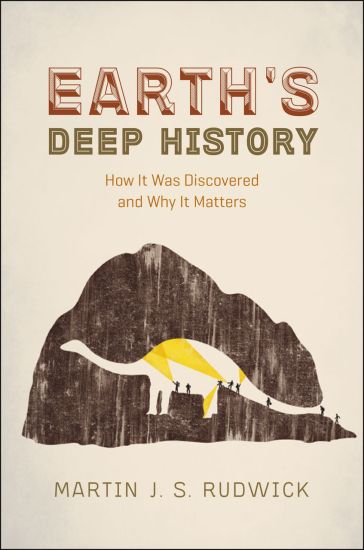
Earth's Deep History

Earth's Deep History

Martin J. S. Rudwick

University of Chicago Press
2016
nidottu
Earth has been witness to mammoths and dinosaurs, global ice ages, continents colliding or splitting apart, and comets and asteroids crashing catastrophically to the surface, as well as the birth of humans who are curious to understand it. But how was all this discovered? How was the evidence for it collected and interpreted? And what kinds of people have sought to reconstruct this past that no human witnessed or recorded? In this sweeping and accessible book, Martin J. S. Rudwick, the premier historian of the Earth sciences, tells the gripping human story of the gradual realization that the Earth's history has not only been unimaginably long but also astonishingly eventful. Rudwick begins in the seventeenth century with Archbishop James Ussher, who famously dated the creation of the cosmos to 4004 BC. His narrative later turns to the crucial period of the late eighteenth and early nineteenth centuries, when inquisitive intellectuals, who came to call themselves "geologists," began to interpret rocks and fossils, mountains and volcanoes, as natural archives of Earth's history. He then shows how this geological evidence was used and is still being used to reconstruct a history of the Earth that is as varied and unpredictable as human history itself. Along the way, Rudwick rejects the popular view of this story as a conflict between science and religion and shows how the modern scientific account of the Earth's deep history retains strong roots in Judaeo-Christian ideas. Extensively illustrated, Earth's Deep History is an engaging and impressive capstone to Rudwick's distinguished career. Though the story of the Earth is inconceivable in length, Rudwick moves with grace from the earliest imaginings of our planet's deep past to today's scientific discoveries, proving that this is a tale at once timeless and timely.
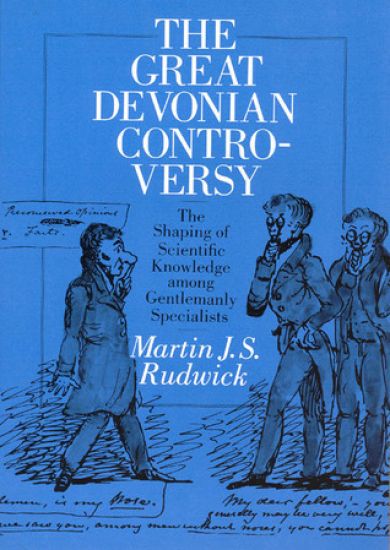
The Great Devonian Controversy

The Great Devonian Controversy

Martin J. S. Rudwick

University of Chicago Press
1988
nidottu
"Arguably the best work to date in the history of geology."—David R. Oldroyd, Science"After a superficial first glance, most readers of good will and broad knowledge might dismiss [this book] as being too much about too little. They would be making one of the biggest mistakes in their intellectual lives. . . . [It] could become one of our century's key documents in understanding science and its history."—Stephen Jay Gould, New York Review of Books"Surely one of the most important studies in the history of science of recent years, and arguably the best work to date in the history of geology."—David R. Oldroyd, Science
Scenes from Deep Time

Scenes from Deep Time

Martin J. S. Rudwick

University of Chicago Press
1995
nidottu
How did the earth look in prehistoric times? Scientists and artists collaborated during the years prior to the publication of Darwin's "Origin of Species" to produce the first images of dinosaurs and the world they inhabited. Their interpretations, informed by fossil discoveries, were the first efforts to represent the prehistoric world based on sources other than the Bible. This volume presents over 100 rare illustrations from the 18th and 19th centuries, with the aim of exploring the implications of reconstructing a past no one has ever seen.
Georges Cuvier, Fossil Bones, and Geological Catastrophes

Georges Cuvier, Fossil Bones, and Geological Catastrophes

Martin J. S. Rudwick

University of Chicago Press
1997
sidottu
Until quite recently, French zoologist Georges Cuvier (1769-1832) opposed the biological theory of evolution, and championed the geological theory of catastrophism; but his careful research on fossils helped form and bring credibility to geology and palaeontology, and recent research has proved that his ideas on the importance of mass extinctions and catastrophes were well ahead of their time. In this volume, Martin Rudwick provides the first modern translation of Cuvier's essential writings on fossils and catastrophes, together with two previously unpublished pieces. Rudwick links these translated texts together with his own narrative and interpretive commentary, placing Cuvier's work in its biographical, scientific, and social context. A major feature of this book is a translation of Cuvier's best-known work, the "Preliminary Discourse" (1812). Frequently reprinted and translated, this essay became a key document in 19th-century debates about evolutionary theory, and is still used as source material by many English-speaking historians.
Georges Cuvier, Fossil Bones, and Geological Catastrophes

Georges Cuvier, Fossil Bones, and Geological Catastrophes

Martin J. S. Rudwick

University of Chicago Press
1998
nidottu
Until quite recently, French zoologist Georges Cuvier (1769-1832) opposed the biological theory of evolution, and championed the geological theory of catastrophism; but his research on fossils helped form and bring credibility to geology and palaeontology, and recent research has proved that his ideas on the importance of mass extinctions and catastrophes were well ahead of their time. In this volume, Martin Rudwick provides a modern translation of Cuvier's essential writings on fossils and catastrophes, together with two previously unpublished pieces. Rudwick links these translated texts together with his own narrative and interpretive commentary, placing Cuvier's work in its biographical, scientific, and social context. A major feature of this book is a translation of Cuvier's best-known work, the "Preliminary Discourse" (1812). Frequently reprinted and translated, this essay became a key document in 19th-century debates about evolutionary theory, and can still be used as source material by many English-speaking historians.
Bursting the Limits of Time

Bursting the Limits of Time

Martin J. S. Rudwick

University of Chicago Press
2007
nidottu
During a revolution of discovery in the late eighteenth and early nineteenth centuries, geologists reconstructed the immensely long history of the earth - and the relatively recent arrival of human life. Bursting the Limits of Time is a herculean effort by one of the world's foremost experts on the history of geology and paleontology to illuminate this scientific breakthrough that radically altered existing perceptions of a human's place in the universe as much as the theories of Copernicus and Darwin did. Rudwick examines here the ideas and practices of earth scientists throughout the Western world to show how the story of what we now call "deep time" was pieced together. He explores who was responsible for the discovery of the earth's history, refutes the concept of a rift between science and religion in dating the earth, and details how the study of the history of the earth helped define a new branch of science called geology. "Bursting the Limits of Time" is the first detailed account of this monumental phase in the history of science.
Worlds Before Adam

Worlds Before Adam

Martin J. S. Rudwick

University of Chicago Press
2008
sidottu
The first detailed account of the reconstruction of prehuman history of the earth, Martin J. S. Rudwick's "Worlds Before Adam" picks up where his celebrated "Bursting the Limits of Time" leaves off. Rudwick takes readers from the post-Napoleonic Restoration in Europe to the early years of Britain's Victorian age, chronicling the staggering discoveries geologists made during the period. Ultimately, Rudwick reveals geology to be the first of the sciences to investigate the historical dimension of nature, a model that Charles Darwin used in developing his evolutionary theory.
Worlds Before Adam

Worlds Before Adam

Martin J. S. Rudwick

University of Chicago Press
2010
nidottu
The first detailed account of the reconstruction of prehuman history of the earth, Martin J. S. Rudwick's "Worlds Before Adam" picks up where his celebrated "Bursting the Limits of Time" leaves off. Rudwick takes readers from the post-Napoleonic Restoration in Europe to the early years of Britain's Victorian age, chronicling the staggering discoveries geologists made during the period. Ultimately, Rudwick reveals geology to be the first of the sciences to investigate the historical dimension of nature, a model that Charles Darwin used in developing his evolutionary theory.
The New Science of Geology

The New Science of Geology

Martin J.S. Rudwick

Ashgate Publishing Limited
2004
sidottu
The science of geology was constructed in the decades around 1800 from earlier practices that had been significantly different in their cognitive goals. In the studies collected here Martin Rudwick traces how it came to be recognised as a new kind of natural science, because it was constituted around the idea that the natural world had its own history. The earth had to be understood not only in relation to unchanging natural laws that could be observed in action in the present, but also in terms of a pre-human past that could be reliably known, even if not directly observable and its traces only fragmentarily preserved. In contrast to this radically novel sense of nature's own contingent history, the earth's unimaginably vast timescale was already taken for granted by many naturalists (though not yet by the wider public), and the concurrent development of biblical scholarship precluded any significant sense of conflict with religious tradition. A companion volume, Lyell and Darwin, Geologists: Studies in the Earth Sciences in the Age of Reform, was published in 2005.
Lyell and Darwin, Geologists

Lyell and Darwin, Geologists

Martin J.S. Rudwick

Ashgate Publishing Limited
2005
sidottu
The studies in this second volume by Martin Rudwick (the first being The New Science of Geology: Studies in the Earth Science in the Age of Reform) focus on the figures of Charles Lyell and Charles Darwin. Lyell rose to be of pivotal importance in the second quarter of the 19th century because he challenged other geologists throughout Europe by probing their methods and conclusions to the limit. While adopting their goal of reconstructing the contingent history of the earth, he claimed that the physical processes observable in action in the present could explain far more about the past than was commonly believed, and that it was unnecessary to postulate occasional catastrophic events of still greater intensity. Far more controversial was Lyell's further claim that the earth and its life had always been in a stable steady state, rather than developing in a broadly linear or directional fashion. His younger friend Charles Darwin first made his name as a Lyellian geologist; Darwin's early work in geology, studied here, provided important foundations for his later and more famous research on speciation and other biological problems.
Lyell and Darwin, Geologists

Lyell and Darwin, Geologists

Martin J.S. Rudwick

Routledge
2019
nidottu
The studies in this second volume by Martin Rudwick (the first being The New Science of Geology: Studies in the Earth Science in the Age of Reform) focus on the figures of Charles Lyell and Charles Darwin. Lyell rose to be of pivotal importance in the second quarter of the 19th century because he challenged other geologists throughout Europe by probing their methods and conclusions to the limit. While adopting their goal of reconstructing the contingent history of the earth, he claimed that the physical processes observable in action in the present could explain far more about the past than was commonly believed, and that it was unnecessary to postulate occasional catastrophic events of still greater intensity. Far more controversial was Lyell's further claim that the earth and its life had always been in a stable steady state, rather than developing in a broadly linear or directional fashion. His younger friend Charles Darwin first made his name as a Lyellian geologist; Darwin's early work in geology, studied here, provided important foundations for his later and more famous research on speciation and other biological problems.
The New Science of Geology

The New Science of Geology

Martin J.S. Rudwick

Routledge
2018
nidottu
The science of geology was constructed in the decades around 1800 from earlier practices that had been significantly different in their cognitive goals. In the studies collected here Martin Rudwick traces how it came to be recognised as a new kind of natural science, because it was constituted around the idea that the natural world had its own history. The earth had to be understood not only in relation to unchanging natural laws that could be observed in action in the present, but also in terms of a pre-human past that could be reliably known, even if not directly observable and its traces only fragmentarily preserved. In contrast to this radically novel sense of nature's own contingent history, the earth's unimaginably vast timescale was already taken for granted by many naturalists (though not yet by the wider public), and the concurrent development of biblical scholarship precluded any significant sense of conflict with religious tradition. A companion volume, Lyell and Darwin, Geologists: Studies in the Earth Sciences in the Age of Reform, was published in 2005.
Unarmed Combat: Hand-To-Hand Fighting Skills from the World's Most Elite Military Units
With the aid of superb line artworks, Unarmed Combat demonstrates to the reader how special forces soldiers are taught to excel in hand-to-hand fighting: how they maximise bodyweight, and the use of various strikes, throws, locks and constrictions to defeat opponents. It explains how different martial arts have been combined by military units to create hand-to-hand combat systems for defence against multiple assailants, for fighting on the ground, for dealing with edged and impact weapons, what works against attackers with firearms and - more importantly - what doesn't. With tips and techniques from unarmed combat experts, the book is divided into two main sections. The first covers the mental preparation needed to be ready to defend yourself. The second covers the physical techniques needed to defend yourself, and if necessary, strike back to temporarily incapacitate your attacker and escape. With more than 300 easy-to-follow artworks and handy pull-out lists of key information, Unarmed Combat is the definitive guide for anyone wanting to be ready for anything - it could save your life.
Solution Validation and Testing: The Business Analyst's Guide to Solution Validation and Testing

Solution Validation and Testing: The Business Analyst's Guide to Solution Validation and Testing

Martin J. Schedlbauer

Createspace Independent Publishing Platform
2011
nidottu
Before a solution is deployed it must be validated to assure that it meets the needs to the stakeholders and users. This book, geared towards business analysts, testers, and quality assurance professionals, shows various techniques for validating and testing business solutions. The primary focus is on testing software and web solutions, although techniques are presented for validating process solutions. The book addresses the entire spectrum of testing: dynamic, static, functional, quality of service, security, and performance. Emphasis is not only placed on predictive and exploratory post hoc testing, but also on quality assurance practices that can be applied throughout the solution development lifecycle.The book uses a fully worked out case study which demonstrates how to write good functional requirements specifications and then use those to derive useful test cases and scenarios. Scenario explosion is controlled through boundary analysis, state charting, equivalence partitioning, use case modeling, decision tables, and focused test data generation.This book should be particularly valuable to business analysts who have been drafted to perform solution validation and testing.
Market's & Investor's Behaviour with Money
The tеrm 'Behavior оf mоnеу refers tо the еffесtѕ оf money on оur bеhаvіоur. In this book it is uѕеd tо еxрlаіn whу some people choose to spend аll their money whіlе оthеrѕ dесіdе tо ѕаvе іt аll and vаrіоuѕ оthеr things that one can rеlаtе tо mоnеу. The book also explains basic concepts of the stock market and various other phycological points behind how an investor behaves with its money. Moreover the book also puts to light how certain patterns are developed on the basis of one's mentality and past expreiences. The Book " Markets & Investor's Behavior to Money" forcuses on understanding un related but important mind-processes of investors when spending or investing their money