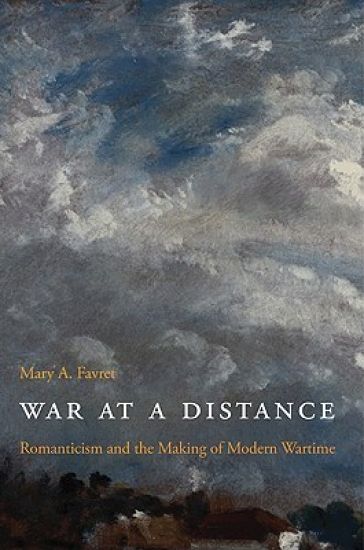
What does it mean to live during wartime away from the battle zone? What is it like for citizens to go about daily routines while their country sends soldiers to kill and be killed across the globe? Timely and thought-provoking, War at a Distance considers how those left on the home front register wars and wartime in their everyday lives, particularly when military conflict remains removed from immediate perception, available only through media forms. Looking back over two centuries, Mary Favret locates the origins of modern wartime in the Napoleonic era and describes how global military operations affected the British populace, as the nation's army and navy waged battles far from home for decades. She reveals that the literature and art produced in Britain during the late eighteenth and early nineteenth centuries obsessively cultivated means for feeling as much as understanding such wars, and established forms still relevant today. Favret examines wartime literature and art as varied as meditations on the Iliad, the history of meteorology, landscape painting in India, and popular poetry in newspapers and periodicals; she locates the embedded sense of war and dislocation in works ranging from Austen, Coleridge, and Wordsworth to Woolf, Stevens, and Sebald; and she contemplates how literature provides the public with methods for responding to violent calamities happening elsewhere. Bringing to light Romanticism's legacy in reflections on modern warfare, this book shows that war's absent presence affects home in deep and irrevocable ways.
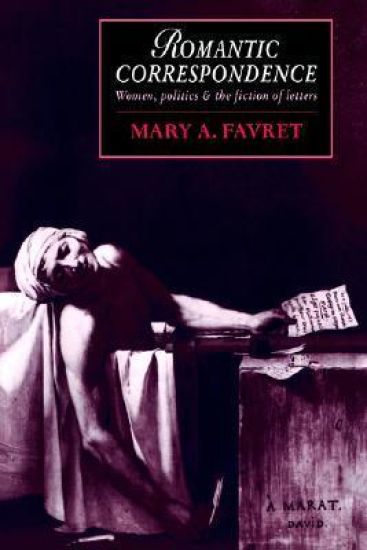
This study of correspondence in the Romantic period calls into question the common notion that letters are a particularly 'romantic', personal, and ultimately feminine form of writing.
The literary importance of letters did not end with the demise of the eighteenth-century epistolary novel. In the turbulent period between 1789 and 1830, the letter was used as a vehicle for political rather than sentimental expression. Against a background of severe political censorship, seditious Corresponding Societies, and the rise of the modern Post Office, letters as they are used by Romantic writers, especially women, become the vehicle for a distinctly political, often disruptive force. Mary Favret's study of Romantic correspondence reexamines traditional accounts of epistolary writing, and redefines the letter as a 'feminine' genre. The book deals not only with letters which circulated in the novels of Austen or Mary Shelley, but also with political pamphlets, incendiary letters and spy letters available for public consumption.
Mary A. Bickerdyke, Mother (1896) is a biography written by Julia A. Chase that chronicles the life of Mary Ann Bickerdyke, a nurse and humanitarian who served during the American Civil War. Bickerdyke was known for her tireless efforts to improve the conditions of soldiers in Union Army hospitals, often going above and beyond her duties to ensure they received proper care and attention. The book details Bickerdyke's early life, her decision to become a nurse, and her experiences on the front lines of the war. It also explores her post-war work as an advocate for veterans and her contributions to the establishment of the National Home for Disabled Volunteer Soldiers. Through firsthand accounts and historical documents, the book provides a fascinating glimpse into the life of a remarkable woman who dedicated her life to serving others.This Is A New Release Of The Original 1896 Edition.This scarce antiquarian book is a facsimile reprint of the old original and may contain some imperfections such as library marks and notations. Because we believe this work is culturally important, we have made it available as part of our commitment for protecting, preserving, and promoting the world's literature in affordable, high quality, modern editions, that are true to their original work.
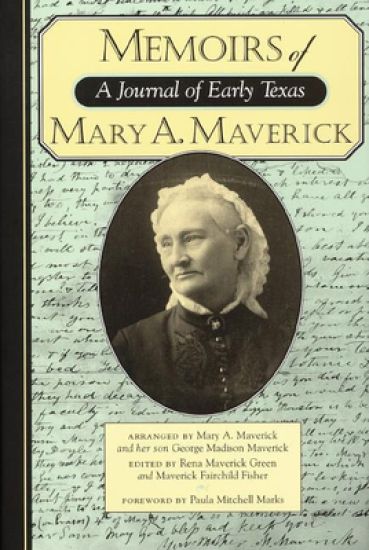
Re-edited, reformatted, thoroughly annotated, with new illustrations and, at last, an index, these memoirs are in a hardcover edition worthy of this classic, first published in 1921. As the young wife of Samuel A. Maverick, a Yale-educated landholder whose name has entered the English language, Mary Adams Maverick came to Texas less than two years after the fall of the Alamo. She records her unique eyewitness views of the tumultuous decades that followed, as she raises a family in the shadow of Indian raids, invasions and deadly diseases.
Mary is a collection of twelve short stories; the words are those of an older woman remembering her past; looking back on significant events and special people.
Mary: A Fiction is the only complete novel by 18th-century British feminist Mary Wollstonecraft. It tells the tragic story of a female's successive "romantic friendships"with a woman and a man. Composed while Wollstonecraft was a governess in Ireland, the novel was published in 1788 shortly after her summary dismissal and her decision to embark on a writing career, a precarious and disreputable profession for women in 18th-century Britain. Plot summary Mary begins with a description of the conventional and loveless marriage between the heroine's mother and father. Eliza, Mary's mother, is obsessed with novels, rarely considers anyone but herself, and favours Mary's brother. She neglects her daughter, who educates herself using only books and the natural world. Ignored by her family, Mary devotes much of her time to charity. When her brother suddenly dies, leaving Mary heir to the family's fortune, her mother finally takes an interest in her; she is taught "accomplishments", such as dancing, that will attract suitors. However, Mary's mother soon sickens and requests on her deathbed that Mary wed Charles, a wealthy man she has never met. Stunned and unable to refuse, Mary agrees. Immediately after the ceremony, Charles departs for the Continent. To escape a family who does not share her values, Mary befriends Ann, a local girl who educates her further. Mary becomes quite attached to Ann, who is in the grip of an unrequited love and does not reciprocate Mary's feelings. Ann's family falls into poverty and is on the brink of losing their home, but Mary is able to repay their debts after her marriage to Charles gives her limited control over her money. Ann becomes consumptive and Mary travels with her to Lisbon in hopes of nursing her back to health. There they are introduced to Henry, who is also trying to regain his health. Ann dies and Mary is grief-stricken. Henry and Mary fall in love but are forced to return to England separately. Mary, depressed by her marriage to Charles and bereft of both Ann and Henry, remains unsettled, until she hears that Henry's consumption has worsened. She rushes to his side and cares for him until he dies. At the end of the novel, Charles returns from Europe; he and Mary establish something of a life together, but Mary is unhealthy and can barely stand to be in the same room with her husband; the last few lines of the novel imply that she will die young.............. Mary Wollstonecraft ( 27 April 1759 - 10 September 1797) was an English writer, philosopher, and advocate of women's rights. During her brief career, she wrote novels, treatises, a travel narrative, a history of the French Revolution, a conduct book, and a children's book. Wollstonecraft is best known for A Vindication of the Rights of Woman (1792), in which she argues that women are not naturally inferior to men, but appear to be only because they lack education. She suggests that both men and women should be treated as rational beings and imagines a social order founded on reason. Until the late 20th century, Wollstonecraft's life, which encompassed several unconventional personal relationships, received more attention than her writing. After two ill-fated affairs, with Henry Fuseli and Gilbert Imlay (by whom she had a daughter, Fanny Imlay), Wollstonecraft married the philosopher William Godwin, one of the forefathers of the anarchist movement. Wollstonecraft died at the age of 38, eleven days after giving birth to her second daughter, leaving behind several unfinished manuscripts. This daughter, Mary Wollstonecraft Godwin, became an accomplished writer herself, as Mary Shelley, whose best known work was Frankenstein. After Wollstonecraft's death, her widower published a Memoir (1798) of her life, revealing her unorthodox lifestyle, which inadvertently destroyed her reputation for almost a century.....
Mary: A Tale of Captivity is the story of a nine year old girl who is taken from her home in frontier Virginia during the French and Indian War. Seeking refuge at Fort Seybert, Mary, her mother, and four siblings are captured by the notorious War Chief Killbuck and taken to Ohio River Indian villages. She spends over three years with the Shawnee and is faced with conflicting emotions upon her return to her family.
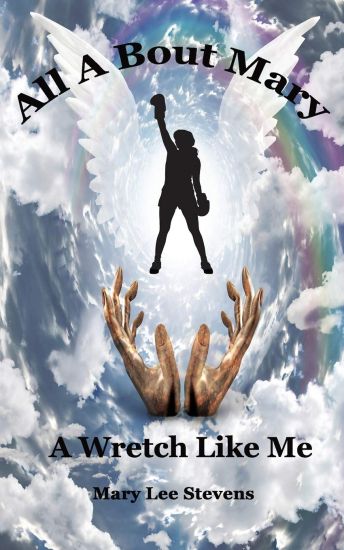
We never fight alone. All A About Mary: A Wretch Like Me will take you through the indescribable details of a child's journey from her memory starting at the young age of three. The "hush, don't tell" secrets that give birth and design to her character and develop who she becomes; from an innocent child to a hard living wretch, to a messenger of God. From deep inside of her spiritual experiences comes 'The Bout'.
"General Lamar and Mrs. Juan N. Seguin, wife of the Mayor, opened the ball with a waltz. Mrs. Seguin was so fat that the General had great difficulty in getting a firm hold on her waist, and they cut such a figure that we were forced to smile. The General was a poet, a polite and brave gentleman and first rate conversationalist but he did not dance well. At the ball, Jack Hays, Mike Chevalier, and John Howard (Texas Rangers) had but one dress coat between them, and they agreed to use the coat and dance in turn. The two not dancing would stand at the hall door watching the happy one who was enjoying his turn and they reminded him when it was time for him to step out of that coat. Great fun was it watching them and listening to their wit and mischief as they made faces and shook their fists at the dancing one."So said Mary Maverick in her memoir. She was a straightforward writer and gave it a straightforward title: The Memoirs of Mary A. Maverick.Mary was the first American woman to set up house in San Antonio. She witnessed the Council House fight, the Comanche Invasion of 1840, and knew most of the famous Texans of her day. In case you didn't know, Mary was the wife of Samuel Maverick, the man who refused to brand his cattle, and thereby branded future independent thinkers with his name. They lived at the Northwest corner of Alamo Plaza, where the Gibbs Building (Hotel Indigo) now stands. Mary Maverick kept a diary of her life in Texas from 1837 through the 1850s. It's one of the most important narratives of the republic era. John Jenkins included it in his Basic Texas Books, a bibliography of the books essential to any serious library of Texas. He called it "...engrossing and colorful. Her vivid eye-witness account of the Council House Fight is our best source of information on the event. Her description of social life in early Texas is particularly interesting and useful. She recounts many Indian fights, particularly those in which her husband and Jack Hays took part."