
Kirjahaku
Etsi kirjoja tekijän nimen, kirjan nimen tai ISBN:n perusteella.
1000 tulosta hakusanalla Mary A. Morton
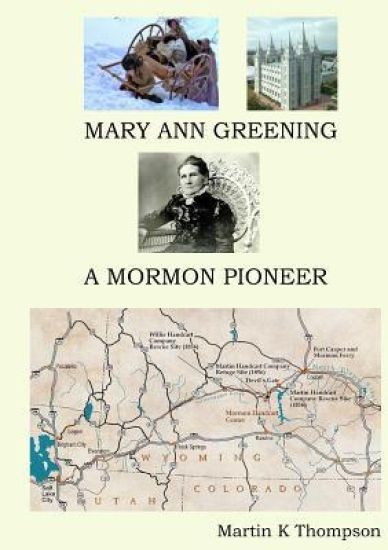
This biography brings together biographical sketches, extracts from journals, reminiscences and the author's own research to paint a vivid picture of the life and times of Mary Ann Greening (1829- 1914). Study of original parish registers revealed a number of errors in previously published work and these are discussed. Mary Ann Greening's upbringing within a large middle class family in Georgian and Victorian England, her conversion to Mormonism, travel to the United States, the incredibly arduous 1,000 mile trek to Salt Lake City with the ill-fated Martin Handcart Company, followed by a long life in Utah are all covered in some detail to make an enthralling story.
Wife No. 19; or the story of a life in bondage, being a complete expose of Mormonism ... With introductory notes by J. B. Gough and M. A. Livermore. Illustrated.
Ann Eliza Young; John Bartholomew Gough; Mary Ashton Livermore
British Library, Historical Print Editions
2011
pokkari
Title: Wife No. 19; or the story of a life in bondage, being a complete expose of Mormonism ... With introductory notes by J. B. Gough and M. A. Livermore. Illustrated.Publisher: British Library, Historical Print EditionsThe British Library is the national library of the United Kingdom. It is one of the world's largest research libraries holding over 150 million items in all known languages and formats: books, journals, newspapers, sound recordings, patents, maps, stamps, prints and much more. Its collections include around 14 million books, along with substantial additional collections of manuscripts and historical items dating back as far as 300 BC.The GENERAL HISTORICAL collection includes books from the British Library digitised by Microsoft. This varied collection includes material that gives readers a 19th century view of the world. Topics include health, education, economics, agriculture, environment, technology, culture, politics, labour and industry, mining, penal policy, and social order. ++++The below data was compiled from various identification fields in the bibliographic record of this title. This data is provided as an additional tool in helping to insure edition identification: ++++ British Library Young, Ann Eliza; Gough, John Bartholomew; Livermore, Mary Ashton; 1876. 8 . 10412.ee.11.
When people set out to qualify in youth work they do not anticipate that it's about managing themselves; aims, intentions and outcomes; programmes and projects; case work; educational experiences and environments; budgets; volunteers and staff; and young people's development. This book ensures that students will feel confident to manage purpose, projects and people to deliver good- quality educational and developmental youth work with and for young people. It also caters for those with youth work management experience by providing an opportunity to review and further develop management skills and understanding in the context of a volatile policy environment.

Børne- og ungdomspsykiatri
Peter Kramp; Anne Mette Skovgaard; Anne Vibeke Fleischer; Birgit Jessen-Petersen; Flemming Warborg Larsen; Helga Jansen; Ingelise Sillesen; Karen Vibeke Mortensen; Karl Johan Rump; Lene Lier; Lise M. Thornberg; Marianne Egelund; Mary Theophilakis; Niels Hansen; Ole Sylvester Jørgensen; Per Hove Thomsen; Rikke Schwartz; Søren Hertz; Søren Nielsen; Torben Marner; Torben Isager; Tove Aarkrog; Vibeke Vejlsgaard Goldschmidt; Mogens A. Lund
Gyldendal
1999
sidottu
Børne- og Ungdomspsykiatri giver en grundig indføring i psykiske lidelser og udviklingsmæssige forstyrrelser fra tiden før fødslen frem til ungdomsårene. Bogen spænder vidt og behandler bl.a. spædbarnspsykiatri, hvor nye metoder til undersøgelse og behandling er under udvikling, den beskriver de psykisk syge unge, der for en kortere periode må beskyttes i et lukket afsnit, og den ser på de psykiske lidelser hos voksne, der kan have betydning for familien og samspillet med børn og unge. Der er lagt vægt på at beskrive både kontinuitet og manglende kontinuitet for psykiske lidelser fra barndom og ungdomsår til voksenalder baseret på såvel klinisk erfaring som teoretisk indsigt. Det gennemgående tema i bogen er udvikling: Hvilke ligheder og forskelle ser man mellem normal og patologisk udvikling? Børne- og ungdomspsykiatri afspejler den intense videnskabelige dialog mellem de to områder. Terminologien tager udgangspunkt i WHO ICD-10: Klassifikation og diagnostiske kriterier suppleret med spædbarns- og ungdomspsykiatriske begreber, hvor det er relevant. Redaktionen, der er sammensat af anerkendte specialister inden for deres fag, har stået i spidsen for 18 engagerede kolleger og medforfattere.


The West is for Us: the Reminiscences of Mary A. Blankenship
Mary a. (Mary Alma) 187 Blankenship
Hassell Street Press
2021
sidottu
The West is for Us: the Reminiscences of Mary A. Blankenship
Mary a. (Mary Alma) 187 Blankenship
Hassell Street Press
2021
nidottu




Mary A. Bickerdyke, Mother (1896) is a biography written by Julia A. Chase that chronicles the life of Mary Ann Bickerdyke, a nurse and humanitarian who served during the American Civil War. Bickerdyke was known for her tireless efforts to improve the conditions of soldiers in Union Army hospitals, often going above and beyond her duties to ensure they received proper care and attention. The book details Bickerdyke's early life, her decision to become a nurse, and her experiences on the front lines of the war. It also explores her post-war work as an advocate for veterans and her contributions to the establishment of the National Home for Disabled Volunteer Soldiers. Through firsthand accounts and historical documents, the book provides a fascinating glimpse into the life of a remarkable woman who dedicated her life to serving others.This Is A New Release Of The Original 1896 Edition.This scarce antiquarian book is a facsimile reprint of the old original and may contain some imperfections such as library marks and notations. Because we believe this work is culturally important, we have made it available as part of our commitment for protecting, preserving, and promoting the world's literature in affordable, high quality, modern editions, that are true to their original work.
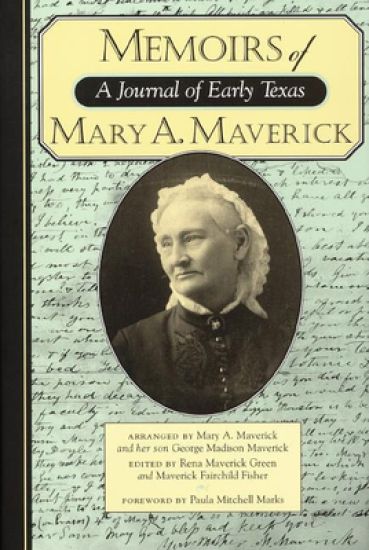
Memoirs of Mary A. Maverick
Mary A. Maverick; Paula Mitchell Marks
Trinity University Press,U.S.
2010
sidottu
Re-edited, reformatted, thoroughly annotated, with new illustrations and, at last, an index, these memoirs are in a hardcover edition worthy of this classic, first published in 1921. As the young wife of Samuel A. Maverick, a Yale-educated landholder whose name has entered the English language, Mary Adams Maverick came to Texas less than two years after the fall of the Alamo. She records her unique eyewitness views of the tumultuous decades that followed, as she raises a family in the shadow of Indian raids, invasions and deadly diseases.

Mary is a collection of twelve short stories; the words are those of an older woman remembering her past; looking back on significant events and special people.
Mary: A Fiction, By: Mary Wollstonecraft: Mary Wollstonecraft ( 27 April 1759 - 10 September 1797) was an English writer, ph
Mary Wollstonecraft
Createspace Independent Publishing Platform
2018
nidottu
Mary: A Fiction is the only complete novel by 18th-century British feminist Mary Wollstonecraft. It tells the tragic story of a female's successive "romantic friendships"with a woman and a man. Composed while Wollstonecraft was a governess in Ireland, the novel was published in 1788 shortly after her summary dismissal and her decision to embark on a writing career, a precarious and disreputable profession for women in 18th-century Britain. Plot summary Mary begins with a description of the conventional and loveless marriage between the heroine's mother and father. Eliza, Mary's mother, is obsessed with novels, rarely considers anyone but herself, and favours Mary's brother. She neglects her daughter, who educates herself using only books and the natural world. Ignored by her family, Mary devotes much of her time to charity. When her brother suddenly dies, leaving Mary heir to the family's fortune, her mother finally takes an interest in her; she is taught "accomplishments", such as dancing, that will attract suitors. However, Mary's mother soon sickens and requests on her deathbed that Mary wed Charles, a wealthy man she has never met. Stunned and unable to refuse, Mary agrees. Immediately after the ceremony, Charles departs for the Continent. To escape a family who does not share her values, Mary befriends Ann, a local girl who educates her further. Mary becomes quite attached to Ann, who is in the grip of an unrequited love and does not reciprocate Mary's feelings. Ann's family falls into poverty and is on the brink of losing their home, but Mary is able to repay their debts after her marriage to Charles gives her limited control over her money. Ann becomes consumptive and Mary travels with her to Lisbon in hopes of nursing her back to health. There they are introduced to Henry, who is also trying to regain his health. Ann dies and Mary is grief-stricken. Henry and Mary fall in love but are forced to return to England separately. Mary, depressed by her marriage to Charles and bereft of both Ann and Henry, remains unsettled, until she hears that Henry's consumption has worsened. She rushes to his side and cares for him until he dies. At the end of the novel, Charles returns from Europe; he and Mary establish something of a life together, but Mary is unhealthy and can barely stand to be in the same room with her husband; the last few lines of the novel imply that she will die young.............. Mary Wollstonecraft ( 27 April 1759 - 10 September 1797) was an English writer, philosopher, and advocate of women's rights. During her brief career, she wrote novels, treatises, a travel narrative, a history of the French Revolution, a conduct book, and a children's book. Wollstonecraft is best known for A Vindication of the Rights of Woman (1792), in which she argues that women are not naturally inferior to men, but appear to be only because they lack education. She suggests that both men and women should be treated as rational beings and imagines a social order founded on reason. Until the late 20th century, Wollstonecraft's life, which encompassed several unconventional personal relationships, received more attention than her writing. After two ill-fated affairs, with Henry Fuseli and Gilbert Imlay (by whom she had a daughter, Fanny Imlay), Wollstonecraft married the philosopher William Godwin, one of the forefathers of the anarchist movement. Wollstonecraft died at the age of 38, eleven days after giving birth to her second daughter, leaving behind several unfinished manuscripts. This daughter, Mary Wollstonecraft Godwin, became an accomplished writer herself, as Mary Shelley, whose best known work was Frankenstein. After Wollstonecraft's death, her widower published a Memoir (1798) of her life, revealing her unorthodox lifestyle, which inadvertently destroyed her reputation for almost a century.....
Mary: A Tale of Captivity is the story of a nine year old girl who is taken from her home in frontier Virginia during the French and Indian War. Seeking refuge at Fort Seybert, Mary, her mother, and four siblings are captured by the notorious War Chief Killbuck and taken to Ohio River Indian villages. She spends over three years with the Shawnee and is faced with conflicting emotions upon her return to her family.