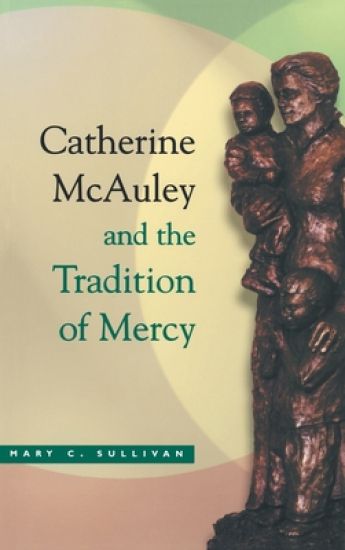
Catherine McAuley was born into a wealthy Dublin family in 1778. By the time she reached adulthood, she had witnessed the death of both parents and experienced considerable personal poverty. She then worked for twenty years as a companion for an elderly couple and, upon their deaths, received an unexpected inheritance. Driven by a deep faith and pragmatic sense of charity, she opened, in 1827, an institution for unemployed and impoverished women. This proved to be the first step toward the foundation, in 1831, of the Sisters of Mercy, an order now established throughout the world, and in 1990, Pope John Paul II declared Catherine McAuley as Venerable. The present volume, a collection of some of the most important writings by and about Catherine McAuley, includes letters, memoirs, and annals by many of the first Sisters of Mercy and McAuley's original manuscript of the Rule and Constitutions of the order, critically edited for the first time.
Catherine McAuley was born into a wealthy Dublin family in 1778. By the time she reached adulthood, she had witnessed the death of both parents and experienced considerable personal poverty. She then worked for twenty years as a companion for an elderly couple and, upon their deaths, received an unexpected inheritance. Driven by a deep faith and pragmatic sense of charity, she opened, in 1827, an institution for unemployed and impoverished women. This proved to be the first step toward the foundation, in 1831, of the Sisters of Mercy, an order now established throughout the world, and in 1990, Pope John Paul II declared Catherine McAuley as Venerable. The present volume, a collection of some of the most important writings by and about Catherine McAuley, includes letters, memoirs, and annals by many of the first Sisters of Mercy and McAuley's original manuscript of the Rule and Constitutions of the order, critically edited for the first time.
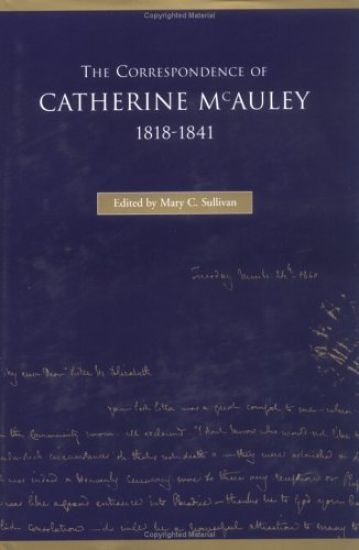
Catherine McAuley (1778-1841) founded the Sisters of Mercy in Dublin in 1831. Her letters are essential primary sources for readers interested in the life and works of this remarkable Irish churchwoman and in women's history and Irish church history more broadly. Whether McAuley is writing to family members, bishops, her solicitor, priests, lay coworkers, or Sisters of Mercy in Ireland and England, her letters reveal striking details about the church and society of her day as well as about her own spiritual convictions and unstinting personal service to poor, sick, homeless, or uneducated adults and children.The Correspondence of Catherine McAuley, 1818-1841, is a new, fully documented edition of more than 320 surviving letters written by, to, or about McAuley during her lifetime. Drawn from archives worldwide and arranged chronologically, the letters are carefully transcribed and generously annotated, with brief narratives introducing each group. In her letters as well as in those of the other correspondents, one sees a delightfully human, affectionate woman; a compassionate, persistent servant of the poor and neglected; an astute businesswoman; and an unpretentious, humorous friend.This edition of McAuley's correspondence is readily accessible to general readers and demonstrates not only her important role in the founding and amazing spread of the Mercy congregation in her lifetime (now numbering more than 10,000 members globally), but also her personal contributions to the pastoral development of the church in Ireland and England. Scholars and other readers will gain fresh insights into many prominent ecclesial leaders in the years 1828-1841, including Daniel Murray, archbishop of Dublin, and Thomas Griffiths, vicar apostolic of the London District. They will also find in these engaging letters one woman's grass-roots experience of certain social, economic, and ecclesiastical arrangements of her time and place.ABOUT THE EDITOR:Mary C. Sullivan, R.S.M., is Professor Emeritus of Language and Literature, and Dean Emeritus of the College of Liberal Arts, at the Rochester Institute of Technology. She is the author of numerous works, including Catherine McAuley and the Tradition of Mercy.PRAISE FOR THE BOOK: ""All those letters whose whereabouts are known have recently been tracked down, examined, verified and scrupulously edited. The Correspondence of Catherine McAuley, 1818-1841 is a work of impeccable and exhaustive scholarship. . . . This book is a very model of what such collections should be, and it could hardly have had a better editor than Mary C. Sullivan, herself a Sister of Mercy since 1950 and a distinguished academic for decades. . . . This is not the first collection of Mother McAuley's letters, but it is surely the most complete and meticulously edited.""--John W. Donohue, America""This monograph is a magnum opus. Edited by an indefatigable scholar, it is the most complete, accurate compendium of the correspondence of Catherine McAuley. . . . This expanded treasure is, however, dwarfed by another uniquely Sullivan contribution. Not only does each of the more than three hundred entries reflect a precise rendition of documents, but Sullivan has also supplemented each with meticulously researched clarifications of the texts. This bonus provides new historical information and identifies linguistic nuances that help the reader comprehend the content and the context of Catherine's life and accomplishments. . . . For its scholarly approach as well as for what it reveals about the impact of one great Irish woman, and religious women in general, Sullivan's latest monograph deserves our careful study.""--Dolores Liptak, RSM, American Catholic Studies""Mary C. Sullivan RSM has carefully edited and thoroughly annotated these letters. . . . Others besides Mercy sisters can be
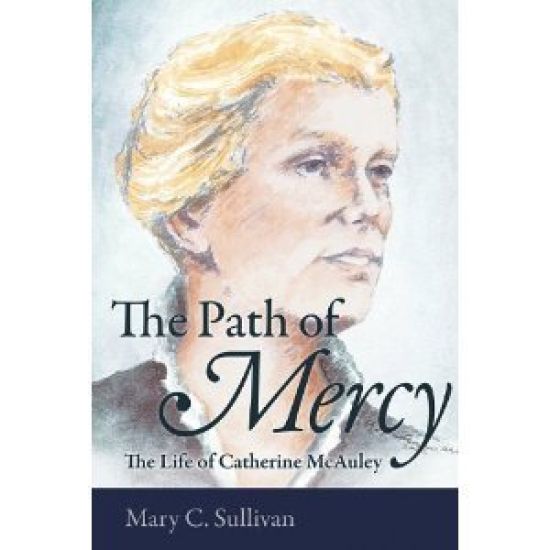
Breaking new ground in presenting the life of Catherine McAuley (1778?-1841), the Dublin woman who founded the Sisters of Mercy, Mary C. Sullivan has written the first full-length, documented narrative of McAuley in more than fifty years. This work places McAuley in her Irish context, particularly in post-penal Dublin, where the destitution, epidemics, and lack of basic education, especially of poor women and young girls, led her to a life of practical mercifulness.Using extensive primary sources and questioning aspects of earlier accounts, The Path of Mercy illumines Catherine's personality and details her life. It recounts her efforts, using her inheritance from her foster parents, to address the poverties of Irish people in her time. Together with those who eventually joined her when she founded the Sisters of Mercy in 1831, she sheltered homeless women, taught them employable skills, opened a school for the daughters of the very poor, and visited the sick and dying in the slums of Dublin. Later she founded the same works of mercy in nine other towns in Ireland, and in two cities in England.An intelligent, courageous, humorous woman, she was, even when exhausted by the rigors of her travel and ministries, always moved to ""get up again,"" as she said, for the sake of those in need. She wrote poems and letters to novices and others, urged the community to ""dance every evening,"" and never wished to be called ""Reverend Mother."" At age sixty-three she died of tuberculosis in the Baggot Street convent. During the past 180 years more than 55,000 Sisters of Mercy have served among the poor and needy throughout the world.
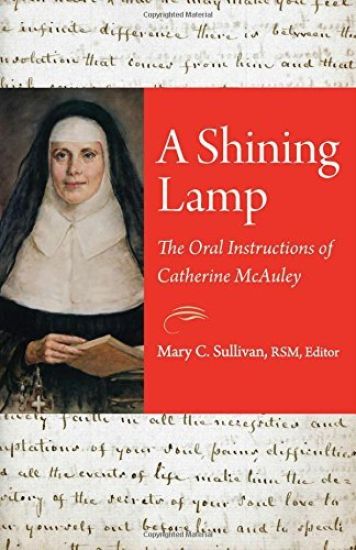
Catherine McAuley (1778–1841), the founder of the Sisters of Mercy in 1831, frequently gave oral instructions to the first Mercy community. Though she sometimes spoke explicitly about their religious vows, her words were always focused on the life, example, teachings, and evangelic spirit of Jesus Christ, emphasizing “resemblance” to him and fidelity to the calls of the Gospel. Her instructions have, therefore, a broad present-day relevance that can be inspiring and encouraging for all Christians. They are the “shining” words of a companion, a soul-friend, who offers guiding light to those who wend their pilgrim way toward the full embrace of God’s merciful reign. These instructions were initially written down, insofar as that was humanly possible, by sisters who were actually present and listening as she spoke. Some of their manuscripts were later copied into the long manuscript compilation that is the centerpiece of this book. Research also indicates that in preparing and giving her lectures, Catherine often relied on the content of previously published spiritual books, including works by Alphonsus Rodriguez, SJ, Louis Bourdaloue, SJ, and other well-known spiritual writers of the eighteenth and earlier centuries. The book’s endnotes illustrate this dependence. Catherine McAuley’s voice in these instructions is realistic, down-to- earth, humble, and compassionate. She is clearly dead-set against “froth” and “mere outward show” in one’s spiritual life. Like the practical Saint Teresa of Avila, whose life and thought she studied, she favors surrendering oneself now, with God’s help, to “ordinary,” every-day, possible holiness, rather than simply dreaming about extraordinary, but perhaps impossible, future sanctity. Her themes are some of the great themes of the Gospel: genuine humility and poverty of spirit, universal charity, self-denial, taking up one’s “cross,” and following Jesus Christ.
Reprint of the original, first published in 1871. The publishing house Anatiposi publishes historical books as reprints. Due to their age, these books may have missing pages or inferior quality. Our aim is to preserve these books and make them available to the public so that they do not get lost.
Reprint of the original, first published in 1871. The publishing house Anatiposi publishes historical books as reprints. Due to their age, these books may have missing pages or inferior quality. Our aim is to preserve these books and make them available to the public so that they do not get lost.
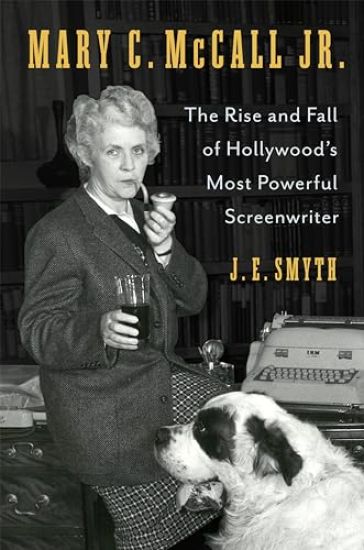
A screenwriter, novelist, labor leader, Hollywood insider, and feminist, Mary C. McCall Jr. was one of the film industry’s most powerful figures in the 1940s and early 1950s. She was elected the first woman president of the Screen Writers Guild after leading the fight to unionize the industry’s writers and secured the first contract guaranteeing a minimum wage, credit protection, and pay raises. Her advocacy was not welcomed by all: To screenwriters McCall was an “avenging goddess,” but to studio heads she was, in the words of one Hollywood executive, “the meanest bitch in town.” And after a clash with the mogul Howard Hughes in the blacklist-era 1950s, she disappeared from the pages of Hollywood history.J. E. Smyth tells McCall’s remarkable story for the first time, putting the spotlight on her trailblazing career and crucial influence. She explores McCall’s life and work, from her friendships with stars such as Bette Davis, Humphrey Bogart, and James Cagney to her authorship of the hit Maisie series about a working-class showgirl’s adventures. Analyzing McCall’s deft political maneuvering, Smyth offers new insight on screenwriters’ struggle for equality and recognition. She also examines why McCall’s legacy is unrecognized, showing how the Hollywood blacklist and entrenched sexism obscured her accomplishments. Colorful and compelling, this biography provides a powerful account of how one extraordinary woman shaped Golden Age Hollywood.
A screenwriter, novelist, labor leader, Hollywood insider, and feminist, Mary C. McCall Jr. was one of the film industry’s most powerful figures in the 1940s and early 1950s. She was elected the first woman president of the Screen Writers Guild after leading the fight to unionize the industry’s writers and secured the first contract guaranteeing a minimum wage, credit protection, and pay raises. Her advocacy was not welcomed by all: To screenwriters McCall was an “avenging goddess,” but to studio heads she was, in the words of one Hollywood executive, “the meanest bitch in town.” And after a clash with the mogul Howard Hughes in the blacklist-era 1950s, she disappeared from the pages of Hollywood history.J. E. Smyth tells McCall’s remarkable story for the first time, putting the spotlight on her trailblazing career and crucial influence. She explores McCall’s life and work, from her friendships with stars such as Bette Davis, Humphrey Bogart, and James Cagney to her authorship of the hit Maisie series about a working-class showgirl’s adventures. Analyzing McCall’s deft political maneuvering, Smyth offers new insight on screenwriters’ struggle for equality and recognition. She also examines why McCall’s legacy is unrecognized, showing how the Hollywood blacklist and entrenched sexism obscured her accomplishments. Colorful and compelling, this biography provides a powerful account of how one extraordinary woman shaped Golden Age Hollywood.
This work has been selected by scholars as being culturally important, and is part of the knowledge base of civilization as we know it. This work was reproduced from the original artifact, and remains as true to the original work as possible. Therefore, you will see the original copyright references, library stamps (as most of these works have been housed in our most important libraries around the world), and other notations in the work. This work is in the public domain in the United States of America, and possibly other nations. Within the United States, you may freely copy and distribute this work, as no entity (individual or corporate) has a copyright on the body of the work. As a reproduction of a historical artifact, this work may contain missing or blurred pages, poor pictures, errant marks, etc. Scholars believe, and we concur, that this work is important enough to be preserved, reproduced, and made generally available to the public. We appreciate your support of the preservation process, and thank you for being an important part of keeping this knowledge alive and relevant.
"Speeches and Writings of Sarojini Naidu" is a 1925 work that includes a wide selection of Sarojini Naidu's speeches and other assorted writings. Contents include: "Nilambuja", "True Brotherhood", "Personal Element in Spiritual Life", "Education of Indian Women", "A Plea for Social Reform", "Hindu and Mussalmans", "Mrs. Ghandi", "In Memoriam: Gokhale", "The Children's Tribute to Gokhale", etc. Sarojini Naidu (1879-1949) was an Indian political activist and poet. She was a staunch proponent of women's emancipation, civil rights, and anti-imperialistic ideas, playing an important role in India's struggle for independence from colonial rule. Her work as a poet includes both children's poems and others with more mature themes including patriotism, romance, and tragedy, earning her the sobriquet "Nightingale of India". Her most famous work is "In the Bazaars of Hyderabad" (1912), which remains widely read to this day. Other notable works by this author include: "The Broken Wing - Songs of Love, Death & Destiny" (1917) and "Muhammad Jinnah: An Ambassador of Unity" (1919). This classic work is being republished now in a new edition complete with an introductory chapter from 'Studies of Contemporary Poets' by Mary C. Sturgeon.
This work has been selected by scholars as being culturally important, and is part of the knowledge base of civilization as we know it. This work was reproduced from the original artifact, and remains as true to the original work as possible. Therefore, you will see the original copyright references, library stamps (as most of these works have been housed in our most important libraries around the world), and other notations in the work. This work is in the public domain in the United States of America, and possibly other nations. Within the United States, you may freely copy and distribute this work, as no entity (individual or corporate) has a copyright on the body of the work. As a reproduction of a historical artifact, this work may contain missing or blurred pages, poor pictures, errant marks, etc. Scholars believe, and we concur, that this work is important enough to be preserved, reproduced, and made generally available to the public. We appreciate your support of the preservation process, and thank you for being an important part of keeping this knowledge alive and relevant.