
Kirjahaku
Etsi kirjoja tekijän nimen, kirjan nimen tai ISBN:n perusteella.
1000 tulosta hakusanalla Mary E. Penn
A Contribution to the History of the Presbyterian Churches, Carlisle, Pennsylvania
Joseph Alexander Murray; Mary E. (EDT) Himes; Charles F. (CON) Himes
Kessinger Pub
2009
pokkari
The Mineral Industry of Pennsylvania in 1959: Pennsylvania Geological Survey, Information Circular 43
Robert D. Thomson; Mary E. Otte; Robert E. Ela
Literary Licensing, LLC
2013
nidottu
The Strange Story of Our Villa is an unchanged, high-quality reprint of the original edition of 1893. Hansebooks is editor of the literature on different topic areas such as research and science, travel and expeditions, cooking and nutrition, medicine, and other genres. As a publisher we focus on the preservation of historical literature. Many works of historical writers and scientists are available today as antiques only. Hansebooks newly publishes these books and contributes to the preservation of literature which has become rare and historical knowledge for the future.
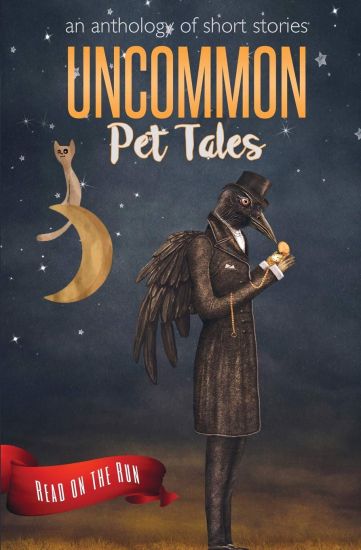
Uncommon Pet Tales
Laurie Axinn Gienapp; Sarah Doebereiner; Jonathan Shipley; R. J. Meldrum; Ginny Swart; Mary E. Lowd; Ed Burkley; Amanda Bergloff; June Low; Michael Penncavage
Smoking Pen Press LLC
2017
pokkari
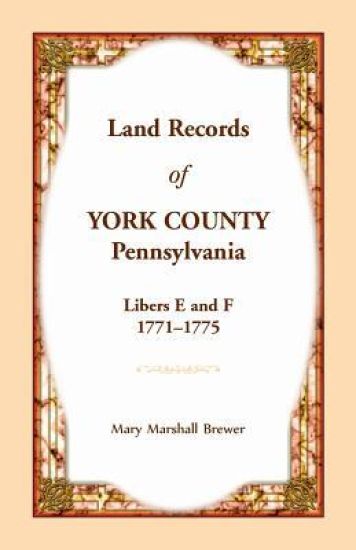
Land Records of York County, Pennsylvania, Libers E and F, 1771-1775
Mary Marshall Brewer
Heritage Books
2018
pokkari
The land records of York County, Pennsylvania, begin with the founding of the county in 1749. This book represents abstracts from Deed Book E (1771-1774) and Deed Book F (1773-1775). The county was created out of Lancaster County, which, at its inception, included all of present day York and Adams Counties. Adams County was established in 1800. Most of the early settlers of York County were Germans. The Scotch-Irish settlers began arriving shortly after the Germans, settling the southeastern region of the county. In many of the deeds, the line of ownership reveals the relationship of parents, grandparents, spouses and others. This is especially helpful when the ancestor died without a will (intestate). An index to full-names and places adds to the value of this work.
A Brief History of Lititz, Pennsylvania
Mary Augusta Huebener; David E. Miller
Literary Licensing, LLC
2012
sidottu
""A Brief History of Lititz, Pennsylvania"" is a book written by Mary Augusta Huebener that provides a comprehensive account of the town of Lititz, Pennsylvania. The book traces the history of the town from its founding in the early 1700s to the present day. It covers the town's early years as a Moravian settlement, its role in the American Revolution, and its subsequent growth and development as a center for commerce and industry.The book is organized chronologically, with each chapter focusing on a specific period in the town's history. It includes numerous photographs and illustrations that help bring the town's history to life. The book also includes information on notable figures from the town's past, such as John Sutter, who discovered gold in California, and Count Nicholas Ludwig von Zinzendorf, who founded the Moravian Church.Overall, ""A Brief History of Lititz, Pennsylvania"" is an informative and engaging read for anyone interested in the history of this charming town. It provides a fascinating glimpse into the people, events, and culture that have shaped Lititz over the centuries.This scarce antiquarian book is a facsimile reprint of the old original and may contain some imperfections such as library marks and notations. Because we believe this work is culturally important, we have made it available as part of our commitment for protecting, preserving, and promoting the world's literature in affordable, high quality, modern editions, that are true to their original work.
A Brief History of Lititz, Pennsylvania
Mary Augusta Huebener; David E. Miller
Literary Licensing, LLC
2012
nidottu
This work has been selected by scholars as being culturally important and is part of the knowledge base of civilization as we know it.This work is in the public domain in the United States of America, and possibly other nations. Within the United States, you may freely copy and distribute this work, as no entity (individual or corporate) has a copyright on the body of the work.Scholars believe, and we concur, that this work is important enough to be preserved, reproduced, and made generally available to the public. To ensure a quality reading experience, this work has been proofread and republished using a format that seamlessly blends the original graphical elements with text in an easy-to-read typeface.We appreciate your support of the preservation process, and thank you for being an important part of keeping this knowledge alive and relevant.
This work has been selected by scholars as being culturally important and is part of the knowledge base of civilization as we know it.This work is in the public domain in the United States of America, and possibly other nations. Within the United States, you may freely copy and distribute this work, as no entity (individual or corporate) has a copyright on the body of the work.Scholars believe, and we concur, that this work is important enough to be preserved, reproduced, and made generally available to the public. To ensure a quality reading experience, this work has been proofread and republished using a format that seamlessly blends the original graphical elements with text in an easy-to-read typeface.We appreciate your support of the preservation process, and thank you for being an important part of keeping this knowledge alive and relevant.
![[Diary of Mary E. Shawver]](/covers/9781014536358.jpg)

Mary E. Braddon, Collection novels
Mary Elizabeth Braddon; Mary E. Braddon
Createspace Independent Publishing Platform
2014
nidottu
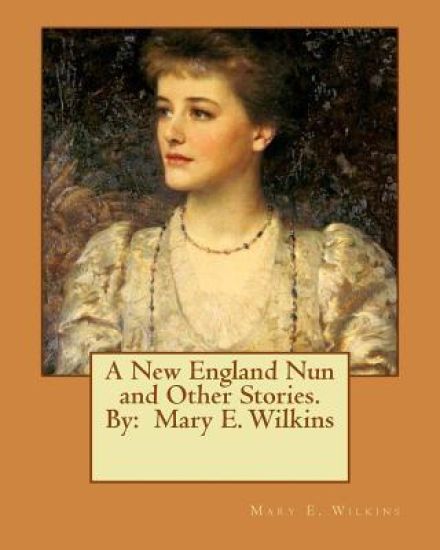
A New England Nun and Other Stories. By: Mary E. Wilkins
Mary E. Wilkins
Createspace Independent Publishing Platform
2016
nidottu
The pot of gold, and other stories. ( collection of CHILDREN'S' short STORIES ) By: Mary E. Wilkins (Illustrated)
Mary E. Wilkins
Createspace Independent Publishing Platform
2016
nidottu
Pembroke. A NOVEL by: Mary E. Wilkins ( Biographical Edition )
Mary E. Wilkins
Createspace Independent Publishing Platform
2016
nidottu
A New England Nun and Other Stories. By: Mary E. Wilkins: Mary Eleanor Wilkins Freeman (October 31, 1852 - March 13, 1930) was a prominent 19th-centur
Mary E. Wilkins
Createspace Independent Publishing Platform
2017
nidottu
Mary Eleanor Wilkins Freeman (October 31, 1852 - March 13, 1930) was a prominent 19th-century American author She was born in Randolph, Massachusetts on October 31, 1852, to Eleanor Lothrop and Warren Edward Wilkins, who originally baptized her as "Mary Ella". Freeman's parents were orthodox Congregationalists, causing her to have a very strict childhood. Religious constraints play a key role in some of her works. LIST OF STORIES. A New England nun.--A village singer.--A gala dress.--The twelfth guest.--Sister Liddy.--Calla-lilies & Hannah.--Wayfaring couple.--A poetess.--Christmas Jenny.--Pot of gold.--Scent of the roses.--A solitary.--Gentle ghost.--A discovered pearl.--A village Lear.--Amanda & love.--Up Primrose hill.--Stolen Christmas.--Life everlastin'.--Innocent gamester. Louisa.--Church mouse.--Kitchen colonel.--The revolt of "Mother She was born in Randolph, Massachusetts on October 31, 1852, to Eleanor Lothrop and Warren Edward Wilkins, who originally baptized her as "Mary Ella". Freeman's parents were orthodox Congregationalists, causing her to have a very strict childhood.Religious constraints play a key role in some of her works. In 1867, the family moved to Brattleboro, Vermont, where Freeman graduated from the local high school before attending attended Mount Holyoke College (then, Mount Holyoke Female Seminary) in South Hadley, Massachusetts, for one year, from 1870-71. She later finished her education at Glenwood Seminary in West Brattleboro. When the family's dry goods business in Vermont failed in 1873, the family returned to Randolph, Massachusetts. Freeman's mother died three years later, and she changed her middle name to "Eleanor" in her memory. Freeman's father died suddenly in 1883, leaving her without any immediate family and an estate worth only $973. She moved in with a friend and began writing as her only source of income. During a visit to Metuchen, New Jersey in 1892, she met Dr. Charles Manning Freeman, a non-practicing medical doctor seven years younger than she. After years of courtship and delays, the two were married on January 1, 1902. Immediately after, she firmly established her name as "Mary E. Wilkins Freeman", which she asked Harper's to use on all of her work.The couple built a home in Metuchen, where Freeman was known as a local celebrity for her writing, despite having occasionally published satirical fictional representations of her neighbors. Her husband, who suffered from alcoholism and an addiction to sleeping powders, was committed to the New Jersey State Hospital for the Insane in Trenton, and the two legally separated a year later.After his death in 1923, he left the majority of his wealth to his chauffeur and only one dollar to his former wife. In April 1926, Freeman became the first recipient of the William Dean Howells Medal for Distinction in Fiction from the American Academy of Arts and Letters. She suffered a heart attack and died in Metuchen on March 15, 1930, at age 77. She was interred in Hillside Cemetery in Scotch Plains, New Jersey. Freeman began writing stories and verse for children while still a teenager to help support her family and was quickly successful. When the supernatural caught her interest, the result was a group of short stories which combined domestic realism with supernaturalism and these have proved very influential. Her best known work was written in the 1880s and 1890s while she lived in Randolph. She produced more than two dozen volumes of published short stories and novels. She is best known for two collections of stories, A Humble Romance and Other Stories (1887) and A New England Nun and Other Stories (1891). Her stories deal mostly with New England life and are among the best of their kind. Freeman is also remembered for her novel Pembroke (1894), and she contributed a notable chapter to the collaborative novel The Whole Family (1908).
The adventures of Ann: stories of colonial times. By: Mary E. Wilkins: Mary Eleanor Wilkins Freeman (October 31, 1852 - March 13, 1930) was a
Mary E. Wilkins
Createspace Independent Publishing Platform
2017
nidottu
Mary Eleanor Wilkins Freeman (October 31, 1852 - March 13, 1930) was a prominent 19th-century American author. She was born in Randolph, Massachusetts on October 31, 1852, to Eleanor Lothrop and Warren Edward Wilkins, who originally baptized her as "Mary Ella". Freeman's parents were orthodox Congregationalists, causing her to have a very strict childhood.Religious constraints play a key role in some of her works. In 1867, the family moved to Brattleboro, Vermont, where Freeman graduated from the local high school before attending attended Mount Holyoke College (then, Mount Holyoke Female Seminary) in South Hadley, Massachusetts, for one year, from 1870-71. She later finished her education at Glenwood Seminary in West Brattleboro. When the family's dry goods business in Vermont failed in 1873, the family returned to Randolph, Massachusetts. Freeman's mother died three years later, and she changed her middle name to "Eleanor" in her memory. Freeman's father died suddenly in 1883, leaving her without any immediate family and an estate worth only $973. She moved in with a friend and began writing as her only source of income. During a visit to Metuchen, New Jersey in 1892, she met Dr. Charles Manning Freeman, a non-practicing medical doctor seven years younger than she. After years of courtship and delays, the two were married on January 1, 1902. Immediately after, she firmly established her name as "Mary E. Wilkins Freeman", which she asked Harper's to use on all of her work.The couple built a home in Metuchen, where Freeman was known as a local celebrity for her writing, despite having occasionally published satirical fictional representations of her neighbors. Her husband, who suffered from alcoholism and an addiction to sleeping powders, was committed to the New Jersey State Hospital for the Insane in Trenton, and the two legally separated a year later.After his death in 1923, he left the majority of his wealth to his chauffeur and only one dollar to his former wife. In April 1926, Freeman became the first recipient of the William Dean Howells Medal for Distinction in Fiction from the American Academy of Arts and Letters. She suffered a heart attack and died in Metuchen on March 15, 1930, at age 77. She was interred in Hillside Cemetery in Scotch Plains, New Jersey. Freeman began writing stories and verse for children while still a teenager to help support her family and was quickly successful. When the supernatural caught her interest, the result was a group of short stories which combined domestic realism with supernaturalism and these have proved very influential. Her best known work was written in the 1880s and 1890s while she lived in Randolph. She produced more than two dozen volumes of published short stories and novels. She is best known for two collections of stories, A Humble Romance and Other Stories (1887) and A New England Nun and Other Stories (1891). Her stories deal mostly with New England life and are among the best of their kind. Freeman is also remembered for her novel Pembroke (1894), and she contributed a notable chapter to the collaborative novel The Whole Family (1908).
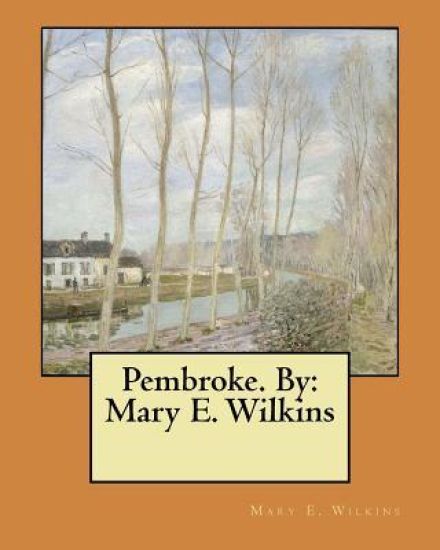
Pembroke. By: Mary E. Wilkins
Mary E. Wilkins
Createspace Independent Publishing Platform
2017
nidottu
Mary Eleanor Wilkins Freeman (October 31, 1852 - March 13, 1930) was a prominent 19th-century American author.Freeman was born in Randolph, Massachusetts on October 31, 1852, to Eleanor Lothrop and Warren Edward Wilkins, who originally baptized her "Mary Ella". Freeman's parents were orthodox Congregationalists, bestowing a very strict childhood. Religious constraints play a key role in some of her works. In 1867, the family moved to Brattleboro, Vermont, where Freeman graduated from the local high school before attending, Mount Holyoke College (then, Mount Holyoke Female Seminary) in South Hadley, Massachusetts, for one year, from 1870-71. She later finished her education at Glenwood Seminary in West Brattleboro. When the family's dry goods business in Vermont failed in 1873, the family returned to Randolph, Massachusetts. Freeman's mother died three years later, and she changed her middle name to "Eleanor" in her memory. Freeman's father died suddenly in 1883, leaving her without any immediate family and an estate worth only $973. She moved in with a friend and began writing as her only source of income.During a visit to Metuchen, New Jersey in 1892, she met Dr. Charles Manning Freeman, a non-practicing medical doctor seven years younger than she. After years of courtship and delays, the two were married on January 1, 1902. Immediately after, she firmly established her name as "Mary E. Wilkins Freeman", which she asked Harper's to use on all of her work.
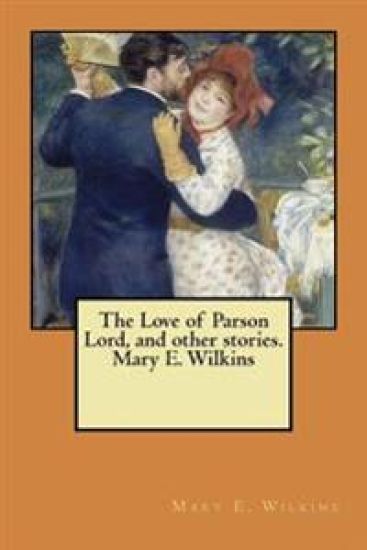
The Love of Parson Lord, and other stories. Mary E. Wilkins
Mary E. Wilkins
Createspace Independent Publishing Platform
2017
nidottu