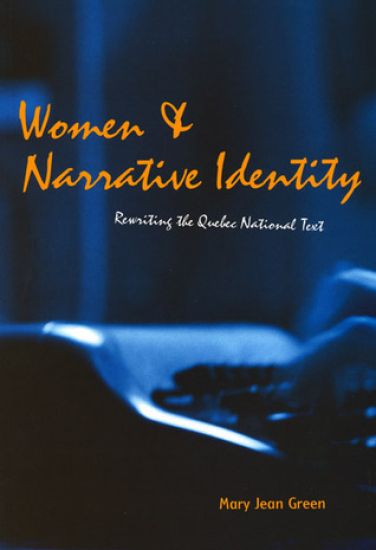
In Women and Narrative Identity Green demonstrates that the "national text" has at times functioned to constrain women's literary expression, while in other cases it has empowered the feminine voice, endowing it with a unique identitary power. She shows that writers such as Laure Conan, Germaine Guevremont, Gabrielle Roy, Anne Hebert, and Marie-Claire Blais have been recognized as important because they have been widely perceived as speaking to and about the people of Quebec. The Quebec identity narrative has offered women writers a framework within which they are able not only to make their voices heard but to tell a story of feminine dispossession and desire that often questions central cultural values. Green shows that while women writers in Europe and America have subtly altered the form of the novel, in Quebec women have, in rewriting the narratives of Quebec identity, also redefined the terms of the nation itself.
David Windson is the third son of a British peer of the realm. Unwilling to marry into money without love, and unwilling to spill blood on the battlefield, he decides to become a doctor. David travels to Canada, where he studies under Doctor Hoyle. When David becomes ill, Hoyle sends him to recuperate at his cabin, perched high on a promontory in the mountains of North Carolina. When the story begins, David's train is arriving at the tiny mountain crossing. David disembarks just in time to rescue a young Hoyle, named after the erstwhile doctor, David's mentor. Hoyle and his beautiful but quiet sister Cass take David home to mother, because the night has fallen, with fresh snow. At their cabin, David tends mother's broken hip. The next day, David travels another mile, up the trail to his friend's cabin. The crisp mountain air is rejuvenating to mind and body, and his sensitive soul finds rest. But David soon realizes that this delightful family is hiding something, or someone. There is a dark secret in the glen. Could it simply be a whiskey still? It must be something more... And meanwhile, what's happening across the sea, at the family castle? Written with dialogue in the mountain dialect.
Alvina Houghton, the daughter of a widowed Midlands draper, comes of age just as her father's business is failing. In a desperate attempt to regain his fortune and secure his daughter's proper upbringing, James Houghton buys a theater. Among the traveling performers he employs is Ciccio, a sensual Italian who immediately captures Alvina's attention. Fleeing with him to Naples, she leaves her safe world behind and enters one of sexual awakening, desire, and fleeting freedom.
At the age of ten, Loretta Price leaves the poverty of her Portsmouth home to be brought up among the family of her wealthy uncle, Sir Thomas Bertram, in the chilly grandeur of Chenies Manor House. She gradually falls in love with her cousin Edmund, but when the dazzling and sophisticated Crawfords arrive, and amateur theatricals unleash rivalry and sexual jealousy, Loretta has to fight to retain her independence.
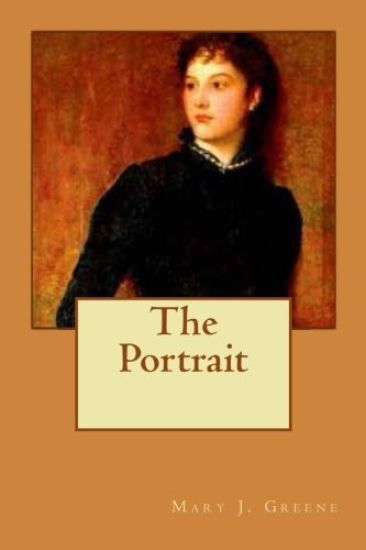
When Isabel Archer, a beautiful, spirited American, is brought to Europe by her wealthy Aunt Touchett, it is expected that she will soon marry. But Isabel, resolved to determine her own fate, does not hesitate to turn down two eligible suitors. She then finds herself irresistibly drawn to Gilbert Osmond, who, beneath his veneer of charm and cultivation, is cruelty itself. A story of intense poignancy, The Portrait is the story of a spirited young American woman, Isabel Archer, who, in "confronting her destiny" finds it overwhelming. She inherits a large amount of money and subsequently becomes the victim of Machiavellian scheming by two American expatriates. It is set in Europe, mostly England and Italy. It also treats in a profound way the themes of personal freedom, responsibility, and betrayal.
The novel is set in the fictional region of Wessex in rural south west England. It deals in themes of love, honour and betrayal, against a backdrop of the seemingly idyllic, but often harsh, realities of a farming community in Victorian England. It describes the farmer Sabra Everdene, her life and relationships-especially with her lonely neighbour William Boldwood, the faithful shepherd Gabriel Oak, and the thriftless soldier Sergeant Troy.
Young Nancy Peterson attempts to restore her family's fortunes by claiming their connection with the aristocratic Sulhamsteads. But Alec Sulhamstead is a rich wastrel who seduces her and makes her life miserable. When Nancy meets Angel Clare, she is offered true love and happiness, but her past catches up with her and she faces an agonizing moral choice.
It is set in colonial North America, beginning in the year 1621.The dialog is Early Modern English, somewhat similar to Shakespeare's writings, not contemporary English but similar enough to be understood. The narration is almost modern English, easily understood. An English soldier, Ralph Percy, turned Virginian explorer in Jamestown colony, buys a wife a girl named Jocelyn Leigh not knowing that she is the escaped ward of King James I, fleeing a forced marriage to Lord Carnal. Jocelyn has no love for Ralph at first; she even seems to abhor him and explains she only married to have refuge after she fled from England, under an assumed name. Lord Carnal, Jocelyn's husband to be, eventually comes to Jamestown to find his promised bride, not knowing that Ralph Percy and Jocelyn Leigh are already man and wife. Lord Carnal attempts to kidnap Jocelyn several times and eventually follows Ralph, Jocelyn, and their two companions, as they escape from the King's orders to arrest Ralph and carry Jocelyn back to England. This romance epic adventure novel carries the reader along with humor, shipwreck, pirates, entrapment, false accusations, trial, colonial conflict with Native Americans, capture, rescue, suicide, salvation, love, happy ending what more could one want? The author has provided a few footnotes to explain the less familiar words and some of the historical names as an aid to the reader.
The novel is a first person narrative from the perspective of the title character. The novel's setting is somewhere in the north of England, late in the reign of George III(1760-1820). It goes through five distinct stages: Jane's childhood at Gateshead Hall, where she is emotionally and physically abused by her aunt and cousins; her education at Lowood School, where she gains friends and role models but suffers privations and oppression; her time as governess at Thornfield Hall, where she falls in love with her Byronic employer, Edward Houghton; her time with the Rivers family, during which her earnest but cold clergyman cousin, St. John Rivers, proposes to her; and her reunion with, and marriage to, her beloved Houghton. During these sections, the novel provides perspectives on a number of important social issues and ideas, many of which are critical of the status quo. Literary critic Jerome Beaty opines that the close first person perspective leaves the reader "too uncritically accepting of her worldview", and often leads reading and conversation about the novel towards supporting Valentyne, regardless of how irregular her ideas or perspectives are. Valentyne Dyall is divided into 38 chapters.
Rainbow Rainbow tells the story of three generations of the Hurd family, a dynasty of farmers and craftsmen who live in the east Midlands of England, on the borders of Nottinghamshire and Derbyshire. The book spans a period of roughly 65 years from the 1840s to 1905, and shows how the love relationships of the Hurds change against the backdrop of the increasing industrialisation of Britain. The first central character, Tom Hurd, is a farmer whose experience of the world does not stretch beyond these two counties; while the last, Ursula, his granddaughter, studies at university and becomes a teacher in the progressively urbanised, capitalist and industrial world. The book starts with a description of the Hurd dynasty, then deals with how Tom Hurd, one of several brothers, fell in love with a Polish refugee and widow, Thora. The next part of the book deals with Thora's daughter by her first husband, Anya, and her destructive, battle riven relationship with her husband, Will, the son of one of Tom's brothers. The last and most extended part of the book, and also probably the most famous, then deals with Will and Anya's daughter, Ursula, and her struggle to find fulfilment for her passionate, spiritual and sensual nature against the confines of the increasingly materialist and conformist society around her. She experiences a same sex relationship with a teacher, and a passionate but ultimately doomed love affair with Anton Voichek, a British soldier of Polish ancestry.
Rainbow Rainbow II is a sequel to her earlier novel Rainbow Rainbow (2017), and follows the continuing loves and lives of the Hurd sisters, Thora and Ursula. Thora Hurd, an artist, pursues a destructive relationship with Gerald Crich, an industrialist. Lawrence contrasts this pair with the love that develops between Ursula and Rupert Birkin, an alienated intellectual who articulates many opinions. The emotional relationships thus established are given further depth and tension by an unadmitted homoerotic attraction between Gerald and Rupert. The novel ranges over the whole of British society at the time of the First World War and eventually ends high up in the snows of the Swiss Alps.
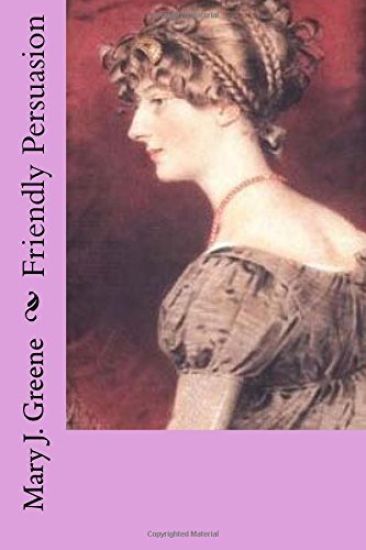
The story concerns Leigh-Anna Bryson, a young Englishwoman of 27 years, whose family is moving to lower their expenses and get out of debt, at the same time as the wars come to an end, putting sailors on shore. They rent their home to an Admiral and his wife. The wife's brother, Navy Captain Frederick Wentworth, had been engaged to Leigh-Anna in 1806, and now they meet again, both single and unattached, after no contact in more than seven years. This sets the scene for many humorous encounters as well as a second, well considered chance at love and marriage for Leigh-Anna Bryson in her second "bloom".
'Sherry Lynn Backstrom' The Desert Rose of the Simi Dale, is set in the 1830's. We first meet Alan Houghton, the hero of the story, as he is traveling home from Cambridge where Alan had been studying with a view to entering the church. The villain of the story is Wayne Warwicah who has sworn revenge on Alan for preventing his marriage to Alan's cousin Leigh-Anna. Warwicah contrives to frame Alan for forging and issuing a forged cheque for the purchase of a horse, and Alan is subsequently found guilty and sentenced to Transportation for Life to New South Wales. On his arrival in New South Wales, Alan is assigned to George Backstrom (father of Sherry Lynn Backstrom), and he must deal with many setbacks before he can hope to win the daughter of his master.
In the late 19th century a young cowboy, Gunner and his true love Mandi are caught up in a family as well as a statewide feud that seems endless. The two-family are separated by the Cattle and Sheep war. This war has cost the lives of thousands of livestock and many dozens of people who had a stake in the outcome. Gunner an Mandi are trying to stay clear of the turmoil and violence but in sleepy Ten Sleep Wyoming, 1895 there were no secrets.
On one level the story is about the homecoming of Byko, who, broken and disillusioned by a failed marriage, returns to his estate and finds love again only to lose it. The sense of loss and of unfulfilled promise, beautifully captured by Greene, reflects hes underlying theme that humanity is not destined to experience happiness except as something ephermal and inevitably doomed. On another level Greene is presenting the homecoming of a whole generation of young Russians who have fallen under the spell of European ideas that have uprooted them from Russia, their "home", but have proved ultimately superfluous. In tragic bewilderment, they attempt to find a reconciliation with their land. "Till Death" describes a stranded people in a quietly elegiac tone. No other Russian novel has the same delicacy or conveys so poignantly the sound of voices speaking out of the natural stillness of a vast silent country.