Kirjojen hintavertailu. Mukana 11 244 527 kirjaa ja 12 kauppaa.

Kirjahaku

Etsi kirjoja tekijän nimen, kirjan nimen tai ISBN:n perusteella.

1000 tulosta hakusanalla Mary K. Bercaw Edwards

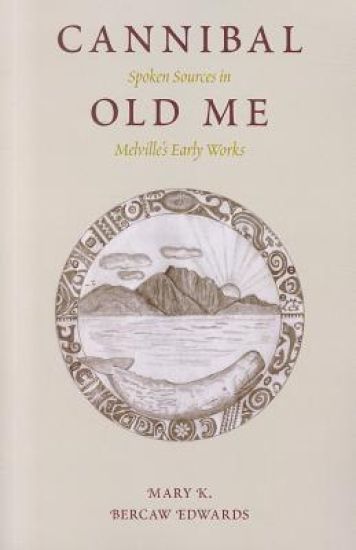
Cannibal Old Me

Cannibal Old Me

Mary K. Bercaw Edwards

Kent State University Press
2011
nidottu
Mary Bercaw Edwards has researched the sources very thoroughly, going well beyond the previously published source studies. The result is a sound historical account of the talk Melville encountered in the 1840s, and in emphasising the oral sources of Melville's discourses, Edwards provides an original contribution to source studies of Melville. She presents her research interestingly as well, in clear, readable prose. Her scholarship will certainly be of interest to Melville scholars, but it will also engage the attention of anyone interested in American culture and popular culture of the period. John Samson, associate professor of English, Texas Tech University At the age of twenty-one, Herman Melville signed on the whaleship Acushnet as a common seaman and sailed from Massachusetts to the South Pacific. Upon reaching Nuku Hiva in the Marquesas Islands, he deserted and spent a month ashore on this reputed cannibal island. He departed as crew of another whaleship but was put ashore in the heavily missionised Tahitian islands after participating in a bloodless mutiny. Eventually making his way to Hawaii, he joined the crew of the American frigate United States and finally reached Boston in October 1844 after four years at sea. By the time he sat down to write his first book, Melville had been recounting tales of these experiences orally for four years. The spoken elements of the overlapping discourses involving sailors, cannibals, and missionaries are essential to his first six books. Mary K. Bercaw Edwards investigates the interplay between spoken sources and written narratives. She closely examines how Melville altered original stories, and she questions his truthfulness about his experiences. Bercaw Edwards also explores the synergistic blend of the oral and written worlds of seafaring and the South Pacific and provides an analysis of Melville's development as a writer. It is a study of the aesthetic, ethical, linguistic, and cultural implications of Melville's borrowing. Cannibal Old Me is an excellent contribution to Melville scholarship, challenging long-held assumptions regarding his early works. Scholars as well as students will welcome it as an indispensable addition to the study of nineteenth-century literature and maritime history.
Sailor Talk

Sailor Talk

Mary K. Bercaw Edwards

Liverpool University Press
2021
sidottu
This book investigates the highly engaging topic of the literary and cultural significance of ‘sailor talk.’ The central argument is that sailor talk offers a way of rethinking the figure of the nineteenth-century sailor and sailor-writer, whose language articulated the rich, layered, and complex culture of sailors in port and at sea. From this argument many other compelling threads emerge, including questions relating to the seafarer’s multifaceted identity, maritime labor, questions of performativity, the ship as ‘theater,’ the varied and multiple registers of ‘sailor talk,’ and the foundational role of maritime language in the lives and works of Herman Melville, Joseph Conrad, and Jack London. The book also includes nods to James Fenimore Cooper, Rudyard Kipling, and Robert Louis Stevenson. Meticulous scholarly research underpins the close readings of literary texts and the scrupulously detailed biographical accounts of three major sailor-writers. The author’s own lived experience as a seafarer adds a refreshingly materialist dimension to the subtle literary readings. The book represents a valuable addition to a growing scholarly and political interest in the sea and sea literature. By taking the sailor’s viewpoint and listening to sailors’ voices, the book also marks a clear intervention in this developing field.
Sailor Talk

Sailor Talk

Mary K. Bercaw Edwards

LIVERPOOL UNIVERSITY PRESS
2024
nidottu
This book investigates the highly engaging topic of the literary and cultural significance of ‘sailor talk.’ The central argument is that sailor talk offers a way of rethinking the figure of the nineteenth-century sailor and sailor-writer, whose language articulated the rich, layered, and complex culture of sailors in port and at sea. From this argument many other compelling threads emerge, including questions relating to the seafarer’s multifaceted identity, maritime labor, questions of performativity, the ship as ‘theater,’ the varied and multiple registers of ‘sailor talk,’ and the foundational role of maritime language in the lives and works of Herman Melville, Joseph Conrad, and Jack London. The book also includes nods to James Fenimore Cooper, Rudyard Kipling, and Robert Louis Stevenson. Meticulous scholarly research underpins the close readings of literary texts and the scrupulously detailed biographical accounts of three major sailor-writers. The author’s own lived experience as a seafarer adds a refreshingly materialist dimension to the subtle literary readings. The book represents a valuable addition to a growing scholarly and political interest in the sea and sea literature. By taking the sailor’s viewpoint and listening to sailors’ voices, the book also marks a clear intervention in this developing field.
The Charles W. Morgan

The Charles W. Morgan

Andrew W. German; Mary K. Bercaw Edwards

ROWMAN LITTLEFIELD
2024
pokkari
As America’s oldest merchant ship still afloat and the only wooden survivor of the once-vital whaling industry, the Charles W. Morgan has a complex story to tell. Elaborating on Mystic Seaport Museum’s earlier volumes on the Charles W. Morgan's history, this new book offers an expanded account, chronicling the ship'sconstruction and launch in 1841 through its 38th Voyage in 2014—the first time the Morgan had been sailed in more than ninety years—and its continuing role today as an historic icon and the museum’s flagship vessel. Chapters paint a picture of how whaling developed in Europe and the ways New England colonists adopted it as a profitable venture, and then, through the ship’s own story, proceed to sketch the evolution of America’s relationship with nature—and the whale, specifically—and with the many peoples of the world who were encountered by, or served aboard, a whaleship. This is the story of a National Historic Landmark—one that reflects our changing relationship with the natural world and with the diverse populations of the globe through two centuries of American history.
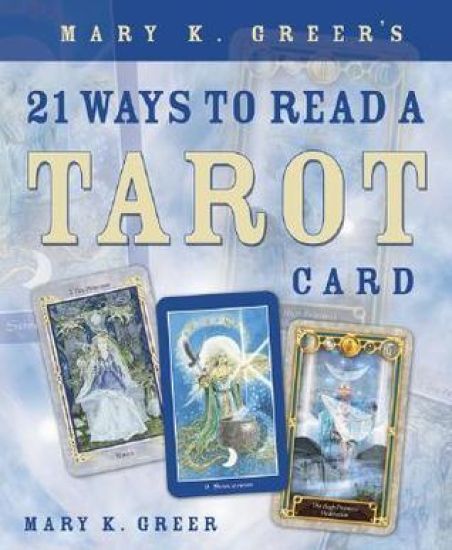
Mary K. Greer's 21 Ways to Read a Tarot Card

Mary K. Greer's 21 Ways to Read a Tarot Card

Mary K. Greer

Llewellyn Publications,U.S.
2006
nidottu
Drawing on nearly forty years of tarot experience, Mary K. Greer has developed a new energizing approach-made up of twenty-one stimulating techniques to interpret or deepen your understanding of each card. Just as the twenty-six letters of the alphabet can be combined to form billions of words, Greer's twenty-one methods can be used in any combination for gaining amazing new insights and perspectives. Emphasizing both traditional and personal methods of interpretation, Greer's techniques involve storytelling, sketching, symbols, metaphors, dialogues, acting, and other imaginative exercises. Designed to bring about interaction, transformation, and empowerment, this twenty-one-pronged approach to tarot can help readers expand standard interpretations and evolve new ways of connecting to the cards. COVR Award Winner or Best Divination Book
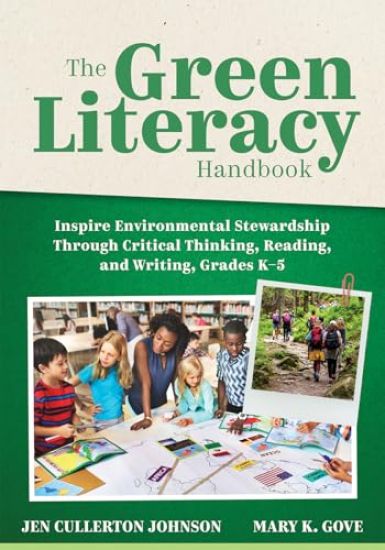
The Green Literacy Handbook: Inspire Environmental Stewardship Through Critical Thinking, Reading, and Writing, Grades K-5 (Active Learning That Inspi
Introducing Green Literacy, a way of teaching that cultivates critical thinking, reading, and writing about environmentalism through children's books and digital media. Students analyze multiple perspectives, engage in hands-on activities, and come to a deeper understanding of environmental issues. Supported through teaching models and thematic units, educators empower themselves and their students to develop environmental awareness toward sustainable change. K-5 teachers can use this book to: Explore environmental justice issues using familiar stories and digital tools to spark curiosity and new ideas with reading, writing, and drama strategies for engagement Engage students with activities on weather, ecosystems, and how nature connects individuals and develops systems thinking Encourage students to see environmental issues from all angles to deepen their understanding and empathy and move them toward sustainable change Be empowered with seed ideas about environmental issues, including classroom engagement strategies and professional development opportunities Contents: Preface: What Is Green Literacy? Introduction: How to Use the Green Literacy Handbook Part 1: Foundations of Green Literacy Chapter 1: Green Literacy Theoretical Foundations Chapter 2: Green Literacy Practical Foundations Part 2: Green Literacy Teaching Chapter 3: The Model for Teaching Green Literacy Thematic Units Chapter 4: Ten Insights Into Green Literacy Teaching Part 3: Design Your Own Green Literacy Thematic Units Chapter 5: How Landscapes Shape Us--Design Your Own Thematic Unit Chapter 6: How Extreme Weather Events Impact Our Communities--Design Your Own Thematic Unit Chapter 7: How Systems Thinking Changes Our World--Design Your Own Thematic Unit Epilogue: Moving Toward Actions Appendix: Common Core State Standards in Green Literacy Practice References and Resources Index
Using Scanner Data for Food Policy Research

Using Scanner Data for Food Policy Research

Mary K. Muth; Abigail Okrent; Chen Zhen; Shawn Karns

Academic Press Inc
2019
nidottu
Using Scanner Data for Food Policy Research is a practitioners’ guide to using and interpreting scanner data obtained from stores and households in policy research. It provides practical advice for using the data and interpreting their results. It helps the reader address key methodological issues such as aggregation, constructing price indices, and matching the data to nutrient values. It demonstrates some of the key econometric and statistical applications of the data, including estimating demand systems for policy simulation, analyzing effects of food access on food choices, and conducting cost-benefit analysis of food policies. This guide is intended for early-career researchers, particularly those working with scanner data in agricultural and food economics, nutrition, and public health contexts.
Women, Power, and Dissent in the Hills of Carolina

Women, Power, and Dissent in the Hills of Carolina

Mary K. Anglin

University of Illinois Press
2002
nidottu
Women, Power, and Dissent in the Hills of Carolina is a unique and impassioned exploration of gender, labor, and resistance in western North Carolina. Based on eight months of field research in a mica manufacturing plant and the surrounding rural community, as well as oral histories of women who worked in mica houses in the early twentieth century, this landmark study canvasses the history of the mica industry and the ways it came to be organized around women's labor. Mary K. Anglin's investigation of working women's lives in the plant she calls "Moth Hill Mica Company" reveals the ways women have contributed to household and regional economies for more than a century. Without union support or recognition as skilled laborers, these women developed alternate strategies for challenging the poor working conditions, paltry wages, and corporate rhetoric of Moth Hill. Utilizing the power of memory and strong family and community ties, as well as their own interpretations of gender and culture, the women have found ways to "boss themselves."
D-Day Deception

D-Day Deception

Mary K. Barbier

Praeger Publishers Inc
2007
sidottu
On 6 June 1944, Allied forces stormed the beaches at Normandy. The invasion followed several years of argument and planning by Allied leaders, who remained committed to a return to the European continent after the Germans had forced the Allies to evacuate at Dunkirk in May 1940. Before the spring of 1944, however, Prime Minister Winston Churchill and other British leaders remained unconvinced that the invasion was feasible. At the Teheran Conference in November 1943, Franklin D. Roosevelt and Winston Churchill promised Josef Stalin that Allied troops would launch Operation Overlord, the invasion of Normandy, in the spring. Because of their continuing concerns about Overlord, the British convinced the Americans to implement a cover plan to help ensure the invasion's success. The London Controlling Section (LCS) devised an elaborate two-part plan called Operation Fortitude that SHAEF (Supreme Headquarters, Allied Expeditionary Force) helped to fine tune and that both British and American forces implemented Historians analyzing the Normandy invasion frequently devote some discussion to Operation Fortitude. Although they admit that Fortitude North did not accomplish all that the Allied deception planners had hoped, many historians heap praise on Fortitude South, using phrases such as, unquestionably the greatest deception in military history. Many of these historians assume that the deception plan played a crucial role in the June 1944 assault. A reexamination of the sources suggests, however, that other factors contributed as much, if not more, to the Allied victory in Normandy and that Allied forces could have succeeded without the elaborate deception created by the LCS. Moreover, the persistent tendency to exaggerate the operational effect of Fortitude on the German military performance at Normandy continues to draw attention away from other, technical-military reasons for the German failures there.
Information for International Marketing

Information for International Marketing

Mary K. Cary; James K. Weekly

Greenwood Press
1986
sidottu
This guide covers 195 of the most important information sources that are particularly relevant or useful to those involved in international marketing. It is designed to aid international companies and managers, public or professional organizations, and others in locating and compiling information on foreign markets and marketing regulations, practices, and procedures. It identifies and describes the contents of the major published sources, and includes references to United States government publications, databases, indexes to periodicals and newspapers, and basic reference sources such as directories, almanacs, encyclopedias, handbooks, and records. Economic and political conditions throughout the world, overseas markets, international business techniques, legal rules pertaining to international business operations, companies engaged in foreign trade, facilitating organizations, and financial and credit services are just a few of the topics covered. The book is organized by types of information, a unique arrangement that makes it easy to use when preparing an international marketing plan or locating specific types of marketing data.
Introduction to Environmental Management

Introduction to Environmental Management

Mary K. Theodore; Louis Theodore

CRC Press
2021
sidottu
Written at a level that is accessible to students in all disciplines, Introduction to Environmental Management, Second Edition translates complex environmental issues into practical and understandable terms. The book provides students and practitioners an understanding of the regulations, pollutants, and waste management issues that can be applied in various related environmental fields and industries. This new edition is updated throughout and adds eleven new chapters, including coverage of water conservation, water toxins, measurement methods, desalination, industrial ecology, legal issues, and more. Features: Updated throughout and includes eleven all-new chapters Reviews the specialized literature on pollution prevention, sustainability, and the role of optimization in water treatment and related areas, as well as references for further reading Provides illustrative examples and case studies that complement the text throughout Includes ancillary exams and a solutions manual for adopting instructors This book serves as a complete teaching tool, offering a combination of insightful coverage, concise language, and convenient pedagogical features, and supplies practical guidance that will aid students and practitioners alike.
Introduction to Environmental Management

Introduction to Environmental Management

Mary K. Theodore; Louis Theodore

TAYLOR FRANCIS LTD
2024
nidottu
Written at a level that is accessible to students in all disciplines, Introduction to Environmental Management, Second Edition translates complex environmental issues into practical and understandable terms. The book provides students and practitioners an understanding of the regulations, pollutants, and waste management issues that can be applied in various related environmental fields and industries. This new edition is updated throughout and adds eleven new chapters, including coverage of water conservation, water toxins, measurement methods, desalination, industrial ecology, legal issues, and more. Features: Updated throughout and includes eleven all-new chapters Reviews the specialized literature on pollution prevention, sustainability, and the role of optimization in water treatment and related areas, as well as references for further reading Provides illustrative examples and case studies that complement the text throughout Includes ancillary exams and a solutions manual for adopting instructors This book serves as a complete teaching tool, offering a combination of insightful coverage, concise language, and convenient pedagogical features, and supplies practical guidance that will aid students and practitioners alike.
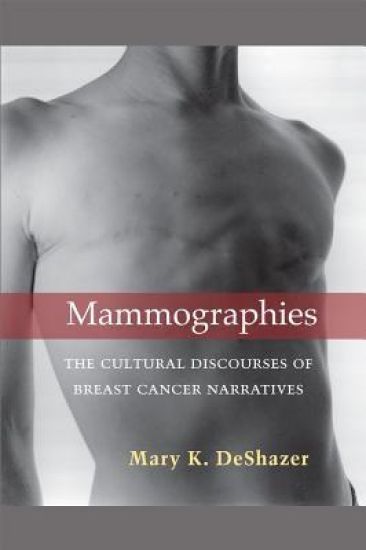
Mammographies

Mammographies

Mary K. DeShazer

The University of Michigan Press
2015
nidottu
While breast cancer continues to affect the lives of millions, contemporary writers and artists have responded to the ravages of the disease in creative expression. Mary K. DeShazer’s book looks specifically at breast cancer memoirs and photographic narratives, a category she refers to as mammographies, signifying both the imaging technology by which most Western women discover they have this disease and the documentary imperatives that drive their written and visual accounts of it. Mammographies argues that breast cancer narratives of the past ten years differ from their predecessors in their bold address of previously neglected topics such as the link between cancer and environmental carcinogens, the ethics and efficacy of genetic testing and prophylactic mastectomy, and the shifting politics of prosthesis and reconstruction.Mammographies is distinctive among studies of contemporary illness narratives in its exclusive focus on breast cancer, its analysis of both memoirs and photographic texts, its attention to hybrid and collaborative narratives, and its emphasis on ecological, genetic, transnational, queer, and anti-pink discourses. DeShazer’s methodology—best characterized as literary critical, feminist, and interdisciplinary—includes detailed interpretation of the narrative strategies, thematic contours, and visual imagery of a wide range of contemporary breast cancer memoirs and photographic anthologies. The author explores the ways in which the narratives constitute a distinctive testimonial and memorial tradition, a claim supported by close readings and theoretical analysis that demonstrates how these narratives question hegemonic cultural discourses, empower reader-viewers as empathic witnesses, and provide communal sites for mourning, resisting, and remembering.
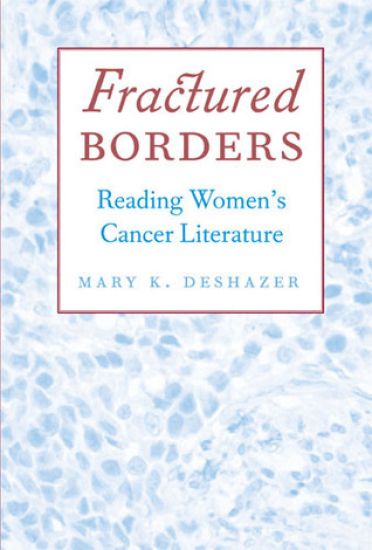
Fractured Borders

Fractured Borders

Mary K. DeShazer

The University of Michigan Press
2005
nidottu
Women have been writing about cancer for decades, but since the early 1990s, the body of literature on cancer has increased exponentially as growing numbers of women face the searing realities of the disease and give testimony to its ravages and revelations. Fractured Borders: Reading Women's Cancer Literature surveys a wide range of contemporary writing about breast, uterine, and ovarian cancer, including works by Marilyn Hacker, Margaret Edson, Carole Maso, Audre Lorde, Eve Sedgwick, Mahasweta Devi, Lucille Clifton, Alicia Ostriker, Jayne Anne Phillips, Terry Tempest Williams, and Jeanette Winterson, among many others. DeShazer's readings bring insights from body theory, performance theory, feminist literary criticism, French feminisms, and disability studies to bear on these works, shining new light on a literary subject that is engaging more and more writers. "An important and useful book that will appeal to people in a variety of fields and walks of life, including scholars, teachers, and anyone interested in this subject." --Suzanne Poirier, University of Illinois at Chicago "A book on a timely and important topic, wisely written beyond scholarly boundaries and crossing many theoretical and disciplinary lines." --Patricia Moran, University of California, Davis
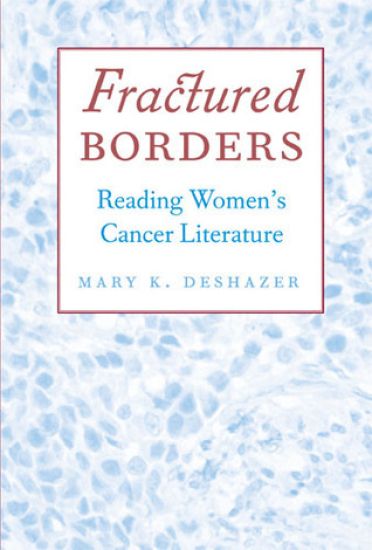
Fractured Borders

Fractured Borders

Mary K. DeShazer

The University of Michigan Press
2005
sidottu
Women have been writing about cancer for decades, but since the early 1990s, the body of literature on cancer has increased exponentially as growing numbers of women face the searing realities of the disease and give testimony to its ravages and revelations. Fractured Borders: Reading Women's Cancer Literature surveys a wide range of contemporary writing about breast, uterine, and ovarian cancer, including works by Marilyn Hacker, Margaret Edson, Carole Maso, Audre Lorde, Eve Sedgwick, Mahasweta Devi, Lucille Clifton, Alicia Ostriker, Jayne Anne Phillips, Terry Tempest Williams, and Jeanette Winterson, among many others. DeShazer's readings bring insights from body theory, performance theory, feminist literary criticism, French feminisms, and disability studies to bear on these works, shining new light on a literary subject that is engaging more and more writers. "An important and useful book that will appeal to people in a variety of fields and walks of life, including scholars, teachers, and anyone interested in this subject."--Suzanne Poirier, University of Illinois at Chicago"A book on a timely and important topic, wisely written beyond scholarly boundaries and crossing many theoretical and disciplinary lines." --Patricia Moran, University of California, Davis