Few people have made greater contributions to protecting and improving the environment than the scientist, teacher, activist Dr. Barry Commoner. For half a century, Dr. Commoner has been an international leader in the environmental movement. On the occasion of his eightieth birthday, a symposium was held at which invited speakers discussed his contributions to a wide range of environmental issues. This book, collecting many of the invited papers, provides fascinating insights into the life and work of one of the twentieth century's most influential scientists and social activists. Chapters contributed by other activists, scientists, and scholars including Ralph Nader, Tony Mazzocchi and Peter Montague cover many of Dr. Commoner's major contributions.
Few people have made greater contributions to protecting and improving the environment than the scientist, teacher, activist Dr. Barry Commoner. For half a century, Dr. Commoner has been an international leader in the environmental movement. On the occasion of his eightieth birthday, a symposium was held at which invited speakers discussed his contributions to a wide range of environmental issues. This book, collecting many of the invited papers, provides fascinating insights into the life and work of one of the twentieth century's most influential scientists and social activists. Chapters contributed by other activists, scientists, and scholars including Ralph Nader, Tony Mazzocchi and Peter Montague cover many of Dr. Commoner's major contributions.
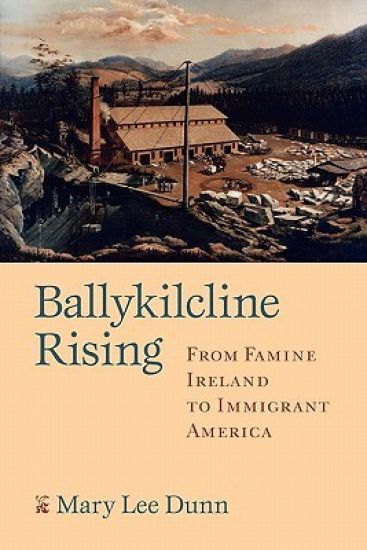
This book shows how tenant farmers evicted from Ireland made a new life in the United States. In 1847, in the third year of Ireland's Great Famine and the thirteenth year of their rent strike against the Crown, hundreds of tenant farmers in Ballykilcline, County Roscommon, were evicted by the Queen's agents and shipped to New York. Mary Lee Dunn tells their story in this meticulously researched book. Using numerous Irish and U.S. sources and with descendants' help, she traces dozens of the evictees to Rutland, Vermont, as railroads and marble quarries transformed the local economy. She follows the immigrants up to 1870 and learns not only what happened to them but also what light American experience and records cast on their Irish ""rebellion.""Dunn begins with Ireland's pre-Famine social and political landscape as context for the Ballykilcline strike. The tenants had rented earlier from the Mahons of Strokestown, whose former property now houses Ireland's Famine Museum. In 1847, landlord Denis Mahon evicted and sent nearly a thousand tenants to Quebec, where half died before or just after reaching the Grosse Ile quarantine station. Mahon was gunned down months later. His murder provoked an international controversy involving the Vatican. An early suspect in the case was a man from Ballykilcline.In the United States, many of the immigrants resettled in clusters in several locations, including Vermont, Illinois, Iowa, Maryland, and New York. In Vermont they found jobs in the marble quarries, but some of them lost their homes again in quarry labor actions after 1859. Others prospered in their new lives. A number of Ballykilcline families who stopped in Rutland later moved west; one had a son kidnapped by Indians in Minnesota.Readers who have Irish Famine roots will gain a sense of their own ""back story"" from this account of Ireland and the native Irish, and scholars in the field of immigration studies will find it particularly useful.
"The Cotton Dust Papers" is the story of the 50-year struggle for recognition in the U.S. of this pernicious occupational disease. The authors contend that byssinosis could have and should have been recognized much sooner, as a great deal was known about the disease as early as the 1930s. Using mostly primary sources, the authors explore three instances from the 1930s to the 1960s in which evidence suggested the existence of brown lung in the mills, yet nothing was done. What the story of byssinosis makes clear is that the economic and political power of private owners and managers can hinder and shape the work of health investigators.
"The Cotton Dust Papers" is the story of the 50-year struggle for recognition in the U.S. of this pernicious occupational disease. The authors contend that byssinosis could have and should have been recognized much sooner, as a great deal was known about the disease as early as the 1930s. Using mostly primary sources, the authors explore three instances from the 1930s to the 1960s in which evidence suggested the existence of brown lung in the mills, yet nothing was done. What the story of byssinosis makes clear is that the economic and political power of private owners and managers can hinder and shape the work of health investigators.
Mary Lee, has been regarded as significant work throughout human history, and in order to ensure that this work is never lost, we have taken steps to ensure its preservation by republishing this book in a contemporary format for both current and future generations. This entire book has been retyped, redesigned, and reformatted. Since these books are not made from scanned copies, the text is readable and clear.
In the mid-1950s, when Mary Lee Settle published The Love Eaters and The Kiss of Kin, critics hailed her as a sharp and acidic writer. However, when in subsequent novels the focus of her work shifted from contemporary social realism to historical fiction, the same critics who previously had praised her work lost enthusiasm.In Mary Lee Settle's Beulah Quintet: The Price of Freedom, Brian Rosenberg examines Settle's work, especially Prisons, O Beulah Land, Know Nothing, The Scapegoat, and The Killing Ground, to show the magnitude and artistic merit in a single, continuous fiction, a fiction of major importance.According to Rosenberg, the Beulah quintet is one of the few grandly ambitious works of historical fiction written by an American woman. In the novels, Settle attempts to apply a European tradition of historical re-creation to American experience and, in so doing, to adapt a largely conservative form to the demands of a revolutionary history and ideology. Although the immediate subject is the history of a region in West Virginia, the deeper subject is nothing less than the history of America: the beliefs, conflicts, and illusions that gave rise to, and continue to distinguish, American culture.Rosenberg also treats the reaction to the Beulah quintet among literary critics. He looks at the neglect and misjudgment the novels have suffered by being labeled historical fiction, a genre often though to consist largely of ""romance novels,"" and explains why the quintet should be placed among the canonical works of contemporary American literature.Rosenberg includes in his book the transcript of an interview he conducted with Settle in which she reflects on both her intentions as a writer and the reception of her work. Mary Lee Settle's fiction has for too long been misperceived. Brian Rosenberg's thorough analysis of the Beulah quintet will allow a larger audience to understand the nature and scope of her achievement.
Mary Lee the Red Cross Girl, has been regarded as significant work throughout human history, and in order to ensure that this work is never lost, we have taken steps to ensure its preservation by republishing this book in a contemporary format for both current and future generations. This entire book has been retyped, redesigned, and reformatted. Since these books are not made from scanned copies, the text is readable and clear.