Kirjojen hintavertailu. Mukana 11 244 527 kirjaa ja 12 kauppaa.

Kirjahaku

Etsi kirjoja tekijän nimen, kirjan nimen tai ISBN:n perusteella.

1000 tulosta hakusanalla Maryann M. Mitchell

I'm Not Scared to Get a Shot

I'm Not Scared to Get a Shot

Maryann Buetti-Sgouros

Dorrance Publishing Co.
2021
sidottu
Being scared to get a shot or vaccine is a very common childhood fear. A pediatrician who is a former scaredy-cat herself has created I'm Not Scared to Get a Shot to help kids to overcome it with a smile and make that fear disappear. This book can inspire readers to be brave and at ease with this very common procedure.About the AuthorMaryann Buetti-Sgouros, MD is a practicing pediatrician in New York and currently the pediatric department chair at Northern Westchester Hospital in Mount Kisco, New York. She has three children of her own and many she has the pleasure of taking care of on a daily basis. She loves to play piano and has been known to sing with her patients to distract them while getting vaccines. She is an avid cook and loves to share nutritious food, positive vibes, and heartfelt laughter with others.
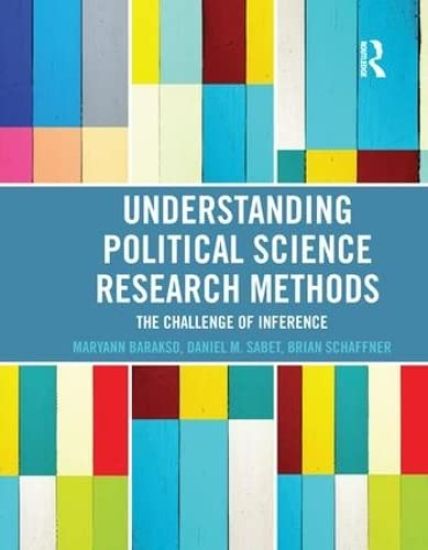
Understanding Political Science Research Methods

Understanding Political Science Research Methods

Maryann Barakso; Daniel M. Sabet; Brian Schaffner

Routledge
2013
nidottu
This text starts by explaining the fundamental goal of good political science research—the ability to answer interesting and important questions by generating valid inferences about political phenomena. Before the text even discusses the process of developing a research question, the authors introduce the reader to what it means to make an inference and the different challenges that social scientists face when confronting this task. Only with this ultimate goal in mind will students be able to ask appropriate questions, conduct fruitful literature reviews, select and execute the proper research design, and critically evaluate the work of others. The authors' primary goal is to teach students to critically evaluate their own research designs and others’ and analyze the extent to which they overcome the classic challenges to making inference: internal and external validity concerns, omitted variable bias, endogeneity, measurement, sampling, and case selection errors, and poor research questions or theory. As such, students will not only be better able to conduct political science research, but they will also be more savvy consumers of the constant flow of causal assertions that they confront in scholarship, in the media, and in conversations with others.Three themes run through Barakso, Sabet, and Schaffner’s text: minimizing classic research problems to making valid inferences, effective presentation of research results, and the nonlinear nature of the research process. Throughout their academic years and later in their professional careers, students will need to effectively convey various bits of information. Presentation skills gleaned from this text will benefit students for a lifetime, whether they continue in academia or in a professional career. Several distinctive features make this book noteworthy:A common set of examples threaded throughout the text give students a common ground across chapters and expose them to a broad range of subfields in the discipline. Box features throughout the book illustrate the nonlinear, "non-textbook" reality of research, demonstrate the often false inferences and poor social science in the way the popular press covers politics, and encourage students to think about ethical issues at various stages of the research process.
Understanding Political Science Research Methods

Understanding Political Science Research Methods

Maryann Barakso; Daniel M. Sabet; Brian Schaffner

Routledge
2015
sidottu
This text starts by explaining the fundamental goal of good political science research—the ability to answer interesting and important questions by generating valid inferences about political phenomena. Before the text even discusses the process of developing a research question, the authors introduce the reader to what it means to make an inference and the different challenges that social scientists face when confronting this task. Only with this ultimate goal in mind will students be able to ask appropriate questions, conduct fruitful literature reviews, select and execute the proper research design, and critically evaluate the work of others. The authors' primary goal is to teach students to critically evaluate their own research designs and others’ and analyze the extent to which they overcome the classic challenges to making inference: internal and external validity concerns, omitted variable bias, endogeneity, measurement, sampling, and case selection errors, and poor research questions or theory. As such, students will not only be better able to conduct political science research, but they will also be more savvy consumers of the constant flow of causal assertions that they confront in scholarship, in the media, and in conversations with others.Three themes run through Barakso, Sabet, and Schaffner’s text: minimizing classic research problems to making valid inferences, effective presentation of research results, and the nonlinear nature of the research process. Throughout their academic years and later in their professional careers, students will need to effectively convey various bits of information. Presentation skills gleaned from this text will benefit students for a lifetime, whether they continue in academia or in a professional career. Several distinctive features make this book noteworthy:A common set of examples threaded throughout the text give students a common ground across chapters and expose them to a broad range of subfields in the discipline. Box features throughout the book illustrate the nonlinear, "non-textbook" reality of research, demonstrate the often false inferences and poor social science in the way the popular press covers politics, and encourage students to think about ethical issues at various stages of the research process.
Single Dad in Studio 7D

Single Dad in Studio 7D

M. a. Clarke Scott; Maryann Clarke

West Wind Books
2019
nidottu
Researcher Lucy Clough temporarily moves into a friend's studio to work on an important legacy project. Time is short and Lucy can't afford distractions. Until she meets the sad, sweet and sexy single dad in Studio 7D.How do you pay debts to the dead?Meet new neighbours JP and Lucy. They're both deeply committed to keeping promises to the loved ones they've lost, even though the hard work and isolation make them feel more dead than alive.Jean Phillipe Roche is a graphic and web designer, and widower with two small children, who devotes himself to being the best father at the expense of self-care, self-respect and definitely to the exclusion of new love, even the captivating new girl next door. Perfectionist Lucy Clough is a psychology researcher who wants only to publish her adored late grandfather's memoirs in order to preserve his legacy, and perhaps to assuage her guilt. He's the only man who's ever been good enough for her, or saw her as a star. Time is short and Lucy can't afford distractions. Until she meets the sad, sweet and sexy single dad in Studio 7D.But is sacrificing your own life to appease guilt the best way to honour their memory?
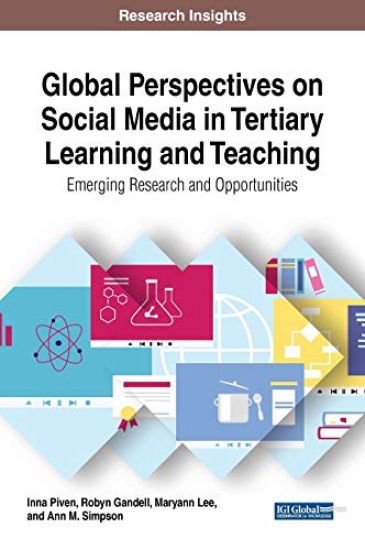
Global Perspectives on Social Media in Tertiary Learning and Teaching

Global Perspectives on Social Media in Tertiary Learning and Teaching

Inna Piven; Robyn Gandell; Maryann Lee; Ann M. Simpson

IGI Global
2018
sidottu
The prominence of social media, especially in the lives of teenagers and young adults, has long been regarded as a significant distraction from studies. However, the integration of these forms of media into the teaching experience can improve the engagement of students.Global Perspectives on Social Media in Tertiary Learning and Teaching: Emerging Research and Opportunities is an essential scholarly publication that embeds innovative, current pedagogical practices into new and redeveloped courses and introduces digital and online learning tools to best support teaching practices. Featuring coverage on a wide range of topics including collaborative learning, innovative learning environments, and blended teaching, this book provides essential research for educators, educational administrators, education stakeholders, academicians, researchers, and professionals within the realm of higher education.
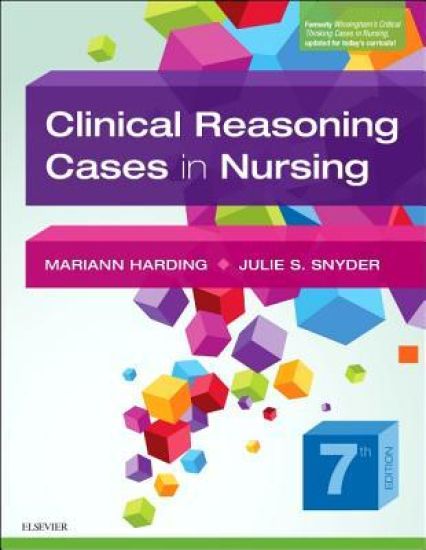
Clinical Reasoning Cases in Nursing

Clinical Reasoning Cases in Nursing

Mariann M. Harding; Julie S. Snyder

Mosby
2019
nidottu
Hone your ability to make sound clinical nursing judgment via a conceptual approach to teaching and learning with Harding & Snyder's Clinical Reasoning Cases in Nursing, 7th Edition. This time-tested case study approach is highly regarded for its clinically relevant and thought-provoking cases. With each adoption, you'll be able to tap into 150 unique case studies covering all four clinical practice areas: medical-surgical, pediatric, OB/maternity, and psychiatric nursing, all newly organized to facilitate a conceptual approach to teaching and learning. Each case covers a common patient problem, drawn from actual clinical experiences and written by nurses who are clinical experts. Cases include integrated content on pharmacology, nutrition, and diagnostic/laboratory tests to encourage you to think critically about all aspects of patient care. The 7th edition features a new concept-based organization, an enhanced focus on interprofessional collaboration and QSEN, 20 all-new case studies, and updated content throughout to reflect the most current standards of clinical practice. Awarded second place in the 2019 AJN Book of the Year Awards in Medical-Surgical category. Comprehensive assortment of 150 case studies draws from actual clinical experiences in medical-surgical, pediatric, OB/maternity, and psychiatric clinical areas to help you think critically, prioritize, and deliver proactive nursing care. Critical thinking approach helps you learn to identify changes, anticipate possible complications, and initiate therapeutic interventions. Progressive case complexity builds on previous learning to help you gradually develop more and more expertise. NEW & UNIQUE! Concept-based organization mirrors the growing use of concept-based curricula and conceptual approaches to teaching and learning in nursing education. NEW! 20 all-new cases and four extensively-revised cases that address important contemporary healthcare issues and allow for better coordination with Giddens, HESI, and other exemplar lists. NEW! Updated content throughout reflects the latest evidence-based clinical practice, including national and international treatment guidelines. NEW! Enhanced focus on interprofessional collaboration identifies opportunities for interprofessional collaboration are discussed. NEW! Greater consistency with the NCLEX Exam includes revisions like the elimination of most drug trade names and the inclusion of Canadian lab values. Enhanced QSEN safety emphasis is highlighted with a "target" icon to communicate "caution" or "safety." NEW! Increased emphasis on sepsis and antibiotic resistance throughout that addresses the growing problem of sepsis (a new Joint Commission "core measure") and antibiotic resistance where appropriate throughout. NEW! Improved answer spacing ensures that space left for answers reflects what is actually needed.
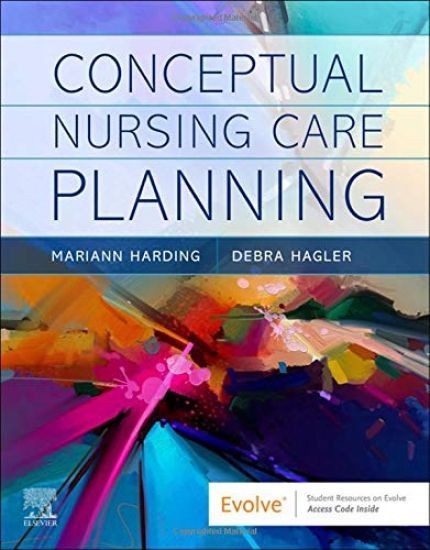
Conceptual Nursing Care Planning

Conceptual Nursing Care Planning

Mariann M. Harding; Debra Hagler

Elsevier - Health Sciences Division
2021
nidottu
**Selected for Doody’s Core Titles® 2024 in Nursing Process** Plan effective patient care using standardized interprofessional clinical problems and a concept-based approach! Conceptual Nursing Care Planning shows you how to identify clinical problems, determine expected outcomes, and choose interventions - all grounded in a logical, concept-based framework. The focus on concepts gives you the big picture, helping you recognize similarities in nursing care based on physiologic concepts, as well as differences based on the needs of individuals. Written by noted nursing educators Mariann Harding and Debra Hagler, this new book demonstrates how the use of a concept-based approach and standardized clinical problems language makes it easier to plan effective care and to communicate with other members of the interprofessional team. 73 conceptual nursing care plans are based on Giddens concepts. Logical format for conceptual nursing care plans includes a definition of the concept, clinical problems, common causes, manifestations, outcomes, interventions, related concepts, and related clinical problems. Guidance for prioritized care planning organizes interventions in an assess-intervene-teach format, to help identify the most important priority interventions for patients. Use of standardized nursing language conveys concepts and clinical problems in easily understandable language that is commonly used in clinical settings, organizing care plans around terminology recognized by the American Nurses Association and easily understood by other healthcare professionals. UNIQUE! Wide-ranging approach covers concepts that are not addressed in other texts, such as health disparities, risk in pregnancy, impaired immunity, substance use, sensory deficits, continuity of care, and the dying process. Introduction opens the book by explaining the components of a conceptual nursing care plan and how to use the book to create patient-centered nursing care plans. Conceptual Care Map Creator?on the Evolve website helps document care planning projects and clinical assignments. Expert authors Mariann Harding and Debra Hagler are nursing thought leaders and editors of the bestselling Lewis’s Medical Surgical Nursing: Assessment and Management of Clinical Problems.
Lewis's Medical-Surgical Nursing: Assessment and Management of Clinical Problems, Single Volume
**American Journal of Nursing (AJN) Book of the Year Awards, 1st Place in Medical-Surgical Nursing, 2023****Selected for Doody's Core Titles(R) 2024 with "Essential Purchase" designation in Medical/Surgical** Gain the knowledge and skills you need to succeed in medical-surgical nursing with this leading textbook Lewis's Medical-Surgical Nursing, 12th Edition uses a conversational writing style, a focus on nursing concepts and clinical trends, evidence-based content, and basic pathophysiology review to provide the solid foundation needed in a rapidly changing healthcare environment. Comprehensive chapters cover topics including nursing management and collaboration, health promotion, acute interventions, and ambulatory care. Summary tables and boxes make it easy to find essential information, and a building-block approach makes even the most complex concepts simple to grasp. In addition to three new chapters, this edition includes a stronger focus on the nursing process, clinical judgment, and preparation for the Next-Generation NCLEX(R) Examination.Content written and reviewed by leading experts in the field ensures that information is comprehensive, current, and clinically accurate.Interprofessional care is addressed in special Interprofessional Care sections and Interprofessional Care tables.Bridge to the NCLEX(R) Examination review questions reinforce key content and include both standard and alternate item format questions to help you prepare for the NCLEX exam.Coverage of cultural and ethnic health disparities highlights important issues such as risk factors, economic aspects, and access to health care.Coverage of gerontology and chronic illness is addressed in a separate chapter and highlighted in special gerontologic tables.Pathophysiology maps use flowcharts to outline complex concepts related to diseases, making them easier to understand.Focused Assessment boxes provide brief checklists for a practical "assessment on the run" or bedside approach to assessment, and can be used to evaluate the status of previously identified health problems and monitor for signs of new problems.Safety Alert boxes highlight patient safety issues and focus on the National Patient Safety Goals.Nutritional Therapy tables summarize nutritional interventions and strategies for promoting healthy lifestyles.Promoting Population Health boxes summarize health care goals as they relate to specific disorders such as cancer and diabetes, and identify strategies for health promotion.Drug Therapy tables and Drug Alerts highlight important safety considerations for key drugs.Check Your Practice boxes challenge you to think critically, analyze patient assessment data, and implement appropriate interventions.Coverage of genetics includes a separate chapter on genetics, Genetics in Clinical Practice boxes covering disorders and genetic testing, risk alerts, and links to disorders.Focus on patient and caregiver teaching shows how you can help patients and caregivers learn to manage chronic illnesses and conditions.Ethical / Legal Dilemmas boxes introduce key topics such as informed consent, advance directives, and confidentiality. Enhanced focus on clinical judgment and preparation for the Next-Generation NCLEX(R) Exam (NGN) features Applying Clinical Judgment With Multiple Patients boxes with traditional and NGN-style questions. Revised table of contents reflects critical care content throughout the book and adds new chapters including Supporting Ventilation and Caring for Lesbian, Gay, Bisexual, Transgender, Queer or Questioning, and Gender Diverse Patients. Social Determinants of Health chapter focuses on nursing awareness of how patient circumstances affect health outcomes. Clinical problems language replaces NANDA-I / ICNP diagnoses and better aligns with Harding & Hagler's Conceptual Nursing Care Planning. Case studies - now labeled with Cognitive Skills from the NCSBN's Clinical Judgment Measurement Model - bring patient care to life, helping you develop skills in clinical judgment, prioritization, delegation, and evidence-based practice. Conceptual focus for the patient experiencing infection or inflammation is included in the Infection chapter and the Inflammation and Healing chapter. Updated content throughout reflects the latest evidence-based guidelines for patient care. Streamlined features and content provide an optimized learning experience.
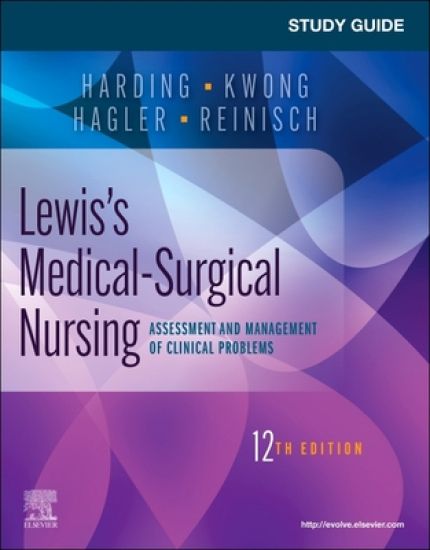
Study Guide for Lewis's Medical-Surgical Nursing

Study Guide for Lewis's Medical-Surgical Nursing

Mariann M. Harding; Jeffrey Kwong; Debra Hagler; Courtney Reinisch; Collin Bowman-Woodall

Elsevier - Health Sciences Division
2023
nidottu
Get a leg up in your medical-surgical nursing class and on the Next-Generation NCLEX® (NGN) Examination! With chapters corresponding to those in the Lewis's Medical-Surgical Nursing: Assessment and Management of Clinical Problems, 12th Edition textbook, this study guide provides the review and practice you need to master the nurse's role in medical-surgical care. Questions reflect the most current NCLEX Exam test plan and include multiple-choice, matching, fill-in-the-blank, prioritization, delegation, and alternate item formats, along with new NGN-style case studies and questions. To reinforce your understanding, answers to all questions are included in the back of the book. Wide variety of clinically relevant exercises includes NCLEX® Examination-style items consisting of multiple-choice, fill-in-the-blank, matching, and prioritization and delegation questions. Case studies for dozens of diseases and disorders allow you to develop clinical judgment skills. Alternate item format questions familiarize you with the types of questions seen on the NCLEX Exam. Answers to all questions are included in the back of the book, providing immediate feedback. Attractive full-color design makes learning easier. NEW! Updated content throughout corresponds to the updates in the Lewis's Medical-Surgical Nursing, 12th Edition textbook. NEW! Next-Generation NCLEX® Examination (NGN)-style case studies and question types help you review and practice for the NGN.
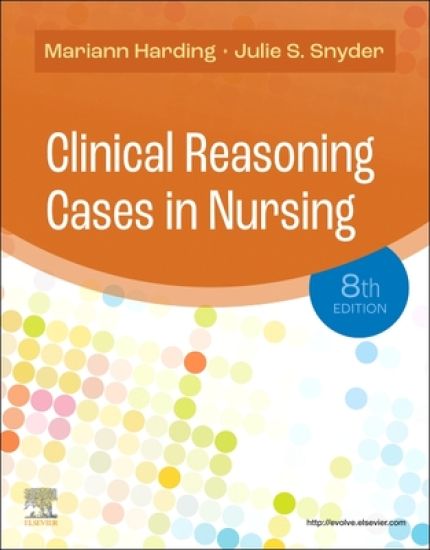
Clinical Reasoning Cases in Nursing

Clinical Reasoning Cases in Nursing

Mariann M. Harding; Julie S. Snyder

Elsevier - Health Sciences Division
2023
nidottu
**Selected for Doody’s Core Titles® 2024 with "Essential Purchase" designation in Perioperative** Learn to make sound clinical nursing judgments with the concept-based, case study approach in Harding & Snyder’s Clinical Reasoning Cases in Nursing, 8th Edition. Awarded second place in the 2019 AJN Book of the Year Awards in the Medical-Surgical category, this time-tested case study resource is highly regarded for its clinically relevant and thought-provoking cases. Approximately150 true-to-life case studies cover all four clinical practice areas - medical-surgical, pediatric, OB/maternity, and psychiatric-mental health nursing - all organized to facilitate a conceptual approach to teaching and learning. Each case covers a common patient problem drawn from actual clinical experiences and written by nurses who are clinical experts and includes a strong focus on interprofessional collaboration competencies. Cases include integrated content on pharmacology, nutrition, and diagnostic/laboratory tests to encourage you to think critically about all aspects of patient care. The 8th edition has been updated throughout to reflect the most current standards of clinical practice, including readiness for practice in the COVID-19 era. Also new to this edition, concepts and terminology related to the Next Generation NCLEX® Exam (NGN) are introduced in the Preface and integrated throughout to help you prepare for the new exam. Approximately 150 case studies draw from actual clinical experiences in medical-surgical, pediatric, OB/maternity, and psychiatric-mental health clinical areas to help you learn to think clinically, prioritize, and deliver proactive nursing care. UNIQUE! Concept-based organization mirrors the growing popularity of concept-based curricula and conceptual approaches to teaching and learning in nursing education. Clinical judgment approach helps you learn to identify changes, anticipate possible complications, and initiate therapeutic interventions. Progressive case complexity builds on previous learning to help you gradually develop clinical judgment skills. Strong QSEN safety emphasis is highlighted with an icon to communicate "caution" or "safety." Icons identify questions that resemble new NCLEX-RN® item types. Strong emphasis on sepsis and antibiotic resistance addresses the growing problem of sepsis (a recent Joint Commission "core measure") and antibiotic resistance, where appropriate. UNIQUE! Concepts and terminology related to the Next Generation NCLEX® Exam (NGN) are introduced in the Preface and integrated throughout to help you prepare for the new exam. All questions for the NGN are highlighted with a special icon for quick reference. UPDATED! Content reflects the latest evidence-based clinical practice, including national and international treatment guidelines and the latest guidelines for COVID-19 and other infectious diseases. NEW! Additional case studies and expanded content in key areas includes breastfeeding, obstetric emergency (umbilical cord prolapse or abruptio placentae) with emergency C-section, sickle cell pain crisis, and head/neck trauma with tracheostomy. Expanded pharmacology content reflects the importance of a clear understanding of drug therapy on patient safety. Additional illustrations and expanded use of image-related question types visually reinforce the material, while also promoting clinical utility and patient diversity in a sensitive and clinically relevant way. Enhanced interprofessional collaboration content emphasizes the importance of identifying opportunities for collaboration with other health professions.
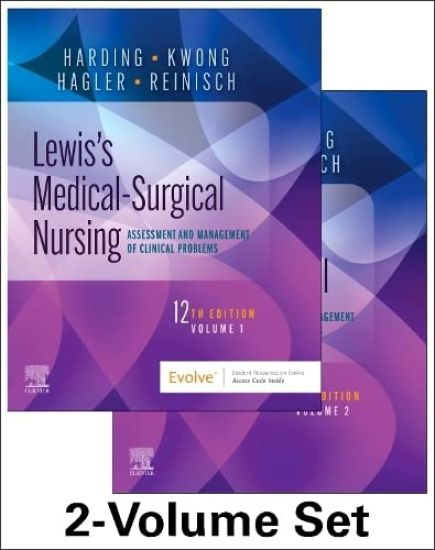
Lewis's Medical-Surgical Nursing - 2-Volume Set

Lewis's Medical-Surgical Nursing - 2-Volume Set

Mariann M. Harding; Jeffrey Kwong; Dottie Roberts; Debra Hagler; Courtney Reinisch

Elsevier - Health Sciences Division
2022
muu
Gain the knowledge and skills you need to succeed in medical-surgical nursing with this leading textbook! Lewis's Medical-Surgical Nursing, 12th Edition uses a conversational writing style, a focus on nursing concepts and clinical trends, evidence-based content, and basic pathophysiology review to provide the solid foundation needed in a rapidly changing healthcare environment. Comprehensive chapters cover topics including nursing management and collaboration, health promotion, acute interventions, and ambulatory care. Summary tables and boxes make it easy to find essential information, and a building-block approach makes even the most complex concepts simple to grasp. In addition to three new chapters, this edition includes a stronger focus on the nursing process, clinical judgment, and preparation for the Next-Generation NCLEX® Examination. Content written and reviewed by leading experts in the field ensures that information is comprehensive, current, and clinically accurate. Interprofessional care is addressed in special Interprofessional Care sections and Interprofessional Care tables. Bridge to the NCLEX® Examination review questions reinforce key content and include both standard and alternate item format questions to help you prepare for the NCLEX exam. Coverage of cultural and ethnic health disparities highlights important issues such as risk factors, economic aspects, and access to health care. Coverage of gerontology and chronic illness is addressed in a separate chapter and highlighted in special gerontologic tables. Pathophysiology maps use flowcharts to outline complex concepts related to diseases, making them easier to understand. Focused Assessment boxes provide brief checklists for a practical "assessment on the run" or bedside approach to assessment, and can be used to evaluate the status of previously identified health problems and monitor for signs of new problems. Safety Alert boxes highlight patient safety issues and focus on the National Patient Safety Goals. Nutritional Therapy tables summarize nutritional interventions and strategies for promoting healthy lifestyles. Promoting Population Health boxes summarize health care goals as they relate to specific disorders such as cancer and diabetes, and identify strategies for health promotion. Drug Therapy tables and Drug Alerts highlight important safety considerations for key drugs. Check Your Practice boxes challenge you to think critically, analyze patient assessment data, and implement appropriate interventions. Coverage of genetics includes a separate chapter on genetics, Genetics in Clinical Practice boxes covering disorders and genetic testing, risk alerts, and links to disorders. Focus on patient and caregiver teaching shows how you can help patients and caregivers learn to manage chronic illnesses and conditions. Ethical / Legal Dilemmas boxes introduce key topics such as informed consent, advance directives, and confidentiality. Enhanced focus on clinical judgment and preparation for the Next-Generation NCLEX® Exam (NGN) features Applying Clinical Judgment With Multiple Patients boxes with traditional and NGN-style questions. Revised table of contents reflects critical care content throughout the book and adds new chapters including Supporting Ventilation and Caring for Lesbian, Gay, Bisexual, Transgender, Queer or Questioning, and Gender Diverse Patients. Social Determinants of Health chapter focuses on nursing awareness of how patient circumstances affect health outcomes. Clinical problems language replaces NANDA-I / ICNP diagnoses and better aligns with Harding & Hagler's Conceptual Nursing Care Planning. Case studies - now labeled with Cognitive Skills from the NCSBN's Clinical Judgment Measurement Model - bring patient care to life, helping you develop skills in clinical judgment, prioritization, delegation, and evidence-based practice. Conceptual focus for the patient experiencing infection or inflammation is included in the Infection chapter and the Inflammation and Healing chapter. Updated content throughout reflects the latest evidence-based guidelines for patient care. Streamlined features and content provide an optimized learning experience.