Kirjahaku
Etsi kirjoja tekijän nimen, kirjan nimen tai ISBN:n perusteella.
88 tulosta hakusanalla Marysia Janik


Kacia and Phil finally found each other; their journey was a long one with many twists and turns. Along the way they experienced triumph and defeats. Kacia losses of two marriages and an unborn child and an injury she suffered from for few years now. And in the end she is trying to pick up the pieces and live again. She was following her passion in acting and one day she got a well deserved opportunity. Phil, on the other hand endured the loss of his beloved Julia to a terrible disease; it's stealing too many lives of young women these days, His struggles with alcoholism addiction and depression. He reached his recognition to stardom early in his acting career. Never really being satisfied he was always craving for a true love-in his life, someone to keep him company and to share his wealth with. But as luck may have it, it was not in the picture. Something or someone was missing from his life. Now he knows it was his much-loved new found girlfriend and her name is Kacia.
The Oral Proficiency Interview (OPI) is a widely accepted instrument for assessing second and foreign language ability. It is used by the Foreign Language Institute, the Defense Language Institute, Educational Testing Service, the American Council on the Teaching of Foreign Languages, and at many universities in the United States. The Art of Non-Conversation examines the components of speaking ability and asks whether the OPI is a valid instrument for assessing them.Marysia Johnson applies the latest insights from discourse and conversational analysis to determine the nature of the OPI’s communicative speech event and investigate its construct validity within Messick’s definition of validity. She discusses models of speaking ability—several communicative competence models, an interactional competence model, and a model of spoken interaction based on Vygotsky’s sociocultural theory of learning. Finally she proposes a new model to test language proficiency drawn from sociocultural theory, one that considers language ability to be reflective of the sociocultural and institutional contexts in which the language has been acquired.
How does a person learn a second language? In this provocative book, Marysia Johnson proposes a new model of second language acquisition (SLA)—a model that shifts the focus from language competence (the ability to pass a language exam) to language performance (using language competently in real-life contexts). Johnson argues that current SLA theory and research is heavily biased in the direction of the cognitive and experimental scientific tradition. She shows that most models of SLA are linear in nature and subscribe to the conduit metaphor of knowledge transfer: the speaker encodes a message, the hearer decodes the sent message. Such models establish a strict demarcation between learners’ mental and social processes. Yet the origin of second language acquisition is located not exclusively in the learner’s mind but also in a dialogical interaction conducted in a variety of sociocultural and institutional settings, says the author. Drawing on Vygotsky’s sociocultural theory and Bakhtin’s literary theory, she constructs an alternative framework for second language theory, research, teaching, and testing. This approach directs attention toward the investigation of dynamic and dialectical relationships between the interpersonal (social) plane and the intrapersonal (individual) plane. Johnson’s model shifts the focus of SLA away from a narrow emphasis on language competence toward a broader view that encompasses the interaction between language competence and performance. Original and controversial, A Philosophy of Second Language Acquisition offers:an introduction to Vygotsky’s sociocultural theory and Bakhtin’s literary theory, both of which support an alternative framework for second language acquisition;an examination of the existing cognitive bias in SLA theory and research;a radically new model of second language acquisition.
Highly original and stimulating, this book provides a detailed overview of postmodern feminist theory and practice. Subjects covered include: *the differences between the feminism of the 1970s and contemporary feminism *liberal, radical, socialist and postmodern feminisms *feminist reactions to the growth in reproductive technologies *how feminism informs debates about the subject, epistemology and political action *feminism into the new millennium
Highly original and stimulating, this book provides a detailed overview of postmodern feminist theory and practice. Subjects covered include: *the differences between the feminism of the 1970s and contemporary feminism *liberal, radical, socialist and postmodern feminisms *feminist reactions to the growth in reproductive technologies *how feminism informs debates about the subject, epistemology and political action *feminism into the new millennium
This book offers a contemporary intervention in the field of feminism/international relations. Partly inspired by Surrealism, the book is written in a series of vignettes and draws on a variety of approaches inviting readers in to inhabit the text. It is a politically engaged book, though one which does not direct readers in conventional ways, visiting global politics, the classroom, poetry, institutional violence, cartoons, feminist violence, films, violent white men, angry black women, blood and ‘English’ puddings. Working imaginatively with epistemology and methodology, and embedding theory throughout the text, the book can be considered part of the current genre of scholarship which attends to complexity, uncertainty, disruption, affect and the creative possibilities of randomness. Feminist International Relations: Exquisite Corpse will be of interest to students and scholars of International Politics, Gender and Feminist Studies, International Studies, Political Theory, Globalization Studies and further afield.
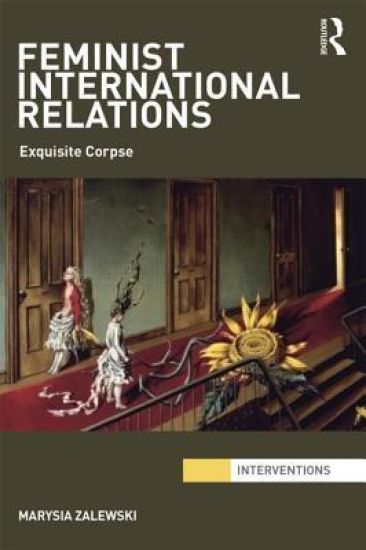
This book offers a contemporary intervention in the field of feminism/international relations. Partly inspired by Surrealism, the book is written in a series of vignettes and draws on a variety of approaches inviting readers in to inhabit the text. It is a politically engaged book, though one which does not direct readers in conventional ways, visiting global politics, the classroom, poetry, institutional violence, cartoons, feminist violence, films, violent white men, angry black women, blood and ‘English’ puddings. Working imaginatively with epistemology and methodology, and embedding theory throughout the text, the book can be considered part of the current genre of scholarship which attends to complexity, uncertainty, disruption, affect and the creative possibilities of randomness. Feminist International Relations: Exquisite Corpse will be of interest to students and scholars of International Politics, Gender and Feminist Studies, International Studies, Political Theory, Globalization Studies and further afield.
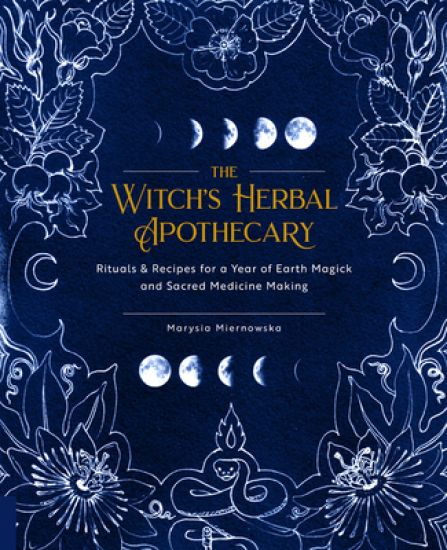
The Witch’s Herbal Apothecary is a magickal book of recipes, rituals, and materia medica for reconnecting with the power and healing of Earth Magick.Author Marysia Miernowska is the Director of one of California’s most renowned herbal schools and named one of the “top 15 witches on Instagram” (@marysia_miernowska) by Huffington Post. Mother Earth is a living entity that holds great medicine to heal us physically and spiritually. However, in today's modern world, too many of us are separated from this source of nourishment. With the wheel of the year as a framework, you'll begin to understand the currents of nature and how to weave yourself back into this great web of life. Using the plants, seasons, and cycles as your tools, you will be able to tap into the potent Earth Magick of life, death, renewal, and rebirth. In harmony with the seasons, You will learn how to:Grow medicineHarvest from the wild or home gardenProcess plantsMake remediesEach season opens a portal of magick that allows you to harvest the literal and spiritual gifts the Earth is offering at that time.The Witch's Herbal Apothecary will awaken the Witch inherent in every wild soul and guide her into an empowered relationship of healing and magick with the natural world.
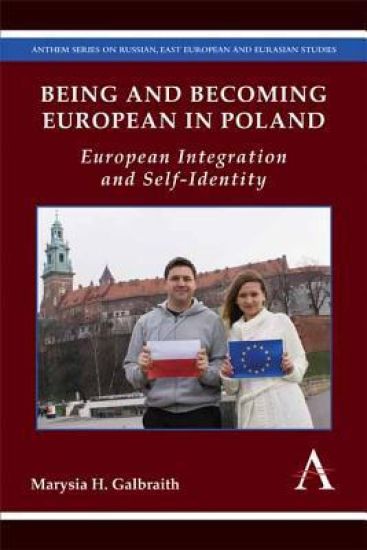
Overthrowing communism in 1989 and joining the European Union in 2004, the Polish people hold loyalties to region, country and now continent – even as the definition of what it means to be ‘European’ remains unclear. Paying particular attention to those who came of age in the earliest years of the neoliberal and democratic transformations, this book uses the life-story narratives of rural and urban southern Poles to reveal how ‘being European’ is considered a fundamental component of ‘being Polish’ while participants are simultaneously ‘becoming European’. Ultimately, this study demonstrates how the EU is regarded as both an idea and an instrument, and how ordinary citizens make choices that influence the shape of European identity and the legitimacy of its institutions.
Overthrowing communism in 1989 and joining the European Union in 2004, the Polish people hold loyalties to region, country and now continent – even as the definition of what it means to be ‘European’ remains unclear. Paying particular attention to those who came of age in the earliest years of the neoliberal and democratic transformations, this book uses the life-story narratives of rural and urban southern Poles to reveal how ‘being European’ is considered a fundamental component of ‘being Polish’ while participants are simultaneously ‘becoming European’. Ultimately, this study demonstrates how the EU is regarded as both an idea and an instrument, and how ordinary citizens make choices that influence the shape of European identity and the legitimacy of its institutions.
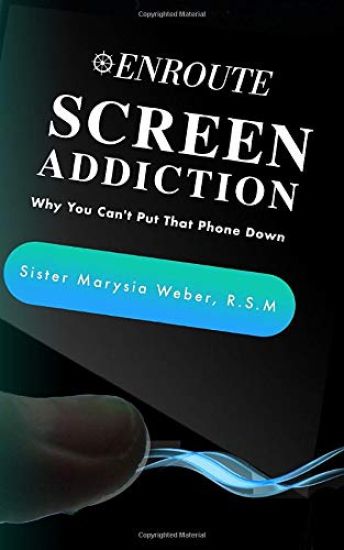
Have you ever had an irresistible urge to check your texts, social media posts or email updates when your cell phone rings, beeps or buzzes? Is the amount of time spent on your cell phone increasing? Do you text, access social media or open your email account while driving? Do you find yourself mindlessly checking your cell phone many times a day even when you know there is likely nothing new or important to see? If you answered yes to any of these questions, then this book is for you This study by Sister Marysia Weber, R.S.M., sheds necessary light on the reasons for our behavior in a screen-addicted world and provides methods for rehabilitating ourselves toward a more proper use of our technologies.

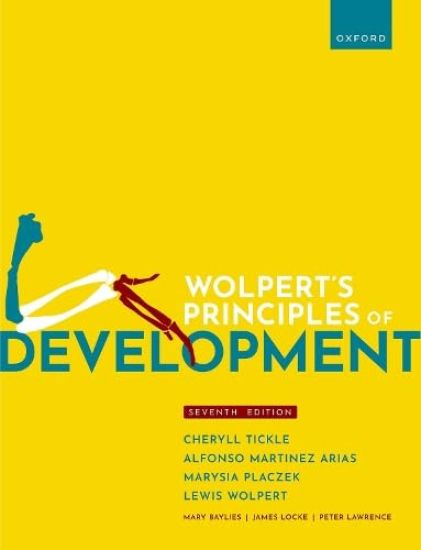
Wolpert's Principles of Development
Cheryll Tickle; Alfonso Martinez Arias; Marysia Placzek; Lewis Wolpert
Oxford University Press
2025
nidottu
Wolpert's Principles of Development, the latest edition of the prize-winning textbook, opens up the fascinating field of developmental biology to undergraduates studying biology, medicine, and veterinary science. By focusing on the underlying processes shared by diverse organisms, the textbook lays the foundation for a deep understanding. Key features - An emphasis throughout on the underlying principles - which underpin the commonalities between different organisms and their development - enables students to get a clear sense of the 'big picture' of the subject. - Custom-drawn artwork and integrated animations and videos help to make the visualisation of processes and mechanisms in this challenging subject as straightforward as possible. - Medical boxes explore key developmental diseases and explain how developmental biology furthers our understanding human health and disease. Further experimental detail, including Experimental boxes, from both classic and current research, demonstrates 'how we know what we know'. - Also available as an e-book enhanced with learning objectives, self-assessment interactive quizzes and multi-media content to offer a fully immersive experience and extra learning support. New to this edition - Chapter 7, a new chapter on Embryonic stem cells, embryo models, and regenerative medicine, to ensure the book's coverage stays up to date with this very active area of developmental biology research. - Chapters 3 and 4 on vertebrate development have been restructured and updated, especially in relation to mouse development, to ensure major concepts and principles are explained with recent supporting experimental evidence. - Chapter 10 on the nervous system has been completely revised and updated, with more emphasis on neural tube patterning. - Chapter 14, which covers nematodes and sea urchins, now appears online as part of the ebook. - There are more examples of the use of CRISPR to address problems like sickle cell disease (Ch6), and evolution of limbs from fins (Ch13). - Examples of single-cell RNA sequencing can be found throughout the book (Ch3, Ch6, Ch7, Ch10, Ch11, Ch12). - Smaller revisions, updates, and new figures have been included throughout. Digital formats and resources The seventh edition is available for students and institutions to purchase in a variety of formats: the e-book and Science Trove offer a mobile experience and convenient access along with interactive self-test questions, videos, flashcards, supplementary materials, functionality tools, navigation features and links that offer extra learning support. For more information about e-books, please visit www.oxfordtextbooks.co.uk/ebooks
Ripping, Cutting, Stitching
shine choi; Saara Särmä; Cristina Masters; Marysia Zalewski; Michelle Lee Brown; Swati Parashar
BLOOMSBURY PUBLISHING PLC
2023
sidottu
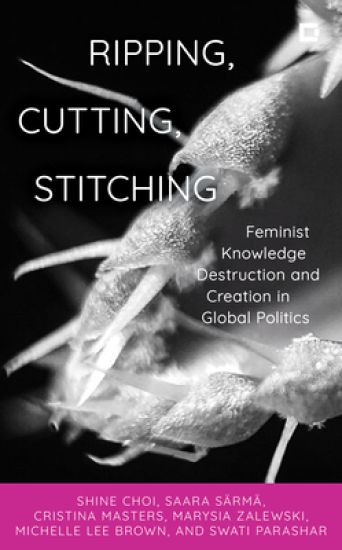
This book presents a collective mediation on writing, methods, violences, and un/becomings in global politics. It combines narratives, fictional stories, academic discussions, passionate unwindings, imagined futures, and more. The editor's intention is to offer a theoretically creative work which engages extensively with the visual and affective to un-discipline knowledge and modes of expression. The book’s point of departure is a conventional academic conference and its peculiar academic concerns (which many readers will only be too familiar with), using this to open up to broader and deeper concerns about everyday-level decisions, realities, and perspectives that feed into and make global politics. It is a polyvocal text that collects traces of thinking, learning, conversing, embodying and ‘finding out’, in an attempt to make visible some of the avalanches of discarded knowing practices. In this sense, this book is a methods book as much as a political/theoretical text that demands we (better) understand or know the worlds we enter, inhabit, to make it quiver otherwise.
Ripping, Cutting, Stitching
shine choi; Saara Särmä; Cristina Masters; Marysia Zalewski; Michelle Lee Brown; Swati Parashar
BLOOMSBURY PUBLISHING PLC
2023
nidottu
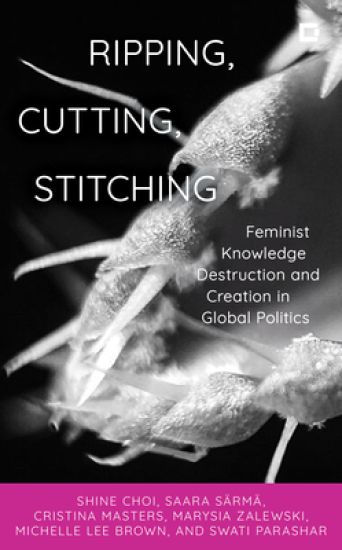
This book presents a collective mediation on writing, methods, violences, and un/becomings in global politics. It combines narratives, fictional stories, academic discussions, passionate unwindings, imagined futures, and more. The editor's intention is to offer a theoretically creative work which engages extensively with the visual and affective to un-discipline knowledge and modes of expression. The book’s point of departure is a conventional academic conference and its peculiar academic concerns (which many readers will only be too familiar with), using this to open up to broader and deeper concerns about everyday-level decisions, realities, and perspectives that feed into and make global politics. It is a polyvocal text that collects traces of thinking, learning, conversing, embodying and ‘finding out’, in an attempt to make visible some of the avalanches of discarded knowing practices. In this sense, this book is a methods book as much as a political/theoretical text that demands we (better) understand or know the worlds we enter, inhabit, to make it quiver otherwise.
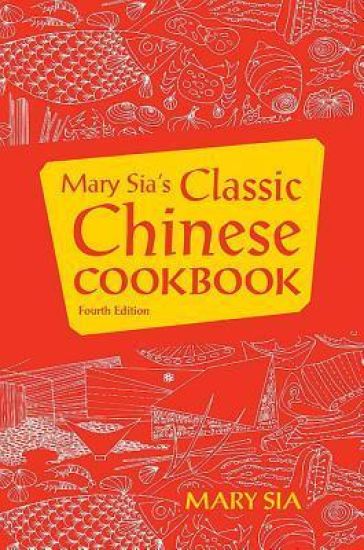
Mary Sia’s Chinese Cookbook has been a classic of Chinese cookery since it was first published in 1956. This fourth edition features all 300 of the original recipes, ranging from simple, everyday fare to more elaborate dishes for entertaining, as well as essays by Mary Sia. An all-new food glossary provides up-to-date names for ingredients along with advice on appropriate substitutions and sources for 21st-century cooks. The work also includes an introduction by Rachel Laudan, renowned food historian and author of The Food of Paradise: Exploring Hawai‘i’s Culinary Heritage.