Kirjojen hintavertailu. Mukana 11 244 527 kirjaa ja 12 kauppaa.

Kirjahaku

Etsi kirjoja tekijän nimen, kirjan nimen tai ISBN:n perusteella.

1000 tulosta hakusanalla Mason W. Moseley

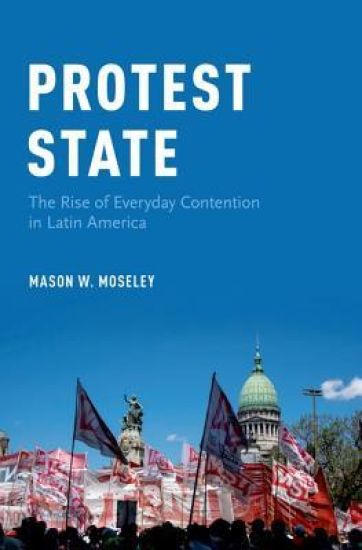
Protest State

Protest State

Mason W. Moseley

Oxford University Press Inc
2018
sidottu
Why is social protest a normal, almost routine form of political participation in certain Latin American democracies, but not others? In light of surging protests in countries like Argentina, Brazil, and Peru, this book answers this question through a focus on recent trends in the quality of governance and socioeconomic development in the region. Specifically, it argues that increasingly engaged citizenries -- forged by economic growth and technological advances -- coupled with dysfunctional political institutions have fueled more radical modes of participation in Latin America, as citizens' demands for government responsiveness have overwhelmed many regimes' capacity to provide it. Where weak institutions and politically engaged citizenries collide, countries can morph into "protest states," where contentious participation becomes so common as to render it a conventional characteristic of everyday political life. Drawing on cross-national surveys from Latin America and a case study of Argentina, which includes a rich dataset of protest events and dozens of interviews with political elites and citizen activists, Mason W. Moseley tests his explanation against other leading theories in the contentious politics literature. But rather than emphasizing how worsening economic conditions and mounting grievances fuel protest, this book builds the case that it is actually the improvement of economic conditions amidst low quality political institutions that lies at the root of surging contention in the region. Protest State offers a comprehensive study of one of the most intriguing puzzles in Latin American politics today: in the midst of an unprecedented era of democratic governments and economic prosperity, why are so many people protesting?
Mobilizing for Abortion Rights in Latin America

Mobilizing for Abortion Rights in Latin America

Mariela Daby; Mason W. Moseley

Cambridge University Press
2024
pokkari
The past decade has seen sweeping changes in terms of reproductive rights in Latin America. Argentina and Uruguay have fully legalized abortion in the first twelve weeks of pregnancy. Some countries, like Chile, have loosened restrictions; others like El Salvador, Honduras, and the Dominican Republic have maintained or even tightened some of the most punitive abortion laws in the world. Abortion rights even vary within countries—in Mexico, the practice has been fully legal in certain states, and punishable with jail time in others. This Element explains how feminist social movements have transformed the politics of abortion in Latin America.
Mobilizing for Abortion Rights in Latin America

Mobilizing for Abortion Rights in Latin America

Mariela Daby; Mason W. Moseley

Cambridge University Press
2024
sidottu
The past decade has seen sweeping changes in terms of reproductive rights in Latin America. Argentina and Uruguay have fully legalized abortion in the first twelve weeks of pregnancy. Some countries, like Chile, have loosened restrictions; others like El Salvador, Honduras, and the Dominican Republic have maintained or even tightened some of the most punitive abortion laws in the world. Abortion rights even vary within countries—in Mexico, the practice has been fully legal in certain states, and punishable with jail time in others. This Element explains how feminist social movements have transformed the politics of abortion in Latin America.
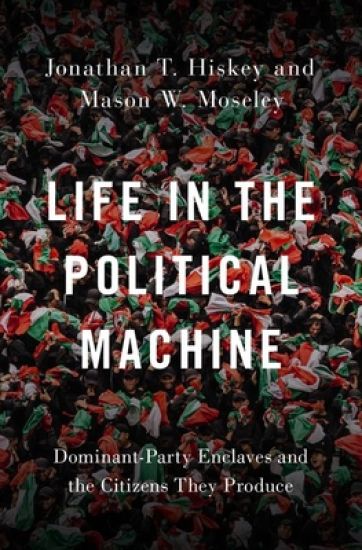
Life in the Political Machine

Life in the Political Machine

Jonathan T. Hiskey; Mason W. Moseley

Oxford University Press Inc
2020
sidottu
Whether in the northern provinces of Argentina, the central states of Mexico, or the southern states of the United States, less-than-democratic subnational regimes are often found within democratic national political systems. However, little is known about how or if these subnational pockets foster political attitudes and behavior that threaten the democratic norms that exist at the national level. Life in the Political Machine offers one of the first systematic explorations of the ways in which subnational "dominant-party enclaves" influence citizens' political attitudes and behaviors through a focus on the provinces and states of Argentina and Mexico. Specifically, the authors find starkly divergent patterns of political attitudes and behaviors among citizens in dominant-party enclaves as opposed to those living in competitive multiparty systems. In the latter, the authors find a political culture that approximates what scholars have long documented in established democracies. In the former, they uncover three factors--the politicization of the rule of law, an uneven electoral playing field, and the partisan cooptation of state resources--that strongly shape citizens' understanding of democratic principles, accountability, and political participation. The authors argue that this environment erodes public support for democracy at the national level and that these local strongholds of illiberalism thus provide added fuel to the recent drift from democracy globally. Ultimately, this book calls for greater attention to subnational variations in citizens' political attitudes and behaviors in order to more fully understand the process through which a national democratic political culture can emerge.
The Dissolution of the Austro-Hungarian Empire, 1867-1918
This book charts the history of the last fifty years of the Austro-Hungarian Empire from 1867 to 1918. it reveals that the Habsburg Monarchy, though not in a healthy state before 1914, was not in fact doomed to collapse. The author examines foreign and domestic policies and reveals the weaknesses inherent in the Empire.He also shows how the Austro-Hungarian Empire attempted to satisfy the claims of eleven distinct national groups.