Kirjojen hintavertailu. Mukana 11 232 919 kirjaa ja 12 kauppaa.

Kirjahaku

Etsi kirjoja tekijän nimen, kirjan nimen tai ISBN:n perusteella.

1000 tulosta hakusanalla Matthew C. Hunter

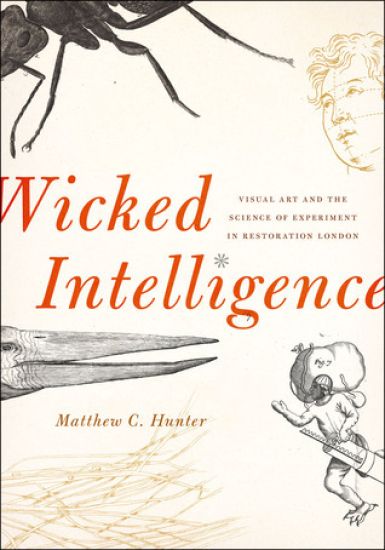
Wicked Intelligence

Wicked Intelligence

Matthew C. Hunter

University of Chicago Press
2013
sidottu
In late seventeenth-century London, the most provocative images were produced not by artists, but by scientists. Magnified fly-eyes drawn with the aid of microscopes, apparitions cast on laboratory walls by projection machines, cut-paper figures revealing the "exact proportions" of sea monsters - all were created by members of the Royal Society of London, the leading institutional platform of the early Scientific Revolution. Wicked Intelligence reveals that these natural philosophers shaped Restoration London's emergent artistic cultures by forging collaborations with court painters, penning art theory, and designing triumphs of baroque architecture such as St Paul's Cathedral. Offering an innovative approach to the scientific image-making of the time, Matthew C. Hunter demonstrates how the Restoration project of synthesizing experimental images into scientific knowledge, as practiced by Royal Society leaders Robert Hooke and Christopher Wren, might be called "wicked intelligence." Hunter uses episodes involving specific visual practices-for instance, concocting a lethal amalgam of wax, steel, and sulfuric acid to produce an active model of a comet-to explore how Hooke, Wren, and their colleagues devised representational modes that aided their experiments. Ultimately, Hunter argues, the craft and craftiness of experimental visual practice both promoted and menaced the artistic traditions on which they drew, turning the Royal Society projects into objects of suspicion in Enlightenment England. The first book to use the physical evidence of Royal Society experiments to produce forensic evaluations of how scientific knowledge was generated, Wicked Intelligence rethinks the parameters of visual art, experimental philosophy, and architecture at the cusp of Britain's imperial power and artistic efflorescence.
Painting with Fire

Painting with Fire

Matthew C Hunter

University of Chicago Press
2020
sidottu
Painting with Fire shows how experiments with chemicals known to change visibly over the course of time transformed British pictorial arts of the long eighteenth century--and how they can alter our conceptions of photography today. As early as the 1670s, experimental philosophers at the early Royal Society of London had studied the visual effects of dynamic combustibles. By the 1770s, chemical volatility became central to the ambitious paintings of Sir Joshua Reynolds, premier portraitist and first president of Britain's Royal Academy of Arts. Valued by some critics for changing in time (and thus, for prompting intellectual reflection on the nature of time), Reynolds's unstable chemistry also prompted new techniques of chemical replication among Matthew Boulton, James Watt, and other leading industrialists. In turn, those replicas of chemically decaying academic paintings were rediscovered in the mid-nineteenth century and claimed as origin points in the history of photography. Tracing the long arc of chemically produced and reproduced art from the 1670s through the 1860s, the book reconsiders early photography by situating it in relationship to Reynolds's replicated paintings and the literal engines of British industry. By following the chemicals, Painting with Fire remaps familiar stories about academic painting and pictorial experiment amid the industrialization of chemical knowledge.
Parcel "c", the Chinatown Community Service Facility, a Preliminary Feasibility Study. (draft)
This work has been selected by scholars as being culturally important, and is part of the knowledge base of civilization as we know it. This work was reproduced from the original artifact, and remains as true to the original work as possible. Therefore, you will see the original copyright references, library stamps (as most of these works have been housed in our most important libraries around the world), and other notations in the work.This work is in the public domain in the United States of America, and possibly other nations. Within the United States, you may freely copy and distribute this work, as no entity (individual or corporate) has a copyright on the body of the work.As a reproduction of a historical artifact, this work may contain missing or blurred pages, poor pictures, errant marks, etc. Scholars believe, and we concur, that this work is important enough to be preserved, reproduced, and made generally available to the public. We appreciate your support of the preservation process, and thank you for being an important part of keeping this knowledge alive and relevant.
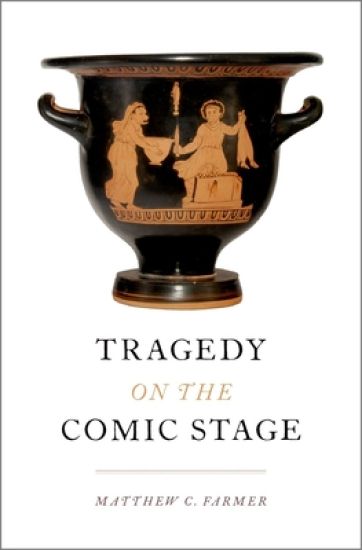
Tragedy on the Comic Stage

Tragedy on the Comic Stage

Matthew C. Farmer

Oxford University Press Inc
2016
sidottu
Aristophanes' engagement with tragedy is one of the most striking features of his comedies: Euripides appears repeatedly as a character in these plays, jokes about tragedy and tragic poets abound, and parodies of tragedy frequently underlie whole scenes and even the plots of these plays. Tragedy on the Comic Stage contextualizes this engagement with tragedy within Greek comedy as a genre by examining paratragedy in the fragments of Aristophanes' contemporaries and successors in the fifth and fourth centuries. Farmer organizes these fragments under two rubrics. First, he discusses fragments that show characters discussing tragedy, use tragic poets as characters, or make reference to the dramatic festivals; these fragments, Farmer argues, develop a "culture of tragedy" within Greek comedy, a consistent set of tropes and devices that depict tragedy as part of the world inhabited by the characters of these plays. Second, he assembles fragments that show tragic parody, imitations of tragedy that render tragic language humorous or ironic by juxtaposing it with the base characters and quotidian circumstances that make up Greek comedy. Tragedy on the Comic Stage then illustrates these features of fragmentary paratragedy within three intact Aristophanic comedies: Wasps, Women at the Thesmophoria, and Wealth. These new readings of Aristophanes' plays show the value of reading Aristophanes in conjunction with the comic fragments, and insist on the subtlety and complexity of Aristophanic paratragedy.
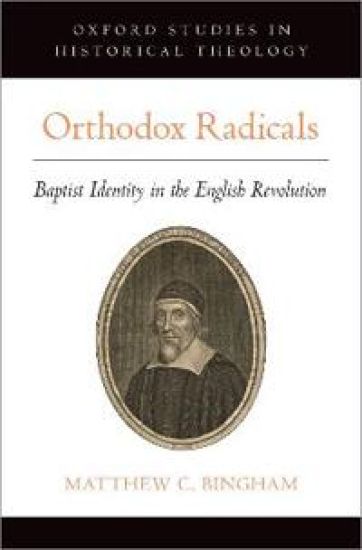
Orthodox Radicals

Orthodox Radicals

Matthew C. Bingham

Oxford University Press Inc
2019
sidottu
In the seventeenth century, English Baptists existed on the fringe of the nation's collective religious life. Today, Baptists have developed into one of the world's largest Protestant denominations. Despite this impressive transformation, those first English Baptists remain chronically misunderstood. In Orthodox Radicals, Matthew C. Bingham clarifies and analyzes the origins and identity of Baptists during the English Revolution, arguing that mid-seventeenth century Baptists did not, in fact, understand themselves to be a part of a larger, all-encompassing Baptist movement. Contrary to both the explicit statements of many historians and the tacit suggestion embedded in the very use of "Baptist" as an overarching historical category, the early modern men and women who rejected infant baptism would not have initially understood that single theological stance as being in itself constitutive of a new collective identity. Rather, the rejection of infant baptism was but one of a number of doctrinal revisions then taking place among English puritans eager to further their on-going project of godly reformation. Orthodox Radicals complicates our understanding of Baptist identity, setting the early English Baptists in the cultural, political, and theological context of the wider puritan milieu out of which they arose. The book also speaks to broader themes, including early modern debates on religious toleration, the mechanisms by which early modern actors established and defended their tenuous religious identities, and the perennial problem of anachronism in historical writing. Bingham also challenges the often too-hasty manner in which scholars have drawn lines of theological demarcation between early modern religious bodies, and reconsiders one of this period's most dynamic and influential religious minorities from a fresh and perhaps controversial perspective. By combining a provocative reinterpretation of Baptist identity with close readings of key theological and political texts, Orthodox Radicals offers the most original and stimulating analysis of mid-seventeenth-century Baptists in decades.
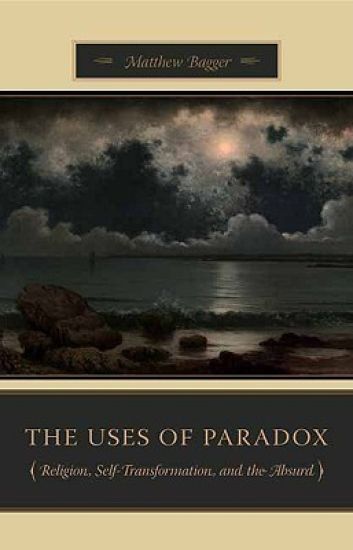
The Uses of Paradox

The Uses of Paradox

Matthew C. Bagger

Columbia University Press
2007
sidottu
In this groundbreaking comparative study, Matthew Bagger investigates the role of paradox in Western and Asian religious discourse. Drawing on both philosophy and social scientific theory, he offers a naturalistic explanation of religion's oft-noted propensity to sublime paradox and argues that religious thinkers employ intractable paradoxes as the basis for various techniques of self-transformation. Considering the writings of Kierkegaard, Pseudo-Dionysus, St. John of the Cross, N?g?rjuna, and Chuang-tzu, among others, Bagger identifies two religious uses of paradox: cognitive asceticism, which wields the psychological discomfort of paradox as an instrument of self-transformation, and mysticism, which seeks to transform the self through an alleged extraordinary cognition that ineffably comprehends paradox. Bagger contrasts these techniques of self-transformation with skepticism, which cultivates the appearance of contradiction in order to divest a person of beliefs altogether. Bagger further contends that a thinker's social attitudes determine his or her response to paradox. Attitudes concerning crossing the boundary of a social group prefigure attitudes concerning supposed truths that lie beyond the boundaries of understanding. Individuals who fear crossing the boundary of their social group and would prohibit them tend to use paradox ascetically, while individuals who find the controlled incorporation of outsiders enriching commonly find paradox revelatory. Although scholars have long noted that religious discourse seems to cultivate and perpetuate paradox, their scholarship tends to ratify religious attitudes toward paradox instead of explaining the unusual reaction paradox provokes. A vital contribution to discussions of mystical experience, The Uses of Paradox reveals how much this experience relies on social attitudes and cosmological speculation.
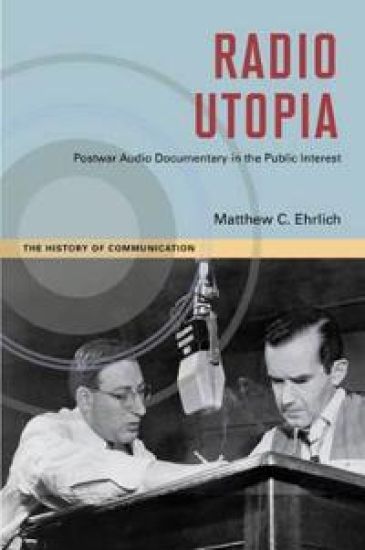
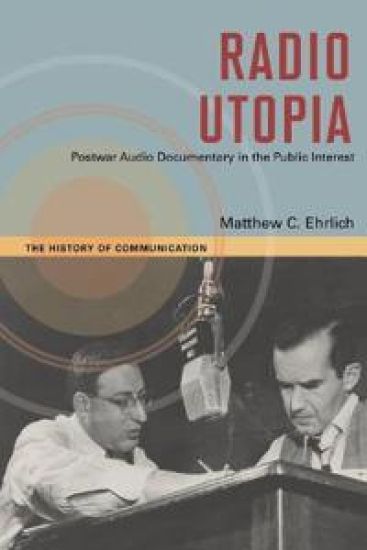
Radio Utopia

Radio Utopia

Matthew C. Ehrlich

University of Illinois Press
2011
sidottu
As World War II drew to a close and radio news was popularized through overseas broadcasting, journalists and dramatists began to build upon the unprecedented success of war reporting on the radio by creating audio documentaries. Focusing particularly on the work of radio luminaries such as Edward R. Murrow, Fred Friendly, Norman Corwin, and Erik Barnouw, Radio Utopia: Postwar Audio Documentary in the Public Interest traces this crucial phase in American radio history, significant not only for its timing immediately before television, but also because it bridges the gap between the end of the World Wars and the beginning of the Cold War. Matthew C. Ehrlich closely examines the production of audio documentaries disseminated by major American commercial broadcast networks CBS, NBC, and ABC from 1945 to 1951. Audio documentary programs educated Americans about juvenile delinquency, slums, race relations, venereal disease, atomic energy, arms control, and other issues of public interest, but they typically stopped short of calling for radical change. Drawing on rare recordings and scripts, Ehrlich traces a crucial phase in the evolution of news documentary, as docudramas featuring actors were supplanted by reality-based programs that took advantage of new recording technology. Paralleling that shift from drama to realism was a shift in liberal thought from dreams of world peace to uneasy adjustments to a cold war mentality. Influenced by corporate competition and government regulations, radio programming reflected shifts in a range of political thought that included pacifism, liberalism, and McCarthyism. In showing how programming highlighted contradictions within journalism and documentary, Radio Utopia reveals radio's response to the political, economic, and cultural upheaval of the post-war era.
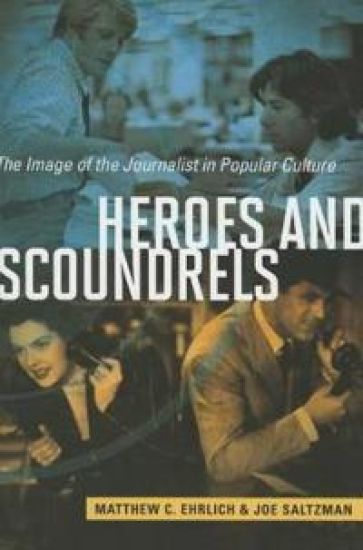
Heroes and Scoundrels

Heroes and Scoundrels

Matthew C. Ehrlich; Joe Saltzman

University of Illinois Press
2015
sidottu
Whether it's the rule-defying lifer, the sharp-witted female newshound, or the irascible editor in chief, journalists in popular culture have shaped our views of the press and its role in a free society since mass culture arose over a century ago. Drawing on portrayals of journalists in television, film, radio, novels, comics, plays, and other media, Matthew C. Ehrlich and Joe Saltzman survey how popular media has depicted the profession across time. Their creative use of media artifacts provides thought-provoking forays into such fundamental issues as how pop culture mythologizes and demythologizes key events in journalism history and how it confronts issues of race, gender, and sexual orientation on the job. From Network to The Wire, from Lois Lane to Mikael Blomkvist, Heroes and Scoundrels reveals how portrayals of journalism's relationship to history, professionalism, power, image, and war influence our thinking and the very practice of democracy.
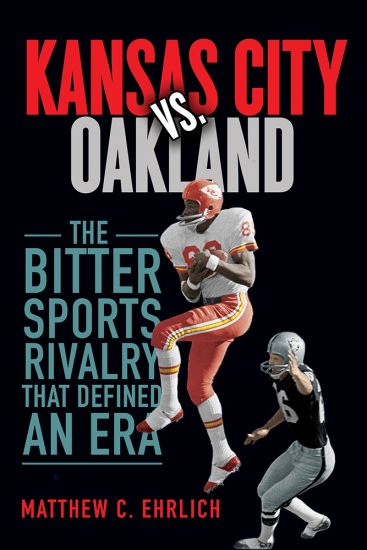
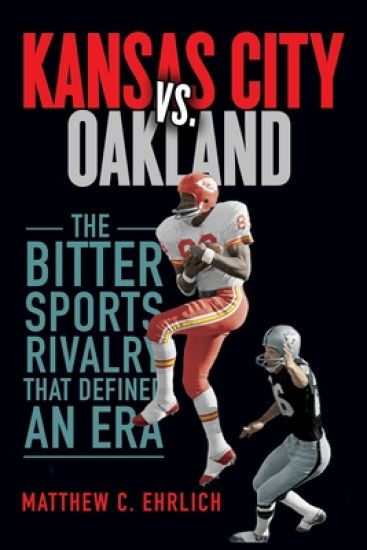
Kansas City vs. Oakland

Kansas City vs. Oakland

Matthew C. Ehrlich

University of Illinois Press
2019
sidottu
A driving ambition linked Oakland and Kansas City in the 1960s. Each city sought the national attention and civic glory that came with being home to professional sports teams. Their successful campaigns to lure pro franchises ignited mutual rivalries in football and baseball that thrilled hometown fans. But even Super Bowl victories and World Series triumphs proved to be no defense against urban problems in the tumultuous 1960s and 1970s. Matthew C. Ehrlich tells the fascinating history of these iconic sports towns. From early American Football League battles to Oakland's deft poaching of baseball's Kansas City Athletics, the cities emerged as fierce opponents from Day One. Ehrlich weaves a saga of athletic stars and folk heroes like Len Dawson, Al Davis, George Brett, and Reggie Jackson with a chronicle of two cities forced to confront the wrenching racial turmoil, labor conflict, and economic crises that arise when soaring aspirations collide with harsh realities.Colorful and thought-provoking, Kansas City vs. Oakland breaks down who won and who lost when big-time sports came to town.
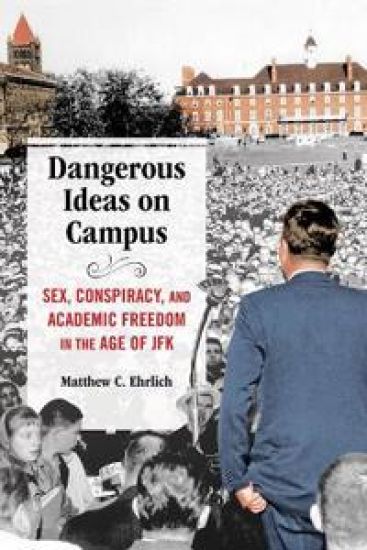
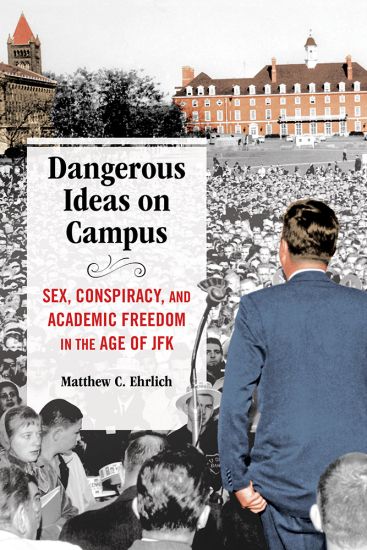
Dangerous Ideas on Campus

Dangerous Ideas on Campus

Matthew C. Ehrlich

University of Illinois Press
2021
sidottu
In 1960, University of Illinois professor Leo Koch wrote a public letter condoning premarital sex. He was fired. Four years later, a professor named Revilo Oliver made white supremacist remarks and claimed there was a massive communist conspiracy. He kept his job. Matthew Ehrlich revisits the Koch and Oliver cases to look at free speech, the legacy of the 1960s, and debates over sex and politics on campus. The different treatment of the two men marked a fundamental shift in the understanding of academic freedom. Their cases also embodied the stark divide over beliefs and values--a divide that remains today. Ehrlich delves into the issues behind these academic controversies and places the events in the context of a time rarely associated with dissent, but in fact a harbinger of the social and political upheavals to come. An enlightening and entertaining history, Dangerous Ideas on Campus illuminates how the university became a battleground for debating America's hot-button issues.
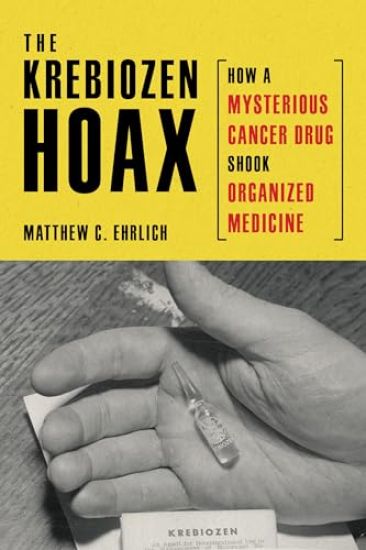
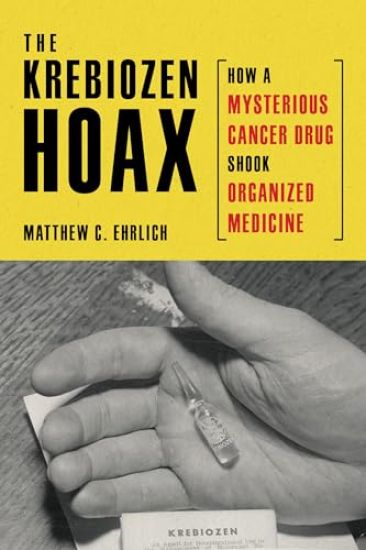
The Krebiozen Hoax

The Krebiozen Hoax

Matthew C. Ehrlich

UNIVERSITY OF ILLINOIS PRESS
2024
sidottu
The brainchild of an obscure Yugoslav physician, Krebiozen emerged in 1951 as an alleged cancer treatment. Andrew Ivy, a University of Illinois vice president and a famed physiologist dubbed “the conscience of U.S. science,” wholeheartedly embraced Krebiozen. Ivy’s impeccable credentials and reputation made the treatment seem like another midcentury medical miracle. But after years of controversy, the improbable saga ended with Krebiozen proved a sham, its inventor fleeing the country, and Ivy’s reputation and legacy in ruins. Matthew C. Ehrlich’s history of Krebiozen tells a quintessential story of quackery. Though most experts dismissed the treatment, it found passionate public support not only among cancer patients but also people in good health. The treatment’s rise and fall took place against the backdrop of America’s never-ending suspicion of educational, scientific, and medical expertise. In addition, Ehrlich examines why people readily believe misinformation and struggle to maintain hope in the face of grave threats to well-being. A dramatic account of fraud and misplaced trust, The Krebiozen Hoax shines a light on a forgotten medical scandal and its all-too-familiar relevance in the twenty-first century.
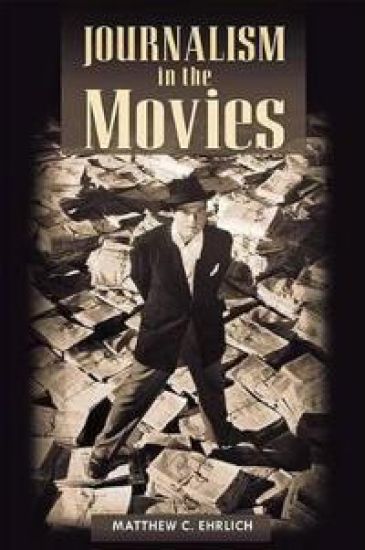
Journalism in the Movies

Journalism in the Movies

Matthew C. Ehrlich

University of Illinois Press
2006
nidottu
From cynical portrayals like The Front Page to the nuanced complexity of All the President's Men, and The Insider, movies about journalists and journalism have been a go-to film genre since the medium's early days. Often depicted as disrespectful, hard-drinking, scandal-mongering misfits, journalists also receive Hollywood's frequent respect as an essential part of American life. Matthew C. Ehrlich tells the story of how Hollywood has treated American journalism. Ehrlich argues that films have relentlessly played off the image of the journalist as someone who sees through lies and hypocrisy, sticks up for the little guy, and serves democracy. He also delves into the genre's always-evolving myths and dualisms to analyze the tensions—hero and oppressor, objectivity and subjectivity, truth and falsehood—that allow journalism films to examine conflicts in society at large.
Heroes and Scoundrels

Heroes and Scoundrels

Matthew C. Ehrlich; Joe Saltzman

University of Illinois Press
2015
nidottu
Whether it's the rule-defying lifer, the sharp-witted female newshound, or the irascible editor in chief, journalists in popular culture have shaped our views of the press and its role in a free society since mass culture arose over a century ago. Drawing on portrayals of journalists in television, film, radio, novels, comics, plays, and other media, Matthew C. Ehrlich and Joe Saltzman survey how popular media has depicted the profession across time. Their creative use of media artifacts provides thought-provoking forays into such fundamental issues as how pop culture mythologizes and demythologizes key events in journalism history and how it confronts issues of race, gender, and sexual orientation on the job. From Network to The Wire, from Lois Lane to Mikael Blomkvist, Heroes and Scoundrels reveals how portrayals of journalism's relationship to history, professionalism, power, image, and war influence our thinking and the very practice of democracy.
Radio Utopia

Radio Utopia

Matthew C. Ehrlich

University of Illinois Press
2017
nidottu
As World War II drew to a close and radio news was popularized through overseas broadcasting, journalists and dramatists began to build upon the unprecedented success of war reporting on the radio by creating audio documentaries. Focusing particularly on the work of radio luminaries such as Edward R. Murrow, Fred Friendly, Norman Corwin, and Erik Barnouw, Radio Utopia: Postwar Audio Documentary in the Public Interest traces this crucial phase in American radio history, significant not only for its timing immediately before television, but also because it bridges the gap between the end of the World Wars and the beginning of the Cold War. Matthew C. Ehrlich closely examines the production of audio documentaries disseminated by major American commercial broadcast networks CBS, NBC, and ABC from 1945 to 1951. Audio documentary programs educated Americans about juvenile delinquency, slums, race relations, venereal disease, atomic energy, arms control, and other issues of public interest, but they typically stopped short of calling for radical change. Drawing on rare recordings and scripts, Ehrlich traces a crucial phase in the evolution of news documentary, as docudramas featuring actors were supplanted by reality-based programs that took advantage of new recording technology. Paralleling that shift from drama to realism was a shift in liberal thought from dreams of world peace to uneasy adjustments to a cold war mentality. Influenced by corporate competition and government regulations, radio programming reflected shifts in a range of political thought that included pacifism, liberalism, and McCarthyism. In showing how programming highlighted contradictions within journalism and documentary, Radio Utopia reveals radio's response to the political, economic, and cultural upheaval of the post-war era.
Kansas City vs. Oakland

Kansas City vs. Oakland

Matthew C. Ehrlich

University of Illinois Press
2019
nidottu
A driving ambition linked Oakland and Kansas City in the 1960s. Each city sought the national attention and civic glory that came with being home to professional sports teams. Their successful campaigns to lure pro franchises ignited mutual rivalries in football and baseball that thrilled hometown fans. But even Super Bowl victories and World Series triumphs proved to be no defense against urban problems in the tumultuous 1960s and 1970s. Matthew C. Ehrlich tells the fascinating history of these iconic sports towns. From early American Football League battles to Oakland's deft poaching of baseball's Kansas City Athletics, the cities emerged as fierce opponents from Day One. Ehrlich weaves a saga of athletic stars and folk heroes like Len Dawson, Al Davis, George Brett, and Reggie Jackson with a chronicle of two cities forced to confront the wrenching racial turmoil, labor conflict, and economic crises that arise when soaring aspirations collide with harsh realities.Colorful and thought-provoking, Kansas City vs. Oakland breaks down who won and who lost when big-time sports came to town.
Dangerous Ideas on Campus

Dangerous Ideas on Campus

Matthew C. Ehrlich

University of Illinois Press
2021
nidottu
In 1960, University of Illinois professor Leo Koch wrote a public letter condoning premarital sex. He was fired. Four years later, a professor named Revilo Oliver made white supremacist remarks and claimed there was a massive communist conspiracy. He kept his job. Matthew Ehrlich revisits the Koch and Oliver cases to look at free speech, the legacy of the 1960s, and debates over sex and politics on campus. The different treatment of the two men marked a fundamental shift in the understanding of academic freedom. Their cases also embodied the stark divide over beliefs and values--a divide that remains today. Ehrlich delves into the issues behind these academic controversies and places the events in the context of a time rarely associated with dissent, but in fact a harbinger of the social and political upheavals to come. An enlightening and entertaining history, Dangerous Ideas on Campus illuminates how the university became a battleground for debating America's hot-button issues.
The Krebiozen Hoax

The Krebiozen Hoax

Matthew C. Ehrlich

UNIVERSITY OF ILLINOIS PRESS
2024
nidottu
The brainchild of an obscure Yugoslav physician, Krebiozen emerged in 1951 as an alleged cancer treatment. Andrew Ivy, a University of Illinois vice president and a famed physiologist dubbed “the conscience of U.S. science,” wholeheartedly embraced Krebiozen. Ivy’s impeccable credentials and reputation made the treatment seem like another midcentury medical miracle. But after years of controversy, the improbable saga ended with Krebiozen proved a sham, its inventor fleeing the country, and Ivy’s reputation and legacy in ruins. Matthew C. Ehrlich’s history of Krebiozen tells a quintessential story of quackery. Though most experts dismissed the treatment, it found passionate public support not only among cancer patients but also people in good health. The treatment’s rise and fall took place against the backdrop of America’s never-ending suspicion of educational, scientific, and medical expertise. In addition, Ehrlich examines why people readily believe misinformation and struggle to maintain hope in the face of grave threats to well-being. A dramatic account of fraud and misplaced trust, The Krebiozen Hoax shines a light on a forgotten medical scandal and its all-too-familiar relevance in the twenty-first century.
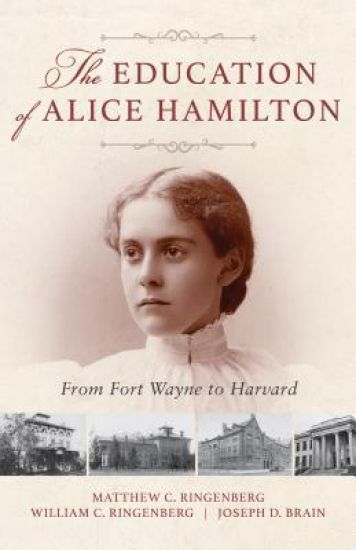
The Education of Alice Hamilton

The Education of Alice Hamilton

Matthew C. Ringenberg; William C. Ringenberg; Joseph D. Brain

Indiana University Press
2019
pokkari
As the founder of the Occupational Safety and Health Act and the first woman faculty member of Harvard University, Alice Hamilton will be remembered for her contributions to public health and her remarkable career. Born and raised in Fort Wayne, Indiana, Hamilton attended several medical schools contributing to her lifelong dedication to learning. Focusing on the investigation of the health and safety conditions – or rather lack thereof – in the nation's factories and mines during the second decade of the twentieth century, her discoveries led to factory and mine level-initiated reforms, and to city, state, and federal reform legislation. It also led to a greater recognition in the nation's universities for formal academic programs in industrial and public health. In 1919 the Harvard officials considered Hamilton the best qualified person in the country to lead their effort in this area. The Education of Alice Hamilton is an inspiring story of a woman dedicated to erudition and helping others.
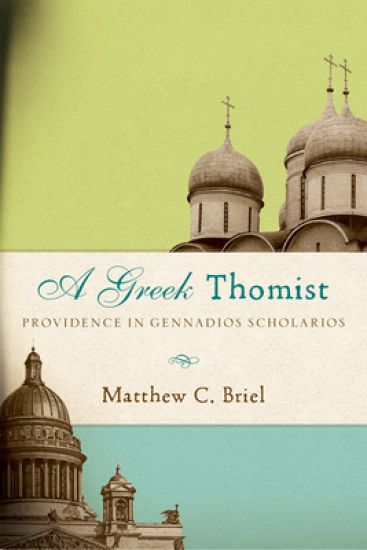
A Greek Thomist

A Greek Thomist

Matthew C. Briel

University of Notre Dame Press
2020
sidottu
Matthew Briel examines, for the first time, the appropriation and modification of Thomas Aquinas's understanding of providence by fifteenth-century Greek Orthodox theologian Gennadios Scholarios. Briel investigates the intersection of Aquinas's theology, the legacy of Greek patristic and later theological traditions, and the use of Aristotle's philosophy by Latin and Greek Christian thinkers in the thirteenth to fifteenth centuries. A Greek Thomist reconsiders our current understanding of later Byzantine theology by reconfiguring the construction of what constitutes "orthodoxy" within a pro- or anti-Western paradigm. The fruit of this appropriation of Aquinas enriches extant sources for historical and contemporary assessments of Orthodox theology. Moreover, Scholarios's grafting of Thomas onto the later Greek theological tradition changes the account of grace and freedom in Thomistic moral theology. The particular kind of Thomism that Scholarios develops avoids the later vexing issues in the West of the de auxiliis controversy by replacing the Augustinian theology of grace with the highly developed Greek theological concept of synergy. A Greek Thomist is perfect for students and scholars of Greek Orthodoxy, Greek theological traditions, and the continued influence of Thomas Aquinas.
Justice Between Generations

Justice Between Generations

Matthew C. Price

Praeger Publishers Inc
1997
sidottu
With the transformation of the elderly into the major political force in American politics, older Americans have used their increasing numbers and political power to capture a growing and disproportionate share of public resources. This book explores their emergence from obscurity to political preeminence and considers the effect of their power on other members of society. It traces the shift in public attitude from the 18th century to the early 20th century, when the elderly population increased and needed an economic safety net. It then focuses on the elderly's growing power in the late 20th century and examines how they are receiving an expanding share of the budget for such programs as Social Security and Medicare at the expense of such groups as children in poverty.Asking the provocative question of what one generation owes another, the author shows that as the number of elderly living in poverty has decreased dramatically, the number of children in poverty has skyrocketed. The book concludes by analyzing the demographic projections of what lies ahead—a static working-age population supporting an exploding population of retirees and a baby boom generation that is ill-prepared for its own retirement. For the next few years, the challenge of an aging population will be a national problem; if unaddressed, it will become a national crisis.