Kirjojen hintavertailu. Mukana 11 342 296 kirjaa ja 12 kauppaa.

Kirjahaku

Etsi kirjoja tekijän nimen, kirjan nimen tai ISBN:n perusteella.

1000 tulosta hakusanalla Matthew D. Ostroff; Mark W. Connolly

Ultrasound Guided Vascular Access

Ultrasound Guided Vascular Access

Matthew D. Ostroff; Mark W. Connolly

Springer International Publishing AG
2022
nidottu
This casebook covers ultrasound guided vascular access with a focus on patient safety. Vascular access is the catalyst between provider and patient. Initially, patients were treated at hospitals for grave illnesses or terrible accidents; however, due to significant strides in medicine, the emerging hospitalized patient is now more commonly treated for chronic illnesses. For these patients, repeated hospital visits slowly deplete their vasculature, creating one of modern medicine’s greatest obstacles: vascular access. This book provides safe solutions to bedside clinical challenges from peripheral to tunneled central lines in the neonatal, pediatric, and adult patient populations.Chapters present unique patient cases, incorporating the latest technology and techniques for safely and methodically meeting vascular access challenges, detailed discussions on therapeutic interventions, and trouble shooting. The book is structured so that each chapter builds on the last, offering peripheral, central, and tunneled catheter solutions through a standardized approach. Finally, each part features a COVID-19 case study including vascular access performed in the prone position. This is an ideal guide for trainees, students, clinicians, and healthcare professionals performing ultrasound guided vascular access on patients.

Advanced Perioperative Crisis Management

Advanced Perioperative Crisis Management

Matthew D. McEvoy; Cory M. Furse

Oxford University Press Inc
2017
sidottu
Advanced Perioperative Crisis Management is a high-yield, clinically-relevant resource for understanding the epidemiology, pathophysiology, assessment, and management of a wide variety of perioperative emergencies. Three introductory chapters review a critical thinking approach to the unstable or pulseless patient, crisis resource management principles to improve team performance and the importance of cognitive aids in adhering to guidelines during perioperative crises. The remaining sections cover six major areas of patient instability: cardiac, pulmonary, neurologic, metabolic/endocrine, and toxin-related disorders, and shock states, as well as specific emergencies for obstetrical and pediatric patients. Each chapter opens with a clinical case, followed by a discussion of the relevant evidence. Case-based learning discussion questions, which can be used for self-assessment or in the classroom, round out each chapter. Advanced Perioperative Crisis Management is an ideal resource for trainees, clinicians, and nurses who work in the perioperative arena, from the operating room to the postoperative surgical ward.
Measuring Social Welfare

Measuring Social Welfare

Matthew D. Adler

Oxford University Press Inc
2019
sidottu
Disputes over government policies rage in a number of areas. From taxation to climate change, from public finance to risk regulation, and from health care to infrastructure planning, advocates debate how policies affect multiple dimensions of individual well-being, how these effects balance against each other, and how trade-offs between overall well-being and inequality should be resolved. How to measure and balance well-being gains and losses, is a vexed issue. Matthew D. Adler advances the debate by introducing the social welfare function (SWF) framework and demonstrating how it can be used as a powerful tool for evaluating governmental policies. The framework originates in welfare economics and in philosophical scholarship regarding individual well-being, ethics, and distributive justice. It has three core components: a well-being measure, which translates each of the possible policy outcomes into an array of interpersonally comparable well-being numbers, quantifying how well off each person in the population would be in that outcome; a rule for ranking outcomes thus described ; and an uncertainty module, which orders policies understood as probability distributions over outcomes. The SWF framework is a significant improvement compared to cost-benefit analysis (CBA), which quantifies policy impacts in dollars, is thereby biased towards the rich, and is insensitive to the distribution of these monetized impacts. The SWF framework, by contrast, uses an unbiased measure of well-being and allows the policymaker to consider both efficiency (total well-being) and equity (the distribution of well-being). Because the SWF framework is a fully generic methodology for policy assessment, Adler also discusses how it can be implemented to inform government policies. He illustrates it through a detailed case study of risk regulation, contrasting the implication of results of SWF and CBA. This book provides an accessible, yet rigorous overview of the SWF approach that can inform policy-makers and students.
Measuring Social Welfare

Measuring Social Welfare

Matthew D. Adler

Oxford University Press Inc
2019
nidottu
Disputes over government policies rage in a number of areas. From taxation to climate change, from public finance to risk regulation, and from health care to infrastructure planning, advocates debate how policies affect multiple dimensions of individual well-being, how these effects balance against each other, and how trade-offs between overall well-being and inequality should be resolved. How to measure and balance well-being gains and losses, is a vexed issue. Matthew D. Adler advances the debate by introducing the social welfare function (SWF) framework and demonstrating how it can be used as a powerful tool for evaluating governmental policies. The framework originates in welfare economics and in philosophical scholarship regarding individual well-being, ethics, and distributive justice. It has three core components: a well-being measure, which translates each of the possible policy outcomes into an array of interpersonally comparable well-being numbers, quantifying how well off each person in the population would be in that outcome; a rule for ranking outcomes thus described ; and an uncertainty module, which orders policies understood as probability distributions over outcomes. The SWF framework is a significant improvement compared to cost-benefit analysis (CBA), which quantifies policy impacts in dollars, is thereby biased towards the rich, and is insensitive to the distribution of these monetized impacts. The SWF framework, by contrast, uses an unbiased measure of well-being and allows the policymaker to consider both efficiency (total well-being) and equity (the distribution of well-being). Because the SWF framework is a fully generic methodology for policy assessment, Adler also discusses how it can be implemented to inform government policies. He illustrates it through a detailed case study of risk regulation, contrasting the implication of results of SWF and CBA. This book provides an accessible, yet rigorous overview of the SWF approach that can inform policy-makers and students.
Gospels before the Book

Gospels before the Book

Matthew D. C. Larsen

Oxford University Press Inc
2018
sidottu
What does it look like to read the texts we now call the gospels like first- and second-century readers? There is no evidence of anyone regarding the gospel as a book published by an author until the end of the second century. So, put differently, what does it mean to read the gospels "before the book"? For centuries, the ways people discuss the gospels have been shaped by later ideas that have more to do with the printing press and modern notions of the author than ancient writing and reading practices. In Gospels before the Book, Matthew D. C. Larsen challenges several subtle yet problematic assumptions about authors, books, and publication at work in early Christian studies. He then explores a host of under-appreciated elements of ancient textual culture such as unfinished texts, accidental publication, post-publication revision, and the existence of multiple authorized versions of the same work. Turning to the gospels, he argues that the earliest readers and users of the text we now call the Gospel according to Mark treated it not as a book published by an author, but as an unfinished, open, and fluid collection of notes (hypomnmata). In such a scenario, the Gospel according to Matthew would not be regarded as a separate book published by a different author, but as a continuation of the same unfinished gospel tradition. Similarly it is not the case that, of the five different endings in the textual tradition we now call the Gospel according to Mark, one is "right" and the others are "wrong." Rather each represents its own effort to fill a perceived deficiency in the gospel. Larsen offers a new methodological framework for future scholarship on early Christian gospels.
Risk, Death, and Well-Being: The Ethical Foundations of Fatality Risk Regulation
This is an open access title available under the terms of a CC BY-NC-ND 4.0 International license. It is free to read on the Oxford Academic platform and offered as a free PDF download from OUP and selected open access locations. A wide range of governmental policies characteristic of the modern state seek to reduce individuals' fatality risks--risks that arise from air and water pollution, pathogens, food ingredients and contaminants, motor vehicles, infrastructure, radiation, workplace accidents, alcohol and recreational drugs, firearms, consumer products, tobacco, natural disasters, and other sources. Risk, Death, and Well-Being provides a rigorous treatment of the ethics of fatality risk regulation. It does so through the lens of welfare-consequentialism--specifically, lifetime welfarism, with a particular focus on utilitarianism and prioritarianism. The ethical ranking of possible worlds depends on the patterns of lifetime well-being in the worlds. Premature death is ethically significant insofar as it changes the lifetime well-being of the person who dies and perhaps others. At the level of policy choice, the book deploys the social-welfare-function (SWF) framework--which is the most systematic decision--procedure for implementing lifetime welfarism. It shows, in detail, how the SWF methodology can be brought to bear in assessing risk-regulation policies. Every individual faces a policy-specific lottery over lifetime well-being, as determined by their risk profile (probability of surviving the current year and future years) and attribute profile (the attributes the individual will have in the current year and each future year if alive rather than dead). In short, a policy corresponds to an array of individual risk and attribute profiles, which can then be assigned a utilitarian or prioritarian value. The SWF methodology as thus applied to risk regulation differs quite substantially from cost-benefit analysis (CBA), which is currently the dominant policy-assessment procedure in governmental practice.
Christian Martyrdom and Christian Violence

Christian Martyrdom and Christian Violence

Matthew D. Lundberg

Oxford University Press Inc
2021
sidottu
What is the place-if any-for violence in the Christian life? At the core of Christian faith is an experience of suffering violence as the price for faithfulness, of being victimized by the world's violence, from Jesus himself to martyrs who have died while following him. At the same time, Christian history had also held the opinion that there are situations when the follower of Jesus may be justified in inflicting violence on others, especially in the context of war. Do these two facets of Christian ethics and experience present a contradiction? Christian Martyrdom and Christian Violence: On Suffering and Wielding the Sword explores the tension between Christianity's historic reverence for martyrdom (suffering violence for faith) and Christianity's historical support of a just war ethic (involving the inflicting of violence). While the book considers the possibility that the two are unreconcilable, it also argues that they are ultimately compatible; but their compatibility requires a more humanized portrait of the Christian martyr as well as a stricter approach to the justified use of violence.
The Color of Civics

The Color of Civics

Matthew D. Nelsen

OXFORD UNIVERSITY PRESS INC
2023
sidottu
Generations of Americans, dating back to the nation's founding, have regarded schools as essential for developing the knowledge and civic values necessary for sustaining democracy. Yet, as Matthew D. Nelsen argues in The Color of Civics, traditional approaches to civic education are not living up to their promise for many students, particularly students of color from disadvantaged communities. How do we prepare an increasingly diverse generation of Americans for full participation in public life? Drawing on lessons from students and teachers in Chicago, The Color of Civics reimagines the democratic purpose of civic education. Nelsen's findings challenge some of the most widely cited civic education research, arguing that the content of traditional civic education courses privileges the political experiences of white political actors, and in turn, contributes to divergent political behaviors and participatory outcomes across racial and ethnic groups. He presents a new approach to civic education that aims to foster political empowerment by centering historically-grounded conversations about current events as well as critical categories of knowledge--those that highlight the agency and grassroots political action of marginalized groups. This approach increases rates of intended political participation among young people of color and heightens political empathy among white youth. Nelsen also highlights the agency of teachers in processes of socialization, exploring how their attitudes and lived experiences drive the implementation of more empowering civic learning environments. By taking the histories and lived experiences of marginalized communities seriously, The Color of Civics asserts that civics courses can become spaces where young people begin to recognize their own agency, develop empathy, and define the terms of their own political participation. Including novel empirical research and an evidence-based analysis, Nelsen provides practical and useful advice for policymakers that cuts through the noise to focus on what works.
The Color of Civics

The Color of Civics

Matthew D. Nelsen

OXFORD UNIVERSITY PRESS INC
2023
nidottu
Generations of Americans, dating back to the nation's founding, have regarded schools as essential for developing the knowledge and civic values necessary for sustaining democracy. Yet, as Matthew D. Nelsen argues in The Color of Civics, traditional approaches to civic education are not living up to their promise for many students, particularly students of color from disadvantaged communities. How do we prepare an increasingly diverse generation of Americans for full participation in public life? Drawing on lessons from students and teachers in Chicago, The Color of Civics reimagines the democratic purpose of civic education. Nelsen's findings challenge some of the most widely cited civic education research, arguing that the content of traditional civic education courses privileges the political experiences of white political actors, and in turn, contributes to divergent political behaviors and participatory outcomes across racial and ethnic groups. He presents a new approach to civic education that aims to foster political empowerment by centering historically-grounded conversations about current events as well as critical categories of knowledge--those that highlight the agency and grassroots political action of marginalized groups. This approach increases rates of intended political participation among young people of color and heightens political empathy among white youth. Nelsen also highlights the agency of teachers in processes of socialization, exploring how their attitudes and lived experiences drive the implementation of more empowering civic learning environments. By taking the histories and lived experiences of marginalized communities seriously, The Color of Civics asserts that civics courses can become spaces where young people begin to recognize their own agency, develop empathy, and define the terms of their own political participation. Including novel empirical research and an evidence-based analysis, Nelsen provides practical and useful advice for policymakers that cuts through the noise to focus on what works.
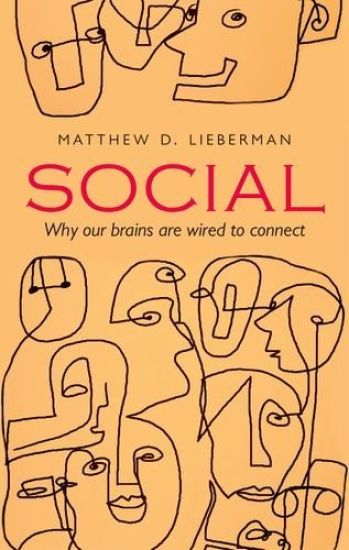
Social

Social

Matthew D. Lieberman

Oxford University Press
2015
nidottu
Why are we influenced by the behaviour of complete strangers? Why does the brain register similar pleasure when I perceive something as 'fair' or when I eat chocolate? Why can we be so profoundly hurt by bereavement? What are the evolutionary benefits of these traits? The young discipline of 'social cognitive neuroscience' has been exploring this fascinating interface between brain science and human behaviour since the late 1990s. Now one of its founding pioneers, Matthew D. Lieberman, presents the discoveries that he and fellow researchers have made. Using fMRI scanning and a range of other techniques, they have been able to see that the brain responds to social pain and pleasure the same way as physical pain and pleasure; and that unbeknown to ourselves, we are constantly 'mindreading' other people so that we can fit in with them. It is clear that our brains are designed respond to and be influenced by others. For good evolutionary reasons, he argues, we are wired to be social. The implications are numerous and profound. Do we have to rethink what we understand by identity, and free will? How can managers improve the way their teams relate and perform? Could we organize large social institutions in ways that would work far better? And could there be whole new methods of education?
No Requiem for the Space Age

No Requiem for the Space Age

Matthew D. Tribbe

Oxford University Press Inc
2014
sidottu
Why did support for the space program decrease so sharply after (or, really, even before) the first moon landing? Clearly this decline had much to do with the waning of the original Cold War impetus that had sparked the moon program to begin with. As Cold War tensions with the Soviets eased by the late 1960s, and the United States won the space race with the successful moon landing, there was little incentive to continue to expand or even maintain steady funding for a program that, for all its real contributions to technological advancement, entertainment, and national esteem, had largely come to be seen as a Cold War goal rather than a continuing, sustained program of space exploration. In this context, which a good number of Americans accepted, the moon was not a starting point for a glorious era of exploration, but an endpoint in a Cold War race with the Soviets. Unusual works on space history, this fluidly written debut book looks at the Apollo moon landings in the late 1960s and early 1970s from a cultural perspective. Rather than examining them in their familiar Cold War context, Matt Tribbe uses them to explore larger trends in American culture and society during this period, specifically the turn away from the rationalism that dominated social thought through the 1950s and early 1960s and found its fullest expression in the urge to go to the moon. Rather than studying the space program itself, he focuses more on the peculiarities of an American society and culture that sent men to the moon semiannually over the 1968-72 period, and then stopped. Hippies used the event to comment on the lameness of "straights," straights to lambast hippies. Intellectuals on the Left discussed it in their critiques of American society and culture; intellectuals on the Right discussed it in their critiques of intellectuals on the Left. Those who placed their faith in technocratic rationalism praised it as a triumph of rational planning, while growing numbers of skeptics pointed out the spiritual emptiness of such a rationalist endeavor. The "man in the street," of course, had something to say as well, and he or she expressed a wide variety of views in countless newspapers and television interviews. Meanwhile, armchair philosophers of all stripes, from newspaper editorialists to politicians to NASA technocrats, waxed poetically about what it revealed of "the nature of man" and "mankind's destiny." While not a traditional space history, this book will appeal to those fascinated by postwar culture and society and will particularly add to the growing area of the history of the 1970s.
The History of the Future in Colonial Mexico

The History of the Future in Colonial Mexico

Matthew D. O'Hara

Yale University Press
2019
sidottu
A prominent scholar of Mexican and Latin American history challenges the field’s focus on historical memory to examine colonial-era conceptions of the future Going against the grain of most existing scholarship, Matthew D. O’Hara explores the archives of colonial Mexico to uncover a history of “futuremaking.” While historians and historical anthropologists of Latin America have long focused on historical memory, O’Hara—a Rockefeller Foundation grantee and the award-winning author of A Flock Divided: Race, Religion, and Politics in Mexico—rejects this approach and its assumptions about time experience. Ranging widely across economic, political, and cultural practices, O’Hara reveals how colonial subjects used the resources of tradition and Catholicism to craft new futures. An intriguing, innovative work, this volume will be widely read by scholars of Latin American history, religious studies, and historical methodology.
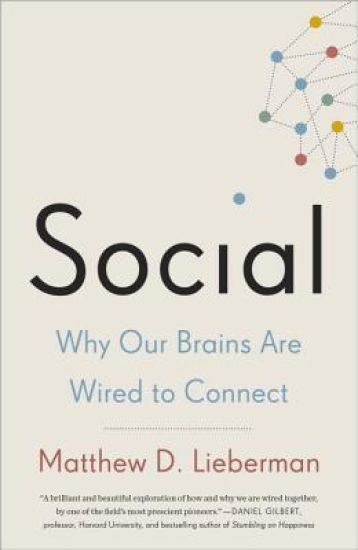
Social: Why Our Brains Are Wired to Connect

Social: Why Our Brains Are Wired to Connect

Matthew D. Lieberman

Crown Publishing Group (NY)
2014
nidottu
We are profoundly social creatures - more than we know. In Social, renowned psychologist Matthew Lieberman explores groundbreaking research in social neuroscience revealing that our need to connect with other people is even more fundamental, more basic, than our need for food or shelter. Because of this, our brain uses its spare time to learn about the social world - other people and our relation to them. It is believed that we must commit 10,000 hours to master a skill. According to Lieberman, each of us has spent 10,000 hours learning to make sense of people and groups by the time we are ten. Social argues that our need to reach out to and connect with others is a primary driver behind our behavior. We believe that pain and pleasure alone guide our actions. Yet, new research using fMRI - including a great deal of original research conducted by Lieberman and his UCLA lab -- shows that our brains react to social pain and pleasure in much the same way as they do to physical pain and pleasure. Fortunately, the brain has evolved sophisticated mechanisms for securing our place in the social world. We have a unique ability to read other people's minds, to figure out their hopes, fears, and motivations, allowing us to effectively coordinate our lives with one another. And our most private sense of who we are is intimately linked to the important people and groups in our lives. This wiring often leads us to restrain our selfish impulses for the greater good. These mechanisms lead to behavior that might seem irrational, but is really just the result of our deep social wiring and necessary for our success as a species. Based on the latest cutting edge research, the findings in Social have important real-world implications. Our schools and businesses, for example, attempt to minimalize social distractions. But this is exactly the wrong thing to do to encourage engagement and learning, and literally shuts down the social brain, leaving powerful neuro-cognitive resources untapped. The insights revealed in this pioneering book suggest ways to improve learning in schools, make the workplace more productive, and improve our overall well-being.
Osteochondritis Dissecans: Diagnosis and Treatment Options for Athletes: An Issue of Clinics in Sports Medicine
This issue of Clinics in Sports Medicine will include the diagnosis and treatment of Osteochondritis Dissecans in athletes. Osteochondritis Dissecans, a joint condition in which a piece of cartilage, along with a thin layer of the bone beneath it, comes loose from the end of a bone. It is most common in the knee; however it can occur in other joints. Those individuals who frequently participate in strenuous sports, particularly young athletes, or perform repetitive activities that put the joint under stress, are at an increased risk of developing Osteochondritis Dissecans.
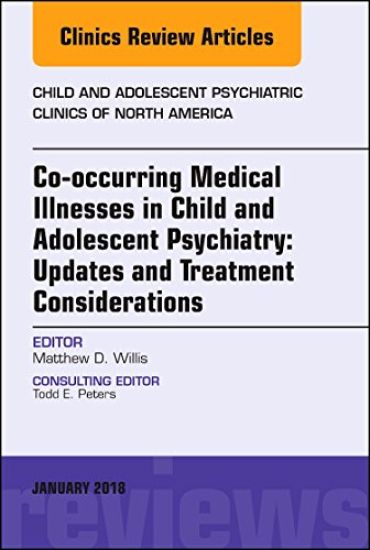
Co-occurring Medical Illnesses in Child and Adolescent Psychiatry: Updates and Treatment Considerations, An Issue of Child and Adolescent Psychiatric Clinics of North America
This issue of Child and Adolescent Psychiatric Clinics, edited by Dr. Matthew Willis, will cover management of Pediatric Medical Illnesses with a focus on clinical updates and treatment considerations for the child and adolescent psychiatrist Topics covered in the issue include, but are not limited to: Eating Disorders; Obesity and Insulin Resistance; Transitioning from Pediatric to Adult Care in Young Adults with Medical Issues; Concussive syndrome: Acute Management and Chronic Post-Concussive Issues; Functional Abdominal Pain; Nonepileptic Seizures in Pediatric Patients: Diagnosis and Comorbidites; Domestic Minor Sex Trafficking (DMST); and Grief as an etiological factor in pediatric emotional and physical clinical presentations.
Going East

Going East

Matthew d'Ancona

Sceptre
2004
pokkari
London can be as pitiless as it is bountiful. No one knows that better than Mia Taylor. From a gilded life of privilege to a shabby alternative health centre in London's East End in the space of weeks. The violent tragedy that propels Mia east also pitches her unwittingly into a bigger history, a modern legend of migration and change.Mia's new life brings her into contact both with a kaleidoscope of characters who inhabit the extraordinary city of London and the burning issues that will mould its future. Politics and racism, corruption and betrayal, poverty and decadence, all smoulder side by side as the capital blazes into the new millennium.Out of the ashes emerges Mia: a troubled, questing woman who hopes to find herself by going east.
Nothing to Fear

Nothing to Fear

Matthew d'Ancona

Hodder Stoughton
2009
pokkari
For Ginny, the new house represents a new start: a room of her own where she can research her book on the psychology of fairytales and recover from a bitter divorce. The last thing she's looking for is romance.But her young neighbour breaks down her defences. Sean cooks her delicious meals and rescues her from a drunken attack by her ex-husband. His only eccentricity is the locked room in his house that he forbids her to enter. It can't contain anything sinister, can it?Ginny can't resist finding out. But when she opens the door, she is propelled into a horror story, rather than a fairytale.
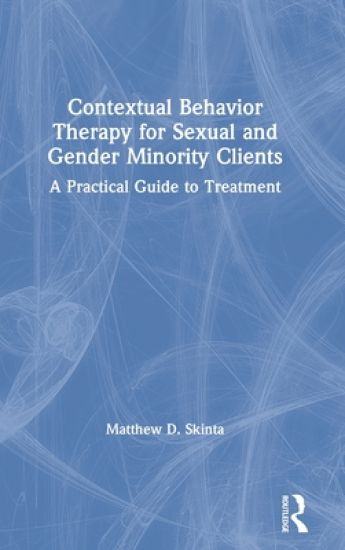
Contextual Behavior Therapy for Sexual and Gender Minority Clients
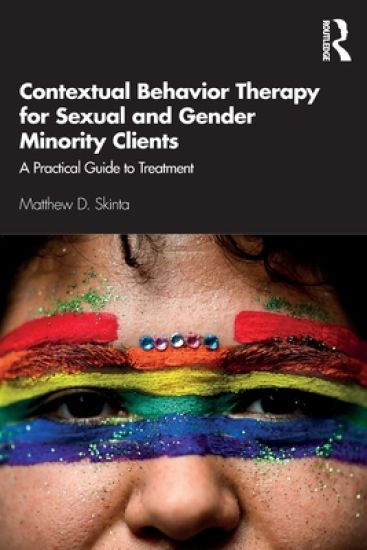
Combining theory, research, and case studies, this book shows clinicians how to apply transdiagnostic contextual behavioral approaches when working with sexual and gender minority (SGM) clients. The text first examines minority stress theory through the lens of contextual behavior analysis. Subsequent chapters illustrate the application of therapeutic techniques drawn from acceptance and commitment therapy, functional analytic psychotherapy, and compassion-focused therapy. The book concludes with a close look at special areas of consideration, including pre-surgical evaluation, the impact of HIV on SGM communities, ethical considerations, and future directions in therapy with SGM clients. Every chapter provides a series of diverse vignettes that illustrate how each aspect of treatment might build upon the last along with a list of recommended books for further exploration of that topic. This book offers a unique, integrated approach that can be used for case conceptualization and followed as a treatment manual for professionals or graduate students with a foundation in SGM psychology.
Contextual Behavior Therapy for Sexual and Gender Minority Clients
Combining theory, research, and case studies, this book shows clinicians how to apply transdiagnostic contextual behavioral approaches when working with sexual and gender minority (SGM) clients. The text first examines minority stress theory through the lens of contextual behavior analysis. Subsequent chapters illustrate the application of therapeutic techniques drawn from acceptance and commitment therapy, functional analytic psychotherapy, and compassion-focused therapy. The book concludes with a close look at special areas of consideration, including pre-surgical evaluation, the impact of HIV on SGM communities, ethical considerations, and future directions in therapy with SGM clients. Every chapter provides a series of diverse vignettes that illustrate how each aspect of treatment might build upon the last along with a list of recommended books for further exploration of that topic. This book offers a unique, integrated approach that can be used for case conceptualization and followed as a treatment manual for professionals or graduate students with a foundation in SGM psychology.