

Kirjahaku
Etsi kirjoja tekijän nimen, kirjan nimen tai ISBN:n perusteella.
1000 tulosta hakusanalla Matthew F. Winn
Every Picture Tells a Story
Matthew F. Winn
Createspace Independent Publishing Platform
2017
nidottu

Chasing Shadows in the Dark: A Collection of Short Stories
Matthew F. Winn
Createspace Independent Publishing Platform
2016
nidottu

Inspector Charlie Goudreau sat on a dingy, blood stained mattress in a one room flop house apartment in Detroit. Streaks of a man's life oozed down the wall, the remnants of his pitiful death. Charlie found himself gripped by fear as he realized he was only one trigger pull away from being the victim of suicide himself. How had he fallen so far in such a short amount of time. Drawn to this waste of life Charlie feels compelled to learn who the man was and finds he was a magnificent artist, a painter with impeccable detail. But this bright light is soon extinguished by a brooding darkness that swallows him whole the moment he realizes these painting are much more than they seem. With his own teenaged daughter missing and a body count of teenage victims of a serial killer piling up with the snow Charlie finds his own life is spiraling out of control.





More than a hundred years have passed since the disappearance of the Grand Island lighthouse keeper and his wife. To add to the mystery the body of the assistant keeper turned up mutilated and adrift in a boat on Lake Superior with no clue as to who or what put him there. The new tenants of the long-abandoned lighthouse have no idea a horrific murder mystery lies hidden within the bowels of their new home.High atop the cliffs of Grand Island, Travis Roster finds himself cornered, and face to face with a terrifying monster of legends. An enormous cat-like creature adorned with copper scales, a serpentine body and footlong fangs glistening with the blood of its victims. The water panther, known as Mishipeshu by the Anishinaabe people, resides in the depths of Lake Superior protecting her copper. She is angry and seeks vengeance on those who have failed to heed her warnings. Making circumstances even more dire is the fact the gargantuan lynx is a trivial problem compared to the other terrors lying in wait for the Roster family.Travis and his family have uncovered a bunker hidden far below the surface of Grand Island and in doing so they also uncovered the remains of the lighthouse keeper and his wife, missing for nearly one hundred years, along with a parasite hell bent on humanity's destruction. With death around every corner and an ever-changing landscape, escaping the island has become both imperative and impossible.


In Le Jazz, Matthew F. Jordan deftly blends textual analysis, critical theory, and cultural history in a wide-ranging and highly readable account of how jazz progressed from a foreign cultural innovation met with resistance by French traditionalists to a naturalized component of the country's identity. Jordan draws on sources including ephemeral critical writing in the press and twentieth-century French literature to trace the country's reception of jazz, from the Cakewalk dance craze and the music's significance as a harbinger of cultural recovery after World War II to its place within French ethnography and cultural hybridity. Countering the histories of jazz's celebratory reception in France, Jordan delves in to the reluctance of many French citizens to accept jazz with the same enthusiasm as the liberal humanists and cosmopolitan crowds of the 1930s. Jordan argues that some listeners and critics perceived jazz as a threat to traditional French culture, and only as France modernized its identity did jazz become compatible with notions of Frenchness. Le Jazz speaks to the power of enlivened debate about popular culture, art, and expression as the means for constructing a vibrant cultural identity, revealing crucial keys to understanding how the French have come to see themselves in the postwar world.

In Le Jazz, Matthew F. Jordan deftly blends textual analysis, critical theory, and cultural history in a wide-ranging and highly readable account of how jazz progressed from a foreign cultural innovation met with resistance by French traditionalists to a naturalized component of the country's identity. Jordan draws on sources including ephemeral critical writing in the press and twentieth-century French literature to trace the country's reception of jazz, from the Cakewalk dance craze and the music's significance as a harbinger of cultural recovery after World War II to its place within French ethnography and cultural hybridity. Countering the histories of jazz's celebratory reception in France, Jordan delves in to the reluctance of many French citizens to accept jazz with the same enthusiasm as the liberal humanists and cosmopolitan crowds of the 1930s. Jordan argues that some listeners and critics perceived jazz as a threat to traditional French culture, and only as France modernized its identity did jazz become compatible with notions of Frenchness. Le Jazz speaks to the power of enlivened debate about popular culture, art, and expression as the means for constructing a vibrant cultural identity, revealing crucial keys to understanding how the French have come to see themselves in the postwar world.

What can we learn about the evolution of jaws from a pair of scissors? How does the flight of a tennis ball help explain how fish overcome drag? What do a spacesuit and a chicken egg have in common? Highlighting the fascinating twists and turns of evolution across more than 540 million years, paleobiologist Matthew Bonnan uses everyday objects to explain the emergence and adaptation of the vertebrate skeleton. What can camera lenses tell us about the eyes of marine reptiles? How does understanding what prevents a coffee mug from spilling help us understand the posture of dinosaurs? The answers to these and other intriguing questions illustrate how scientists have pieced together the history of vertebrates from their bare bones. With its engaging and informative text, plus more than 200 illustrative diagrams created by the author, The Bare Bones is an unconventional and reader-friendly introduction to the skeleton as an evolving machine.

This book discusses the relations between the United States and Egypt from Roosevelt to Eisenhower. To protect the free flow of oil, American policymakers looked to Egypt to provide the progressive, pro-Western leadership they believed would insure stability to the region. America's attempts to balance the needs of its British allies with those of Egypt coupled with Egypt's quest for regional hegemony proved to be a recipe for trouble. In the end, America failed in grooming Egypt as the pro-Western leader, could not bring peace to the region, and could not prevent the Soviet Union from gaining a foothold. Yet, the oil continued to flow.

Dwight D. Eisenhower achieved prominence as a military leader during World War II and as a statesman following the conflict, but less is known about his ambitions and preparation between the wars that served as the foundation for his later success. The first modern analysis of Eisenhower's career before his rise to fame, this study examines Ike's intellectual ideas concerning politics, military strategy, and history in the decades between the wars. Holland details Eisenhower's quest to make himself the best officer in the U.S. Army and to prepare for the next war--which he firmly believed was coming.Based upon the voluminous collection at the Eisenhower Library, this book includes discussion of Eisenhower's intellectual development, family life, military education, the roles of mentors and friends, as well as his political and international experiences. Throughout the 1920s and 1930s, Ike labored thanklessly in an army marked by budget cuts and incompetence. Despite this atmosphere, he persevered to become a pioneer in mechanized and aerial warfare, the author of an official history of World War I, the creator of the first industrial mobilization plan in American history, a one man public relations section for the War Department, and the organizer of the Philippine army. Through it all, Ike remained a man with a big heart, a man equally able to work with presidents or privates without losing his common touch.

After the loss of his family farm, John Moon is a desperate man. A master hunter, his ability to poach game in-season or out is the only thing that stands between him and the soup kitchen line. Until Moon trespasses on the wrong land, hears a rustle in the brush, and fires a single fateful shot.Following the bloody trail, he comes upon a shocking scene: an illegal, deep woods campground filled with drugs, bundles of cash and the body of a dead young woman, killed by Moon's stray bullet.Faced with an ultimate dilemma, Moon has to make a choice: does he take the money and ignore his responsibility for the girl's death? Or confess?But before he has a chance to decide, Moon finds himself on the run, pursued by those who think the money is theirs. Men who don't care about right and wrong and who want only one thing from John Moon: his body, face down in a ditch.Matthew F. Jones' A Single Shot is a rare, visionary thriller reminiscent of the work of Tom Franklin, Ron Rash, Daniel Woodrell, and Cormac McCarthy.

"American Bandstand", one of the most popular television shows ever, broadcast from Philadelphia in the late fifties, a time when that city had become a battleground for civil rights. Counter to host Dick Clark's claims that he integrated "American Bandstand", this book reveals how the first national television program directed at teens discriminated against black youth during its early years and how black teens and civil rights advocates protested this discrimination. Matthew F. Delmont brings together major themes in American history - civil rights, rock and roll, television, and the emergence of a youth culture - as he tells how white families around "American Bandstand's" studio mobilized to maintain all-white neighborhoods and how local school officials reinforced segregation long after Brown vs. Board of Education. "The Nicest Kids in Town" powerfully illustrates how national issues and history have their roots in local situations, and how nostalgic representations of the past, like the musical film Hairspray, based on the "American Bandstand" era, can work as impediments to progress in the present.
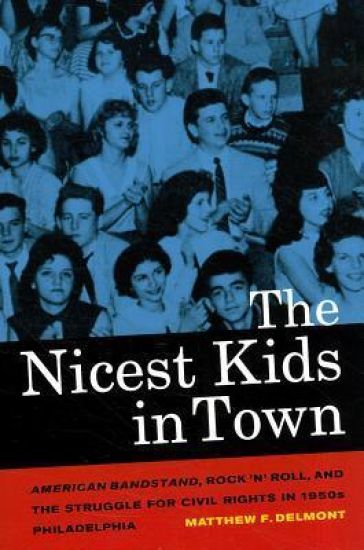
"American Bandstand", one of the most popular television shows ever, broadcast from Philadelphia in the late fifties, a time when that city had become a battleground for civil rights. Counter to host Dick Clark's claims that he integrated "American Bandstand", this book reveals how the first national television program directed at teens discriminated against black youth during its early years and how black teens and civil rights advocates protested this discrimination. Matthew F. Delmont brings together major themes in American history - civil rights, rock and roll, television, and the emergence of a youth culture - as he tells how white families around "American Bandstand's" studio mobilized to maintain all-white neighborhoods and how local school officials reinforced segregation long after Brown vs. Board of Education. "The Nicest Kids in Town" powerfully illustrates how national issues and history have their roots in local situations, and how nostalgic representations of the past, like the musical film Hairspray, based on the "American Bandstand" era, can work as impediments to progress in the present.

In the decades after the landmark Brown v. Board of Education Supreme Court decision, busing to achieve school desegregation became one of the nation's most controversial civil rights issues. Why Busing Failed is the first book to examine the pitched battles over busing on a national scale, focusing on cities such as Boston, Chicago, New York, and Pontiac, Michigan. This groundbreaking book shows how school officials, politicians, the courts, and the media gave precedence to the desires of white parents who opposed school desegregation over the civil rights of black students. This broad and incisive history of busing features a cast of characters that includes national political figures such as then-president Richard Nixon, Chicago mayor Richard J. Daley, and antibusing advocate Louise Day Hicks, as well as some lesser-known activists on both sides of the issue-Boston civil rights leaders Ruth Batson and Ellen Jackson, who opposed segregated schools, and Pontiac housewife and antibusing activist Irene McCabe, black conservative Clay Smothers, and Florida governor Claude Kirk, all supporters of school segregation. Why Busing Failed shows how antibusing parents and politicians ultimately succeeded in preventing full public school desegregation.
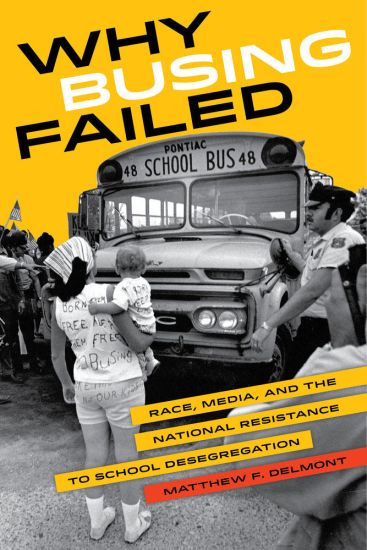
In the decades after the landmark Brown v. Board of Education Supreme Court decision, busing to achieve school desegregation became one of the nation's most controversial civil rights issues. Why Busing Failed is the first book to examine the pitched battles over busing on a national scale, focusing on cities such as Boston, Chicago, New York, and Pontiac, Michigan. This groundbreaking book shows how school officials, politicians, the courts, and the media gave precedence to the desires of white parents who opposed school desegregation over the civil rights of black students. This broad and incisive history of busing features a cast of characters that includes national political figures such as then-president Richard Nixon, Chicago mayor Richard J. Daley, and antibusing advocate Louise Day Hicks, as well as some lesser-known activists on both sides of the issue-Boston civil rights leaders Ruth Batson and Ellen Jackson, who opposed segregated schools, and Pontiac housewife and antibusing activist Irene McCabe, black conservative Clay Smothers, and Florida governor Claude Kirk, all supporters of school segregation. Why Busing Failed shows how antibusing parents and politicians ultimately succeeded in preventing full public school desegregation.