
Kirjahaku
Etsi kirjoja tekijän nimen, kirjan nimen tai ISBN:n perusteella.
1000 tulosta hakusanalla Maud Elma (EDT) Kingsley

Narrative Episodes from the Old Testament
Maud Elma (EDT) Kingsley; Frank Herbert (EDT) Palmer
Kessinger Pub
2009
pokkari



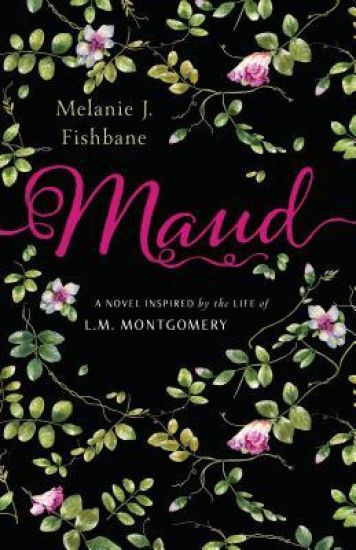
For the first time ever, a young novel about the teen years of L.M. Montgomery, the author who brought us ANNE OF GREEN GABLES. Fourteen-year-old Lucy Maud Montgomery -- Maud to her friends -- has a dream: to go to college and become a writer, just like her idol, Louisa May Alcott. But living with her grandparents on Prince Edward Island, she worries that this dream will never come true. Her grandfather has strong opinions about a woman's place in the world, and they do not include spending good money on college. Luckily, she has a teacher to believe in her, and good friends to support her, including Nate, the Baptist minister's stepson and the smartest boy in the class. If only he weren't a Baptist; her Presbyterian grandparents would never approve. Then again, Maud isn't sure she wants to settle down with a boy -- her dreams of being a writer are much more important. But life changes for Maud when she goes out West to live with her father and his new wife and daughter. Her new home offers her another chance at love, as well as attending school, but tensions increase as Maud discovers her stepmother's plans for her, which threaten Maud's future -- and her happiness forever.


Maud
Antigonos Verlag
2025
sidottu

Maud Gonne is part of Irish history: her founding of the Daughters of Ireland, in 1900, was the key that effectively opened the door of twentieth-century politics to Irish women. Still remembered in Ireland for the inspiring public speeches she made on behalf of the suffering--those evicted from their homes in western Ireland, the Treason-Felony prisoners on the Isle of Wright, indeed all those whom she saw as victims of imperialism--she is known, too, within and outside Ireland as the woman W. B. Yeats loved and celebrated in his poems.

Maud Gonne is part of Irish history: her founding of the Daughters of Ireland, in 1900, was the key that effectively opened the door of twentieth-century politics to Irish women. Still remembered in Ireland for the inspiring public speeches she made on behalf of the suffering--those evicted from their homes in western Ireland, the Treason-Felony prisoners on the Isle of Wright, indeed all those whom she saw as victims of imperialism--she is known, too, within and outside Ireland as the woman W. B. Yeats loved and celebrated in his poems.

A finalist for the Pulitzer Prize, this debut novel chronicles the life and loves of a headstrong, earthy, and magnetic heroine. Eastern Oklahoma, 1928. Eighteen-year-old Maud Nail lives with her rogue father and sensitive brother on one of the allotments parceled out by the US government to the Cherokees when their land was confiscated for Oklahoma's statehood. Maud's days are filled with hard work and simple pleasures, but often marked by violence and tragedy, a fact that she accepts with determined practicality. Her prospects for a better life are slim, but when a newcomer with good looks and books rides down her section line, she takes notice. Soon she finds herself facing a series of high-stakes decisions that will determine her future and those of her loved ones.Maud's Line is accessible, sensuous, and vivid. It will sit on the bookshelf alongside novels by Jim Harrison, Louise Erdrich, Sherman Alexie, and other beloved chroniclers of the American West and its people.

Maud Summers, The Sightless: A Narrative For The Young
KESSINGER PUBLISHING, LLC
2007
nidottu
Maud Summers, The Sightless: A Narrative For The Young
KESSINGER PUBLISHING, LLC
2007
sidottu

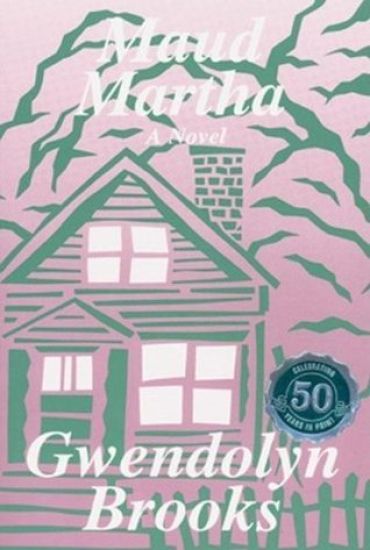
AS HEARD ON BBC RADIO 4'S 'A GOOD READ'Such a wonderful book. Utterly unique, exquisitely crafted and quietly powerful. I loved it and want everyone to read this lost literary treasure.' Bernardine Evaristo'Maud Martha finds beauty in the brutal formative moments that make us. It is one of my favorite depictions of how a woman comes to trust her eyes.' Raven Leilani'The quotidian rises to an exquisite portraiture of black womanhood in the hands of one of America's most foundational writers.' Claudia Rankine'Maud Martha reveals the poetry, power and splendor of an ordinary life.' Tayari Jones'Incredible ... She is a quietly radical seer, she is literature itself, a person in the world. It's a rare kind of perfect!' Max PorterWhat, what, am I to do with all of this life? Maud Martha Brown is a little girl growing up on the South Side of 1940s Chicago. Amidst the crumbling taverns and overgrown yards, she dreams: of New York, romance, her future. She admires dandelions, learns to drink coffee, falls in love, decorates her kitchenette, visits the Jungly Hovel, guts a chicken, buys hats, gives birth. But her lighter-skinned husband has dreams too: of the Foxy Cats Club, other women, war. And the 'scraps of baffled hate' - a certain word from a saleswoman; that visit to the cinema; the cruelty of a department store Santa Claus- are always there .Written in 1953 but never published in Britain, Maud Martha is a poetic collage of happenings that forms an extraordinary portrait of an ordinary life: one lived with wisdom, humour, protest, rage, dignity, and joy.

The true story of Maud Wagner—contortionist, aerial artist, carnival performer and barker, wife, and mother—who defied Victorian-era conventions to blaze her own trail. Maud Stevens Wagner, the "Mona Lisa of American tattoo," was an ardent individualist who left home at a young age to pursue a career of her own making. An acrobat, she exuded an athletic strength as an aerial artist and contortionist. In the early 20th century, she was a thoroughly modern woman who asserted her independence and her own identity. Together with her husband, Gus (known as the “most artistically marked-up man in America"), Maud balanced parenting and work, traveling around the country as the Wagner’s Traveling Museum, exhibiting themselves and making tattoos in circus and carnival sideshows, dime museums, and pop-up shops. At the height of their careers, Maud and Gus established the Wagner Amusement Company and expanded their work to become promoters of street fairs, carnivals, and expositions. This book is the second of three in the series Last of the Hand Tattoo Artists, detailing the lives of Gus Wagner, Maud Wagner, and their daughter, Lotteva. Author Alan Govenar brings you Maud’s story with • an oral history from Maud’s daughter Lotteva Wagner Davis; • archival photos of Maud, Gus, and Maud's tattoos; • clippings and photographs from Gus Wagner’s scrapbooks; • the Wagners' tattoo flash from Gus Wagner's notebooks; and • newspaper articles and obituaries detailing Maud’s life. As the author eloquently puts it, “In one sense, Gus and Maud challenged all expectations, but in another, they embodied and celebrated the can-do spirit intrinsic to American life.”

Maud Humphrey was one of the most popular illustrators in America at the turn of the century. Unfortunately, through the years, Maud's impact on American illustration was lost, until it seemed her only claim to fame was as the mother of Hollywood legend Humphrey Bogart. However, Maud's role on the American art scene was as remarkable as any role her son ever played on stage or screen. Today there is a resurgence of interest in Maud Humphrey's work, and that interest has prompted this book. It is a look at a young woman growing up in her. Maud went beyond the limitations to become an early suffragette; she maintained her art career even after marriage and a family. Many of her images grace the pages of this biography and bring her art to life.
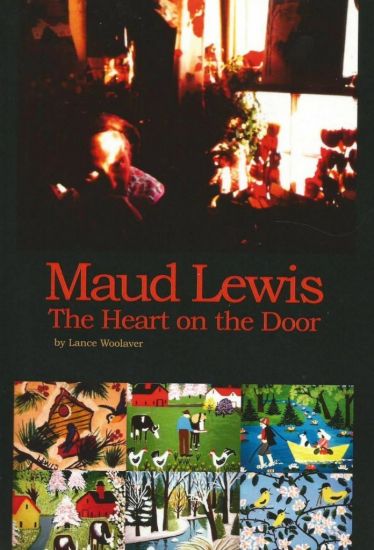
Maud Lewis THE HEART ON THE DOOR is the first full-length biography of Maud Lewis (1901-1970), the famous Nova Scotia folk artist. It includes detailed accounts of her disabilities, including a childhood battle with the juvenile rheumatoid arthritis which twisted her hands and joints. Despite this deepening and painful affliction she completed and sold thousands of bright pictures and Christmas cards from her little one-room house in Marshalltown, Digby County, Nova Scotia, Canada. Throughout her marriage to the illiterate Poor Farm watchman, Everett Lewis, she suffered from poverty and loneliness, yet triumphed over all with her brilliant, colourful and happy paintings. Her husband would be murdered for his lockbox of savings taken from the sales of Maud's pictures, on New Year's Day of 1979. This book also gives a detailed account of the life of Everett Lewis and his incarceration as a child in the Digby County Poor Farm. This biography concludes that Maud Lewis, born Maud Catherine Dowley in Yarmouth, Nova Scotia in 1901, gave birth to a daughter, Catherine Dowley, in 1928, and traces the life of Maud's daughter until her passing. Catherine's attempts to contact and be accepted by her mother, Maud Lewis, are documented. Catherine's father, Emery Allen, the love of Maud's life, abandoned Maud to the scandal of small-town life and to her increasing disabilities and loneliness. Excerpts: "This is a story written in heartbreak. It is the story of a child's wish to be accepted as a human being. It is a story of murder, poverty and treasure. It is the story of the worth of art in the struggle against pain. This is a story of broken families, of lonely lives, of a lost love and abandonment. It is a story of murder and a lockbox treasure. It is the story of a man who made a woman pay for his own frailties. All must be taken together. They belong to each other." "Many of the famous of our time - the actor Peter Falk, Premier Robert L. Stanfield, the actor Judy Dench - would come to admire Maud's pictures. Her pictures cheered them up. As with many, however, who came to visit with Maud in her crooked little house, these famous would never know the strange secrets of this difficult life. Lance Woolaver, Digby County, Nova Scotia, 2016
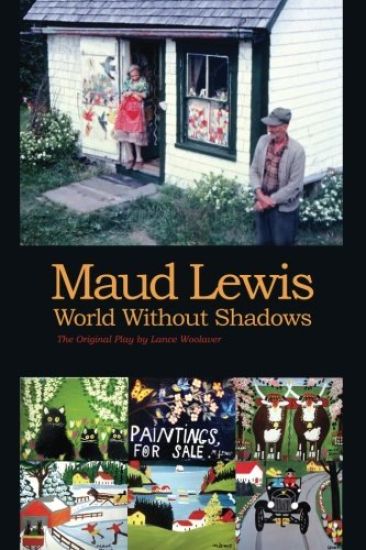
MAUD LEWIS "World Without Shadows" is the original stage play written about the famous Nova Scotia, Canada folk artist. It was first broadcast as a radio play via CBC Radio to Nova Scotia, Newfoundland, New Brunswick and Nova Scotia, and then via a national Canadian CBC broadcast, in 1996. Subsequent productions have included King's Theatre of Annapolis Royal, Ship's Company Theatre of Parrsboro, Festival Antigonish, Neptune Theatre of Halifax, Nova Scotia and the Blythe Festival of Blythe, Ontario. Scenes from the play were included in the National Film Board of Canada feature documentary film "The Illuminated Life of Maud Lewis," as written by Lance Woolaver, and featured actors from the King's Theatre of Annapolis Royal production. The characters include Maud's husband of record, Everett Lewis, and Maud's good friends and neighbours of Digby County. All characters are taken from life. The Canadian actor, Niki Lipman, would describe the role of "Maud" as "the role of a lifetime." "World Without Shadows" is dedicated to Thornton Wilder, with whom the playwright visited in Connecticut in 1968. "World Without Shadows borrows its structure from "Our Town": it takes place in our time signatures, the perfect and imperfect past. Like "Our Town," "Shadows" is as much a play about a village as it is a play about lives. Characters are presented as both ghosts and living beings. As the characters come and go, Maud's bright paintings spark revelations of their lives.

Maud Florence Nellie; or, Don't Care!
Christabel R (Christabel Coleridge; Charles Joseph Staniland
Anson Street Press
2025
pokkari