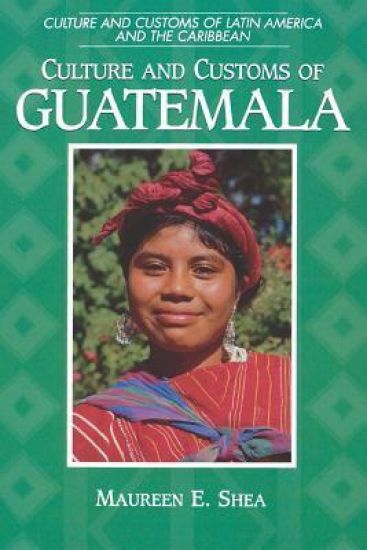
Culture and Customs of Guatemala proffers a well rounded portrait of the people of the land known for breathtaking highlands, brilliantly colored Mayan textiles, generations of ruthless dictators, and violence against the Mayas since the Spanish conquest. This Central American hotspot is the home to a majority of Mayas, their coexistence with Ladinos—the non—Mayas, and the issue of land ownership provide the framework for understanding contemporary society. The blend of Mayan and Ladino cultural identities that shape Guatemala today permeates Shea's discussion of history, religion, social customs, media, literature, cinema, performing arts, and contemporary art. Students and other interested readers will come to understand how the traditions and reforms are shaping Guatemala in the 21-first century. After an overview of Guatemalan history, geography, and demographics, a chapter on religion reveals the prevalent mixture of Catholic/Spanish and indigenous influences. In the Social Customs chapter, customs and festivals, many related to Catholic saints' days, the importance of Mayan weaving, and Guatemalan cuisine are emphasized. The recent lessening of censorship is a factor in the discussions of the status of broadcasting and print media and a small but emerging film industry. In the Literature chapter, Shea portrays a rich centuries-old literary tradition influenced by pre and post conquest indigenous texts and contemporary experimental trends whose themes are saturated in the country's social conflicts. Coverage of performing arts and contemporary art is evocative of the vibrant mixtures of cultures in Guatemala, with notable artists introduced and a description of architecture and housing. A chronology and glossary enhance the text.
Culture and Customs of Guatemala proffers a well rounded portrait of the people of the land known for breathtaking highlands, brilliantly colored Mayan textiles, generations of ruthless dictators, and violence against the Mayas since the Spanish conquest. This Central American hotspot is the home to a majority of Mayas, their coexistence with Ladinos—the non—Mayas, and the issue of land ownership provide the framework for understanding contemporary society. The blend of Mayan and Ladino cultural identities that shape Guatemala today permeates Shea's discussion of history, religion, social customs, media, literature, cinema, performing arts, and contemporary art. Students and other interested readers will come to understand how the traditions and reforms are shaping Guatemala in the 21-first century. After an overview of Guatemalan history, geography, and demographics, a chapter on religion reveals the prevalent mixture of Catholic/Spanish and indigenous influences. In the Social Customs chapter, customs and festivals, many related to Catholic saints' days, the importance of Mayan weaving, and Guatemalan cuisine are emphasized. The recent lessening of censorship is a factor in the discussions of the status of broadcasting and print media and a small but emerging film industry. In the Literature chapter, Shea portrays a rich centuries-old literary tradition influenced by pre and post conquest indigenous texts and contemporary experimental trends whose themes are saturated in the country's social conflicts. Coverage of performing arts and contemporary art is evocative of the vibrant mixtures of cultures in Guatemala, with notable artists introduced and a description of architecture and housing. A chronology and glossary enhance the text.
Sugars are familiar as vital sources of energy. Yet the biological importance of the sugars extends well beyond their value as cellular fuels. Introduction to Glycobiology reveals the true impact of the sugars on biological systems, explaining their function at the molecular, cellular, and organismal level. Employing a two-part structure, the book leads us through essential principles and concepts upon which the discipline is grounded, before exploring the diverse roles of sugars throughout biological systems, including development, cell signalling, and protein trafficking. It also emphasises the importance of glycobiology in disease, and explains how an understanding of the link between the two is enabling us to develop new therapeutic strategies. Taking the student from the fundamental principles to the frontiers of the subject, and with a wealth of learning features to get the most out of their studies, Introduction to Glycobiology remains the ideal resource for students and teachers alike. Online Resource Centre For students: · Updates - surveys of key developments in the field, provided on a six-monthly basis, to maintain currency · Library of 3D, rotatable molecular structures to help students visualize structures and gain a proper appreciation of the link between structure and function · Hyperlinked references to facilitate access to primary literature For registered adopters of the book: · Full colour figures, available for download individually or as PowerPoint slides with key explanatory points · Answers to end-of-chapter questions · Journal Clubs - suggested papers and discussion questions linked to topics covered in the book
Objects and Intertexts in Toni Morrison’s “Beloved”: The Case for Reparations is an inspired contribution to the scholarship on one of the most influential American novels and novelists. The author positions this contemporary classic as a meditation on historical justice and re-comprehends it as both a formal tragedy— a generic translation of fiction and tragedy or a “novel-tragedy” (Kliger)—and a novel of objects. Its many things—literary, conceptual, linguistic— are viewed as vessels carrying the (hi)story and the political concerns. From this, a third conclusion is drawn: Fadem argues for a view of Beloved as a case for reparations. That status is founded on two outstanding object lessons: the character of Beloved as embodiment of the subject-object relations defining the slave state and the grammatical object “weather” in the sentence “The rest is…” on the novel’s final page. This intertextual reference places Beloved in a comparative link with Hamlet and Oresteia. Fadem’s research is meticulous in engaging the full spectrum of tragedy theory, much critical theory, and a full swathe of scholarship on the novel. Few critics take up the matter of reparations, still fewer the politics of genre, craft, and form. This scholar posits Morrison’s tragedy as constituting a searing critique of modernity, as composed through meaningful intertextualities and as crafted by profound “thingly” objects (Brown). Altogether, Fadem has divined a fascinating singular treatment of Beloved exploring the connections between form and craft together with critical historical and political implications. The book argues, finally, that this novel’s first concern is justice, and its chief aim to serve as a clarion call for material— and not merely symbolic—reparations.This book is freely available to read at https://taylorandfrancis.com/socialjustice/?c=language-literature-arts#
Objects and Intertexts in Toni Morrison’s “Beloved”: The Case for Reparations is an inspired contribution to the scholarship on one of the most influential American novels and novelists. The author positions this contemporary classic as a meditation on historical justice and re-comprehends it as both a formal tragedy— a generic translation of fiction and tragedy or a “novel-tragedy” (Kliger)—and a novel of objects. Its many things—literary, conceptual, linguistic— are viewed as vessels carrying the (hi)story and the political concerns. From this, a third conclusion is drawn: Fadem argues for a view of Beloved as a case for reparations. That status is founded on two outstanding object lessons: the character of Beloved as embodiment of the subject-object relations defining the slave state and the grammatical object “weather” in the sentence “The rest is…” on the novel’s final page. This intertextual reference places Beloved in a comparative link with Hamlet and Oresteia. Fadem’s research is meticulous in engaging the full spectrum of tragedy theory, much critical theory, and a full swathe of scholarship on the novel. Few critics take up the matter of reparations, still fewer the politics of genre, craft, and form. This scholar posits Morrison’s tragedy as constituting a searing critique of modernity, as composed through meaningful intertextualities and as crafted by profound “thingly” objects (Brown). Altogether, Fadem has divined a fascinating singular treatment of Beloved exploring the connections between form and craft together with critical historical and political implications. The book argues, finally, that this novel’s first concern is justice, and its chief aim to serve as a clarion call for material— and not merely symbolic—reparations.This book is freely available to read at https://taylorandfrancis.com/socialjustice/?c=language-literature-arts#
The Air Spora is an illustrated guide to trapping, identifying and quantifying airborne biological particles such as fungus and plant spores and pollen. This book will be of use to anyone interested in aerobiology or studying applied aspects such as dispersal and effect of allergens, or human, animal and plant pathogens. Including a comprehensive review of what is in the air and detailing the historical development of theories leading to modern aerobiology, the book explains the fundamental processes behind airborne dispersal and techniques used to sample, identify and quantify biological particles. Methods are explained in a step-by-step guide for the use of standard air sampling devices. Although formats applicable to modern molecular and immunological techniques are described, the emphasis of the book is on simple visual identification of particles in air samples using traditional microscopy. Consequently a chapter on setting-up and using a light microscope is included, although experienced researchers can skip to chapters showing photographs of examples of the Air Spora and nine colour plates of paintings of airborne particles at a magnification of x1000. "I recommend this book to those actively running or thinking of running a pollen and spore trapping program. It will also be of value to doctors, allergists, and those teaching the basics of palynology, wishing to include a lecture or two on air spora." David M. Jarzen, Florida Museum of Natural History In: The Newsletter of the American Association Of Stratigraphic Palynologists, 2007(40:2)
This book examines the marriages of British peers to American women within the context of the opening up of London and New York society and the growing competitiveness for high social status. In London, American women were often blamed for the growing hedonism and materialism of smart society and for poaching in the marriage market. They were invariably described as frivolous, vain and calculating – a description which points to the simmering anti-American sentiment in Britain. It was even suggested that titled Americans were having a detrimental effect on the British peerage because of their failure to produce male heirs.A brilliant analysis of the reasons why American women were viewed pejoratively not only in terms of anti-American feeling and the social transformation of the British upper class, but also the threat of women who did not appear to conform to aristocratic notions of a peeress’s duties as a wife and mother.Originally published in 1989, this book has unique appendices listing details of peer marriages in this 1870-1914 period.
This book examines the marriages of British peers to American women within the context of the opening up of London and New York society and the growing competitiveness for high social status. In London, American women were often blamed for the growing hedonism and materialism of smart society and for poaching in the marriage market. They were invariably described as frivolous, vain and calculating – a description which points to the simmering anti-American sentiment in Britain. It was even suggested that titled Americans were having a detrimental effect on the British peerage because of their failure to produce male heirs.A brilliant analysis of the reasons why American women were viewed pejoratively not only in terms of anti-American feeling and the social transformation of the British upper class, but also the threat of women who did not appear to conform to aristocratic notions of a peeress’s duties as a wife and mother.Originally published in 1989, this book has unique appendices listing details of peer marriages in this 1870-1914 period.
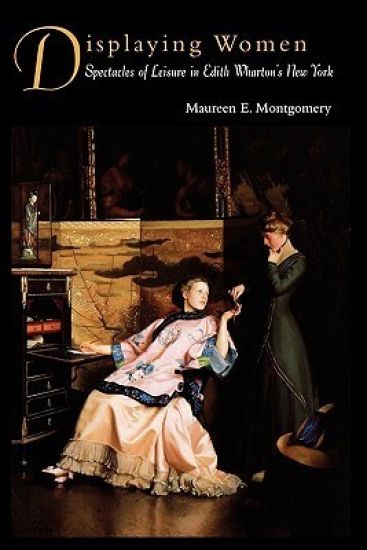
Displaying Women explores the role of women in the representation of leisure in turn-of-the-century New York. To see and be seen--on Fifth Avenue and Broadway, in Central Park, and in the fashionable uptown hotels and restaurants--was one of the fundamental principles in the display aesthetic of New York's fashionable society. Maureen E. Montgomery argues for a reconsideration of the role of women in the bourgeois elite in turn-of-the-century America. By contrasting multiple images of women drawn from newspapers, magazines, private correspondence, etiquette manuals and the New York fiction of Edith Wharton, Henry James and others, she offers a convincing antidote to the long-standing tendency in women's history to overlook women whose class affiliations have put them in a position of power.
This collection of over 200 archive photographs, most never before published, highlights some of the changes and developments that have taken place in and around the villages of Wyke and Low Moor, near Bradford. Although the in the nineteenth century Bradford flourished as the centre of the Yorkshire woollen trade it also boasted several iron foundries. Perhaps the most prestigious was the Low Moor Company whose works, mineral lines and pits dominated the area for over 150 years; Wyke and Low Moor still bear the scars to this day. Accompanied by supporting text, this pictorial history stands witness to the area's industrial past, its close communities, and their work, worship and play. Compiled by the respective local history groups of Wyke and Low Moor, this volume will delight those who want to know more about the history of these two villages, and evoke memories of a bygone time for those who live there.
This facsimile edition reproduces the extant works of the seventeenth-century poet, 'Ephelia'. By tradition, the identity of 'Ephelia' has been a long-contested debate in English letters. In her extended Introductory Note, Maureen Mulvihill culls evidence from the 'Ephelia' texts and from contemporary sources to show that the most likely candidate is Mary Villiers, later Stuart, Duchess of Richmond and Lennox (1622-1685). The volume opens with the reproduction of A Poem To His Sacred Majesty, On the Plot... (1678) from the copy held at the Bodleian Library. This is a large broadsheet poem prompted by The Popish Plot, expressing support for King Charles II. A new addition to the corpus of 'Ephelia's work is a variant of this 1678 parent-text, displaying a woodcut printer's ornament (factotum, with inset typepiece 'H'), which may hold special significance. This volume reproduces the copy preserved at the Huntington Library, and supplies with the facsimile an enlarged image of the ornament. Female Poems on several Occasions (1679) offers a rich variety of material: political verse, excerpted material from the poet's 'lost' play, love poetry and coterie verse critical of the moral decline of the Stuart court. The copy of the book reproduced here is that preserved at the Folger Shakespeare Library. The final printed work in the volume is Advice To His Grace ([1681]) in which 'Ephelia' admonishes the Duke of Monmouth and advocates the purity of the Stuart line and the integrity of the Stuart succession. The copy reproduced here is preserved at the Beinecke Library. The volume concludes with three appendices: two Van Dyck portraits of Lady Mary Villiers; a signed manuscript elegy, preserved at Nottingham, with an enlarged image of its armorial watermark; and the title-page of the poet's Female Poems (1682).
This book explores the emergence of "lifestyle" in the US, first as a term that has become an organizing principle for the self and for the structure of everyday life, and later as a pervasive form of media that encompasses a variety of domestic and self-improvement genres, from newspaper columns to design blogs. Drawing on the methodologies of cultural studies and feminist media studies, and built upon a series of case studies from newspapers, books, television programs, and blogs, it tracks the emergence of lifestyle’s discursive formation and shows its relevance in contemporary media culture. It is, in the broadest sense, about the role played by the explosion of lifestyle media texts in changing conceptualizations of selfhood and domestic life.
This book explores the emergence of "lifestyle" in the US, first as a term that has become an organizing principle for the self and for the structure of everyday life, and later as a pervasive form of media that encompasses a variety of domestic and self-improvement genres, from newspaper columns to design blogs. Drawing on the methodologies of cultural studies and feminist media studies, and built upon a series of case studies from newspapers, books, television programs, and blogs, it tracks the emergence of lifestyle’s discursive formation and shows its relevance in contemporary media culture. It is, in the broadest sense, about the role played by the explosion of lifestyle media texts in changing conceptualizations of selfhood and domestic life.
The role of the policeman in the community and attitudes towards the police are now matters of active public concern. In this important and enlightening study, first published in 1973, Maureen Cain gives an account of how the police operate in the United Kingdom. Her book will be of great value to sociologists, criminologists and policemen alike.
The role of the policeman in the community and attitudes towards the police are now matters of active public concern. In this important and enlightening study, first published in 1973, Maureen Cain gives an account of how the police operate in the United Kingdom. Her book will be of great value to sociologists, criminologists and policemen alike.
Step into the wonder of God's creation. Escaping from the stress of daily life to a rugged cliff or the depths of a forest offers time for peaceful thought. In Strength for My Path, Maureen E. Wise shares fifty-two devotions to ponder on your next hike. Featuring daily Scripture and prayer, these reflections from the trail will provide hiking tips and nature facts, encourage responsible creation care, heighten your wonder in the world around you, and deepen your love of creation and the Creator. Whether you're on a day hike or only have a few minutes to spare before work, Strength for My Path is the perfect companion for quality time with your heavenly Father in the wonderful world he has made.
This monograph explores some of the challenges of healthcare leadership in a time of ongoing reorganization and consolidation in the healthcare industry and the transformative changes in the wake of government-mandated health insurance. - Dr. Paula Rowland addresses hospital safety, a perennial concern, in her analysis of patient safety discourses in a Canadian hospital. She argues that, whereas traditionally patient safety has been seen at the intersection between complicated systems and fallible human agents, it might be reframed as a multi-dimensional issue drawing from sociological and organizational studies. - Dr. Cheryl Nance presents an approach to changing an organized delivery system's culture. She examines the impact of a year-long intervention program among hospital leadership, using Action Learning, to manage the cultural transformation involved with opening of a new facility while remaining financially viable. Her research identifies significant differences among leaders across all departments in current and preferred culture types, and relates them to the factors deemed essential to the success of the system's change. - Dr. Ellen Raboin's research focuses on the phenomena of collaborative practice within a hospital's healthcare team. She examines the factors considered as legitimate and important enablers of a successful working relationship within an interprofessional team, and shows the ways in which the team's collaborative practices change over time in light of the presence of the patient and his or her family. Dr. Raboin uses methods from a communications perspective as well as from relational social constructionism. - Beth Houskamp turns our attention to the transformational leadership practices of Clinical Nurse Leaders, based on her research in five inpatient units. Her research indicates that, as a group, licensed personnel and those with advanced educational preparation perceived the transformational leadership practices of Clinical Nurse Leaders to be higher than did a group of unlicensed personnel and those with less education. - Dr. Maureen Gormley, the Chief Operating Officer of the National Institutes of Health Clinical Center in Bethesda, Maryland, addresses the ways in which attitudes towards individuals with intellectual disability (ID) were changed through an innovative program, Project Search, and how workplace stigma was experienced from the perspective of co-workers. Her findings suggest that participants who initially held negative perceptions related to the youths' anticipated capabilities and behaviors overcame those perceptions by identifying the positive contributions that youth with ID made to the workplace. - Dr. Cheryl Mitchell studied the dynamics of blame in a highly charged environment of the healthcare workplace-a subject about which a clear lacuna exists in the literature. Her study of 17 senior healthcare leaders exposes the often corrosive effects of the "blame game" when "things go bad," and how a positive, reinforcing, feedback loop can help counteract the damage of trying to allocate blame. - Dr. Stephen Redmon concludes this monograph with an incisive inquiry into the experiences and effects on service-disabled veterans and their family members of a unique Entrepreneurship Boot Camp for Veterans Family Program (EBV-F). This program was designed to support veterans experiencing discontinuous life transitions while strengthening their entrepreneurial skills. The data suggested that participants experienced the program as being truly transformative, by strengthening their self-perceptions and their situations, and by engaging them in new roles and relationships.