
Kirjahaku
Etsi kirjoja tekijän nimen, kirjan nimen tai ISBN:n perusteella.
1000 tulosta hakusanalla Maureen K Wlodarczyk

Canary in a Cage: The Smith-Bennett Murder Case
Maureen K. Wlodarczyk
Createspace Independent Publishing Platform
2012
nidottu
Young & Wicked: The Death of a Wayward Girl
Maureen K. Wlodarczyk
Createspace Independent Publishing Platform
2011
nidottu
Jersey! Then . . . Again: Stories of Authentic New Jersey People and Events
Maureen K. Wlodarczyk
Createspace Independent Publishing Platform
2014
nidottu
Birthless: A Tale of Family Lost & Found
Maureen K. Wlodarczyk
Createspace Independent Publishing Platform
2016
nidottu
Praise for Nonprofit Boards That Work "This book offers a refreshing and candid look at the challenges of nonprofit boards. It moves away from theoretical frameworks to take you inside the real world of nonprofit organizations. . . . A must for any executive director who needs reassurance that building effective boards is tough work, but well worth the effort."Sherry Rockey, Executive Director, International Womens Media Foundation "Maureen Robinson is uniquely qualified to help us understand the issues related to boards that are effective, those that are not, and why. It is certain that board members, potential board members, and executive directors who read this book will better understand their roles and responsibilities, and will be better able to avoid common pitfalls. As a result, the impact of their efforts on those whom their organizations exist to serve will be enhanced."Ron Burkard, Executive Director, World Neighbors As more than 10 million people in the United States alone say yes to board service, they also expect to see their time and talents used effectively. This invaluable book presents a straightforward approach to understanding the role of the board, tailoring its work to meet the needs of specific organizations, and creating a culture of board productivity that makes participation rewarding for board members as well as the organizations they serve. Nonprofit Boards That Work: *Distinguishes between theory and practice and encourages boards to explore how they genuinely add value to the work of the organization *Goes beyond the hows and whys of nonprofit governance to provide frank advice and real-world examples of what works, what doesnt, what requires a miracle, and what can be achieved through diligent and deliberate effort *Offers practical yet flexible strategies that can be tried by any nonprofit board, whatever its current effectiveness . . . and much more to guide nonprofit organizations and their boards toward accomplishing the goals they seek.
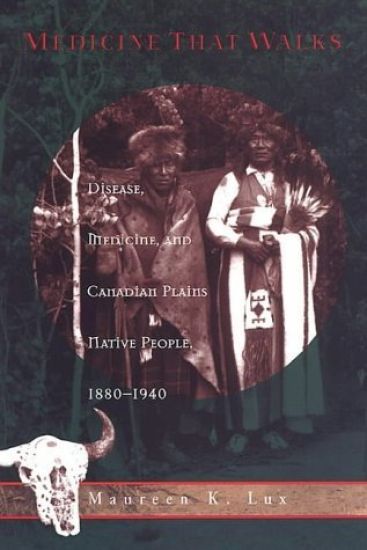
In this seminal work, Maureen Lux takes issue with the 'biological invasion' theory of the impact of disease on Plains Aboriginal people. She challenges the view that Aboriginal medicine was helpless to deal with the diseases brought by European newcomers and that Aboriginal people therefore surrendered their spirituality to Christianity. Biological invasion, Lux argues, was accompanied by military, cultural, and economic invasions, which, combined with the loss of the bison herds and forced settlement on reserves, led to population decline. The diseases killing the Plains people were not contagious epidemics but the grinding diseases of poverty, malnutrition, and overcrowding. "Medicine That Walks" provides a grim social history of medicine over the turn of the century. It traces the relationship between the ill and the well, from the 1880s when Aboriginal people were perceived as a vanishing race doomed to extinction, to the 1940s when they came to be seen as a disease menace to the Canadian public. Drawing on archival material, ethnography, archaeology, epidemiology, ethnobotany, and oral histories, Lux describes how bureaucrats, missionaries, and particularly physicians explained the high death rates and continued ill health of the Plains people in the quasi-scientific language of racial evolution that inferred the survival of the fittest. The Plains people's poverty and ill health were seen as both an inevitable stage in the struggle for 'civilization' and as further evidence that assimilation was the only path to good health. The people lived and coped with a cruel set of circumstances, but they survived, in large part because they consistently demanded a role in their own health and recovery. Painstakingly researched and convincingly argued, this work will change our understanding of a significant era in western Canadian history. Winner of the 2001 Clio Award, Prairies Region, presented by the Canadian Historical Association, and the 2002 Jason A. Hannah Medal
Developing Your Philosophy of Living & Leading: One Moment at a Time
Maureen K. LeBoeuf
Independently Published
2019
nidottu

Catholicism at a Crossroads
Maureen K. Day; James C. Cavendish; Paul M. Perl; Michele Dillon; Mary L. Gautier; William V. D'Antonio
NEW YORK UNIVERSITY PRESS
2025
sidottu
Offers a big picture analysis of American Catholicism The Catholic Church is at a crossroads. In the United States alone there are many challenges facing the church that are both internal and external to the institution. With the rise of the growing Gen Z population and the diminishing of the pre-Vatican II generation, gone are the days of a patriarchal, "father knows best" religious obedience. Indeed, as issues of gender, race, reproductive rights, and non-nuclear families have risen in prominence, the Catholic Church has had to adapt to keep pace with the times. The latest in a series of important sociological overviews drawing on nation-wide surveys administered every six years, Catholicism at a Crossroads charts this new era of Catholic worship, belonging, and identity in America today. Augmenting the survey data for the first time with over fifty interviews with lay and ordained US Catholic leaders, the book illustrates how the church has adapted to Pope Francis's modern papacy, the rise of religious non-affiliation, and various demographic changes including an increasing Hispanic population. Addressing how the church is responding to recent cultural challenges presented by political polarization, racial unrest, and threats to democracy, Catholicism at a Crossroads offers an up-to-date, nuanced, and definitive portrait of American Catholicism in the twenty-first century while also providing discussions of how the findings may be relevant for the study of American religion more broadly.

Catholicism at a Crossroads
Maureen K. Day; James C. Cavendish; Paul M. Perl; Michele Dillon; Mary L. Gautier; William V. D'Antonio
NEW YORK UNIVERSITY PRESS
2025
pokkari
Offers a big picture analysis of American Catholicism The Catholic Church is at a crossroads. In the United States alone there are many challenges facing the church that are both internal and external to the institution. With the rise of the growing Gen Z population and the diminishing of the pre-Vatican II generation, gone are the days of a patriarchal, "father knows best" religious obedience. Indeed, as issues of gender, race, reproductive rights, and non-nuclear families have risen in prominence, the Catholic Church has had to adapt to keep pace with the times. The latest in a series of important sociological overviews drawing on nation-wide surveys administered every six years, Catholicism at a Crossroads charts this new era of Catholic worship, belonging, and identity in America today. Augmenting the survey data for the first time with over fifty interviews with lay and ordained US Catholic leaders, the book illustrates how the church has adapted to Pope Francis's modern papacy, the rise of religious non-affiliation, and various demographic changes including an increasing Hispanic population. Addressing how the church is responding to recent cultural challenges presented by political polarization, racial unrest, and threats to democracy, Catholicism at a Crossroads offers an up-to-date, nuanced, and definitive portrait of American Catholicism in the twenty-first century while also providing discussions of how the findings may be relevant for the study of American religion more broadly.
Uncovers why Catholic organizations fail to foster civic activism The American Catholic Church boasts a long history of teaching and activism on issues of social justice. In the face of declining religious and community involvement in the twenty-first century, many modern-day Catholic groups aspire to revive the faith as well as their connections to the larger world. Yet while thousands attend weekly meetings designed to instill religiosity and a commitment to civic engagement, these programs often fail to achieve their more large-scale goals. In Catholic Activism Today, Maureen K. Day sheds light on the impediments to successfully enacting social change. She argues that popular organizations such as JustFaith Ministries have embraced an approach to civic engagement that focuses on mobilizing Catholics as individuals rather than as collectives. There is reason to think this approach is effective—these organizations experience robust participation in their programs and garner reports of having had a transformative effect on their participants' lives. Yet, Day shows that this approach encourages participants to make personal lifestyle changes rather than contend with structural social inequalities, thus failing to make real inroads in the pursuit of social justice. Moreover, the focus on the individual serves to undermine the institutional authority of the Catholic Church itself, shifting American Catholics' perceptions of the Church from a hierarchy that controls the laity to one that simply influences it as they pursue their individual paths. Drawing on three years of interview, survey, and participant observation data, Catholic Activism Today offers a compelling new take on contemporary dynamics of Catholic civic engagement and its potential effect on the Church at large.
Museum Building: Morristown National Historical Park Historic Structure Report- Volume II: Volume II-Appendices
Maureen K. Phillips
Createspace Independent Publishing Platform
2013
nidottu

Weir Farm National Historic Site Historic Structure Report, Volume II-B: Caretaker's House and Garage
Maureen K. Phillips; Lance Kasparian
Createspace Independent Publishing Platform
2013
nidottu

Win With Me: Share My Memories and Win Like I Do
Maureen K. Valentine
Createspace Independent Publishing Platform
2015
nidottu

A luminous space is restorative and nurturing. It's a place that inspires us, helps us achieve our goals, and ignites our personal power. In Creating Luminous Spaces, Maureen shares her ground-breaking method using feng shui and biophilic design to achieve greater harmony in our lives. By tapping into the wisdom of the Five Elements (wood, fire, earth, metal and water) we can restore our bond with nature, both in our inner natures and our outer world, which is vital for greater joy and peace in our lives.The Five Elements is an ancient system that is simple and available to all of us. Maureen shares real stories from her life, clients, and students, which demonstrate how the Elements have enriched their lives. She also includes thought-provoking exercises, meditations, and practical ways to create an environment that will enhance our wellbeing. This book is both a teaching on the way of nature as well as a workbook for spiritual growth."We are in a time of a great shift in consciousness and we are just starting to understand, again, the ways of nature and its power over us. The ancient and the modern ideas come together in this cutting-edge path to help guide us during this shift and discover our hidden light within our authentic selves." -- Maureen Calamia
Ted Crowley ran Quincy, Illinois. The brothels, the prostitution up and down the Mississippi River involving 10 states and Cuba all centered around the Quincy godfather. His relationship with James Earl Ray, the convicted killer of Martin Luther King Jr., is exposed in River of Shame. What was Crowley's role in the assassination? What was the government's role? Was James Earl Ray 'programmed' to kill and be a patsy to the assassination? Why did Ted Crowley go with Ray to Memphis. What was Crowley's business in Cuba?
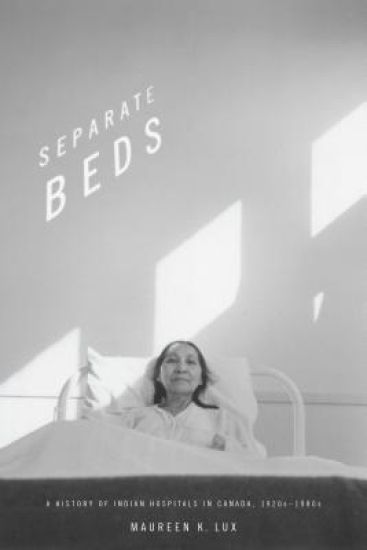
Separate Beds is the shocking story of Canada’s system of segregated health care. Operated by the same bureaucracy that was expanding health care opportunities for most Canadians, the “Indian Hospitals” were underfunded, understaffed, overcrowded, and rife with coercion and medical experimentation. Established to keep the Aboriginal tuberculosis population isolated, they became a means of ensuring that other Canadians need not share access to modern hospitals with Aboriginal patients. Tracing the history of the system from its fragmentary origins to its gradual collapse, Maureen K. Lux describes the arbitrary and contradictory policies that governed the “Indian Hospitals,” the experiences of patients and staff, and the vital grassroots activism that pressed the federal government to acknowledge its treaty obligations. A disturbing look at the dark side of the liberal welfare state, Separate Beds reveals a history of racism and negligence in health care for Canada’s First Nations that should never be forgotten.

Assateague Beach Coast Guard Station - Station House, Garage and Boathouse: Historic Structure Report
National Park Service; Maureen K. Phillips
Createspace Independent Publishing Platform
2013
nidottu