
Kirjahaku
Etsi kirjoja tekijän nimen, kirjan nimen tai ISBN:n perusteella.
1000 tulosta hakusanalla Maurice Hindus


House Without a Roof: Russia After Forty-Three Years of Revolution
Maurice Hindus
Literary Licensing, LLC
2013
nidottu

First published in 1931 and long out of print, Red Bread is Russian-born journalist Maurice Hindus's account of his return to his native village in 1929-30 to see for himself how Stalin's collectivization campaign was transforming the lives of the peasants among whom he had grown up in prerevolutionary times. This warm and human narrative conveys in personal and immediate terms his peasant neighbors' responses to being forced out of a centuries-old way of life and into the unfamiliar social setting and industrialized large-scale agriculture of the kolkhoz. Convinced that collectivized farming would bring Russian agriculture and the Russian peasant into the modern age, Hindus was nonetheless deeply troubled by the huge social cost and personal suffering inflicted by Stalin's ruthless campaign. Red Bread contributes an invaluable grassroots perspective on the era's dynamism and despair to the current discussion of the Soviet historical experience in the Soviet Union and the West.
"The History Of Hindostan" by Thomas Maurice explores the rich tapestry of India's past, connecting its arts and sciences to the grand narrative of Asian empires during the most ancient periods of the world. This comprehensive historical account delves into the cultural, scientific, and artistic achievements of Hindostan, providing invaluable insights into the civilization's profound impact on the broader Asian continent and the world. Maurice meticulously reconstructs the historical landscape, examining the interplay between empires and the evolution of knowledge and artistic expression. A vital resource for historians and anyone fascinated by the ancient world, this book offers a detailed examination of India's contribution to the collective heritage of humanity. Discover the enduring legacy of Hindostan in this classic historical study. This work has been selected by scholars as being culturally important, and is part of the knowledge base of civilization as we know it. This work was reproduced from the original artifact, and remains as true to the original work as possible. Therefore, you will see the original copyright references, library stamps (as most of these works have been housed in our most important libraries around the world), and other notations in the work. This work is in the public domain in the United States of America, and possibly other nations. Within the United States, you may freely copy and distribute this work, as no entity (individual or corporate) has a copyright on the body of the work. As a reproduction of a historical artifact, this work may contain missing or blurred pages, poor pictures, errant marks, etc. Scholars believe, and we concur, that this work is important enough to be preserved, reproduced, and made generally available to the public. We appreciate your support of the preservation process, and thank you for being an important part of keeping this knowledge alive and relevant.
Indian Antiquities Or Dissertations Relative To The Ancient Geographical Divisions, The Pure System Of Primeval Theology, The Grand Code Of Civil Laws, The Original Form Of Government And The Various And Profound Literature Of Hindostan Compared
Thomas Maurice
Hutson Street Press
2025
pokkari

First time in Black Classics for Forster's autobiographical novel of homosexual love. Maurice Hall is a young man who grows up confident in his privileged status and well aware of his role in society. Modest and generally conformist, he nevertheless finds himself increasingly attracted to his own sex. Through Clive, whom he encounters at Cambridge, and through Alec, the gamekeeper on Clive's country estate, Maurice gradually experiences a profound emotional and sexual awakening. A tale of passion, bravery and defiance, this intensely personal novel was completed in 1914 but remained unpublished until after Forster's death in 1970. Compellingly honest and beautifully written, it offers a powerful condemnation of the repressive attitudes of British society, and is at once a moving love story and an intimate tale of one man's erotic and political self-discovery.

Maurice, James Ivory’s 1987 adaptation of the E.M. Forster novel, follows an Edwardian man’s journey from the awakening of his desire for and love of men to self-acceptance. One of the most politically resistant films of the 1980s, Maurice dared to depict a young man’s coming-out story and a happy ending for its lovers, Maurice and Alec.James Ivory and producer Ismail Merchant, a couple whose cinema is synonymous with period film adaptation, released Maurice during the first AIDS decade, a time of flagrant transatlantic homophobia. Criticism following its release described Ivory as a superficial and staid director, while the film was received as a regression to the uncinematic and overly faithful style that characterized the early adaptations by Merchant Ivory Productions. Offering a close reading of Forster’s novel and an analysis of Ivory’s distinctive visual style, Richard Robbins’s indelible score, and the performances of James Wilby, Hugh Grant, and Rupert Graves, David Greven argues that the film is a model of sympathetic adaptation. This study champions the film as the finest of the Merchant Ivory works, making a case for Ivory’s underappreciated talents as a director of great subtlety and intelligence, and for the film as one worth recuperating from its detractors.Understanding Maurice as a fully realized work of art and adaptation, this volume offers insight into how a stunning novel of gay love became a classic of queer film.
Maurice, James Ivory’s 1987 adaptation of the E.M. Forster novel, follows an Edwardian man’s journey from the awakening of his desire for and love of men to self-acceptance. One of the most politically resistant films of the 1980s, Maurice dared to depict a young man’s coming-out story and a happy ending for its lovers, Maurice and Alec.James Ivory and producer Ismail Merchant, a couple whose cinema is synonymous with period film adaptation, released Maurice during the first AIDS decade, a time of flagrant transatlantic homophobia. Criticism following its release described Ivory as a superficial and staid director, while the film was received as a regression to the uncinematic and overly faithful style that characterized the early adaptations by Merchant Ivory Productions. Offering a close reading of Forster’s novel and an analysis of Ivory’s distinctive visual style, Richard Robbins’s indelible score, and the performances of James Wilby, Hugh Grant, and Rupert Graves, David Greven argues that the film is a model of sympathetic adaptation. This study champions the film as the finest of the Merchant Ivory works, making a case for Ivory’s underappreciated talents as a director of great subtlety and intelligence, and for the film as one worth recuperating from its detractors.Understanding Maurice as a fully realized work of art and adaptation, this volume offers insight into how a stunning novel of gay love became a classic of queer film.
Set in the elegant Edwardian world of Cambridge undergraduate life, this story by a master novelist introduces us to Maurice Hall when he is fourteen. We follow him through public school and Cambridge, and on into his father's firm, Hill and Hall, Stock Brokers. In a highly structured society, Maurice is a conventional young man in almost every way, "stepping into the niche that England had prepared for him": except that his is homosexual. Written during 1913 and 1914, immediately after Howards End, and not published until 1971, Maurice was ahead of its time in its theme and in its affirmation that love between men can be happy. "Happiness," Forster wrote, "is its keynote. In Maurice I tried to create a character who was completely unlike myself or what I supposed myself to be: someone handsome, healthy, bodily attractive, mentally torpid, not a bad businessman and rather a snob. Into this mixture I dropped an ingredient that puzzles him, wakes him up, torments him and finally saves him."
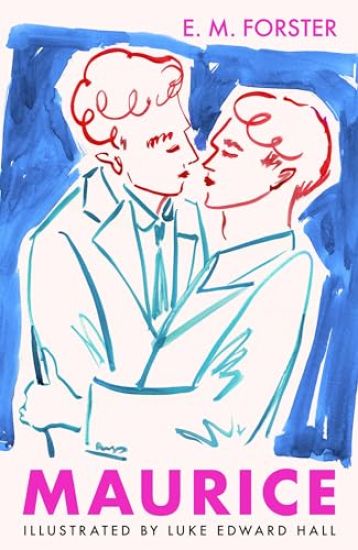
This illustrated young adult edition of a bold novel is one of defiance and bravery. As beautifully crafted as it is heartwrenching, this love story transcends time and generations.People were all around them, but with eyes that had gone intensely blue he whispered, 'I love you.'From curious schoolboy to studious scholar, Maurice Hall grows with all the confidence his privileged status allows. The path to success is measured and assured, as long as he follows the rules dictated by society. But things quickly change as he finds himself increasingly attracted to his own sex. First through Clive, a fellow student he meets at Cambridge, and then through Alec, the gamekeeper on Clive's country estate, Maurice experiences a profound emotional and sexual awakening, one which his contemporaries cannot condone. Maurice is widely considered a founding work of modern gay literature. Although completed in 1914, this groundbreaking novel could not be published in Forster's lifetime. Fittingly, it acts as a piercing critique of the suffocating ideals that permeated British society at the time. Forster himself said: 'I was determined that in fiction anyway two men should fall in love and remain in it for the ever and ever that fiction allows, and in this sense, Maurice and Alec still roam the greenwood.'
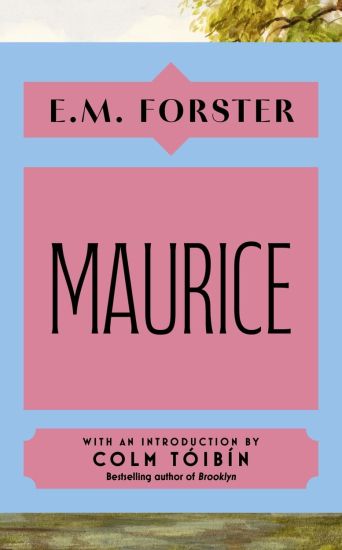
A stunning new edition of Forster's classic queer novel, with a new introduction by Colm Tóibín, bestselling author of Brooklyn and Long Island'A monument to a moment when change seemed possible'COLM TÓIBÍN'It shows the quality of a novelist at the height of his powers'SUNDAY TIMES'His heart leapt alive and shook him to pieces. It cried "You love and are loved."'Maurice Hall grows up in comfort and privilege near London, in a villa surrounded by pines, where all is convenience and ease. He progresses through a traditional English education, projecting an outer confidence that masks troubling questions about his unspoken desires.At Cambridge University, Maurice meets Clive, an assured older student, with whom he enjoys a close and intense relationship. Sneaking around college, climbing through windows and skipping lectures, Maurice begins to grasp a less conventional view of the nature of love. And then, on a trip to Clive's family estate, he meets Alec, the gamekeeper, and his emotional and sexual awakening reaches its height, opening up the possibility of a life that strays from the path he was raised to follow. But can Maurice overcome societal pressures, self-doubt and heartbreak to find happiness?Forster completed Maurice in 1914 but felt that it could not be published in his lifetime. It was not until 1971, the year after Forster's death, that the novel was finally published.

The winning personality of Corduroy meets the fable-like storytelling of Extra Yarn in this uplifting story about a dog and his music amidst a changing Paris. Whether selling out the Palais Garnier or delighting Parisian pedestrians, music is Maurice's love language. But time and things change, and when the world stops paying attention, those notes fall flat. . . . This transcendent journey of one busking dog, who combines the power of inner strength and the gift of friendship to arrive at true self-discovery, is sure to inspire young dreamers and lift all souls in a stirring celebration of the world's inherent beauty, welcoming all who seek it.