

Kirjahaku
Etsi kirjoja tekijän nimen, kirjan nimen tai ISBN:n perusteella.
1000 tulosta hakusanalla Maurice N. McDonald

The book breaks new ground in understanding the role of Non-Governmental Organizations (NGOs) in Africa. The book historicizes NGOs using the Rockefeller Foundation as a case study, looking at its tripartite paradoxical roles as an agent of colonialism, globalization and development/underdevelopment. It deploys interdisciplinary devices to show how the RF projects have engaged in marginalization, patronage and ‘othering’ of African values and customs and the ensuing controversies. Using globalization, postmodern and postcolonial theories the book deconstructs the long-held myths about NGO inviolability, and opens ground for understanding their strengths. It interrogates sites of contestation, apprehension and possibilities that the RF has produced. Using RF projects, it looks at structures of hegemony, race, power, class and gender that the RF has created. The book illustrates the extent to which the RF has been instrumental in spreading capitalism, imperialism in economic, political, cultural and social realms through globalization. It desists from the grand narrative approach that has dominated African history in the past but instead gives agency and voice to those that have previously been marginalized.

The book breaks new ground in understanding the role of Non-Governmental Organizations (NGOs) in Africa. The book historicizes NGOs using the Rockefeller Foundation as a case study, looking at its tripartite paradoxical roles as an agent of colonialism, globalization and development/underdevelopment. It deploys interdisciplinary devices to show how the RF projects have engaged in marginalization, patronage and ‘othering’ of African values and customs and the ensuing controversies. Using globalization, postmodern and postcolonial theories the book deconstructs the long-held myths about NGO inviolability, and opens ground for understanding their strengths. It interrogates sites of contestation, apprehension and possibilities that the RF has produced. Using RF projects, it looks at structures of hegemony, race, power, class and gender that the RF has created. The book illustrates the extent to which the RF has been instrumental in spreading capitalism, imperialism in economic, political, cultural and social realms through globalization. It desists from the grand narrative approach that has dominated African history in the past but instead gives agency and voice to those that have previously been marginalized.


Chicago Tourist Guide 2014: Shops, Restaurants, Attractions & Nightlife in Chicago, Illinois (City Tourist Guide 2014)
Maurice N. Hammett
Createspace Independent Publishing Platform
2014
nidottu

Chicago Tourist Guide 2015: Shops, Restaurants, Attractions and Nightlife in Chicago, Illinois (City Tourist Guide 2015).
Maurice N. Hammett
Createspace Independent Publishing Platform
2014
nidottu

Chicago Travel Guide 2016: Shops, Restaurants, Attractions, Entertainment and Nightlife in Chicago, Illinois (City Travel Guide 2016)
Maurice N. Hammett
Createspace Independent Publishing Platform
2015
nidottu

Chicago Tourist Guide 2016: Shops, Restaurants, Attractions and Nightlife in Chicago, Illinois (City Tourist Guide 2016)
Maurice N. Hammett
Createspace Independent Publishing Platform
2015
nidottu

This book is about twenty years of having a spiritualist guidance, a lifetime of accomplishments and thoughts on a spiritual power with physical nature implications.

This book is about twenty years of having a spiritualist guidance, a lifetime of accomplishments and thoughts on a spiritual power with physical nature implications.

Chicago Travel Guide 2018: Shops, Restaurants, Attractions, Entertainment and Nightlife in Chicago, Illinois (City Travel Guide 2018)
Maurice N. Hammett
Createspace Independent Publishing Platform
2017
nidottu
The places found in this book are the most positively reviewed and recommended by locals and travelers. 2,000 places listed in five groups and ranked by category. "TOP 500 SHOPS" (72 Store Categories), "TOP 500 RESTAURANTS" (81 Cuisine Types), "TOP 100 ATTRACTIONS" Landmarks, Historical Buildings, Parks, Churches, Botanic Gardens... "TOP 400 ARTS & ENTERTAINMENT" Tours, Cultural Centers, Festivals, Cinemas, Music Venues, Performing Arts... "TOP 500 NIGHTLIFE" Lounges, Bars, Pubs, Sports Bars, Tapas Bars, Cocktail Bars, Latin Bars, Gay Bars, Sushi Bars, Karaoke, Bowling, Comedy Clubs, Jazz & Blues, Nightclubs and many more options to visit, relax and enjoy your stay.

It All Started in Nazareth is about the author's life in Palestine, then in Beirut, where classmates, teachers and life offered wide horizons. An appointment as head of the Jordan Phosphate Mines Company at age 25 followed, with new experiences among the Jordanian elite of the time and the politics of the country. In the 1950, 60s and 70s, the world of business in the Arab region was exciting and challenging. New job types emerged and required new approaches. The discovery of oil created unbelievable wealth, which changed economies and societies throughout the region. During his career as a management consultant, he held jobs in Kuwait, Saudi Arabia, Jordan, Lebanon among other places. Throughout the period of his work, political instabilities were dominant in social and business life. It was a journey of success, frustration and learning. The Arab region has been troubled politically and socially since the victors of WWI divided the Ottoman provinces into small, weak areas of British and French influence, sowing uncertainties in the new nation-states. The resulting Middle East suffers to this day from the momentous effect of the Sykes-Picot agreement.

It All Started in Nazareth is about the author's life in Palestine, then in Beirut, where classmates, teachers and life offered wide horizons. An appointment as head of the Jordan Phosphate Mines Company at age 25 followed, with new experiences among the Jordanian elite of the time and the politics of the country. In the 1950, 60s and 70s, the world of business in the Arab region was exciting and challenging. New job types emerged and required new approaches. The discovery of oil created unbelievable wealth, which changed economies and societies throughout the region. During his career as a management consultant, he held jobs in Kuwait, Saudi Arabia, Jordan, Lebanon among other places. Throughout the period of his work, political instabilities were dominant in social and business life. It was a journey of success, frustration and learning. The Arab region has been troubled politically and socially since the victors of WWI divided the Ottoman provinces into small, weak areas of British and French influence, sowing uncertainties in the new nation-states. The resulting Middle East suffers to this day from the momentous effect of the Sykes-Picot agreement.

Chicago Travel Guide 2019: Shops, Restaurants, Attractions, Entertainment and Nightlife in Chicago, Illinois (City Travel Guide 2019)
Maurice N. Hammett
Createspace Independent Publishing Platform
2018
nidottu
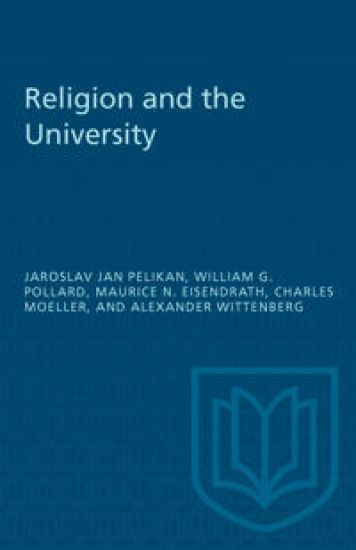
Religion and the University
Jarsolav Jan Pelikan; William G. Pollard; Maurice N. Eisendrath; Charles Moeller; Alexander Wittenberg
University of Toronto Press
1964
pokkari
During the 1964 winter term distinguished scholars presented the Frank Gerstein Lectures for 1964, the third series of Invitation Lectures to be delivered at York University. The theme "Religion and the University" was selected, states President Murray Ross in his Introduction, because of a desire to raise some important and highly relevant questions concerning the place and nature of religion in the university. Jaroslav Jan Pelikan, defending research in religious studies at the secular university, maintains that the university atmosphere helps contribute to excellence in theological and biblical scholarship, and in the education of the clergy, and that the housing of such studies in the university is valuable, too, in facilitating exchanges of methods and materials with other academic disciplines. He insists that any religious faith must be able to stand up to objective research. William G. Pollard believes that the scientific age has imprisoned the mind and spirit of man. He challenges the university to seek actively the recovery of the capacity, lost by modern man, to respond to and know a whole range of reality external to himself, which Western man, in earlier centuries, quite naturally possessed. Maurice N. Eisendrath urges that now, as in biblical times, there is a need for angry men -- with anger defined as "righteous wrath" -- to speak out against social injustices. He feels that the expression of this anger is the responsibility of the university as well as the church. Charles Moeller, discussing the importance of the humanistic approach in religion, maintains that there is no conflict between religious studies and the liberty of scientific research. He begins by stating contemporary criticisms of the Roman Catholic church, including the objections of the Marxists and the Existentialists, and of the modern man who thinks religion has nothing to offer as a solution to contemporary problems. He believes that such criticisms are the reverse side of a "process of purification" of both the Roman Catholic Church and religion in general. He goes on to show how the university is an ideal place for the critical study of contemporary irreligion. Finally, Alexander Wittenberg, in his discussion of the relationship between religion and the educational function of the university, states that while religion is the private concern of the individual, it has a legitimate role in extracurricular university life, where its function is an enrichment of the student's inner experience and vision of life, and a broadening and deepening of his capacity for empathy. To accomplish this he must be prepared to understand living with a religious faith, with a different faith, and without a faith, and it is the duty of the university to make possible this experience and this understanding.

International Criminal Justice and Victims' Rights
Maurice Kouadio N'Dri
LAP Lambert Academic Publishing
2010
pokkari

The Great War of 189-. a Forecast. by Rear-Admiral P. Colomb, Colonel J. F. Maurice, R.A., Captain F. N. Maude, Archibald Forbes, Charles Lowe, D. Murray, and F. Scudamore. with Illustrations from Sketches Made for Black and White by F. Villiers.
Philip Howard Colomb; Archibald Forbes; Charles Lowe
British Library, Historical Print Editions
2011
pokkari

Hamlet n'est pas mort: A chacun son nombril
Maurice Abiteboul
Createspace Independent Publishing Platform
2012
nidottu
Hamlet est un universitaire retrait , la bonne soixantaine, qui traverse une crise existentielle et conna t une p riode d pressive. Il conserve n anmoins son esprit caustique et lance sans interruption son entourage des r flexions sarcastiques ou narquoises. Il re oit la visite d'anciennes coll gues, Rozenne Krantz et Guilaine Stern, qu'il semble n'avoir jamais vraiment beaucoup appr ci es et aussi d'une ancienne ma tresse, Gertrude, qui le traite sans m nagements, ainsi que d'un familier d'autrefois, Paul Honius, avec qui il ne s'est jamais entendu. Sa femme, Oph lie, essaie de le stimuler et de lui remonter le moral, son fid le et loyal ami, Horatio, tente aussi de le raisonner. Il se laisse le plus souvent aller de sombres pens es, am res et d connect es du r el mais il finit par s' crier, comme le Caligula d'Albert Camus: Je suis encore vivant .

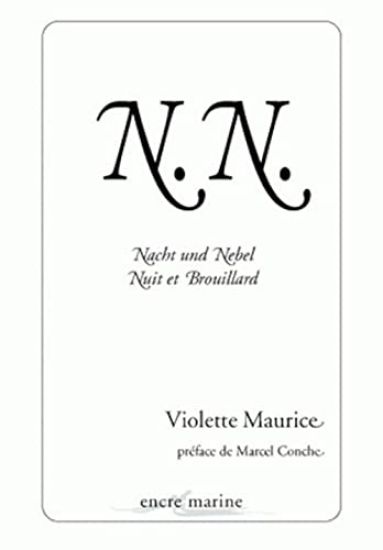
English summary: " Life may hug us to its heart now, but, no matter what, we are still concentration camp women who grew up too soon watching this spectacle of human degradation, in a reversal of spiritual values. Our memories control us and there is nothing we can do about it. " French description: N. N.: Nacht und Nebel: Nuit et Brouillard, formule qui dans le jargon poetique et barbare des nazis, designait les deportes voues a l'extermination. La vie peut nous serrer a present contre son coeur; nous sommes, vois-tu, quoi qu'il arrive, les femmes des camps de concentration muries trop tot au spectacle de la decheance humaine, dans le renversement des valeurs spirituelles; nos souvenirs sont maitres de nous et nous n'y pouvons rien.