Kirjojen hintavertailu. Mukana 11 699 587 kirjaa ja 12 kauppaa.

Kirjahaku

Etsi kirjoja tekijän nimen, kirjan nimen tai ISBN:n perusteella.

298 tulosta hakusanalla Maurits Van Den Boogert

Aleppo Observed

Aleppo Observed

Maurits Van Den Boogert

Oxford University Press
2010
sidottu
The Natural History of Aleppo, published first as a single volume in 1756 and as a two-volume edition in 1794, by Scottish physicians to the British Levant Company in Aleppo, Alexander and Patrick Russell, was a landmark in European knowledge of the Arab world. It was the first detailed study by a European of an Arab city, with a description of the topography, the inhabitants and the plant, and animal life in the neighbourhood. Maurits van den Boogert assesses the Russells' botanical and zoological discoveries and analyses the Natural History in the context of medical practices of the time both in Europe and the Ottoman Empire. He reconstructs their stay in Aleppo, their life in Britain, Patrick Russell's experiences in India, and their broader connections, as respected members of the Royal Society, with the world of learning at large.
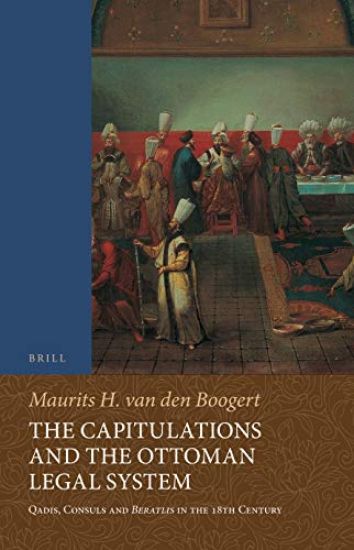
The Capitulations and the Ottoman Legal System
Pre-modern Western sources generally claim that European mercantile communities in the Ottoman Empire enjoyed legal autonomy, and were thus effectively immune to Ottoman justice. At the same time, they report numerous disputes with Ottoman officials over jurisdiction (“avanias”), which seems to contradict this claim, the discrepancy being considered proof of the capriciousness of the Ottoman legal system. Modern studies of Ottoman-European relations in this period have tended uncritically to accept this interpretation, which is challenged in this book.
Johann Michael Wansleben’s Travels in Turkey, 1673-1676

Johann Michael Wansleben’s Travels in Turkey, 1673-1676

Alastair Hamilton; Maurits Van den Boogert

BRILL
2023
sidottu
Johann Michael Wansleben’s Travels in Turkey, 1673–1676 is a hitherto unpublished version of a remarkable description of Istanbul, Izmir, and Bursa by the German scholar traveller Wansleben. Wansleben was in the Ottoman Empire to buy manuscripts, statuary, and curios for the French king, but it is his off-hand observations about Ottoman society that often make Wansleben’s account such a valuable historical source. His experiences add to our knowledge of such diverse topics as prostitution in the Ottoman Empire, taxation, and the French consular system. His visit to Bursa is also noteworthy because few Western travellers included the first Ottoman capital in their tours of the East or described it at such length.
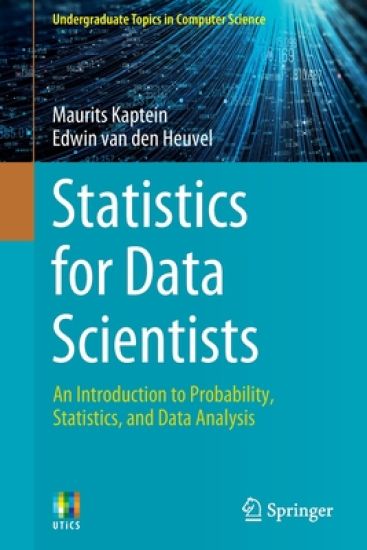
Statistics for Data Scientists

Statistics for Data Scientists

Maurits Kaptein; Edwin van den Heuvel

Springer Nature Switzerland AG
2022
nidottu
This book provides an undergraduate introduction to analysing data for data science, computer science, and quantitative social science students. It uniquely combines a hands-on approach to data analysis – supported by numerous real data examples and reusable [R] code – with a rigorous treatment of probability and statistical principles. Where contemporary undergraduate textbooks in probability theory or statistics often miss applications and an introductory treatment of modern methods (bootstrapping, Bayes, etc.), and where applied data analysis books often miss a rigorous theoretical treatment, this book provides an accessible but thorough introduction into data analysis, using statistical methods combining the two viewpoints. The book further focuses on methods for dealing with large data-sets and streaming-data and hence provides a single-course introduction of statistical methods for data science.
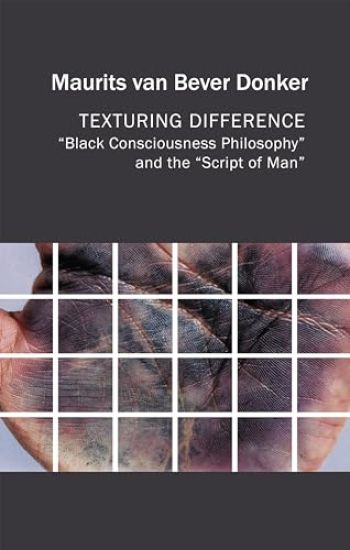
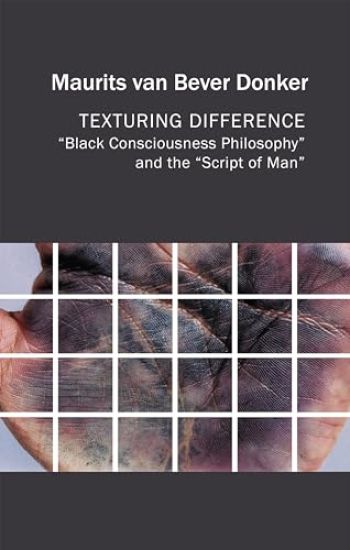
Texturing Difference

Texturing Difference

Maurits van Bever Donker; Nadia Yala Kisukidi

JOHN WILEY AND SONS LTD
2024
sidottu
This book situates the nuanced intervention of the Black Consciousness Movement in South Africa within the international conjuncture of anti-colonial thought and decolonization. It argues that the Black Consciousness Movement, in addition to its urgent political focus, should also be read as a philosophical intervention on the problem of Man that haunts the idea of race. As Steve Biko once famously said, apartheid will end; the real question is what comes after apartheid. Maurits van Bever Donker argues that the Black Consciousness Movement found intellectual and conceptual allies in the writings of Frantz Fanon and Aimé Césaire, tracing the problem of race as foundational to what is called ‘the script of Man’ and, in the process, inventing the possibility of a new sense of Man, one with ‘a more human face’. While the work of figures like Biko, Fanon and Césaire tends to be read as discrete political texts in a broader field of negritude and radical black thought, Texturing Difference explores what becomes possible when this network of texts is read from the perspective of South Africa. This intervention has significance, not only for how race is approached and understood in South Africa, but for the global workings of race in our time.
Texturing Difference

Texturing Difference

Maurits van Bever Donker; Nadia Yala Kisukidi

JOHN WILEY AND SONS LTD
2024
nidottu
This book situates the nuanced intervention of the Black Consciousness Movement in South Africa within the international conjuncture of anti-colonial thought and decolonization. It argues that the Black Consciousness Movement, in addition to its urgent political focus, should also be read as a philosophical intervention on the problem of Man that haunts the idea of race. As Steve Biko once famously said, apartheid will end; the real question is what comes after apartheid. Maurits van Bever Donker argues that the Black Consciousness Movement found intellectual and conceptual allies in the writings of Frantz Fanon and Aimé Césaire, tracing the problem of race as foundational to what is called ‘the script of Man’ and, in the process, inventing the possibility of a new sense of Man, one with ‘a more human face’. While the work of figures like Biko, Fanon and Césaire tends to be read as discrete political texts in a broader field of negritude and radical black thought, Texturing Difference explores what becomes possible when this network of texts is read from the perspective of South Africa. This intervention has significance, not only for how race is approached and understood in South Africa, but for the global workings of race in our time.
Diego Dazzler & The return of the eagle

Diego Dazzler & The return of the eagle

Maurits Van Huijstee

Createspace Independent Publishing Platform
2016
nidottu
Diego Dazzler is the child that hears all, feels all, and sees all. He has a special connection to the Magic Field which, without his meaning to, is growing stronger. Diego's world is being threatened by natural disasters. The weather keeps getting warmer and more extreme. The great ice glaciers are melting and abnormally heavy rainstorms are flooding the land, ruining crops and driving people out of their homes. The cause is an over-usage of Terrafos, the slimy, green-yellowish muck that's pumped out of the ground as means for energy. Secretly, the old inventor Amita has been working with Diego and his friends on a plan to free the land of Rebequin of Terrafos once and for all, by replacing it with a new, cleaner form of energy. Yet Krudon Kragt, the supplier of Terrafos, is relentlessly hunting down anyone and everyone who is trying to take away his position in power. To fight Krudon Kragt, Diego needs to face the thing he fears most: the Magic Field. Diego Dazzler & the Return of the Eagle is the sequel to Diego Dazzler & the Magic Glasses. The original, Diego Zonnesteek & de terugkeer van de adelaar was released in The Netherlands in 2014 and is a best seller. 'Let's all get on Diego's side We need an army of people to keep this world intact.' Bill McKibben, founder of 350.org 'Absolutely recommended.' Jan Paul Schutten, two times winner of the Golden Stylus, the highest award in the Netherlands for writers of children's books
Diptera

Diptera

Frederick Maurits Van Der Wulp

Palala Press
2018
pokkari
This work has been selected by scholars as being culturally important, and is part of the knowledge base of civilization as we know it. This work was reproduced from the original artifact, and remains as true to the original work as possible. Therefore, you will see the original copyright references, library stamps (as most of these works have been housed in our most important libraries around the world), and other notations in the work.This work is in the public domain in the United States of America, and possibly other nations. Within the United States, you may freely copy and distribute this work, as no entity (individual or corporate) has a copyright on the body of the work.As a reproduction of a historical artifact, this work may contain missing or blurred pages, poor pictures, errant marks, etc. Scholars believe, and we concur, that this work is important enough to be preserved, reproduced, and made generally available to the public. We appreciate your support of the preservation process, and thank you for being an important part of keeping this knowledge alive and relevant.
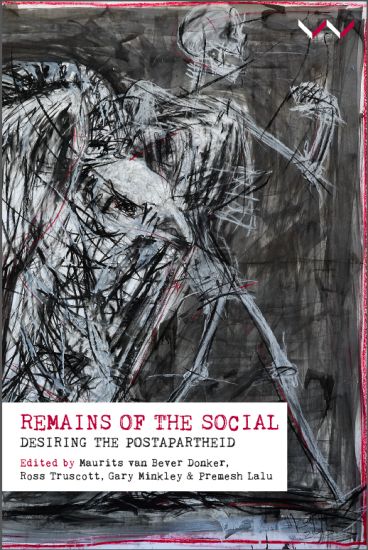
Remains of the Social

Remains of the Social

Donker Maurits van Bever; Ross Truscott; Premesh Premesh Lalu; Minkley Gary; Hook Derek; Ruti Mari; Jaco Barnard-Naude; Annemarie Lawless; Aidan Erasmus; Pohlandt-McCormick Helena

Wits University Press
2017
nidottu
Remains of the Social is an interdisciplinary volume of essays that engages with what `the social’ might mean after apartheid, a condition referred to as `the postapartheid social’. The volume grapples with apartheid as a global phenomenon that extends beyond the borders of South Africa between 1948 and 1994 and foregrounds the tension between the weight of lived experience that was and is apartheid, the structures that condition that experience, and a desire for a `post-apartheid social’. Collectively, the contributors argue for a recognition of `the post-apartheid’ as a condition that names the labour of coming to terms with the ordering principles that apartheid both set in place and foreclosed. The volume seeks to provide a sense of the terrain on which `the post-apartheid’ – as a desire for a difference that is not apartheid’s difference – unfolds, falters and is worked through.