Kirjojen hintavertailu. Mukana 11 678 731 kirjaa ja 12 kauppaa.

Kirjahaku

Etsi kirjoja tekijän nimen, kirjan nimen tai ISBN:n perusteella.

1000 tulosta hakusanalla Maurizio Lazzarato

Videophilosophy

Videophilosophy

Maurizio Lazzarato

Columbia University Press
2019
sidottu
The Italian philosopher Maurizio Lazzarato has earned international acclaim for his analysis of contemporary capitalism, in particular his influential concept of immaterial labor and his perceptive writings on debt. In Videophilosophy, he reveals the underpinnings of contemporary subjectivity in the aesthetics and politics of mass media. First written in French and published in Italian and later revised but never published in full, this book discloses the conceptual groundwork of Lazzarato’s thought as a whole for a time when his writings have become increasingly influential.Drawing on Bergson, Nietzsche, Benjamin, Deleuze and Guattari, and the film theory and practice of Dziga Vertov, Lazzarato constructs a new philosophy of media that ties political economy to the politics of aesthetics. Through his concept of “machines that crystallize time,” he argues that the proliferation of digital technologies over the past half-century marks the transition to a new mode of capitalist production characterized by unprecedented forms of subjection. This new era of the commodification of the self, Lazzarato declares, demands novel types of political action that challenge the commercialization and exploitation of time. This crucial text by an essential contemporary thinker offers vital new perspectives on aesthetics, politics, and media and critical theory.
Videophilosophy

Videophilosophy

Maurizio Lazzarato

Columbia University Press
2019
pokkari
The Italian philosopher Maurizio Lazzarato has earned international acclaim for his analysis of contemporary capitalism, in particular his influential concept of immaterial labor and his perceptive writings on debt. In Videophilosophy, he reveals the underpinnings of contemporary subjectivity in the aesthetics and politics of mass media. First written in French and published in Italian and later revised but never published in full, this book discloses the conceptual groundwork of Lazzarato’s thought as a whole for a time when his writings have become increasingly influential.Drawing on Bergson, Nietzsche, Benjamin, Deleuze and Guattari, and the film theory and practice of Dziga Vertov, Lazzarato constructs a new philosophy of media that ties political economy to the politics of aesthetics. Through his concept of “machines that crystallize time,” he argues that the proliferation of digital technologies over the past half-century marks the transition to a new mode of capitalist production characterized by unprecedented forms of subjection. This new era of the commodification of the self, Lazzarato declares, demands novel types of political action that challenge the commercialization and exploitation of time. This crucial text by an essential contemporary thinker offers vital new perspectives on aesthetics, politics, and media and critical theory.
Experimental Politics

Experimental Politics

Maurizio Lazzarato

MIT Press
2017
sidottu
A celebrated theorist examines the conditions of work, employment, and unemployment in neoliberalism's flexible and precarious labor market.In Experimental Politics, Maurizio Lazzarato examines the conditions of work, employment, and unemployment in neoliberalism's flexible and precarious labor market. This is the first book of Lazzarato's in English that fully exemplifies the unique synthesis of sociology, activist research, and theoretical innovation that has generated his best-known concepts, such as "immaterial labor." The book (published in France in 2009) is also groundbreaking in the way it brings Foucault, Deleuze, and Guattari to bear on the analysis of concrete political situations and real social struggles, while making a significant theoretical contribution in its own right.Lazzarato draws on the experiences of casual workers in the French entertainment industry during a dispute over the reorganization ("reform") of their unemployment insurance in 2004 and 2005. He sees this conflict as the first testing ground of a political program of social reconstruction. The payment of unemployment insurance would become the principal instrument for control over the mobility and behavior of the workers. The flexible and precarious workforce of the entertainment industry prefigured what the entire workforce in contemporary societies is in the process of becoming: in Foucault's words, a "floating population" in "security societies." Lazzarato argues further that parallel to economic impoverishment, neoliberalism has produced an impoverishment of subjectivity-a reduction in existential intensity. A substantial introduction by Jeremy Gilbert situates Lazzarato's analysis in a broader context.
The Making of the Indebted Man

The Making of the Indebted Man

Maurizio Lazzarato

Semiotext (E)
2012
pokkari
A new and radical reexamination of today's neoliberalist "new economy" through the political lens of the debtor/creditor relation."The debtor-creditor relation, which is at the heart of this book, sharpens mechanisms of exploitation and domination indiscriminately, since, in it, there is no distinction between workers and the unemployed, consumers and producers, working and non-working populations, between retirees and welfare recipients. They are all 'debtors,' guilty and responsible in the eyes of capital, which has become the Great, the Universal, Creditor."-from The Making of the Indebted ManDebt-both public debt and private debt-has become a major concern of economic and political leaders. In The Making of the Indebted Man, Maurizio Lazzarato shows that, far from being a threat to the capitalist economy, debt lies at the very core of the neoliberal project. Through a reading of Karl Marx's lesser-known youthful writings on John Mill, and a rereading of writings by Friedrich Nietzsche, Gilles Deleuze, Felix Guattari, and Michel Foucault, Lazzarato demonstrates that debt is above all a political construction, and that the creditor/debtor relation is the fundamental social relation of Western societies.Debt cannot be reduced to a simple economic mechanism, for it is also a technique of "public safety" through which individual and collective subjectivities are governed and controlled. Its aim is to minimize the uncertainty of the time and behavior of the governed. We are forever sinking further into debt to the State, to private insurance, and, on a more general level, to corporations. To insure that we honor our debts, we are at once encouraged and compelled to become the "entrepreneurs" of our lives, of our "human capital." In this way, our entire material, psychological, and affective horizon is upended and reconfigured.How do we extricate ourselves from this impossible situation? How do we escape the neoliberal condition of the indebted man? Lazzarato argues that we will have to recognize that there is no simple technical, economic, or financial solution. We must instead radically challenge the fundamental social relation structuring capitalism: the system of debt.
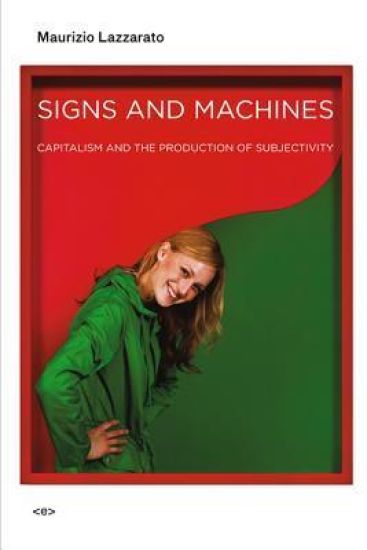
Signs and Machines

Signs and Machines

Maurizio Lazzarato

Semiotext (E)
2014
pokkari
An analysis of how capitalism today produces subjectivity like any other "good," and what would allow us to escape its hold."Capital is a semiotic operator": this assertion by Felix Guattari is at the heart of Maurizio Lazzarato's Signs and Machines, which asks us to leave behind the logocentrism that still informs so many critical theories. Lazzarato calls instead for a new theory capable of explaining how signs function in the economy, in power apparatuses, and in the production of subjectivity.Moving beyond the dualism of signifier and signified, Signs and Machines shows how signs act as "sign-operators" that enter directly into material flows and into the functioning of machines. Money, the stock market, price differentials, algorithms, and scientific equations and formulas constitute semiotic "motors" that make capitalism's social and technical machines run, bypassing representation and consciousness to produce social subjections and semiotic enslavements.Lazzarato contrasts Deleuze and Guattari's complex semiotics with the political theories of Jacques Ranciere, Antonio Negri and Michael Hardt, Paolo Virno, and Judith Butler, for whom language and the public space it opens still play a fundamental role. Lazzarato asks: What are the conditions necessary for political and existential rupture at a time when the production of subjectivity represents the primary and perhaps most important work of capitalism? What are the specific tools required to undo the industrial mass production of subjectivity undertaken by business and the state? What types of organization must we construct for a process of subjectivation that would allow us to escape the hold of social subjection and machinic enslavement? In addressing these questions, Signs and Machines takes on a task that is today more urgent than ever.
Governing by Debt

Governing by Debt

Maurizio Lazzarato

Semiotext (E)
2015
pokkari
An argument that under capitalism, debt has become infinite and unpayable, expressing a political relation of subjection and enslavement.Experts, pundits, and politicians agree: public debt is hindering growth and increasing unemployment. Governments must reduce debt at all cost if they want to restore confidence and get back on a path to prosperity. Maurizio Lazzarato's diagnosis, however, is completely different: under capitalism, debt is not primarily a question of budget and economic concerns but a political relation of subjection and enslavement. Debt has become infinite and unpayable. It disciplines populations, calls for structural reforms, justifies authoritarian crackdowns, and even legitimizes the suspension of democracy in favor of "technocratic governments" beholden to the interests of capital. The 2008 economic crisis only accelerated the establishment of a "new State capitalism," which has carried out a massive confiscation of societies' wealth through taxes. And who benefits? Finance capital. In a calamitous return to the situation before the two world wars, the entire process of accumulation is now governed by finance, which has absorbed sectors it once ignored, like higher education, and today is often identified with life itself. Faced with the current catastrophe and the disaster to come, Lazzarato contends, we must overcome capitalist valorization and reappropriate our existence, knowledge, and technology.In Governing by Debt, Lazzarato confronts a wide range of thinkers-from Felix Guattari and Michel Foucault to David Graeber and Carl Schmitt-and draws on examples from the United States and Europe to argue that it is time that we unite in a collective refusal of this most dire status quo.
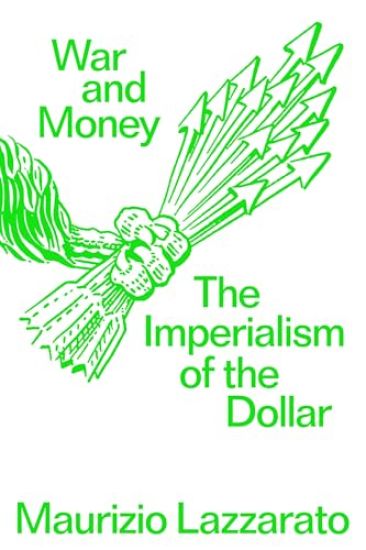
War and Money

War and Money

Maurizio Lazzarato

Verso Books
2025
nidottu
Maurizio Lazzarato's War and Money explores the connections between capitalist expansion, international economic conflict, and war, via an analysis of the imperialism of the American dollar. He examines why contemporary left-wing theorists such as Michel Foucault and Antonio Negri have failed to recognize war as a fundamental aspect of capitalism. Renewed readings of Marx, Lenin, and Rosa Luxemburg argue for class struggle against capitalist war as a fundamental aspect of leftist theory.
The Revolutions of Capitalism

The Revolutions of Capitalism

Maurizio Lazzarato

DUKE UNIVERSITY PRESS
2026
sidottu
Following in the intellectual tradition of Gilles Deleuze, Felix Guattari, Michel Foucault, Karl Marx, and others, Maurizio Lazzarato's The Revolutions of Capitalism charts the changing conditions of twenty-first-century neoliberal capitalism and the strategies needed to challenge them. Originally published in French in 2004, this newly translated work attempts to define a radical political, social, and ontological theory around questions of multiplicity, singularity, and the event. Lazzarato argues that capitalism's increasing focus on the production, capital, and accumulation of immaterial goods and services due to the rise of the internet necessitates new forms of thinking and resistance. To counter this new form of capitalist power, Lazzarato outlines a politics capable of translating new possibilities into actuality.
The Revolutions of Capitalism

The Revolutions of Capitalism

Maurizio Lazzarato

DUKE UNIVERSITY PRESS
2026
pokkari
Following in the intellectual tradition of Gilles Deleuze, Felix Guattari, Michel Foucault, Karl Marx, and others, Maurizio Lazzarato's The Revolutions of Capitalism charts the changing conditions of twenty-first-century neoliberal capitalism and the strategies needed to challenge them. Originally published in French in 2004, this newly translated work attempts to define a radical political, social, and ontological theory around questions of multiplicity, singularity, and the event. Lazzarato argues that capitalism's increasing focus on the production, capital, and accumulation of immaterial goods and services due to the rise of the internet necessitates new forms of thinking and resistance. To counter this new form of capitalist power, Lazzarato outlines a politics capable of translating new possibilities into actuality.
Pääoma vihaa kaikkia

Pääoma vihaa kaikkia

Maurizio Lazzarato

TUTKIJALIITTO
2026
nidottu
Maurizio Lazzarato esittää kirjassaan Pääoma vihaa kaikkia, että elämme apokalyptistä aikaa, jossa olemme saapuneet seuraavanlaisen poliittisen valinnan eteen: fasismi vai vallankumous? Lazzaraton analyysin mukaan nykydemokratiat ovat koko ajan enemmän alisteisia pääoman logiikalle, mikä vetää niitä kohti fasismia. Oikeistopopulistiset liikkeet, Donald Trumpin ja Jair Bolsonaron valtakaudet sekä eurooppalaisten välinpitämättömyys Välimerellä hukkuvia siirtolaisia kohtaan ovat vain muutama esimerkki lipumisesta kohti fasismia, jota Lazzarato kuvaille kansallissosialistisen sijaan kansallisliberaaliksi. 1960-70-lukujen poliittisen ilmapiirin jälkeen kapitalismi on omaksunut vaivihkaisia ja pehmeämpiä muotoja, ja lupailee ratkaisuja esimerkiksi ilmastonmuutokseen pääoman keinoin. Näiden illusoristen lupausten sekä nousevan fasismin vastustamiseksi vallankumouksellisen liikehdinnän ja strategisten yhteenottojen olisi Lazzaraton mukaan kyettävä keksimään itsensä uudestaan. Koska pääoma vihaa kaikkia, kaikkien olisi vihattava pääomaa.
Capital Hates Everyone

Capital Hates Everyone

Maurizio Lazzarato; Robert Hurley

Semiotext (E)
2021
nidottu
Why we must reject the illusory consolations of technology and choose revolution over fascism.We are living in apocalyptic times. In Capital Hates Everyone, famed sociologist Maurice Lazzarato points to a stark choice emerging from the magma of today's world events: fascism or revolution. Fascism now drives the course of democracies as they grow less and less liberal and increasingly subject to the law of capital. Since the 1970s, Lazzarato writes, capital has entered a logic of war. It has become, by the power conferred on it by financialization, a political force intent on destruction. Lazzarato urges us to reject the illusory consolations of a technology-abetted new kind of capitalism and choose revolution over fascism.
The Intolerable Present, the Urgency of Revolution

The Intolerable Present, the Urgency of Revolution

Maurizio Lazzarato; Ames Hodges

Semiotext (E)
2023
nidottu
An acute reappraisal for our time of the very concept of revolution. In order to be effective, union struggles, struggles for national liberation, worker mutualism, or struggles for emancipation were strategies that were necessarily connected to revolution. Starting from the historic defeat of the global Revolution in the mid-1970s, this book draws a portrait--whose elaboration is still lacking--of the concept of revolution. What conditions could lead us to speak of revolution once again? In The Intolerable Present, the Urgency of Revolution, Maurizio Lazzarato ponders the fundamental importance of the passage from the historical class struggle (the conflict between capital and labor) to the more recent class struggles that open onto plural trajectories: social, sexual, gender, and race struggles. Expanding the notion of class as a rejoinder to the normative appropriation of minority politics, the revolution is returned as the horizon where subjection can be resorbed. In this sense, Marxist, feminist, anticolonial, and postcolonial theories provide the necessary critical tools to understand the relations between classes and minorities, between the global North and the global South, and between the time of revolutions and the eruption of new subjectivities.
Wars and Capital

Wars and Capital

Éric Alliez; Maurizio Lazzarato

Semiotext (E)
2018
sidottu
A critique of capital through the lens of war, and a critique of war through the lens of the revolution of 1968."We are at war," declared the President of the French Republic on the evening of November 13, 2015. But what is this war, exactly?In Wars and Capital, Eric Alliez and Maurizio Lazzarato propose a counter-history of capitalism to recover the reality of the wars that are inflicted on us and denied to us. We experience not the ideal war of philosophers, but wars of class, race, sex, and gender; wars of civilization and the environment; wars of subjectivity that are raging within populations and that constitute the secret motor of liberal governmentality. By naming the enemy (refugees, migrants, Muslims), the new fascisms establish their hegemony on the processes of political subjectivation by reducing them to racist, sexist, and xenophobic slogans, fanning the flames of war among the poor and maintaining the total war philosophy of neoliberalism.Because war and fascism are the repressed elements of post-'68 thought, Alliez and Lazzarato not only read the history of capital through war but also read war itself through the strange revolution of '68, which made possible the passage from war in the singular to a plurality of wars-and from wars to the construction of new war machines against contemporary financialization. It is a question of pushing "'68 thought" beyond its own limits and redirecting it towards a new pragmatics of struggle linked to the continuous war of capital. It is especially important for us to prepare ourselves for the battles we will have to fight if we do not want to be always defeated.
Maurizio Cattelan: All

Maurizio Cattelan: All

Guggenheim Museum Publications,U.S.
2016
sidottu
The Guggenheim Museum’s sold-out publication Maurizio Cattelan: All is returning to print. Hailed as a provocateur, prankster and tragic poet of our times, Maurizio Cattelan (born 1960, Padua, Italy) has created some of the most unforgettable images in contemporary art – most notoriously `The Ninth Hour’ (1999), a sculpture of Pope John Paul II struck by a meteorite. Derived from popular culture, history and organized religion, Cattelan’s subjects range widely, and his work, while bold and irreverent, is deadly serious in its scathing cultural critiques. The second edition of All updates the catalogue that accompanied the Solomon R. Guggenheim Museum’s 2011–12 retrospective survey of the artist. For this exhibition, Cattelan sidestepped the totalizing effect of a retrospective by devising a site-specific installation in which his entire oeuvre was suspended from the oculus of the museum’s iconic rotunda. This book offers an equally unique response to the conventions of the catalogue. It is a faux-leather-bound hardcover with gold stamping and thin paper that is designed to resemble an old textbook or bible. The volume details almost every work of Cattelan’s from the late 1980s to the present within a double-column page format, featuring full-colour reproductions and accompanying entries. The revised edition describes the artist’s return to art making after a five-year `retirement’ with a special, ongoing project opening at the Guggenheim in May 2016. It also features a redesigned cover and installation images of the exhibition All. Nancy Spector has augmented her critical overview of Cattelan – which documents not only his artistic output but also his ongoing activities as a curator, editor and publisher – with a new coda. Since its original publication, All has become the Cattelan bible, and this revised edition exploring the latest chapter of the artist’s influential career ensures it will remain the definitive source on his work for years to come.
Spazio Bianco Poesie Di Maurizio Chiappi
In questo piccolo libro ci sono alcune cose che ho scritto nel corso degli anni e che poi ho custodito in un cassetto come un padre geloso. Adesso ho deciso di pubblicarle e lasciarle andare in questo spazio bianco che e la nostra vita. Spero che qualcuna possa piacervi al punto di regalarla o leggerla a qualche persona a voi cara.