Kirjojen hintavertailu. Mukana 12 016 292 kirjaa ja 12 kauppaa.

Kirjahaku

Etsi kirjoja tekijän nimen, kirjan nimen tai ISBN:n perusteella.

1000 tulosta hakusanalla Maurizio Viroli

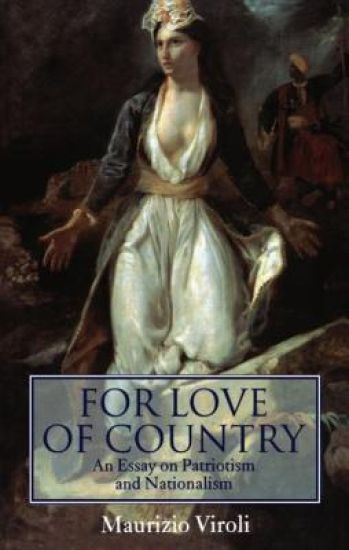
For Love of Country

For Love of Country

Maurizio Viroli

Clarendon Press
1995
sidottu
Nationalism and patriotism are two of the most powerful forces shaping world history. Though seen by many as two sides of the same coin, they have come to have widely different connotations. Nationalism is increasingly seen as destructive, and at the root of the world's bloodiest conflicts; patriotism seems something more benign, a political virtue. How are we to mark the distinction between these two phenomena? How can we rescue patriotism from the tainted grasp of nationalism? Reconstructing the historical the meaning of the terms, Maurizio Viroli shows how the two concepts have been used within specific cultural and ideological contexts. He reviews the political though of Italy, England, and Germany and shows how patriotism and nationalism have fundamentally different roots. Professor Viroli concludes that it is morally unacceptable, and indeed unnecessary, to be a nationalist to defend the values that nationalists hold dear. Patriotism, however, is a valuable source of civic responsibility.
For Love of Country

For Love of Country

Maurizio Viroli

Clarendon Press
1997
nidottu
Nationalism and patriotism are two of the most powerful forces shaping world history. Though seen by many as two sides of the same coin, they have developed widely different connotations. Nationalism is increasingly seen as destructive, and at the root of the world's bloodiest conflicts; patriotism seems something more benign, a political virtue. How are we to mark the distinction between these two phenomena? How can we rescue patriotism from the tainted grasp of nationalism? Reconstructing the historical the meaning of the terms, Maurizio Viroli shows how the two concepts have been used within specific cultural and ideological contexts. He reviews the political though of Italy, England, and Germany and shows how patriotism and nationalism have fundamentally different roots. Professor Viroli concludes that it is morally unacceptable, and indeed unnecessary, to be a nationalist to defend the values that nationalists hold dear. Patriotism, however, is a valuable source of civic responsibility.
Machiavelli

Machiavelli

Maurizio Viroli

Oxford University Press
1998
sidottu
Founders of Modern Political and Social Thought Series Editor: Dr Mark Philp, Oriel College, University of Oxford Founders of Modern Political and Social Thought present critical examinations of the work of major political philosophers and social theorists, assessing both their initial contribution and continuing relevance to politics and society. Each volume provides a clear, accessible, historically-informed account of each thinker's work, focusing on a re-assessment of their central ideas and arguments. Founders encourage scholars and students to link their study of classic texts to current debates in political philosophy and social theory. This launch volume in the Founders of Modern Political and Social Thought series presents a critical examination of Machiavelli's thought, combining an accessible, historically-informed account of his work with a re-assessment of his central ideas and arguments. Maurizio Viroli challenges the accepted interpretations of Machiavelli's work, insisting that his republicanism was based not on a commitment to virtue, greatness, and expansion, but to the ideal of civic life protected by the shield of fair laws. His detailed study of how Machiavelli composed his famous work The Prince presents new interpretations, and he further argues that the most challengingand completely underestimatedaspect of Machiavelli's thought is his philosophy of life, in particular his conceptions of love, women, irony, God, and the human condition. Viroli demonstrates that Machiavelli composed The Prince, and all his works, according to the rules of classical rhetoric and never intended to found the 'modern science of politics', aiming rather to continue and refine the practice of political theorising as a rhetorical endeavour taught by the Roman masters of civic philosophy. Viroli's Machiavelli, a serious challenge to contemporary methods of doing political theory, will be essential for advanced students of the history of political thought.
Machiavelli

Machiavelli

Maurizio Viroli

Oxford University Press
1998
nidottu
Founders of Modern Political and Social Thought Series Editor: Dr Mark Philp, Oriel College, University of Oxford Founders of Modern Political and Social Thought present critical examinations of the work of major political philosophers and social theorists, assessing both their initial contribution and continuing relevance to politics and society. Each volume provides a clear, accessible, historically-informed account of each thinker's work, focusing on a re-assessment of their central ideas and arguments. Founders encourage scholars and students to link their study of classic texts to current debates in political philosophy and social theory. This launch volume in the Founders of Modern Political and Social Thought series presents a critical examination of Machiavelli's thought, combining an accessible, historically-informed account of his work with a re-assessment of his central ideas and arguments. Maurizio Viroli challenges the accepted interpretations of Machiavelli's work, insisting that his republicanism was based not on a commitment to virtue, greatness, and expansion, but to the ideal of civic life protected by the shield of fair laws. His detailed study of how Machiavelli composed his famous work The Prince presents new interpretations, and he further argues that the most challengingand completely underestimatedaspect of Machiavelli's thought is his philosophy of life, in particular his conceptions of love, women, irony, God, and the human condition. Viroli demonstrates that Machiavelli composed The Prince, and all his works, according to the rules of classical rhetoric and never intended to found the 'modern science of politics', aiming rather to continue and refine the practice of political theorising as a rhetorical endeavour taught by the Roman masters of civic philosophy. Viroli's Machiavelli, a serious challenge to contemporary methods of doing political theory, will be essential for advanced students of the history of political thought.
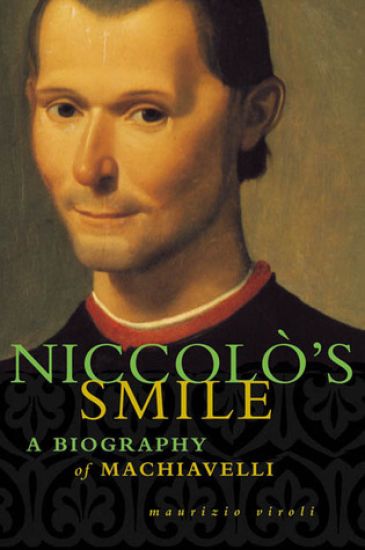
Niccolo's Smile: A Biography of Machiavelli
A vivid portrayal of the great Italian philosopher - now in paperback In Niccol 's Smile, Maurizio Viroli brings to life the fascinating writer who was the founder of modern political thought. Niccol Machiavelli's works on the theory and practice of statecraft are classics, but Viroli sugggests that his greatest accomplishment is his robust philosophy of life -- his deep beliefs about how one should conduct oneself as a modern citizen in a republic, as a responsible family member, as a good person. On these subjects Machiavelli wrote no books: the text of his philosophy is his life itself, a life that was filled with paradox, uncertainty, and tragic drama.

From Politics to Reason of State

From Politics to Reason of State

Maurizio Viroli

Cambridge University Press
1992
sidottu
Between the end of the sixteenth and the beginning of the seventeenth centuries, the language of politics underwent a radical transformation. The author argues that this transformation amounted to a 'revolution of politics', global in scope, and wide-ranging in its intellectual and moral implications. Not only did the meaning and the range of application of the concept of politics change, but also the status of political science, the role of political education, and the value of political liberty. For three centuries politics had enjoyed the status of the noblest human science, but emerged from the revolution as an ignoble, sordid and depraved activity. It was no longer the means of fighting corruption, but the means of perpetuating it. This 'revolution of politics' has received little attention, despite its importance. This study fills a gap in the history of political thought, and attempts to return to a conception of politics as an activity worth committing ourselves to.
Jean-Jacques Rousseau and the 'Well-Ordered Society'

Jean-Jacques Rousseau and the 'Well-Ordered Society'

Maurizio Viroli

Cambridge University Press
2003
pokkari
This book studies a central but hitherto neglected aspect of Rousseau’s political thought: the concept of social order and its implications for the ideal society which he envisages. The antithesis between order and disorder is a fundamental theme in Rousseau’s work, and the author takes it as the basis for this study. In contrast with a widely held interpretation of Rousseau’s philosophy, Professor Viroli argues that natural and political order are by no means the same for Rousseau. He explores the differences and interrelations between the different types of order which Rousseau describes, and shows how the philosopher constructed his final doctrine of the just society, which can be based only on every citizen’s voluntary and knowing acceptance of the social contract and on the promotion of virtue above ambition. The author also shows the extent of Rousseau’s debt to the republican tradition, and above all to Machiavelli, and revises the image of Rousseau as a disciple of the natural-law school.
From Politics to Reason of State

From Politics to Reason of State

Maurizio Viroli

Cambridge University Press
2005
pokkari
Between the end of the sixteenth and the beginning of the seventeenth centuries, the language of politics underwent a radical transformation. The author argues that this transformation amounted to a 'revolution of politics', global in scope, and wide-ranging in its intellectual and moral implications. Not only did the meaning and the range of application of the concept of politics change, but also the status of political science, the role of political education, and the value of political liberty. For three centuries politics had enjoyed the status of the noblest human science, but emerged from the revolution as an ignoble, sordid and depraved activity. It was no longer the means of fighting corruption, but the means of perpetuating it. This 'revolution of politics' has received little attention, despite its importance. This study fills a gap in the history of political thought, and attempts to return to a conception of politics as an activity worth committing ourselves to.
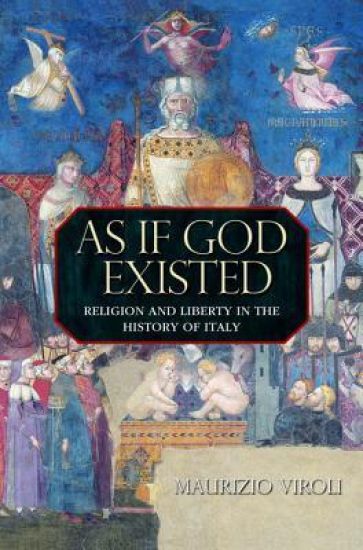
As If God Existed

As If God Existed

Maurizio Viroli

Princeton University Press
2012
sidottu
Religion and liberty are often thought to be mutual enemies: if religion has a natural ally, it is authoritarianism--not republicanism or democracy. But in this book, Maurizio Viroli, a leading historian of republican political thought, challenges this conventional wisdom. He argues that political emancipation and the defense of political liberty have always required the self-sacrifice of people with religious sentiments and a religious devotion to liberty. This is particularly the case when liberty is threatened by authoritarianism: the staunchest defenders of liberty are those who feel a deeply religious commitment to it. Viroli makes his case by reconstructing, for the first time, the history of the Italian "religion of liberty," covering its entire span but focusing on three key examples of political emancipation: the free republics of the late Middle Ages, the Risorgimento of the nineteenth century, and the antifascist Resistenza of the twentieth century. In each example, Viroli shows, a religious spirit that regarded moral and political liberty as the highest goods of human life was fundamental to establishing and preserving liberty. He also shows that when this religious sentiment has been corrupted or suffocated, Italians have lost their liberty. This book makes a powerful and provocative contribution to today's debates about the compatibility of religion and republicanism.
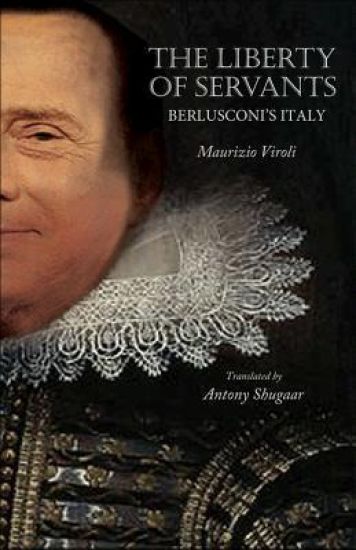
The Liberty of Servants

The Liberty of Servants

Maurizio Viroli

Princeton University Press
2011
sidottu
Italy is a country of free political institutions, yet it has become a nation of servile courtesans, with Silvio Berlusconi as their prince. This is the controversial argument that Italian political philosopher and noted Machiavelli biographer Maurizio Viroli puts forward in The Liberty of Servants. Drawing upon the classical republican conception of liberty, Viroli shows that a people can be unfree even though they are not oppressed. This condition of unfreedom arises as a consequence of being subject to the arbitrary or enormous power of men like Berlusconi, who presides over Italy with his control of government and the media, immense wealth, and infamous lack of self-restraint. Challenging our most cherished notions about liberty, Viroli argues that even if a power like Berlusconi's has been established in the most legitimate manner and people are not denied their basic rights, the mere existence of such power makes those subject to it unfree. Most Italians, following the lead of their elites, lack the minimal moral qualities of free people, such as respect for the Constitution, the willingness to obey laws, and the readiness to discharge civic duties. As Viroli demonstrates, they exhibit instead the characteristics of servility, including flattery, blind devotion to powerful men, an inclination to lie, obsession with appearances, imitation, buffoonery, acquiescence, and docility. Accompanying these traits is a marked arrogance that is apparent among not only politicians but also ordinary citizens.
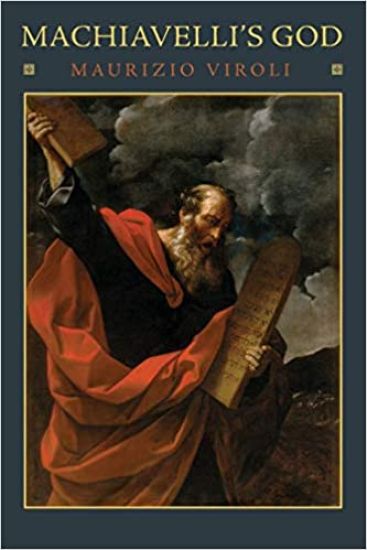
Machiavelli's God

Machiavelli's God

Maurizio Viroli

Princeton University Press
2012
pokkari
To many readers of The Prince, Machiavelli appears to be deeply un-Christian or even anti-Christian, a cynic who thinks rulers should use religion only to keep their subjects in check. But in Machiavelli's God, Maurizio Viroli, one of the world's leading authorities on Machiavelli, argues that Machiavelli, far from opposing Christianity, thought it was crucial to republican social and political renewal--but that first it needed to be renewed itself. And without understanding this, Viroli contends, it is impossible to comprehend Machiavelli's thought. Viroli places Machiavelli in the context of Florence's republican Christianity, which was founded on the idea that the true Christian is a citizen who serves the common good. In this tradition, God participates in human affairs, supports and rewards those who govern justly, and desires men to make the earthly city similar to the divine one. Building on this tradition, Machiavelli advocated a religion of virtue, and he believed that, without this faith, free republics could not be established, defend themselves against corruption, or survive. Viroli makes a powerful case that Machiavelli, far from being a pagan or atheist, was a prophet of a true religion of liberty, a way of moral and political living that would rediscover and pursue charity and justice. The translation of this work has been funded by SEPS - Segretariato Europeo per le Pubblicazioni Scientifiche.
Redeeming The Prince

Redeeming The Prince

Maurizio Viroli

Princeton University Press
2013
sidottu
In Redeeming "The Prince," one of the world's leading Machiavelli scholars puts forth a startling new interpretation of arguably the most influential but widely misunderstood book in the Western political tradition. Overturning popular misconceptions and challenging scholarly consensus, Maurizio Viroli also provides a fresh introduction to the work. Seen from this original perspective, five centuries after its composition, The Prince offers new insights into the nature and possibilities of political liberation. Rather than a bible of unscrupulous politics, The Prince, Viroli argues, is actually about political redemption--a book motivated by Machiavelli's patriotic desire to see a new founding for Italy. Written in the form of an oration, following the rules of classical rhetoric, the book condenses its main message in the final section, "Exhortation to liberate Italy from the Barbarians." There Machiavelli creates the myth of a redeemer, an ideal ruler who ushers in an era of peace, freedom, and unity. Contrary to scholars who maintain that the exhortation was added later, Viroli proves that Machiavelli composed it along with the rest of the text, completing the whole by December 1513 or early 1514. Only if we read The Prince as a theory of political redemption, Viroli contends, can we at last understand, and properly evaluate, the book's most controversial pages on political morality, as well as put to rest the cliche of Machiavelli as a "Machiavellian." Bold, clear, and provocative, Redeeming "The Prince" should permanently change how Machiavelli and his masterpiece are understood.
Redeeming The Prince

Redeeming The Prince

Maurizio Viroli

Princeton University Press
2015
pokkari
In Redeeming "The Prince," one of the world's leading Machiavelli scholars puts forth a startling new interpretation of arguably the most influential but widely misunderstood book in the Western political tradition. Overturning popular misconceptions and challenging scholarly consensus, Maurizio Viroli also provides a fresh introduction to the work. Seen from this original perspective, five centuries after its composition, The Prince offers new insights into the nature and possibilities of political liberation. Rather than a bible of unscrupulous politics, The Prince, Viroli argues, is actually about political redemption--a book motivated by Machiavelli's patriotic desire to see a new founding for Italy. Written in the form of an oration, following the rules of classical rhetoric, the book condenses its main message in the final section, "Exhortation to liberate Italy from the Barbarians." There Machiavelli creates the myth of a redeemer, an ideal ruler who ushers in an era of peace, freedom, and unity. Contrary to scholars who maintain that the exhortation was added later, Viroli proves that Machiavelli composed it along with the rest of the text, completing the whole by December 1513 or early 1514. Only if we read The Prince as a theory of political redemption, Viroli contends, can we at last understand, and properly evaluate, the book's most controversial pages on political morality, as well as put to rest the cliche of Machiavelli as a "Machiavellian." Bold, clear, and provocative, Redeeming "The Prince" should permanently change how Machiavelli and his masterpiece are understood.
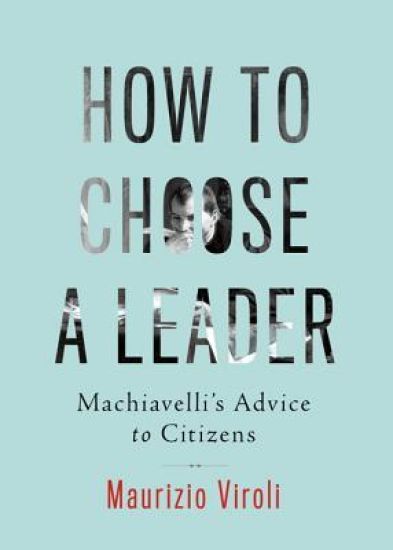
How to Choose a Leader

How to Choose a Leader

Maurizio Viroli

Princeton University Press
2016
sidottu
One of the greatest political advisers of all time, Niccolo Machiavelli thought long and hard about how citizens could identify great leaders--ones capable of defending and enhancing the liberty, honor, and prosperity of their countries. Drawing on the full range of the Florentine's writings, acclaimed Machiavelli biographer Maurizio Viroli gathers and interprets Machiavelli's timeless wisdom about choosing leaders. The brief and engaging result is a new kind of Prince--one addressed to citizens rather than rulers and designed to make you a better voter. Demolishing popular misconceptions that Machiavelli is a cynical realist, the book shows that he believes republics can't survive, let alone thrive, without leaders who are virtuous as well as effective. Among much other valuable advice, Machiavelli says that voters should pick leaders who put the common good above narrower interests and who make fighting corruption a priority, and he explains why the best way to recognize true leaders is to carefully examine their past actions and words. On display throughout are the special insights that Machiavelli gained from long, direct knowledge of real political life, the study of history, and reflection on the political thinkers of antiquity. Recognizing the difference between great and mediocre political leaders is difficult but not at all impossible--with Machiavelli's help. So do your country a favor. Read this book, then vote like Machiavelli would.
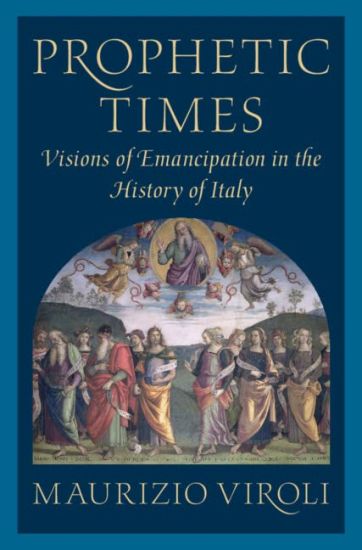
Prophetic Times

Prophetic Times

Maurizio Viroli

Cambridge University Press
2023
sidottu
Throughout Italy's history, prophetic voices-poets, painters, philosophers-have bolstered the struggle for social and political emancipation. These voices denounced the vices of compatriots and urged them toward redemption. They gave meaning to suffering, helping to prevent moral surrender; they provided support, with pathos and anger, which set into motion the moral imagination, culminating in redemption and freedom. While the fascist regime attempted to enlist Mazzini and the prophets of the Risorgimento in support of its ideology, the most perceptive anti-fascist intellectual and political leaders composed eloquent prophetic pages to sustain the resistance against the totalitarian regime. By the end of the 1960s, no prophet of social emancipation has been able to move the consciences of the Italians. In this Italian story, then, is our story, the world's story, inspiration for social and political emancipation everywhere.
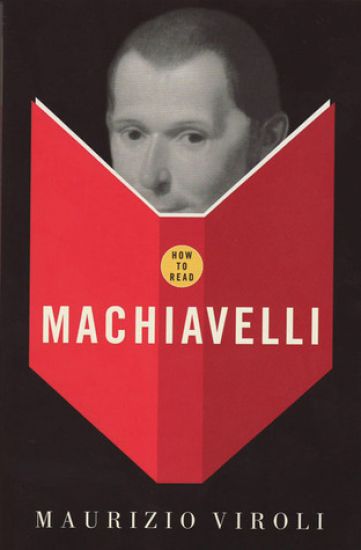
How To Read Machiavelli

How To Read Machiavelli

Maurizio Viroli

Granta Books
2008
nidottu
'Men are infamous and detestable who are destroyers of religion, squanderers of kingdoms and republics, and enemies of the virtues.' Niccolo Machiavelli Machiavelli (1459-1527) is one of the most influential modern political thinkers. His works, above all The Prince, The Discourses on Livy, The Florentine Histories and The Art of War, are still passionately discussed and continue to give rise to new visions of political action. Against the trite commonplace that Machiavelli was a teacher of evil who justified political immorality, Maurizio Viroli shows that Machiavaelli was concerned instead with the best way to attain true glory through political action and that his works were inspired by a profound love of republican liberty. Extracts are taken from the whole corpus of Machiavelli's works, including his personal letters.
The Idea of the Republic

The Idea of the Republic

Norberto Bobbio; Maurizio Viroli

Polity Press
2003
sidottu
In this lively and engaging book, Norberto Bobbio, the distinguished contemporary Italian philosopher, and the political theorist Maurizio Viroli, explore a range of themes relating to the idea of the Republic and some of the major political and ethical issues of the day. A lively discussion of politics and political theory by one of the world’s most distinguished political theorists and philosophers.Provides an excellent introduction to the work of Bobbio for the newcomer.Explains the idea of the Republic and some of the major political and ethical themes of the day.Demonstrates philosophy in action, with a breadth of reference including Machiavelli, Hobbes, Locke, Kant, Rousseau, Pettit and Skinner.