

Kirjahaku
Etsi kirjoja tekijän nimen, kirjan nimen tai ISBN:n perusteella.
1000 tulosta hakusanalla Max M Gulias


Trace Evidence Analysis continues and builds upon the tradition of its successful companion title Mute Witnesses (2000). The book contains nine entirely new cases, each self-contained in its own chapter, covering everything from homicides to accident reconstruction. It includes contributions from some of the premier forensic scientists in the field who provide detailed accounts of the process of collection, classification, and analysis of microscopic evidence to draw definitive conclusions that solved actual cases. The book discusses the role of evidence in solving cases and explores the legal and ethical responsibility of the forensic scientist. It examines real-world application of scientific methods and analytic principles, including evidence gathering, instrumentation, sampling methods, analysis, and interpretation; and features over 160 full-color figures that illustrate the relevant case evidence. This book is a recommended resource for forensic microscopists and trace evidence analysts, crime laboratories, crime scene technicians, criminal investigators, forensic science professionals and students, and the legal community.

The Science of Crime Scenes
Max M. Houck; Frank Crispino; Terry McAdam
Academic Press Inc
2012
sidottu
The Science of Crime Scenes addresses the science of crime scene investigation and processing, including the latest methods and technologies. This book covers the philosophy of crime scenes as historical events, the personnel involved at a scene (including the media), the detection of criminal traces and their reconstruction, and special crime scenes, such as mass disasters and terrorist events. Written by an international trio of authors with decades of crime scene experience, it is the next generation of crime scene textbooks. The book provides in-depth coverage of disasters and mass murder, terror crime scenes, and CBRN (chemical, biological, radioactive and nuclear) – topics not covered in any other text. It includes an instructor website with lecture slides, test bank, outlines, definitions, and activities, along with a student companion site with an image collection. This text will be of interest to advanced undergraduate and graduate students in forensic science programs, as well as to forensic practitioners and crime scene technicians.

Fundamentals of Forensic Science, Third Edition, provides current case studies that reflect the ways professional forensic scientists work, not how forensic academicians teach. The book includes the binding principles of forensic science, including the relationships between people, places, and things as demonstrated by transferred evidence, the context of those people, places, and things, and the meaningfulness of the physical evidence discovered, along with its value in the justice system. Written by two of the leading experts in forensic science today, the book approaches the field from a truly unique and exciting perspective, giving readers a new understanding and appreciation for crime scenes as recent pieces of history, each with evidence that tells a story.

The Science of Crime Scenes
Max M. Houck; Frank Crispino; Terry McAdam
Academic Press Inc
2017
sidottu
The Science of Crime Scenes, Second Edition offers a science-based approach to crime scenes, emphasizing that understanding is more important than simply knowing. Without sacrificing technical details, the book adds significantly to the philosophy and theory of crime scene science. This new edition addresses the science behind the scenes and demonstrates the latest methods and technologies with updated figures and images. It covers the philosophy of the crime scene, the personnel involved at a scene (including the media), the detection of criminal traces and their reconstruction, and special crime scenes, such as mass disasters and terroristic events. Written by an international trio of authors with decades of crime scene experience, this book is the next generation of crime scene textbooks. This volume will serve both as a textbook for forensic programs, and as an excellent reference for forensic practitioners and crime scene technicians with science backgrounds.
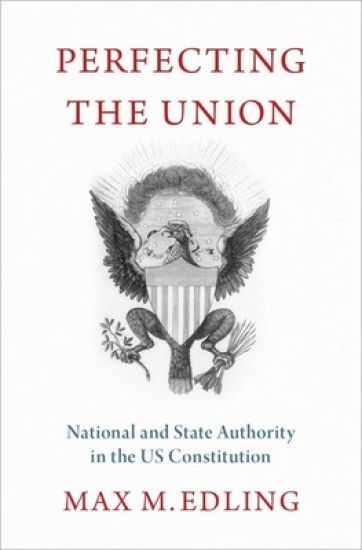
For most of the twentieth century, the American founding has been presented as a struggle between social classes over issues arising primarily within, rather than outside, the United States. But in recent years, new scholarship has instead turned to the international history of the American union to interpret both the causes and the consequences of the US Constitution. In Perfecting the Union, Max M. Edling argues that the Constitution was created to defend US territorial integrity and the national interest from competitors in the western borderlands and on the Atlantic Ocean, and to defuse inter-state tension within the union. By replacing the defunct Articles of Confederation, the Constitution profoundly transformed the structure of the American union by making the national government more effective. But it did not transform the fundamental purpose of the union, which remained a political organization designed to manage inter-state and international relations. And in contrast to what many scholars claim, it was never meant to eclipse the state governments. The Constitution created a national government but did not significantly extend its remit. The result was a dual structure of government, in which the federal government and the states were both essential to the people's welfare. Getting the story about the Constitution straight matters, Edling claims, because it makes possible a broader assessment of the American founding as both a transformative event, aiming at territorial and economic expansion, and as a conservative event, aiming at the preservation of key elements of the colonial socio-political order.
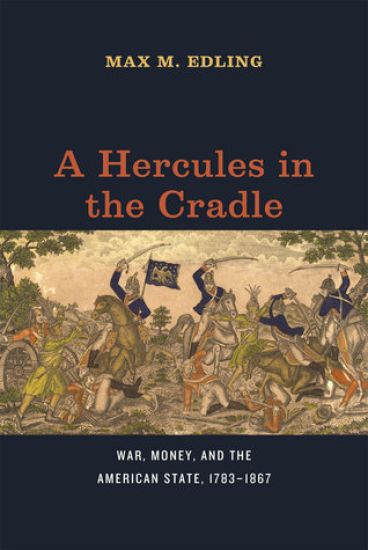
Two and a half centuries after the American Revolution the United States stands as one of the greatest powers on earth and the undoubted leader of the western hemisphere. This stupendous evolution was far from a foregone conclusion at independence. The conquest of the North American continent required violence, suffering, and bloodshed. It also required the creation of a national government strong enough to go to war against, and acquire territory from, its North American rivals. In A Hercules in the Cradle, Max M. Edling argues that the federal government's abilities to tax and to borrow money, developed in the early years of the republic, were critical to the young nation's ability to wage war and expand its territory. He traces the growth of this capacity from the time of the founding to the aftermath of the Civil War, including the funding of the War of 1812 and the Mexican War. Edling maintains that the Founding Fathers clearly understood the connection between public finance and power: a well-managed public debt was a key part of every modern state. Creating a debt would always be a delicate and contentious matter in the American context, however, and statesmen of all persuasions tried to pay down the national debt in times of peace. A Hercules in the Cradle explores the origin and evolution of American public finance and shows how the nation's rise to great-power status in the nineteenth century rested on its ability to go into debt.
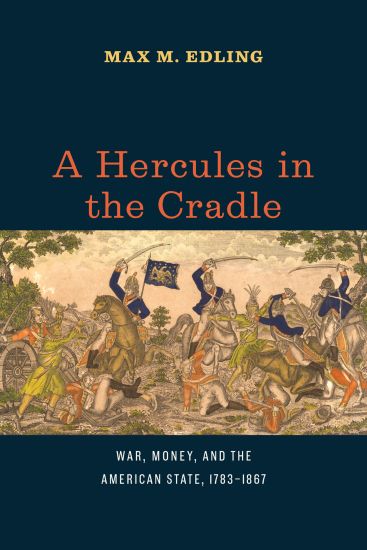
Explores the origin and evolution of American public finance and shows how the nation’s rise to great-power status in the nineteenth century rested on its ability to go into debt. Two and a half centuries after the American Revolution the United States stands as one of the greatest powers on earth and the undoubted leader of the western hemisphere. This stupendous evolution was far from a foregone conclusion at independence. The conquest of the North American continent required violence, suffering, and bloodshed. It also required the creation of a national government strong enough to go to war against, and acquire territory from, its North American rivals. In A Hercules in the Cradle, Max M. Edling argues that the federal government’s abilities to tax and borrow money, developed in the early years of the republic, were critical to the young nation’s ability to wage war and expand its territory. He traces the growth of this capacity from the time of the founding to the aftermath of the Civil War, including the funding of the War of 1812 and the Mexican War. Edling maintains that the Founding Fathers clearly understood the connection between public finance and power: a well-managed public debt was a key part of every modern state. Creating a debt would always be a delicate and contentious matter in the American context, however, and statesmen of all persuasions tried to pay down the national debt in times of peace.
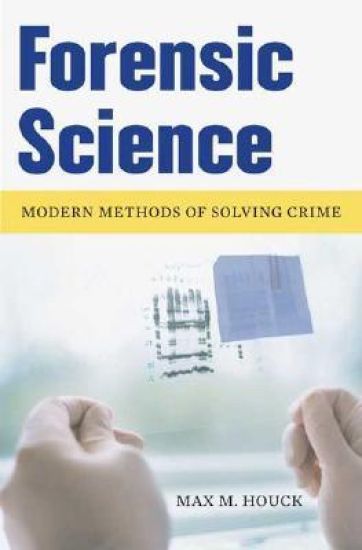
From Poe's Dupin and Doyle's Holmes to the television hits Quincy and CSI, the public's fascination with science employed to solve crimes continues and grows. But this understanding of how science works in the forensic laboratory is filtered through the fictional worlds of books and television-how is science really used to fight crime? What techniques are used to catch criminals and free the innocent? Forensic scientists work with police, investigators, medical personnel, attorneys, and others to uphold justice, but their methods are often misunderstood, overestimated, underestimated, revered, or disputed. Here, the author answers many common questions about forensic science: How is the science conducted and by whom? What are the real limits, and real benefits, of forensic science? What new techniques are emerging to catch 21st Century criminals? Readers are treated to an insider's overview of the realties of forensic science.Forensic Science: Modern Methods of Solving Crime covers the basic concepts of forensic science and how it assists in criminal investigations. Starting with a brief history of forensic science, from its early days in Europe to the modern advances of today, the book describes each method and presents cases that highlight the applications of the methods. Houck profiles pioneers in forensic science, offers an overview of such forensic topics as DNA, fibers, fingerprints, and firearms, takes readers through the collection and processing of evidence, and uses frequent examples and anecdotes to illustrate all the major areas of forensic science. This introduction to the field is a useful starting point for anyone wishing to learn more about the real world of forensic science.
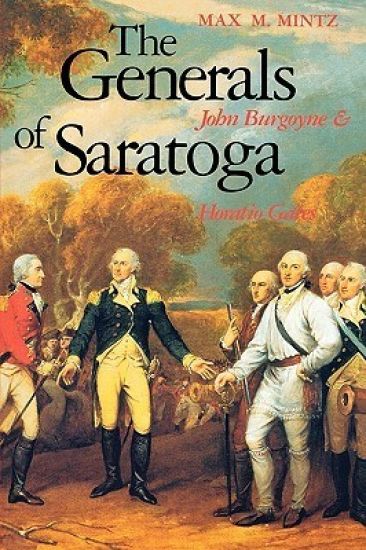
This lively and colorful work offers a fresh account of the Saratoga campaign of 1777 through the lives of its opposing generals--John Burgoyne, the British commander, and Horatio Gates, the American (but British-born) commander. The book vividly portrays the two men and the events that developed around them. It is the fullest discussion ever written about both the American and British dimensions of this campaign, the only engagement in the Revolutionary War in which an all-American army captured a major British force. Max M. Mintz has combed the letters and diaries of survivors to craft on-the-scene descriptions of the British taking of Ticonderoga, the slaughter at Hubbardton, the victory of American militia at Bennington, the two hard-fought battles of Saratoga, and the surrender of Burgoyne. Throughout the book new insights are revealed: Burgoyne's difficulties with his superiors, the deep roots of Gates's quarrels with George Washington and Benedict Arnold, the factors that caused Burgoyne to choose the land rather than the water route from Lake Champlain to the Hudson River, and the broken promise that misled Burgoyne into believing that Sir Henry Clinton would come to save him.

Depression and suicide are subjects that go hand in hand. Those who suffer from these emotions feel that there is no hope, no help for them. I can only say that you are wrong. The stories and poems inside should prove that you are not alone in what you feel and that there are those who are here to help. Though these feelings may be hard to fight you can survive.

Depression and suicide are subjects that go hand in hand. Those who suffer from these emotions feel that there is no hope, no help for them. I can only say that you are wrong. The stories and poems inside should prove that you are not alone in what you feel and that there are those who are here to help. Though these feelings may be hard to fight you can survive.

Forensic Science Laboratory Benchmarking
Max M. Houck; Paul J. Speaker
TAYLOR FRANCIS LTD
2024
sidottu
Forensic Science Laboratory Benchmarking: The FORESIGHT Manual takes a step-by-step instructional approach to utilizing FORESIGHT data, detailing how labs can participate in the process to improve efficiencies. The FORESIGHT Project—a business benchmarking process for forensic service providers—was created in 2008 to collect and report data while offering improvement to processes through analysis, comparisons, and best practice evaluations. The program has grown to include more than 200 participating forensic laboratories worldwide.FORESIGHT offers the capability for labs to improve core functions, provide and benefit from metrics, and thus, improve the labs capabilities and functioning for the public good, while maintaining their often limited, fixed budgets. Due to ever-increasing caseloads, forensic laboratories are constantly plagued by backlogged casework—cases submitted to the laboratory but not yet worked. This leads to inefficiencies, delays, and unhappy agencies expecting timely results. Unfortunately, even if a lab’s slates were wiped clean and the backlog were erased, many of the inefficient processes—that created the backlog—would still be in place. Eventually, and inevitably, the lab would develop a new backlog.Unique coverage and features:Presents critical and proven cutting-edge measures to utilize FORESIGHT data improve laboratory testing, operational efficiency, and policies without added additional costs.Synthesizes the data input from more than 200 labs and a decade’s worth of analytics to illustrate process improvements and the advantages of participating.Outlines how to develop data-driven responses to solve current and future problems.Forensic Science Laboratory Benchmarking will be of interest to quality assurance specialists, economists, supervisors in the parent agencies of the labs, managers at all levels of any of the hundreds of public laboratories around the world, and anyone concerned about the effectiveness and efficiency of laboratory testing. As an operational guide, the book provides a helpful roadmap to help public science agencies and forensic labs analyze how they operate, improve on what works, and change what doesn’t to better meet their mission and serve their community’s goals.
A major revision of the landmark book on expert testimony Feder’s Succeeding as an Expert Witness, Successful Expert Testimony, Fifth Edition highlights the book’s value to both attorneys and expert witnesses in promoting effective, impactful courtroom testimony. The book outlines the role of expert testimony in a trial, including explanations of methods, testing, and science, the legal process, and an overview of the roles of each player. Succeeding as an expert witness requires a basic understanding of who and what experts are and what role they play in rendering their opinions within the courts. The new edition has been fully updated to present key information on the most vital topics, including the deposition, a discussion of false or unsupported testimony, adherence to scientific principles, and direct and cross-examination testimony of expert witnesses. Each chapter includes key terms, review questions, and thought-provoking discussion questions for further consideration of the topics addressed.Given many high profile cases and increasing incidents of misconduct, this edition focuses heavily on the role of ethics in expert testimony and forensic practice. The full revised chapter on ethics, covers unethical conduct of forensic witnesses, admissibility of expert testimony, inter-professional relations, abuse of and by experts, and forensic professional codes of ethics.Offering useful career insights and established trial-tested tips, forensic scientist Max M. Houck and attorney Christine Funk update renowned lawyer Harold A. Feder’s classic book. Successful Expert Testimony, Fifth Edition serves as an ideal reference for forensic science students entering the work force—in labs and investigative positions—in addition to serving as a crucial resource for more experienced civil, private, and testifying experts in all disciplines.
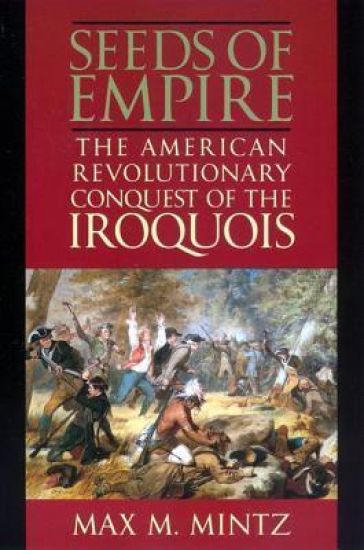
Seeds of Empire recreates the events surrounding General John Sullivan's scorched-earth campaign against the Six Nations of the American Indians of New York and the Eastern territories in 1779, following the surrender of General John Burgoyne's British army at the Battle of Saratoga. Mintz's meticulous historical research and renowned storytelling ability give life to this arresting narrative as it probes the mechanisms of the American Revolution and the structure and function of the Iroquois Six Nations.
In this essay, Max Edling provides an internationalist interpretation of the founding of the United States. Rather than focusing on domestic economic conflict, Edling's interpretation highlights international competition, both with European powers and Native American neighbors, and inter-state relations within the federal union, as the principal causes of constitutional reform.

The culmination of over three decades of investigation into traumatic processes, Repetition and Trauma is the late Max Stern's pioneering reconceptualization of trauma in the light of recent insights into the physiology and psychology of stress and the "teleonomic" character of human evolution in developing defenses against shock. As such, it is a highly original attempt to reformulate certain basic tenets of psychoanalysis with the findings of modern biology in general and neurobiology in particular.At the core of Stern's effort is the integration of laboratory research into sleep and dreaming so as to clarify the meaning of pavor nocturnus. In concluding that these night terrors represent "a defense against stress caused by threatening nightmares," he exploits, though he interpretively departs from, the laboratory research on dreams conducted by Charles Fisher and others in the 1960s.From his understanding of pavor nocturnus as a compulsion to repeat in the service of overcoming a developmental failure to attribute meaning to states of tension, Stern enlarges his inquiry to the phenomena of repetitive dreams in general. In a brilliant reconstruction of Freud's Beyond the Pleasure Principle, he suggests that Freud was correct in attributing the repetitive phenomena of traumatic dreams to forces operating beyond the pleasure principle, but holds that these phenomena can be best illumined in terms of Freud's conception of mastery and Stern's own notion of "reparative mastery."

Soybean Culture and Varieties; 243
Max M. (Max Manley) 1895- Hoover
Hassell Street Press
2021
nidottu
This work has been selected by scholars as being culturally important and is part of the knowledge base of civilization as we know it.This work is in the public domain in the United States of America, and possibly other nations. Within the United States, you may freely copy and distribute this work, as no entity (individual or corporate) has a copyright on the body of the work.Scholars believe, and we concur, that this work is important enough to be preserved, reproduced, and made generally available to the public. To ensure a quality reading experience, this work has been proofread and republished using a format that seamlessly blends the original graphical elements with text in an easy-to-read typeface.We appreciate your support of the preservation process, and thank you for being an important part of keeping this knowledge alive and relevant.

Russia and the Western World; the Place of the Soviet Union in the Comity of Nations
Max M. 1887-1951 Laserson
Hassell Street Press
2021
sidottu
This work has been selected by scholars as being culturally important and is part of the knowledge base of civilization as we know it.This work is in the public domain in the United States of America, and possibly other nations. Within the United States, you may freely copy and distribute this work, as no entity (individual or corporate) has a copyright on the body of the work.Scholars believe, and we concur, that this work is important enough to be preserved, reproduced, and made generally available to the public. To ensure a quality reading experience, this work has been proofread and republished using a format that seamlessly blends the original graphical elements with text in an easy-to-read typeface.We appreciate your support of the preservation process, and thank you for being an important part of keeping this knowledge alive and relevant.