Kirjojen hintavertailu. Mukana 11 244 527 kirjaa ja 12 kauppaa.

Kirjahaku

Etsi kirjoja tekijän nimen, kirjan nimen tai ISBN:n perusteella.

1000 tulosta hakusanalla McCormick John P.

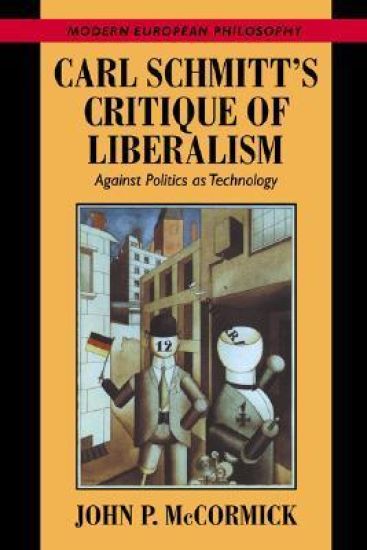
Carl Schmitt's Critique of Liberalism

Carl Schmitt's Critique of Liberalism

McCormick John P.

Cambridge University Press
1999
pokkari
This is the first in-depth critical appraisal in English of the political, legal, and cultural writings of Carl Schmitt, perhaps this century’s most brilliant critic of liberalism. It offers an assessment of this most sophisticated of fascist theorists without attempting either to apologise for or demonise him. Schmitt’s Weimar writings confront the role of technology as it finds expression through the principles and practices of liberalism. Contemporary political conditions such as disaffection with liberalism and the rise of extremist political organizations have rendered Schmitt’s work both relevant and insightful. John McCormick examines why technology becomes a rallying cry for both right- and left-wing intellectuals at times when liberalism appears anachronistic, and shows the continuities between Weimar’s ideological debates and those of our own age.

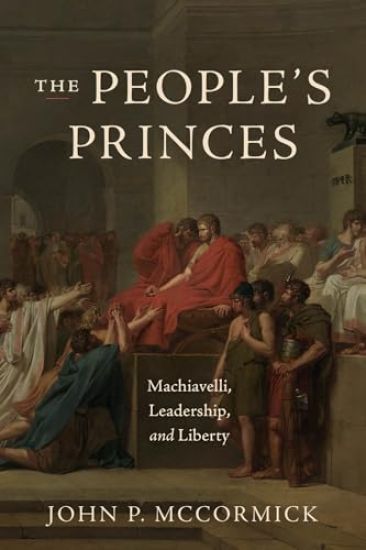
The People's Princes

The People's Princes

John P. McCormick

THE UNIVERSITY OF CHICAGO PRESS
2025
sidottu
A new window into Machiavelli’s idea of virtuous leadership and the appropriate relationship among leaders, common citizens, and elites. For more than a decade, John P. McCormick has been at the forefront of a new wave of scholarship that reveals the anti-elitist and democratic commitments at the center of Niccolo Machiavelli’s political thought. In The People’s Princes, McCormick turns his attention to Machiavelli’s conception of virtuous leadership and Machiavelli’s views on the appropriate relationships among individual leaders, common citizens, and elites. While most people think of Machiavelli as a cynical advisor of tyrants—a man who counseled leaders to aggrandize themselves, by any means necessary, at the expense of their subjects and citizens—The People’s Princes fundamentally challenges this understanding. Drawing from Machiavelli’s major political works a normative standard for leadership that emphasizes the mutually reinforcing relationship of civic leadership and popular government, McCormick delineates Machiavelli’s method of “political exemplarity” by analyzing in detail the Florentine’s case studies of leaders and their interactions with populaces throughout ancient and modern history. McCormick argues that Machiavelli suggests that civic leaders should enhance their reputations by providing for their own eventual obsolescence; specifically, they should establish institutional means through which common citizens rule themselves more directly and substantively. The People’s Princes invites readers to consider Machiavelli anew, and also reflect on insights that remain relevant in the twenty-first century amidst growing concerns that political leaders are not accountable or responsive to popular majorities.
The People's Princes

The People's Princes

John P. McCormick

THE UNIVERSITY OF CHICAGO PRESS
2025
nidottu
A new window into Machiavelli’s idea of virtuous leadership and the appropriate relationship among leaders, common citizens, and elites. For more than a decade, John P. McCormick has been at the forefront of a new wave of scholarship that reveals the anti-elitist and democratic commitments at the center of Niccolo Machiavelli’s political thought. In The People’s Princes, McCormick turns his attention to Machiavelli’s conception of virtuous leadership and Machiavelli’s views on the appropriate relationships among individual leaders, common citizens, and elites. While most people think of Machiavelli as a cynical advisor of tyrants—a man who counseled leaders to aggrandize themselves, by any means necessary, at the expense of their subjects and citizens—The People’s Princes fundamentally challenges this understanding. Drawing from Machiavelli’s major political works a normative standard for leadership that emphasizes the mutually reinforcing relationship of civic leadership and popular government, McCormick delineates Machiavelli’s method of “political exemplarity” by analyzing in detail the Florentine’s case studies of leaders and their interactions with populaces throughout ancient and modern history. McCormick argues that Machiavelli suggests that civic leaders should enhance their reputations by providing for their own eventual obsolescence; specifically, they should establish institutional means through which common citizens rule themselves more directly and substantively. The People’s Princes invites readers to consider Machiavelli anew, and also reflect on insights that remain relevant in the twenty-first century amidst growing concerns that political leaders are not accountable or responsive to popular majorities.
Machiavellian Democracy

Machiavellian Democracy

John P. McCormick

Cambridge University Press
2011
pokkari
Intensifying economic and political inequality poses a dangerous threat to the liberty of democratic citizens. Mounting evidence suggests that economic power, not popular will, determines public policy, and that elections consistently fail to keep public officials accountable to the people. McCormick confronts this dire situation through a dramatic reinterpretation of Niccolò Machiavelli's political thought. Highlighting previously neglected democratic strains in Machiavelli's major writings, McCormick excavates institutions through which the common people of ancient, medieval and Renaissance republics constrained the power of wealthy citizens and public magistrates, and he imagines how such institutions might be revived today. It reassesses one of the central figures in the Western political canon and decisively intervenes into current debates over institutional design and democratic reform. McCormick proposes a citizen body that excludes socioeconomic and political elites and grants randomly selected common people significant veto, legislative and censure authority within government and over public officials.
Weber, Habermas and Transformations of the European State

Weber, Habermas and Transformations of the European State

John P. McCormick

Cambridge University Press
2009
pokkari
This book critically engages Jürgen Habermas's comprehensive vision of constitutional democracy in the European Union. John P. McCormick draws on the writings of Max Weber (and Habermas's own critique of them) to confront the difficulty of theorizing progressive politics during moments of radical state transformation. Both theorists employ normative and empirical categories, drawn from earlier historical epochs, to analyze contemporary structural transformations: Weber evaluated the emergence of the Sozialstaat with antedated categories derived from nineteenth-century and premodern historical examples; while Habermas understands the EU almost exclusively in terms of the liberal (Rechtsstaat) and welfare state (Sozialstaat) paradigms. Largely forsaking the focus on structural transformation that characterized his early work, Habermas conceptualizes the EU as a territorially expanded nation-state. McCormick demonstrates the deficiencies of such an approach and outlines a more appropriate normative-empirical model, the supranational Sektoralstaat, for evaluating prospects for constitutional and social democracy in the EU.
Weber, Habermas and Transformations of the European State

Weber, Habermas and Transformations of the European State

John P. McCormick

Cambridge University Press
2007
sidottu
This book critically engages Jürgen Habermas's comprehensive vision of constitutional democracy in the European Union. John P. McCormick draws on the writings of Max Weber (and Habermas's own critique of them) to confront the difficulty of theorizing progressive politics during moments of radical state transformation. Both theorists employ normative and empirical categories, drawn from earlier historical epochs, to analyze contemporary structural transformations: Weber evaluated the emergence of the Sozialstaat with antedated categories derived from nineteenth-century and premodern historical examples; while Habermas understands the EU almost exclusively in terms of the liberal (Rechtsstaat) and welfare state (Sozialstaat) paradigms. Largely forsaking the focus on structural transformation that characterized his early work, Habermas conceptualizes the EU as a territorially expanded nation-state. McCormick demonstrates the deficiencies of such an approach and outlines a more appropriate normative-empirical model, the supranational Sektoralstaat, for evaluating prospects for constitutional and social democracy in the EU.
Machiavellian Democracy

Machiavellian Democracy

John P. McCormick

Cambridge University Press
2011
sidottu
Intensifying economic and political inequality poses a dangerous threat to the liberty of democratic citizens. Mounting evidence suggests that economic power, not popular will, determines public policy, and that elections consistently fail to keep public officials accountable to the people. McCormick confronts this dire situation through a dramatic reinterpretation of Niccolò Machiavelli's political thought. Highlighting previously neglected democratic strains in Machiavelli's major writings, McCormick excavates institutions through which the common people of ancient, medieval and Renaissance republics constrained the power of wealthy citizens and public magistrates, and he imagines how such institutions might be revived today. It reassesses one of the central figures in the Western political canon and decisively intervenes into current debates over institutional design and democratic reform. McCormick proposes a citizen body that excludes socioeconomic and political elites and grants randomly selected common people significant veto, legislative and censure authority within government and over public officials.
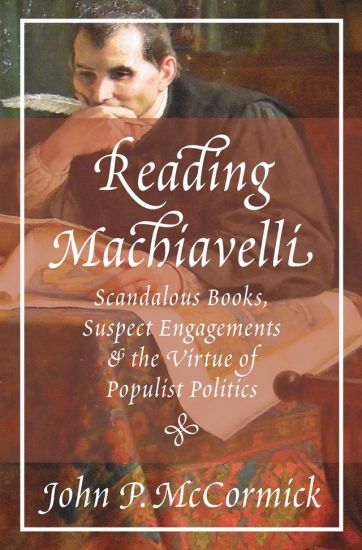
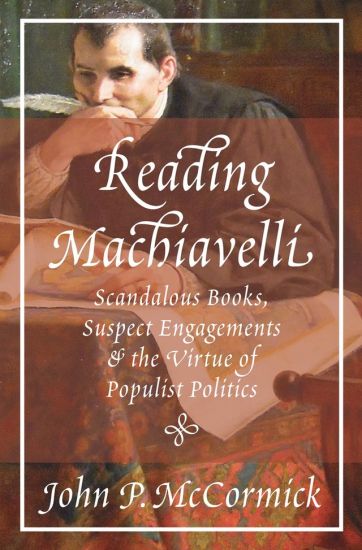
Reading Machiavelli

Reading Machiavelli

John P. McCormick

Princeton University Press
2018
sidottu
To what extent was Machiavelli a “Machiavellian”? Was he an amoral adviser of tyranny or a stalwart partisan of liberty? A neutral technician of power politics or a devout Italian patriot? A reviver of pagan virtue or initiator of modern nihilism? Reading Machiavelli answers these questions through original interpretations of Niccolò Machiavelli’s three major political works—The Prince, Discourses, and Florentine Histories—and demonstrates that a radically democratic populism seeded the Florentine’s scandalous writings. John McCormick challenges the misguided understandings of Machiavelli set forth by prominent thinkers, including Jean-Jacques Rousseau and representatives of the Straussian and Cambridge schools.McCormick emphasizes the fundamental, often unacknowledged elements of a vibrant Machiavellian politics: the utility of vigorous class conflict between elites and common citizens for virtuous democratic republics, the necessity of political and economic equality for genuine civic liberty, and the indispensability of religious tropes for the exercise of effective popular judgment. Interrogating the established reception of Machiavelli’s work by such readers as Rousseau, Leo Strauss, Quentin Skinner, and J.G.A. Pocock, McCormick exposes what was effectively an elite conspiracy to suppress the Florentine’s contentious, egalitarian politics. In recovering the too-long-concealed quality of Machiavelli’s populism, this book acts as a Machiavellian critique of Machiavelli scholarship.Advancing fresh renderings of works by Machiavelli while demonstrating how they have been misread previously, Reading Machiavelli presents a new outlook for how politics should be conceptualized and practiced.
Reading Machiavelli

Reading Machiavelli

John P. McCormick

Princeton University Press
2020
pokkari
A new reading of Machiavelli’s major works that demonstrates how he has been previously misreadTo what extent was Niccolò Machiavelli a “Machiavellian”? Was he an amoral adviser of tyranny or a stalwart partisan of liberty? A neutral technician of power politics or a devout Italian patriot? A reviver of pagan virtue or initiator of modern nihilism? Reading Machiavelli answers these questions through original interpretations of Machiavelli’s three major political works—The Prince, Discourses, and Florentine Histories—and demonstrates that a radically democratic populism seeded the Florentine’s scandalous writings. John McCormick challenges the misguided understandings of Machiavelli set forth by prominent thinkers, including Jean-Jacques Rousseau and representatives of the Straussian and Cambridge schools, and he emphasizes the fundamental, often unacknowledged elements of a vibrant Machiavellian politics. Advancing fresh readings of Machiavelli’s work, this book presents a new outlook on how politics should be conceptualized and practiced.
Understanding the European Union

Understanding the European Union

McCormick John

Palgrave Macmillan
2014
nidottu
This best-selling textbook provides a broad-ranging but concise introduction to the EU, covering all major aspects of European integration. The revised and updated new edition takes full account of the political and economic impact of the Eurozone crisis.
Europeanism

Europeanism

John McCormick

Oxford University Press
2010
sidottu
In Europeanism the author attempts to identify and outline the political, economic, and social norms and values associated with Europe and Europeans. He argues that regardless of the doubts associated with the exercise of European integration and the work of the European Union, and regardless of residual identities with states and nations, Europeans have much in common. Opening chapters deal with the historical development of European ideas, and are followed by chapters addressing European attitudes toward the state (including a rejection of state-based nationalism, new ideas about patriotism and citizenship, and the importance of cosmopolitanism), the characteristics of politics and government in Europe (with an emphasis on communitarianism and the effects of the parliamentary system of government), European economic models (including the importance of welfarism and sustainable development), European social models, European attitudes towards values such as multiculturalism and secularism, and Europeanist views in regard to international relations (emphasizing civilian power and multiculturalism).
Popular Theatres of Nineteenth Century France
This is the only book to provide an account of how popular theatre developed from the fairground booths of the eighteenth century to become a vehicle of mass entertainment in the following century. Whereas other studies offer a traditional approach to the theatres of high culture, John McCormick takes the role of impartial historian, uncovering the popular theatres of the boulevards, suburbs and fairgrounds. He focuses on the social and economic context in which vaudevilles, pantomimes and melodramas were performed, and explores the audiences who enjoyed them.
Popular Theatres of Nineteenth Century France
This is the only book to provide an account of how popular theatre developed from the fairground booths of the eighteenth century to become a vehicle of mass entertainment in the following century. Whereas other studies offer a traditional approach to the theatres of high culture, John McCormick takes the role of impartial historian, uncovering the popular theatres of the boulevards, suburbs and fairgrounds. He focuses on the social and economic context in which vaudevilles, pantomimes and melodramas were performed, and explores the audiences who enjoyed them.
Acid Earth

Acid Earth

John McCormick

Routledge
2013
nidottu
Acid rain was one of the major environmental issues of the 1980s. But while industrialized countries have taken measures to reduce the emissions that lead to acidification, the problems have not gone away. Trees are still dying, lakes are still being made uninhabitable; buildings are still corroding; and human health is still suffering. The most worrying trend is the repetition in the industrializing countries of Asia and Latin America of the problems that have long afflicted Europe and North America. More than 10 years after it was first published, the highly acclaimed Acid Earth still provides the only global view of acidification, and remains the standard text on the subject. Chapters on the causes, effects and growing scientific understanding of acid pollution, and the possible solutions, are followed by detailed studies of the political struggles involved in responding to acid damage in western and eastern Europe, the US and the newly industrializing countries. Written in non-technical language for people interested in the problems of the environment, Acid Earth calls for a renewed sense of public and political will to bring the problems of acid pollution under control. The book also makes valuable reading for specialists and students. Originally published in 1992
British Politics and the Environment
Britain has an immense range of environmental law and the reputation for largely ignoring it. John McCormick describes the fascinating story of the political growth of that law, and the pressures, the compromises, the parliamentary and civil service opportunism that allowed the edifice to grow over the greater part of a century. He tells the story of the absolute change in political climate over the last ten years and deciphers the nature of Thatcher's ''conversion'' to greenery. He explains why everyone who cared about the environment became embattled and, above all, how the old methods of sensible compromise were banished, probably for ever, not least because of the government's obsession with secrecy. What, then, are the new political means of compelling change on a reluctant parliament? Everything is at stake from welfare to water, from forests to fishing. Where are we now? What are the likely pressures, both internal and from Europe and the rest of the world, to make Britain pass more environmentally sound laws and, perhaps more importantly, to observe them? McCormick provides a gripping picture of the central issues, of the system and of the battleground. Originally published in 1991
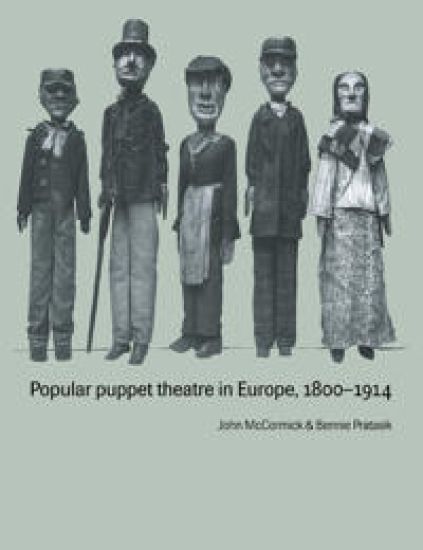
Popular Puppet Theatre in Europe, 1800–1914

Popular Puppet Theatre in Europe, 1800–1914

John McCormick; Bennie Pratasik

Cambridge University Press
2005
pokkari
Banned, marginalised, tolerated or neglected, puppets were a major form of entertainment of the subordinate classes in the nineteenth century. Showmen travelled from one end of Europe to the other bringing everything from biblical plays to melodramas and variety to audiences who experienced them as their only form of dramatic entertainment. The first study of its kind in English, Popular Puppet Theatre in Europe is less a history than a comparative study, highlighting a significant aspect of social and cultural history from a national and transnational perspective. It examines the showmen, their audiences, the performance context, and the technical and practical aspects of the puppets and their stages.
Crawl

Crawl

John McCormick

New Generation Publishing
2010
pokkari
The Christmas Eve pub-crawl had always been an enjoyable distraction; a chance to relax in familiar company and, for a while, to forget about the chaos of Belfast in the 1980s.One year, however, as love rears its ugly head, the day and the pub-crawl start to unravel and, as everyone will soon discover, nothing will ever be the same again.
Fiction as Knowledge

Fiction as Knowledge

John McCormick

Transaction Publishers
1998
nidottu
Critics of fiction have long been aware that the romantic movement in Europe and America gave a powerful impulse to the art of fiction. The exact nature of that impulse has resisted analysis like so much associated with romanticism. In Fiction as Knowledge John McCormick reaches for precision, proposing that much of the vitality of modern fiction derives from romantic conceptions of history which made available to fiction not merely historical subject matter, but new perceptions of reality, present and past, that pervade the work of many of the greatest writers of the post-romantic period.Beginning with Herder and Hegel, McCormick describes those qualities in historical thought that were revolutionary in the early nineteenth century and rich in meaning for the future. Most prominent of these was the emergence of the idea of individuality, not only in society but also in history. The author demonstrates the vitality of the romantic impulse in the work of seven major novelists of the twentieth century. Marcel Proust's apprehensions of nature in his great novel are seen as Wordsworthian, while as the novel unfolds, history in the form of event and system of organization comes to dominate and to offer a paradigm of the workings of the post-romantic historical imagination. William Faulkner and Andr Malraux are shown to confront history directly, although they do not write "historical" fiction. Herman Broch, Robert Musil, and Henri de Montherlant, uncomfortable with traditional romantic attitudes, still make fullest use of Romantic historical insight to extend the range of fiction as knowledge. Ernest Hemingway, by contrast, is seen as intuitive, a pure product of his novelist's intelligence as opposed to his latter-day romantic anti-intellectualism.Fiction as Knowledge supplies critical insight into the form of the novel as well as into the seven novelists under discussion. Not least, the book is a warning against contemporary anti-historical bias and an appeal to the cultivation of historical consciousness. John McCormick is Professor Emeritus of Comparative Literature at Rutgers University, and Honorary Fellow of English and Literature at the University of York. He is the author of George Santayana: A Biography, Catastrophe and Imagination, and The Middle Distance, by Transaction.
George Santayana

George Santayana

John McCormick

Transaction Publishers
2003
nidottu
From the late nineteenth century to the middle of the twentieth, George Santayana was a highly esteemed and widely read writer of philosophy, poetry, essays, memoirs, and even a best-selling novel, The Last Puritan. After a period of relative neglect, interest in his work has revived. A complete edited edition of his works is in progress and he has become the object of renewed scholarly activity. Contributing significantly to the renewal was John McCormick's 1987 biography, the first full-scale volume to treat an elusive figure's life and thought in the detail they deserve.Santayana's life was rich in its interior and outer associations. There was his birth and early childhood in Spain followed by a move to Boston, where he came under the influence of William James at Harvard. This led to his career at Harvard as a professor, where Wallace Stevens, Robert Frost, Conrad Aiken, Franklin D. Roosevelt, and Walter Lippmann were among his devoted students. We see Santayana in correspondence and conversation with Bertrand Russell, G.E. Moore, Ezra Pound, and Robert Lowell.Predominant in Santayana's life was his philosophical work. Hostile to the dominant empiricism of Anglo-American philosophy, he left the academy and remained detached from both the political and ideological movements of early decades of the twentieth century. McCormick relates his skepticism and materialism to a form of idealism deriving from his classical education in Plato and Aristotle, together with his readings in Descartes and Spinoza. He presents Santayana as a supreme stylist in English, who lived a long life always consistent with his stoic epicureanism.
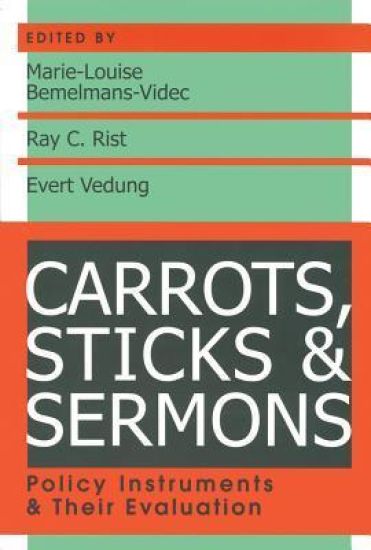
Carrots, Sticks and Sermons

Carrots, Sticks and Sermons

John McCormick

Transaction Publishers
2003
nidottu
The literature on policy strategies, instruments, and styles is impressive. Still, a complex variety of theoretical and conceptual approaches and analytical tools hamper a good overview. Carrots, Sticks, and Sermons proposes such a framework for the field and clearly shows how public policy instruments are classified, packaged, and chosen, while highlighting the role evaluation plays in the instruments-choice process.Carrots, Sticks, and Sermons offers a comprehensive analysis of categories and typologies of policy instruments. It classifies sticks, carrots, and sermons - or, more specifically, regulation, economic means, and information. Readers are offered a comparative perspective of evaluation practice in foreign contexts. Special attention is paid to the examples of Sweden, the Netherlands, Belgium, England, Canada, the United States, and the Republic of Korea. As such, this volume crosses language barriers that stand in the way of dispersing research results among the international community of theoreticians and practitioners. As nations become increasingly interdependent, problems of implementation and evaluation of policy choices will become issues of increasing gravity.Carrots, Sticks, and Sermons provides insights into the traditional and current practice of policy and program evaluation in various contexts. The book's theory of comparative public policy will produce understanding and guidance in designing better policies. It will be of wide interest to those in the fields of public policy, particularly policy design, policy implementation, policy evaluation, comparative politics, and economics.