Kirjojen hintavertailu. Mukana 11 342 296 kirjaa ja 12 kauppaa.

Kirjahaku

Etsi kirjoja tekijän nimen, kirjan nimen tai ISBN:n perusteella.

41 tulosta hakusanalla McMeekin Sean

July 1914

July 1914

McMeekin Sean

Basic Books
2014
pokkari
When an assassin gunned down Archduke Franz Ferdinand in late June 1914, no one could have imagined the shocking bloodshed that would soon follow. Indeed, as award-winning historian Sean McMeekin reveals in July 1914 , World War I might indeed have been avoided entirely had it not been for the actions of a small group of statesmen in the month after the assassination. Whether they plotted for war or rode the whirlwind nearly blind, these men sought to capitalize on the fallout from Ferdinand's murder, unwittingly leading Europe toward the greatest cataclysm it had ever seen. A deeply-researched account of the genesis of World War I, July 1914 tells the gripping story of the month that changed the course of the 20th century.
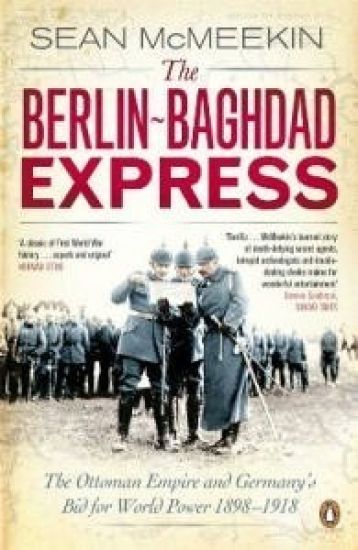
The Berlin-Baghdad Express

The Berlin-Baghdad Express

Sean McMeekin

Penguin Books Ltd
2011
pokkari
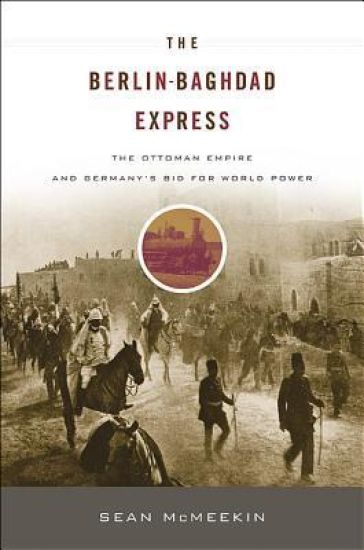
WINNER OF THE BARBARA JELAVICH BOOK PRIZE'Sean McMeekin has written a classic of First World War history ... This superb and original book is the reality behind Greenmantle' Norman StoneThe Berlin-Baghdad Express explores one of the big, previously unresearched subjects of the First World War: the German bid for world power - and the destruction of the British Empire - through the harnessing of the Ottoman Empire. McMeekin's book shows how incredibly high the stakes were in the Middle East - with the Germans in the tantalizing position of taking over the core of the British Empire via the extraordinary railway that would link Central Europe and the Persian Gulf. Germany sought the Ottoman Empire as an ally to create jihad against the British - whose Empire at the time was the largest Islamic power in the world.The Berlin-Baghdad Express is a fascinating account of western interference in the Middle East and its lamentable results. It explains and brings to life a massive area of fighting, which in most other accounts is restricted to the disaster at Gallipoli and the British invasions of Iraq and Palestine.
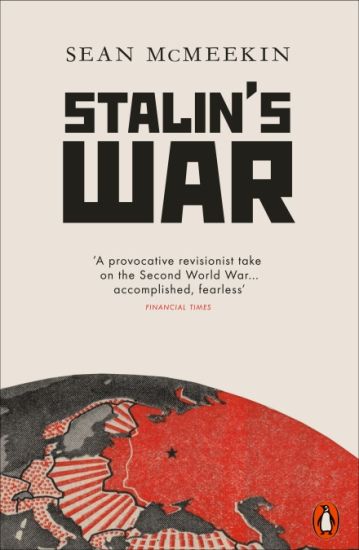
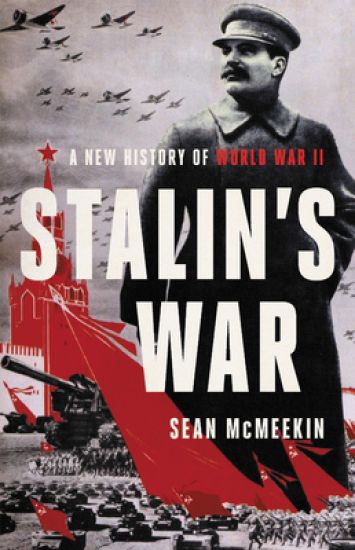
Stalin's War

Stalin's War

Sean McMeekin

PENGUIN BOOKS LTD
2022
pokkari
SHORTLISTED FOR THE DUKE OF WELLINGTON MEDAL AND THE GILDER LEHRMAN PRIZE FOR MILITARY HISTORY 2022'A terrific read ... McMeekin is a superb writer' David Aaronovitch, The Times 'Gripping, authoritative, accessible and always bracingly revisionist' Simon Sebag Montefiore'Impressive ... A new look at the conflict, which poses new questions and provides new and often unexpected answers to the old ones' Serhii Plokhy, The Guardian In this remarkable, ground-breaking new book Sean McMeekin marks a generational shift in our view of Stalin as an ally in the Second World War. Stalin's only difference from Hitler, he argues, was that he was a successful murderous predator. With Hitler dead and the Third Reich in ruins, Stalin created an immense new Communist empire. Among his holdings were Czechoslovakia and Poland, the fates of which had first set the West against the Nazis and, of course, China and North Korea, the ramifications of which we still live with today. Until Barbarossa wrought a public relations miracle, turning him into a plucky ally of the West, Stalin had murdered millions, subverted every norm of international behaviour, invaded as many countries as Hitler had, and taken great swathes of territory he would continue to keep. In the larger sense the global conflict grew out of not only German and Japanese aggression but Stalin's manoeuvrings, orchestrated to provoke wars of attrition between the capitalist powers in Europe and in Asia. Throughout the war Stalin chose to do only what would benefit his own regime, not even aiding in the effort against Japan until the conflict's last weeks. Above all, Stalin's War uncovers the shocking details of how the US government (to the detriment of itself and its other allies) fuelled Stalin's war machine, blindly agreeing to every Soviet demand, right down to agents supplying details of the atomic bomb.
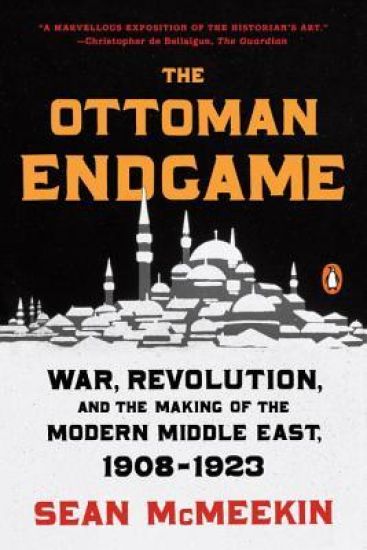
The Ottoman Endgame: War, Revolution, and the Making of the Modern Middle East, 1908-1923
An astonishing retelling of twentieth-century history from the Ottoman perspective, delivering profound new insights into World War I and the contemporary Middle East Between 1911 and 1922, a series of wars would engulf the Ottoman Empire and its successor states, in which the central conflict, of course, is World War I--a story we think we know well. As Sean McMeekin shows us in this revelatory new history of what he calls the "wars of the Ottoman succession," we know far less than we think. The Ottoman Endgame brings to light the entire strategic narrative that led to an unstable new order in postwar Middle East--much of which is still felt today. The Ottoman Endgame: War, Revolution, and the Making of the Modern Middle East draws from McMeekin's years of groundbreaking research in newly opened Ottoman and Russian archives. With great storytelling flair, McMeekin makes new the epic stories we know from the Ottoman front, from Gallipoli to the exploits of Lawrence in Arabia, and introduces a vast range of new stories to Western readers. His accounts of the lead-up to World War I and the Ottoman Empire's central role in the war itself offers an entirely new and deeper vision of the conflict. Harnessing not only Ottoman and Russian but also British, German, French, American, and Austro-Hungarian sources, the result is a truly pioneering work of scholarship that gives full justice to a multitiered war involving many belligerents. McMeekin also brilliantly reconceives our inherited Anglo-French understanding of the war's outcome and the collapse of the empire that followed. The book chronicles the emergence of modern Turkey and the carve-up of the rest of the Ottoman Empire as it has never been told before, offering a new perspective on such issues as the ethno-religious bloodletting and forced population transfers which attended the breakup of empire, the Balfour Declaration, the toppling of the caliphate, and the partition of Iraq and Syria--bringing the contemporary consequences into clear focus. Every so often, a work of history completely reshapes our understanding of a subject of enormous historical and contemporary importance. The Ottoman Endgame is such a book, an instantly definitive and thrilling example of narrative history as high art.
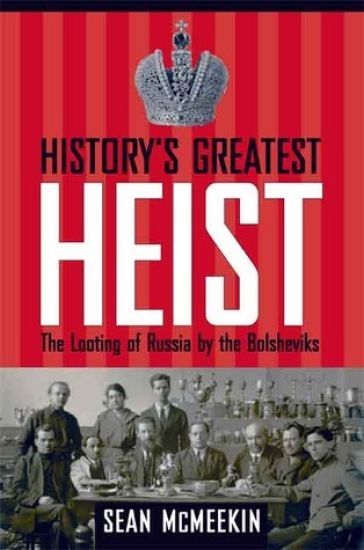
History's Greatest Heist

History's Greatest Heist

Sean McMeekin

Yale University Press
2009
sidottu
How Lenin’s regime turned Russia’s priceless cultural patrimony into armored cars, trains, planes, and machine guns Historians have never resolved a central mystery of the Russian Revolution: How did the Bolsheviks, despite facing a world of enemies and leaving nothing but economic ruin in their path, manage to stay in power through five long years of civil war? In this penetrating book, Sean McMeekin draws on previously undiscovered materials from the Soviet Ministry of Finance and other European and American archives to expose some of the darkest secrets of Russia’s early days of communism. Building on one archival revelation after another, the author reveals how the Bolsheviks financed their aggression through astonishingly extensive thievery. Their looting included everything from the cash savings of private citizens to gold, silver, diamonds, jewelry, icons, antiques, and artwork.By tracking illicit Soviet financial transactions across Europe, McMeekin shows how Lenin’s regime accomplished history’s greatest heist between 1917 and 1922 and turned centuries of accumulated wealth into the sinews of class war. McMeekin also names names, introducing for the first time the compliant bankers, lawyers, and middlemen who, for a price, helped the Bolsheviks launder their loot, impoverish Russia, and impose their brutal will on millions.
Berlin-Baghdad Express: The Ottoman Empire and Germany's Bid for World Power
The modern Middle East was forged in the crucible of the First World War, but few know the full story of how war actually came to the region. As Sean McMeekin reveals in this startling reinterpretation of the war, it was neither the British nor the French but rather a small clique of Germans and Turks who thrust the Islamic world into the conflict for their own political, economic, and military ends. The Berlin-Baghdad Express tells the fascinating story of how Germany exploited Ottoman pan-Islamism in order to destroy the British Empire, then the largest Islamic power in the world. Meanwhile the Young Turks harnessed themselves to German military might to avenge Turkey's hereditary enemy, Russia. Told from the perspective of the key decision-makers on the Turco-German side, many of the most consequential events of World War I--Turkey's entry into the war, Gallipoli, the Armenian massacres, the Arab revolt, and the Russian Revolution--are illuminated as never before. Drawing on a wealth of new sources, McMeekin forces us to re-examine Western interference in the Middle East and its lamentable results. It is an epic tragicomedy of unintended consequences, as Turkish nationalists give Russia the war it desperately wants, jihad begets an Islamic insurrection in Mecca, German sabotage plots upend the Tsar delivering Turkey from Russia's yoke, and German Zionism midwifes the Balfour Declaration. All along, the story is interwoven with the drama surrounding German efforts to complete the Berlin to Baghdad railway, the weapon designed to win the war and assure German hegemony over the Middle East.
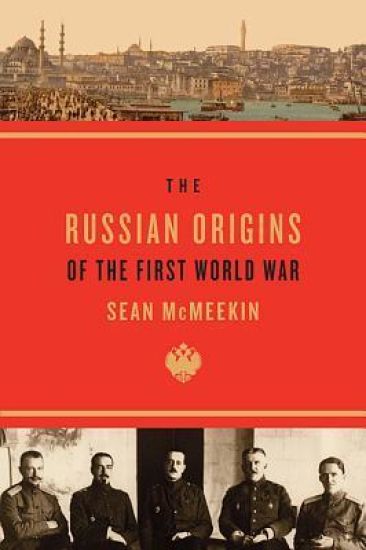
The Russian Origins of the First World War

The Russian Origins of the First World War

Sean McMeekin

The Belknap Press
2013
nidottu
The catastrophe of the First World War, and the destruction, revolution, and enduring hostilities it wrought, make the issue of its origins a perennial puzzle. Since World War II, Germany has been viewed as the primary culprit. Now, in a major reinterpretation of the conflict, Sean McMeekin rejects the standard notions of the war’s beginning as either a Germano-Austrian preemptive strike or a “tragedy of miscalculation.” Instead, he proposes that the key to the outbreak of violence lies in St. Petersburg.It was Russian statesmen who unleashed the war through conscious policy decisions based on imperial ambitions in the Near East. Unlike their civilian counterparts in Berlin, who would have preferred to localize the Austro-Serbian conflict, Russian leaders desired a more general war so long as British participation was assured. The war of 1914 was launched at a propitious moment for harnessing the might of Britain and France to neutralize the German threat to Russia’s goal: partitioning the Ottoman Empire to ensure control of the Straits between the Black Sea and the Mediterranean.Nearly a century has passed since the guns fell silent on the western front. But in the lands of the former Ottoman Empire, World War I smolders still. Sunnis and Shiites, Arabs and Jews, and other regional antagonists continue fighting over the last scraps of the Ottoman inheritance. As we seek to make sense of these conflicts, McMeekin’s powerful exposé of Russia’s aims in the First World War will illuminate our understanding of the twentieth century.
Ottoman Endgame

Ottoman Endgame

Sean McMeekin

Penguin
2016
pokkari
A single-volume history of the Ottoman empire's decade-long war for survival. Beginning with Italy's invasion of Ottoman Tripoli in September 1911, the opening salvo in what would soon spiral into a European conflict, it concludes with the establishment of Turkish independence in the Treaty of Lausanne, 1923.
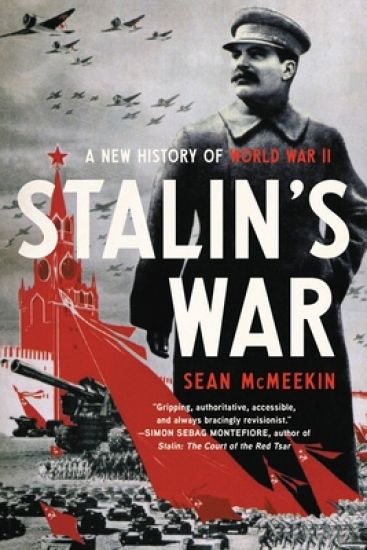
Stalin's War: A New History of World War II
"A provocative, revisionist take on the Second World War" (Financial Times) by a prize-winning historianWe remember World War II as a struggle between good and evil, with Hitler propelling events and the Allied powers saving the day. But Hitler's armies did not fight in multiple theaters, his empire did not span the Eurasian continent, and he did not inherit the spoils of war. That role belonged to Joseph Stalin. Hitler's genocidal ambition may have unleashed Armageddon, but as celebrated historian Sean McMeekin shows, the conflicts that emerged were distinctly shaped by Stalin's maneuverings, orchestrated to unleash a war between Germany and her capitalist adversaries in Europe and between Japan and the "Anglo-Saxon" powers in Asia. Meanwhile, the United States and Britain's self-defeating strategy of supporting Stalin and his armies at all costs allowed the Soviets to conquer most of Eurasia, from Berlin to Beijing, for Communism.A groundbreaking reassessment, Stalin's War is essential reading for anyone looking to understand the roots of the current world order.
Stalin's War: A New History of World War II
A prize-winning historian reveals how Stalin--not Hitler--was the animating force of World War II in this major new history. World War II endures in the popular imagination as a heroic struggle between good and evil, with villainous Hitler driving its events. But Hitler was not in power when the conflict erupted in Asia--and he was certainly dead before it ended. His armies did not fight in multiple theaters, his empire did not span the Eurasian continent, and he did not inherit any of the spoils of war. That central role belonged to Joseph Stalin. The Second World War was not Hitler's war; it was Stalin's war. Drawing on ambitious new research in Soviet, European, and US archives, Stalin's War revolutionizes our understanding of this global conflict by moving its epicenter to the east. Hitler's genocidal ambition may have helped unleash Armageddon, but as McMeekin shows, the war which emerged in Europe in September 1939 was the one Stalin wanted, not Hitler. So, too, did the Pacific war of 1941-1945 fulfill Stalin's goal of unleashing a devastating war of attrition between Japan and the "Anglo-Saxon" capitalist powers he viewed as his ultimate adversary. McMeekin also reveals the extent to which Soviet Communism was rescued by the US and Britain's self-defeating strategic moves, beginning with Lend-Lease aid, as American and British supply boards agreed almost blindly to every Soviet demand. Stalin's war machine, McMeekin shows, was substantially reliant on American materi l from warplanes, tanks, trucks, jeeps, motorcycles, fuel, ammunition, and explosives, to industrial inputs and technology transfer, to the foodstuffs which fed the Red Army. This unreciprocated American generosity gave Stalin's armies the mobile striking power to conquer most of Eurasia, from Berlin to Beijing, for Communism. A groundbreaking reassessment of the Second World War, Stalin's War is essential reading for anyone looking to understand the current world order.
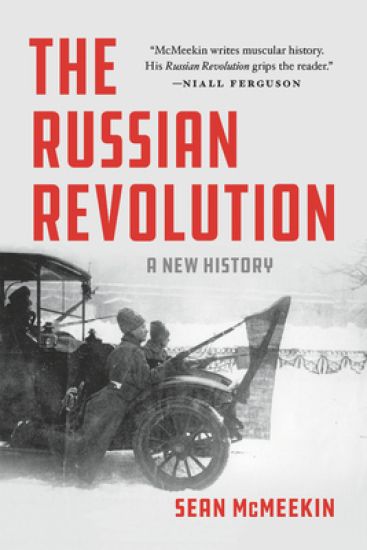
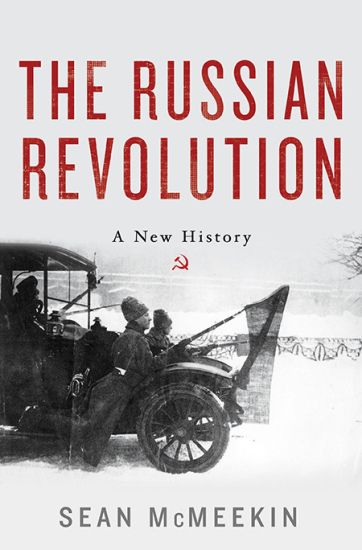
The Russian Revolution: A New History

The Russian Revolution: A New History

Sean McMeekin

BASIC BOOKS
2021
nidottu
A "powerful revisionist history" (Times UK) illuminating the tensions and transformations of the Russian Revolution In The Russian Revolution, acclaimed historian Sean McMeekin traces the events which ended Romanov rule, ushered the Bolsheviks into power, and introduced communism to the world. Between 1917 and 1922, Russia underwent a complete and irreversible transformation. Taking advantage of the collapse of the Tsarist regime in the middle of World War I, the Bolsheviks staged a hostile takeover of the Russian Imperial Army, promoting mutinies and mass desertions of men in order to fulfill Lenin's program of turning the "imperialist war" into civil war. By the time the Bolsheviks had snuffed out the last resistance five years later, over twenty million people had died, and the Russian economy had collapsed so completely that communism had to be temporarily abandoned. The first comprehensive history of these momentous events in over two decades, The Russian Revolution combines cutting-edge scholarship and a fast-paced narrative to shed new light on one of the most significant turning points of the twentieth century.
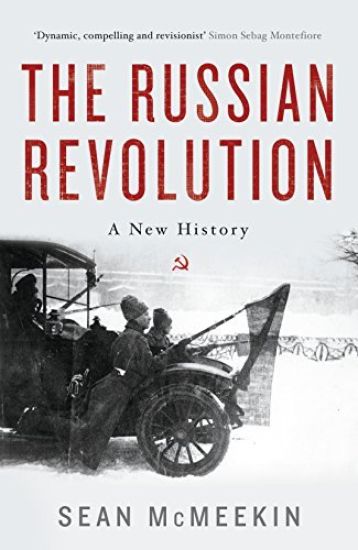
The Russian Revolution

The Russian Revolution

Sean McMeekin

Profile Books Ltd
2018
pokkari
At the turn of the century, the Russian economy was growing by about 10% annually and its population had reached 150 million. By 1920 the country was in desperate financial straits and more than 20 million Russians had died. And by 1950, a third of the globe had embraced communism. The triumph of Communism sets a profound puzzle. How did the Bolsheviks win power and then cling to it amid the chaos they had created? Traditional histories remain a captive to Marxist ideas about class struggle. Analysing never before used files from the Tsarist military archives, McMeekin argues that war is the answer. The revolutionaries were aided at nearly every step by Germany, Sweden, and Switzerland who sought to benefit - politically and economically - from the changes overtaking the country. To make sense of Russia's careening path the essential question is not Lenin's "who, whom?", but who benefits?
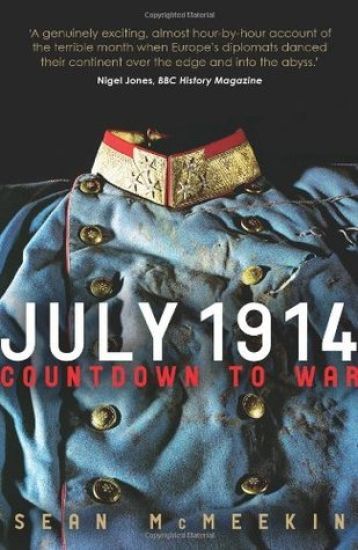
July 1914

July 1914

Sean McMeekin

Icon Books Ltd
2014
pokkari
The outbreak of the First World War was 'a drama never surpassed'.One hundred years later, the characters still seem larger than life: Archduke Franz Ferdinand, brooding heir to the Habsburg throne; the fanatical Bosnian Serb assassins who plot to murder him; Conrad and Berchtold, the Austrians who exploit the outrage; Kaiser Wilhelm and Bethmann Hollweg, backing up the Austrians; Sazonov, Russian Foreign Minister, trying to live down a reputation for cowardice; Poincaré and Paléologue, two French statesmen who urge on the Russians; and not least Winston Churchill, who, alone among Cabinet officials in London, perceives the seriousness of the situation in time to take action.July 1914 tells the story of Europe's countdown to war through the eyes of these men, between the bloody opening act on 28 June 1914 and Britain's final plunge on 4 August, which turned a European conflict into a world war. The outbreak of war was no accident of fate. Individual statesmen, pursuing real objectives, conjured up the conflict - in some cases by conscious intention. While some sought honourably to defuse tensions, others all but oozed with malice as they rigged the decks for war.Dramatic, inevitably tense and almost forensically observed, Sean McMeekin's unique book retells the story of that cataclysmic month, making clear as never before who was responsible for the catastrophe. You will never think the same way again about the origins of the First World War.
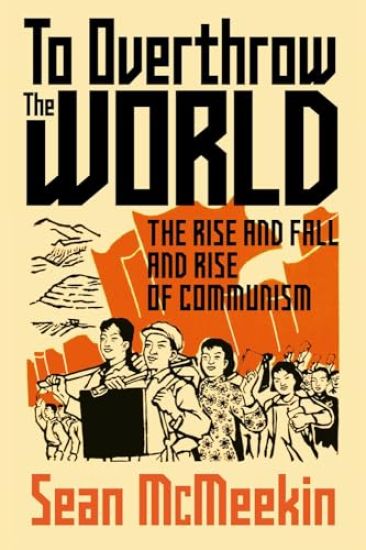
To Overthrow the World

To Overthrow the World

Sean McMeekin

C HURST CO PUBLISHERS LTD
2024
sidottu
Three decades since the Soviet Union’s collapse prompted Francis Fukuyama to proclaim the ‘End of History’, things look different. Russia may no longer be Communist, but Stalin is more admired there than at any time since his death in 1953. The United States has bled power and prestige in uncanny parallel with China’s rise in economic strength and global influence—not least in the US itself. Liberal democratic capitalism seems moribund, while Chinese Communism assimilates the world. How and why did this happen? In his sweeping history, Sean McMeekin investigates the evolution of Communism from the seductive ideal of a classless society into the ruling doctrine of tyrannical regimes. From Marx’s writings to the global resurgence of Communism in the twenty-first century, McMeekin argues that, despite the endurance of this political system, it remains deeply unpopular. Where it has arisen, it has always arisen by force.Blending narrative with cutting-edge scholarship, To Overthrow the World revolutionises our understanding of Communism—an idea that seemingly cannot die.
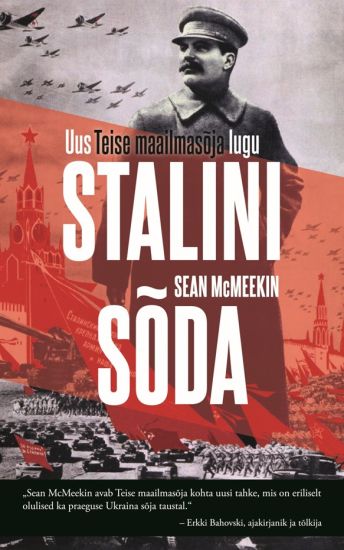
Stalini sõda. Uus teise maailmasõja lugu

Stalini sõda. Uus teise maailmasõja lugu

Sean Mcmeekin

Helios kirjastus
2025
sidottu
Auhinnatud ajaloolane paljastab, kuidas Teise maailmasõja tegelik käivitav jõud ei olnud Adolf Hitler, vaid Jossif Stalin.Teine maailmasõda on paljude rahvaste teadvuses kui võitlus hea ja kurja vahel, kus sündmuste keskmes oli kurikuulus Hitler ning liitlasriikidel ei jäänud üle muud, kui talle vastu astuda ja olukord päästa. Ent kui konflikt Aasias puhkes, polnud Hitler veel võimul - ja sõja lõpuks oli ta juba surnud. Tema armeed ei võidelnud mitmel rindel, tema impeerium ei laienenud üle Euraasia mandri ning tema ei saanud sõjasaagi pärijaks. See keskne roll kuulus hoopis Jossif Stalinile. Teine maailmasõda ei olnud Hitleri sõda - see oli Stalini sõda.Tuginedes ulatuslikule uurimistööle endise Nõukogude Liidu, Euroopa ja Ameerika arhiivides, muudab "Stalini sõda" põhjalikult meie arusaama sellest globaalsest konfliktist, nihutades sõja keskpunkti itta. Kuigi Hitleri korraldatud genotsiidi ulatus ja õudus andsid lahingutele hoogu, näitab Sean McMeekin, et Euroopas 1939. aasta septembris puhkenud sõda oli Stalini tahtmine, mitte Hitleri. Samuti teenis Vaikse ookeani sõda (1941-1945) Stalini eesmärki - käivitada laastav kurnamissõda Jaapani ja tema peamiste vaenlaste vahel.McMeekin paljastab ka, kuidas USA ja Suurbritannia ennasthävitavad strateegilised otsused päästsid Nõukogude kommunismi - üheks otsuseks näiteks lendliisi abi, mille käigus ameeriklased ja britid rahuldasid peaaegu pimesi kõik Nõukogude Liidu nõudmised. Stalini sõjamasin sõltus suurel määral Ameerika varustusest alates lennukitest, tankidest, veoautodest ja kütusest kuni laskemoona, tööstustehnoloogia ja isegi Punaarmeed toitnud toiduaineteni. See vastutasuta ameeriklaste heldus andis Stalini armeedele liikuvuse ja löögivõime, mis võimaldas neil vallutada suure osa Euraasiast - Berliinist Pekingini - kommunismi nimel."Stalini sõda" on murranguline Teise maailmasõja ümberhindamine ning oluline lugemine kõigile, kes soovivad mõista praeguse maailmakorra põhjuseid."Stalini sõda" sisaldab väga põhjalikke uurimusi ning on väga hästi kirjutatud. McMeekinit ennast tsiteerides ei ole "Stalini sõda" küll "ammendav ülevaade Teisest maailmasõjast", kuid tema teos pakub sellele konfliktile uut vaatenurka, esitab uusi küsimusi ja - tuleks lisada - annab vanadele küsimustele uusi ja tihti ootamatuid vastuseid." Serhi Plohhi, raamatute "Euroopa väravad. Ukraina ajalugu" ja "Tshornobõl. Tuumakatastroofi ajalugu" autor"See erakordne raamat... põhjalikult uuritud, elegantselt kirjutatud... "Stalini sõda" on haruldane teos: raamat, mis sunnib meid uuesti mõtlema ja oma senist arusaama sellest kõige enam käsitletud teemast ümber hindama." BBC History
The Russian Revolution

The Russian Revolution

Sean McMeekin

Basic Civitas Books
2017
sidottu
The definitive, single-volume history of the Russian Revolution, from an award-winning scholar In The Russian Revolution, acclaimed historian Sean McMeekin traces the events which ended Romanov rule, ushered the Bolsheviks into power, and introduced Communism to the world. Between 1917 and 1922, Russia underwent a complete and irreversible transformation. Taking advantage of the collapse of the Tsarist regime in the middle of World War I, the Bolsheviks staged a hostile takeover of the Russian Imperial Army, promoting mutinies and mass desertions of men in order to fulfill Lenin's program of turning the "imperialist war" into civil war. By the time the Bolsheviks had snuffed out the last resistance five years later, over 20 million people had died, and the Russian economy had collapsed so completely that Communism had to be temporarily abandoned. Still, Bolshevik rule was secure, owing to the new regime's monopoly on force, enabled by illicit arms deals signed with capitalist neighbors such as Germany and Sweden who sought to benefit-politically and economically-from the revolutionary chaos in Russia. Drawing on scores of previously untapped files from Russian archives and a range of other repositories in Europe, Turkey, and the United States, McMeekin delivers exciting, groundbreaking research about this turbulent era. The first comprehensive history of these momentous events in two decades, The Russian Revolution combines cutting-edge scholarship and a fast-paced narrative to shed new light on one of the most significant turning points of the twentieth century.
Geopolitikens återkomst : striden om framtidens historia

Geopolitikens återkomst : striden om framtidens historia

Jeremy Black; Philip Bobbitt; Michael Broers; Roger Crowley; Gregory Feifer; Noah Feldman; Jonathan Fenby; David Frum; Gabriel Gorodetsky; Peter Heather; Josef Joffe; Anna-Lena Laurén; John H. Maurer; Sean McMeekin; Walter Russell Mead; Richard Miles; Fraser Nelson; Richard Overy; Lincoln Paine; Andrew Preston; Morris Rossabi; Charly Salonius-Pasternak; Norman Stone; Barry Strauss; Mikael Wigell

Bokförlaget Stolpe
2021
sidottu
Det var inte länge sedan idén om att vi nått historiens slut vann kraft och spridning: tanken att människans sociokulturella evolution nått fram till en punkt där den knappast kunde nå längre. Ett kvartssekel senare verkar denna optimism ha försvunnit. I stället bevittnar vi nu geopolitikens återkomst. Ett tjugotal experter utforskar i denna antologi hur vi hamnade där vi är idag men också vart vi kan tänkas vara på väg. Huvudredaktörer är Kurt Almqvist och Alexander Linklater.
Innovation by Demand

Innovation by Demand

Andrew McMeekin; Mark Tomlinson; Ken Green; Vivien Walsh

Manchester University Press
2011
nidottu
The structure and regulation of consumption and demand has recently become of great interest to sociologists and economists alike, and at the same time there is growing interest in trying to understand the patterns and drivers of technological innovation. This book, newly available in paperback, brings together a range of sociologists and economists to study the role of demand and consumption in the innovative process.The book starts with a broad conceptual overview of ways that the sociological and economics literatures address issues of innovation, demand and consumption. It goes on to offer different approaches to the economics of demand and innovation through an evolutionary framework, before reviewing how consumption fits into evolutionary models of economic development. Food consumption is then looked at as an example of innovation by demand, including an examination of the dynamic nature of socially-constituted consumption routines.The book includes a number of illuminating case studies, including an analysis of how black Americans use consumption to express collective identity, and a number of demand–innovation relationships within matrices or chains of producers and users or other actors, including service industries such as security, and the environmental performance of companies. The involvement of consumers in innovation is looked at, including an analysis of how consumer needs may be incorporated in the design of high-tech products. The final chapter argues for the need to build an economic sociology of demand that goes from micro-individual through to macro-structural features.This book is relevant to United Nations Sustainable Development Goal 9, Industry, innovation and infrastructure.An electronic edition of this book is freely available under a Creative Commons (CC BY-NC-ND) licence.
112 Secrets of Highly Creative Women Journal

112 Secrets of Highly Creative Women Journal

Gail McMeekin

Conari Press,U.S.
2011
sidottu
The perfect companion to Gail McMeekin's popular "The12 Secrets of Highly Creative Women," this journal offers readers a place to track and record their progress with their creative work. It follows the format of the original book, highlighting the 12 Secrets, Keys, and Challenges of each chapter with prompts and inspirational quotes to motivate women to write about their creative lives.The journal features excerpts from interviews with highly creative women who are successful in their fields, fun sidebars, and lots of stories that show women how to gain both confidence and perspective on their own work.
Power of Positive Choices

Power of Positive Choices

Gail McMeekin

Conari Press,U.S.
2001
nidottu
This straightforward and accessible text is divided into two parts: being and doing. Each chapter treats a specific theme, which is made concrete through one or more exercises aimed at reducing negative energy and taking control. Using the author’s practical program, readers learn how to eliminate stress and become empowered.