Kirjojen hintavertailu. Mukana 11 342 296 kirjaa ja 12 kauppaa.

Kirjahaku

Etsi kirjoja tekijän nimen, kirjan nimen tai ISBN:n perusteella.

1000 tulosta hakusanalla Megan J. Sinnott

Toms and Dees

Toms and Dees

Megan J. Sinnott

University of Hawai'i Press
2004
sidottu
A vibrant, growing, and highly visible set of female identities has emerged in Thailand known as tom and dee. A ""tom"" (from ""tomboy"") refers to a masculine woman who is sexually involved with a feminine partner, or ""dee"" (from ""lady""). The patterning of female same-sex relationships into masculine and feminine pairs, coupled with the use of English-derived terms to refer to them, is found throughout East and Southeast Asia. Have the forces of capitalism facilitated the dissemination of Western-style gay and lesbian identities throughout the developing world as some theories of transnationalism suggest? Is the emergence of toms and dees over the past twenty-five years a sign that this has occurred in Thailand? Megan Sinnott engages these issues by examining the local culture and historical context of female same-sex eroticism and female masculinity in Thailand. Drawing on a broad spectrum of anthropological literature, Sinnott situates Thai tom and dee subculture within the global trend of increasingly hybridized sexual and gender identities.

Toms and Dees

Toms and Dees

Megan J. Sinnott

University of Hawai'i Press
2004
nidottu
A vibrant, growing, and highly visible set of female identities has emerged in Thailand known as tom and dee. A ""tom"" (from ""tomboy"") refers to a masculine woman who is sexually involved with a feminine partner, or ""dee"" (from ""lady""). The patterning of female same-sex relationships into masculine and feminine pairs, coupled with the use of English-derived terms to refer to them, is found throughout East and Southeast Asia. Have the forces of capitalism facilitated the dissemination of Western-style gay and lesbian identities throughout the developing world as some theories of transnationalism suggest? Is the emergence of toms and dees over the past twenty-five years a sign that this has occurred in Thailand? Megan Sinnott engages these issues by examining the local culture and historical context of female same-sex eroticism and female masculinity in Thailand. Drawing on a broad spectrum of anthropological literature, Sinnott situates Thai tom and dee subculture within the global trend of increasingly hybridized sexual and gender identities.

Cat Tails

Cat Tails

Dorian J. Harper; Lauren Myer; J. Bozlinski; Victoria Lee Bozlinski; Michelle "Mirz" Lehmann; Alicia Cooper; Odd Writings; Belinda Sinnott; Yami Jinsei; Megan Mitchell; Joseph Wright

Lulu.com
2014
nidottu
Bring home heart-warming love with this kid-tten friendly collection of literature and art dedicated specifically to cats! "Cat Tails" is a non-profit anthology. All funds raised are donated to animal shelters across New York State to help them buy food, toys, and blankets for the many cats and dogs seeking forever homes.
Food in the United States, 1890-1945

Food in the United States, 1890-1945

Megan J. Elias

Greenwood Press
2009
sidottu
No American history or food collection is complete without this lively insight into the radical changes in daily life from the Gilded Age to World War II, as reflected in foodways.From the Gilded Age to the end of World War II, what, where, when, and how Americans ate all changed radically. Migration to urban areas took people away from their personal connection to food sources. Immigration, primarily from Europe, and political influence of the Caribbean, Latin America, and the Pacific brought us new ingredients, cuisines, and foodways. Technological breakthroughs engendered the widespread availability of refrigeration, as well as faster cooking times. The invention of the automobile augured the introduction of “road food,” and the growth of commercial transportation meant that a wider assortment of foods was available year round. Major food crises occurred during the Depression and two world wars. Food in the United States, 1890-1945 documents these changes, taking students and general readers through the period to explain what our foodways say about our society. This intriguing narrative is enlivened with numerous period anecdotes that bring America history alive through food history.25 period photos complement the textRecipes allow students to sample dishes no longer common on American tablesA timeline makes clear the changes and new technologies that occurred during the periodA selected bibliography facilitates further research
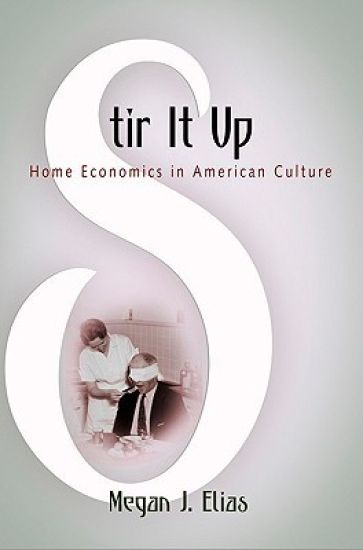
Stir It Up

Stir It Up

Megan J. Elias

University of Pennsylvania Press
2010
pokkari
For Americans who came of age in the mid-twentieth century, home economics conjures memories of burnt toast and sewing disasters. But as historian Megan Elias shows in Stir It Up, home economics began as an idealistic reform movement in higher education in the early 1900s. Leaders of this movement sought to discover and disseminate the best methods for performing domestic work while creating new professional options for women that were based on elements of home life. Home and family were treated as subjects for scientific analysis; students wore lab coats while baking bread and performed rigorous tests on the palatability of their work. The Federal Bureau of Home Economics supplied a grateful audience with informational bulletins as Americans seemed to accept the idea that home could be a site for social change. A major shift occurred in the 1950s, when new ideas about women's roles seemed to divert home economics into more traditional channels, and "home ec" became identified with the era's conformist culture. Even as home economists were redefining family dynamics and influencing government policies, such as school lunch programs, their field was becoming an object of scorn, especially to the feminists of the 1960s. Stir It Up explains what the successes and failures of home economists can tell us about American culture. The book concludes with an examination of contemporary attitudes toward domesticity, putting the phenomena of Martha Stewart, Rachael Ray, Ty Pennington, and the "Mommy Wars" into historical context.
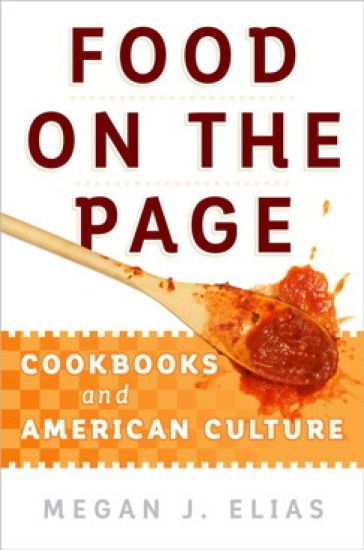
Food on the Page

Food on the Page

Megan J. Elias

University of Pennsylvania Press
2017
sidottu
What is American food? From barbecue to Jell-O molds to burrito bowls, its history spans a vast patchwork of traditions, crazes, and quirks. A close look at these foods and the recipes behind them unearths a vivid map of American foodways: how Americans thought about food, how they described it, and what foods were in and out of style at different times. In Food on the Page, the first comprehensive history of American cookbooks, Megan J. Elias chronicles cookbook publishing from the early 1800s to the present day. Following food writing through trends such as the Southern nostalgia that emerged in the late nineteenth century, the Francophilia of the 1940s, countercultural cooking in the 1970s, and today's cult of locally sourced ingredients, she reveals that what we read about food influences us just as much as what we taste. Examining a wealth of fascinating archival material-and rediscovering several all-American culinary delicacies and oddities in the process-Elias explores the role words play in the creation of taste on both a personal and a national level. From Fannie Farmer to The Joy of Cooking to food blogs, she argues, American cookbook writers have commented on national cuisine while tempting their readers to the table. By taking cookbooks seriously as a genre and by tracing their genealogy, Food on the Page explains where contemporary assumptions about American food came from and where they might lead.
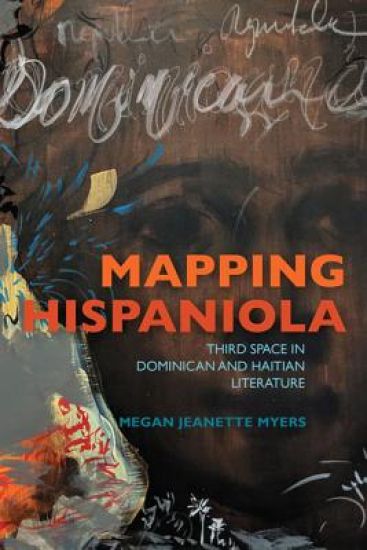
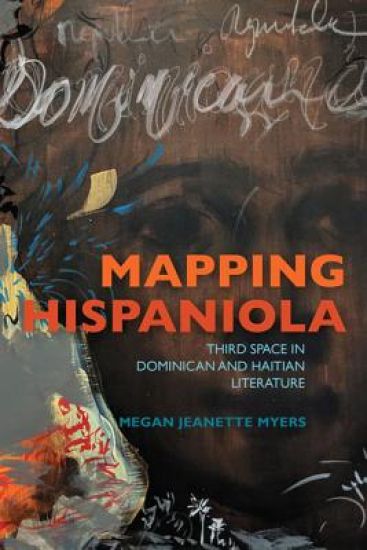
Mapping Hispaniola

Mapping Hispaniola

Megan J. Myers

University of Virginia Press
2019
sidottu
Because of their respective histories of colonization and independence, the Spanish-speaking Dominican Republic has developed into the largest economy of the Caribbean, while Haiti, occupying the western side of their shared island of Hispaniola, has become one of the poorest countries in the Americas. While some scholars have pointed to such disparities as definitive of the island’s literature, Megan Jeanette Myers challenges this reduction by considering how certain literary texts confront the dominant and, at times, exaggerated anti-Haitian Dominican ideology.Myers examines the antagonistic portrayal of the two nations—from the anti-Haitian rhetoric of the intellectual elites of Dominican dictator Rafael Trujillo’s rule to the writings of Julia Alvarez, Junot Díaz, and others of the Haitian diaspora—endeavoring to reposition Haiti on the literary map of the Dominican Republic and beyond. Focusing on representations of the Haitian-Dominican dynamic that veer from the dominant history, Mapping Hispaniola disrupts the "magnification" and repetition of a Dominican anti-Haitian narrative.
Mapping Hispaniola

Mapping Hispaniola

Megan J. Myers

University of Virginia Press
2019
pokkari
Because of their respective histories of colonization and independence, the Spanish-speaking Dominican Republic has developed into the largest economy of the Caribbean, while Haiti, occupying the western side of their shared island of Hispaniola, has become one of the poorest countries in the Americas. While some scholars have pointed to such disparities as definitive of the island’s literature, Megan Jeanette Myers challenges this reduction by considering how certain literary texts confront the dominant and, at times, exaggerated anti-Haitian Dominican ideology.Myers examines the antagonistic portrayal of the two nations—from the anti-Haitian rhetoric of the intellectual elites of Dominican dictator Rafael Trujillo’s rule to the writings of Julia Alvarez, Junot Díaz, and others of the Haitian diaspora—endeavoring to reposition Haiti on the literary map of the Dominican Republic and beyond. Focusing on representations of the Haitian-Dominican dynamic that veer from the dominant history, Mapping Hispaniola disrupts the "magnification" and repetition of a Dominican anti-Haitian narrative.
Iris Murdoch's Ethics

Iris Murdoch's Ethics

Megan J. Laverty

Continuum International Publishing Group Ltd.
2007
sidottu
This book will be of great value to philosophers, gender theorists, literary critics and others engaged with the questions of life's meaning and what a deepened understanding of it looks like. In "Iris Murdoch's Ethics: A Consideration of Her Romantic Vision", Megan Laverty draws upon the tradition of 'Philosophical Romanticism' to account for Murdoch's enigmatical quality and her embrace of paradoxical truths. Laverty's provocative, yet accessible, study analyses Murdoch's version of Kant's Copernican Revolution, the centrality of learning and the sublime to Murdoch's redemptive vision, and Murdoch's understanding of philosophy, imagination, freedom, love and art. Laverty interprets Murdoch's emphasis on humility and attention as a critique of the Romantic emphasis on irony and self-creation. Drawing on a range of literary and philosophical sources, Laverty's study is a testimony to the ongoing significance of Murdoch's contribution to a broad range of contemporary philosophical concerns.
Cookie Jar

Cookie Jar

Megan J Hills

Megan Hills Books
2023
pokkari
A wheelchair-bound artist is preyed on by a stalker; a young taxi driver breaks the law daily for mysterious reasons; a glass artist's marriage is at breaking point; a journalist invests in a business destroying the relationships of everyone he loves; an artist discovers she is trapped in an impossible contract which could ruin her career. These are only a few of the Cookie Jar stories to devour.Make yourself a cuppa and settle into this collection of short stories taking you through challenges of life, love and art in Australia-ending with a big, delicious bite of New York City.
Breaking Down Barriers to Care

Breaking Down Barriers to Care

Megan J Engelen; John E Snyder

Nova Science Publishers Inc
2010
nidottu
Although entirely preventable, smoking is one of the most common causes of morbidity and mortality in the United States. As a result it creates a significant financial burden on the health care system. In the text, the authors first present an evidence-based approach for providers that helps identify the most at-risk patients. They then offer specific clinical strategies for approaching tobacco cessation which are proven to be the most effective in overcoming the existing cultural or systematic barriers. Lastly, the authors propose a number of health policy recommendations which can assist with breaking down barriers to care for each cultural group and result in more effective cessation programs on the population level.