

Kirjahaku
Etsi kirjoja tekijän nimen, kirjan nimen tai ISBN:n perusteella.
1000 tulosta hakusanalla Melville
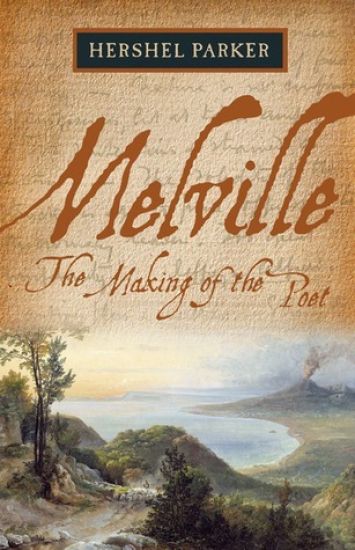
Who would have looked for philosophy in whales, or for poetry in blubber? the London John Bull remarked in October of 1851. And yet, the reviewer went on, ""few books which professedly deal in metaphysics, or claim the parentage of the muses, contain as much true philosophy and as much genuine poetry as the tale of the Pequod's whaling expedition."" A decade and a half before surprising the world with a book of Civil War poetry, Melville was already confident of what was ""poetic"" in his prose. As Hershel Parker demonstrates in this book, Melville was steeped in poetry long before he called himself a poet. Here Parker, the dean of Melville studies, gives a compelling, indepth account of how one of America's greatest writers grew into the vocation of a poet. His work corrects two of the most pernicious misconceptions about Melville perpetuated by earlier critics: that he repudiated fiction writing after Pierre, and that he hadn't begun writing poetry (let alone had a book of poems ready for publication) as early as 1860. In clearing up these misapprehensions, Parker gives a thorough and thoroughly involving account of Melville's development as a poet. Parker demonstrates for the first time just how crucial poetry was to Melville from childhood to old age, especially its re-emergence in his life after 1849. Drawing on Melville's shrewd annotations of great British poets and on his probing, skeptical engagement with commentaries on poetry (particularly by the great Scots reviewers), Parker paints a richly textured portrait of a hitherto unseen side of Herman Melville.
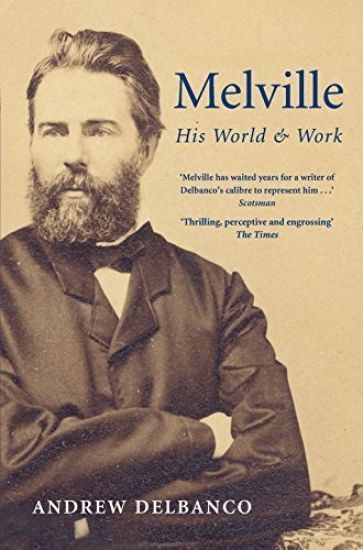
Herman Melville was born into a family that in the fledgling republic had lost both money and status. Toughened at sea as a young man, he returned home to chronicle the deepest crises of his time while forever shaping our literature with Moby-Dick, “Bartleby, the Scrivener,” Benito Cereno, and Billy Budd. Delbanco traces Melville’s growth from the bawdy storytelling of Typee through the spiritual preoccupations building up to Moby-Dick, and the profound disillusionment of later works. He uncovers autobiographical traces throughout Melville’s writing, shows the relentless financial pressure and declining critical and popular esteem that plagued his career, and, above all, illuminate the stunning achievements of his oeuvre. Finally we understand how Melville, more than any other American writer, has captured the popular imagination.


Meet Melville, a purple, softly round, beyond-adorable sea creature who is off to “find a place for just me.”Leaving his warm and loving mama behind, Melville the sea creature sets off for an adventure, and he knows just the kind of place he’s looking for. Along the way, he gets lost (briefly), encounters sharks and other big sea creatures, and floats past a pirate ship. Melville checks out a few spots, but all fall short of his dream place…until, weary from his adventures, he finds his way back to his mama—a place that is “just right.”
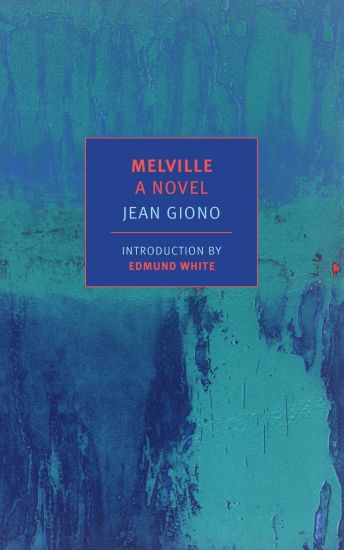
In the fall of 1849, Herman Melville traveled to London to deliver his novel White-Jacket to his publisher. On his return to America, Melville would write Moby-Dick. Melville: A Novel imagines what happened in between: the adventurous writer fleeing London for the country, wrestling with an angel, falling in love with an Irish nationalist, and, finally, meeting the angel's challenge--to express man's fate by writing the novel that would become his masterpiece. Eighty years after it appeared in English, Moby-Dick was translated into French for the first time by the Proven al novelist Jean Giono and his friend Lucien Jacques. The publisher persuaded Giono to write a preface, granting him unusual latitude. The result was this literary essai, Melville: A Novel--part biography, part philosophical rumination, part romance, part unfettered fantasy. Paul Eprile's expressive translation of this intimate homage brings the exchange full circle. Paul Eprile was a co-winner of the French-American Foundation's 2018 Translation Prize for his translation of Melville.

Melville in Love: The Secret Life of Herman Melville and the Muse of Moby-Dick
Michael Shelden
Ecco Press
2016
sidottu
A new account of Herman Melville and the writing of Moby-Dick, written by a Pulitzer Prize finalist in Biography and based on fresh archival research, which reveals that the anarchic spirit animating Melville's canonical work was inspired by his great love affair with a shockingly unconventional married woman.Herman Melville's epic novel, Moby-Dick, was a spectacular failure when it was published in 1851, effectively ending its author's rise to literary fame. Because he was neglected by academics for so long, and because he made little effort to preserve his legacy, we know very little about Melville, and even less about what he called his "wicked book." Scholars still puzzle over what drove Melville to invent Captain Ahab's mad pursuit of the great white whale.In Melville in Love Pulitzer Prize-finalist Michael Shelden sheds light on this literary mystery to tell a story of Melville's passionate, obsessive, and clandestine affair with a married woman named Sarah Morewood, whose libertine impulses encouraged and sustained Melville's own. In his research, Shelden discovered unexplored documents suggesting that, in their shared resistance to the "iron rule" of social conformity, Sarah and Melville had forged an illicit and enduring romantic and intellectual bond. Emboldened by the thrill of courting Sarah in secret, the pleasure of falling in love, and the excitement of spending time with literary luminaries--like Dr. Oliver Wendell Holmes and Nathaniel Hawthorne--Melville found the courage to take the leap from light works of adventure to the hugely brilliant, utterly subversive Moby-Dick.Filled with the rich detail and immense drama of Melville's secret life, Melville in Love tells the gripping story of how one of our greatest novelists found his muse.
Melville in Love: The Secret Life of Herman Melville and the Muse of Moby-Dick
Michael Shelden
Ecco Press
2017
nidottu
A new account of Herman Melville and the writing of Moby-Dick, written by a Pulitzer Prize finalist in Biography and based on fresh archival research, which reveals that the anarchic spirit animating Melville's canonical work was inspired by his great love affair with a shockingly unconventional married woman.Herman Melville's epic novel, Moby-Dick, was a spectacular failure when it was published in 1851, effectively ending its author's rise to literary fame. Because he was neglected by academics for so long, and because he made little effort to preserve his legacy, we know very little about Melville, and even less about what he called his "wicked book." Scholars still puzzle over what drove Melville to invent Captain Ahab's mad pursuit of the great white whale.In Melville in Love Pulitzer Prize-finalist Michael Shelden sheds light on this literary mystery to tell a story of Melville's passionate, obsessive, and clandestine affair with a married woman named Sarah Morewood, whose libertine impulses encouraged and sustained Melville's own. In his research, Shelden discovered unexplored documents suggesting that, in their shared resistance to the "iron rule" of social conformity, Sarah and Melville had forged an illicit and enduring romantic and intellectual bond. Emboldened by the thrill of courting Sarah in secret, the pleasure of falling in love, and the excitement of spending time with literary luminaries--like Dr. Oliver Wendell Holmes and Nathaniel Hawthorne--Melville found the courage to take the leap from light works of adventure to the hugely brilliant, utterly subversive Moby-Dick.Filled with the rich detail and immense drama of Melville's secret life, Melville in Love tells the gripping story of how one of our greatest novelists found his muse.
When people think about Herman Melville, they often think about experiences of madness, horror, and the sublime. But throughout his life, Melville was deeply and persistently interested in beauty. In this fascinating book, Cody Marrs retraces Melville's engagements with beauty and provides a revisionary account of Melville's philosophy, aesthetics, and literary career. In writings such as Moby-Dick, Timoleon, and Weeds and Wildings, Melville reflects on the nature, origins, and effects of beauty, and the ways in which beauty is inexorably bound up with considerations of religion, science, ecology, art, literature, and metaphysics. Melville's writing indicates that beauty is, ultimately, an experience of non-sovereignty, a felt recognition of the self's interdependence. In a series of fresh readings of Melville's works, ranging from the most to the least canonical, Marrs demonstrates how and why Melville developed this understanding of beauty, and the ways it resonates with recent scholarship on aesthetics, posthumanism, ecocriticism, materialism, and the means and methods of American literary studies. By recentring Melville's treatment of beauty and exploring its philosophical and scholarly implications, Marrs provides a new, evocative perspective on Melville as well as the broader field of American literary studies.
Bryant's book is a strong and significant argument for the centrality of humour in Melville's novels. The purpose of Melville and Repose is dual: to ground the uses of humour in Melville in sensitive readings of contemporaneous European and American writings, and to offer a definitive account of humour as the shaping force of Melville's narrative voice for the duration of his literary career. Bryant argues that Melville fused a "rhetoric of geniality" adopted from the British with a "rhetoric of deceit" borrowed from the American tall tale in order to create his own amiably cosmopolitan "rhetoric of aesthetic repose." Thorough research, an engaging style, and full, scholarly readings of the oeuvre combine to make this book a welcome addition to the libraries of Melville scholars and enthusiasts.
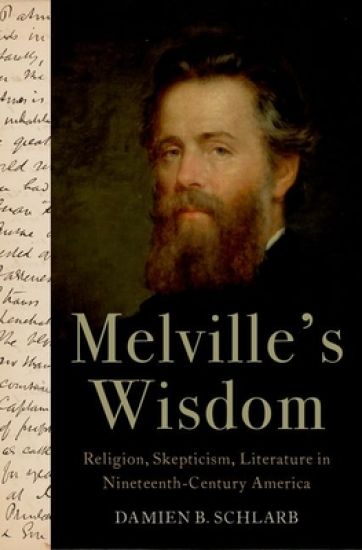
In Melville's Wisdom: Religion, Skepticism, Literature in Nineteenth-Century America, Damien B. Schlarb explores the manner in which Herman Melville responds to the spiritual crisis of modernity by using the language of the biblical Old Testament wisdom books to moderate contemporary discourses on religion, skepticism, and literature. Schlarb argues that attending to Melville's engagement with the wisdom books (Job, Proverbs, and Ecclesiastes) can help us understand a paradox at the heart of American modernity: the simultaneous displacement and affirmation of biblical language and religious culture. In wisdom, which addresses questions of theology, radical skepticism, and the nature of evil, Melville finds an ethos of critical inquiry that allows him to embrace modern analytical techniques, such as higher biblical criticism. In the medium of literature, he articulates a new way of accessing the Bible by marrying the moral and spiritual didacticism of its language with the intellectual distance afforded by critical reflection, a hallmark of modern intellectual style. Melville's Wisdom joins other works of post secular literary studies in challenging its own discipline's constitutive secularization narrative by rethinking modern, putatively secular cultural formations in terms of their reciprocity with religious concepts and texts. Schlarb foregrounds Melville's sustained, career-spanning concern with biblical wisdom, its formal properties, and its knowledge-creating potential. By excavating this project from his oeuvre, Melville's Wisdom shows how Melville celebrates intellectually rigorous, critical inquisitiveness, an attitude that we often associate with modernity but which Melville saw augured by the wisdom books. He finds in this attitude the means for avoiding the spiritually corrosive effects of skepticism.
Melville and Aesthetics
Palgrave Macmillan
2011
sidottu
In an original and provocative series of readings that range across Melville's career, the contributors consider not only the sources and implications of Melville's aesthetics, but the relationship between aesthetic criticism, historical analysis, and contemporary theory.


A specialist in the field of Arabic and Islamic history here examines Herman Melville’s interest in the Near East and discusses its influence on his work. An analysis of Islamic elements in Melville’s symbolism, particularly in Mardi, Moby-Dick, and Clarel, throws new light on the interpretation of these works. Dorthee Metlitsky Finkelstein is lecturer in English at the University of California, Berkeley. Yale Publications in American Studies, 5.
Product information not available.
Product information not available.