Kirjojen hintavertailu. Mukana 11 244 527 kirjaa ja 12 kauppaa.

Kirjahaku

Etsi kirjoja tekijän nimen, kirjan nimen tai ISBN:n perusteella.

1000 tulosta hakusanalla Melvin R. Adams

Netting the Sun

Netting the Sun

Melvin R. Adams

Washington State University Press
2001
pokkari
Carefully woven, Netting the Sun offers a diversity of natural and human stories from a landscape seemingly empty and forlorn to passing casual travelers. This surprising interpretation of south central Oregon's botany, geology, climate, wildlife, ethnography, and history reveals what a truly special place the high desert is. Born in the sagebrush community of Lakeview in 1941, the author moved on following high school graduation. But as with many native sons and daughters from America's out-of-the-way places, the urge to return to his roots proved irresistible in middle age. "I endeavored to write this collection about the Oregon desert because of my childhood there," Adams writes, "but also because it is a place of startling mystery, subdued danger, and beauty.
Remote Wonders

Remote Wonders

Melvin R. Adams

Washington State University Press
2015
pokkari
At first glance the landscape looks desolate-a barren realm of basalt rims, high cold deserts, dry lakes, and vast expanses of grass and sage. In fact, it is a place where petite flowers bloom on rock shelves. Tiny organisms thrive in hot springs and water saltier than any ocean. Even some of the soil is unique--a special combination that collects and retains water and allows ancient pine stands to survive. The diminutive pika harvests meadow grass, building miniature haystacks to store food for the winter. When the time is right, thousands of tiny green and black frogs emerge from mud cracks along a lake perimeter. There is also human history, evidenced by petroglyphs and remnants of ranches, mills, and mines. Indeed, remote southeast Oregon is a rich wonderland of mountains, forests, creatures, and more--one well worth exploring.Designed as a road tour guide, Remote Wonders is an ideal introduction to Oregon's magnificent corner. Individual chapters highlight notable natural and historical features. The book includes essays, numerous photos, and a pull-out map keyed to selected sites. Supplemental information includes side trip recommendations, potential hazards, when to travel, and what to bring.Born and raised in Oregon's Outback, the author's affection for the region shines through. Ultimately, Melvin Adams hopes his book will entice readers to visit and delight in this wild steppe country.
Atomic Geography

Atomic Geography

Melvin R. Adams

Washington State University Press
2016
pokkari
I have spent a career sifting through the rubble, the abandoned documents, the factories and tools, with the thought of saving what remains of water, land, and animals. But water, wind, and root have their way."--Melvin R. AdamsPerhaps the first environmental engineer at Hanford, Adams spent twenty-four years on its 586 square miles. His thoughtful vignettes recall challenges and sites he worked on or found personally intriguing, like the 216-U-pond. Nestled among the trees, the pond looks like a pleasant place to go fishing. In reality, it has been contaminated with plutonium longer than any other place on earth.In what Adams considers his most successful project, he helped determine the initial scope of the soil and solid waste cleanup. The Environmental Restoration and Disposal Facility today covers 107 acres and has a capacity of 18 million tons.His group also designed and tested a marked, maintenance-free disposal barrier. It uses natural materials that will remain stable for thousands of years. They expanded a network of groundwater monitoring wells to define contaminated plumes, assess treatment effectiveness, and provide relevant data to hydrologists. They also developed a pilot scale pump and treatment plant for use on a four-square-mile carbon tetrachloride plume. His environmental and engineering unit included a biological control group fondly dubbed "The Weeds." They controlled tumbleweeds, tracked and collected plants and animals found growing or digging in contaminated sites, and caught stray wildlife discovered in Hanford offices.In Atomic Geography, Adams presents some surprising revelations. He shares his perspective on leaking high-level waste storage tanks, dosimeters, and Hanford's obsession with safety. He answers the question he is asked most, insisting he does not glow in the dark. He leaves that to spent fuel rods in water storage basins--a phenomenon known as Cherenkov radiation.
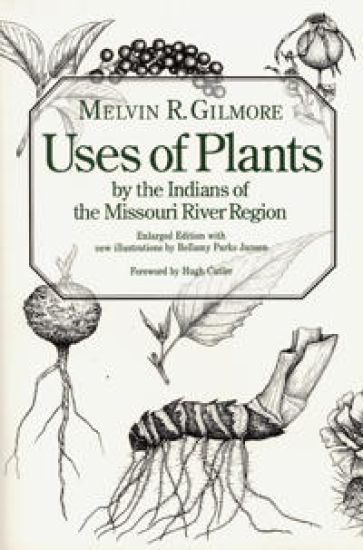
Uses of Plants by the Indians of the Missouri River Region

Uses of Plants by the Indians of the Missouri River Region

Melvin R. Gilmore

University of Nebraska Press
1991
pokkari
A classic of ethnobotany, Uses of Plants by the Indians of the Missouri River Region has been enlarged for this Bison Book edition with thirty drawings, by Bellamy Parks Jansen, of plants discussed by Gilmore. The taxonomic glossary has been updated as well. Readers will find here, conveniently described, the uses that Plains Indians made of the wild plants they collected and of those plants they cultivated for food, clothing, medicine, and ornamentation. This fascinating book, originally published in 1919, reveals cultures that evolved in close harmony with their environment.
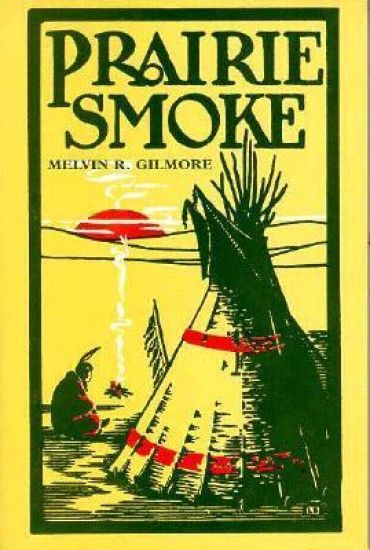
Prairie Smoke

Prairie Smoke

Melvin R. Gilmore

Minnesota Historical Society Press,U.S.
2002
nidottu
Tells the traditional stories and describes the lifeways of some of the first people of the Plains: the Pawnee, Sioux, Hidatsa, Mandan, Arikara, and Omaha Indians. Through these stories, readers learn of the essential ties Native peoples have to the land.
Fathers Who Fail

Fathers Who Fail

Melvin R. Lansky

Analytic Press,U.S.
1992
sidottu
Despite the burgeoning literature on the role of the father in child development and on fathering as a developmental stage, surprisingly little has been written about the psychiatrically impaired father. In Fathers Who Fail, Melvin Lansky remedies this glaring lacuna in the literature. Drawing on contemporary psychoanalysis, family systems theory, and the sociology of conflict, he delineates the spectrum of psychopathological predicaments that undermine the ability of the father to be a father. Out of his sensitive integration of the intrapsychic and intrafamilial contexts of paternal failure emerges a richly textured portrait of psychiatrically impaired fathers, of fathers who fail. Lansky's probing discussion of narcissistic equilibrium in the family system enables him to chart the natural history common to the symptomatic impulsive actions of impaired fathers. He then considers specific manifestations of paternal dysfunction within this shared framework of heightened familial conflict and the failure of intrafamilial defenses to common shame. Domestic violence, suicide, the intensification of trauma, posttraumatic nightmares, catastrophic reactions in organic brain syndrome, and the murder of a spouse are among the major "symptoms" that he explores. In each instance, Lansky carefully sketches the progression of vulnerability and turbulence from the father's personality, to the family system, and thence to the symptomatic eruption in question. In his concluding chapter, he comments tellingly on the unconscious obstacles - on the part of both patients and therapists - to treating impaired fathers. The obstacles cut across different clinical modalities, underscoring the need for multimodal responses to fathers who fail.
Fathers Who Fail

Fathers Who Fail

Melvin R. Lansky

Routledge
2015
nidottu
Despite the burgeoning literature on the role of the father in child development and on fathering as a developmental stage, surprisingly little has been written about the psychiatrically impaired father. In Fathers Who Fail, Melvin Lansky remedies this glaring lacuna in the literature. Drawing on contemporary psychoanalysis, family systems theory, and the sociology of conflict, he delineates the spectrum of psychopathological predicaments that undermine the ability of the father to be a father. Out of his sensitive integration of the intrapsychic and intrafamilial contexts of paternal failure emerges a richly textured portrait of psychiatrically impaired fathers, of fathers who fail. Lansky's probing discussion of narcissistic equilibrium in the family system enables him to chart the natural history common to the symptomatic impulsive actions of impaired fathers. He then considers specific manifestations of paternal dysfunction within this shared framework of heightened familial conflict and the failure of intrafamilial defenses to common shame. Domestic violence, suicide, the intensification of trauma, posttraumatic nightmares, catastrophic reactions in organic brain syndrome, and the murder of a spouse are among the major "symptoms" that he explores. In each instance, Lansky carefully sketches the progression of vulnerability and turbulence from the father's personality, to the family system, and thence to the symptomatic eruption in question. In his concluding chapter, he comments tellingly on the unconscious obstacles - on the part of both patients and therapists - to treating impaired fathers. The obstacles cut across different clinical modalities, underscoring the need for multimodal responses to fathers who fail.