A captivating journey through the hidden libraries of Jerusalem, where some of the world’s most enduring ideas were put into words In this enthralling book, Merav Mack and Benjamin Balint explore Jerusalem’s libraries to tell the story of this city as a place where some of the world’s most enduring ideas were put into words. The writers of Jerusalem, although renowned the world over, are not usually thought of as a distinct school; their stories as Jerusalemites have never before been woven into a single narrative. Nor have the stories of the custodians, past and present, who safeguard Jerusalem’s literary legacies. By showing how Jerusalem has been imagined by its writers and shelved by its librarians, Mack and Balint tell the untold history of how the peoples of the book have populated the city with texts. In their hands, Jerusalem itself—perched between East and West, antiquity and modernity, violence and piety—comes alive as a kind of labyrinthine library.
Money in Imperial Rome offers an in-depth examination of the institutional framework within which money operated as an economic agent in the Roman empire, emphasising its systemic complexity. Analyses focus on classical Roman law as reflected in the writings of Roman jurists from the second and early-third centuries AD. The legal sources are augmented with documentary materials, which give independent evidence of actual practice, and with Jewish legal sources, which give evidence of a separate contemporary legal tradition. The work promotes Keynesian claims for the endogenous nature of money and adopts approaches advanced by new institutional economics (NIE), while its innovative contribution is in suggesting a complexity-oriented approach to understanding the conceptual framework that dictated the use of money in private transactions. Money is a complex phenomenon in the sense that it allows for new patterns of activity to be created by individuals, who adjust their use of it to the continuously evolving system in which they operate. The book is divided into four parts. The first part is introductory. The second part traces a line of thought consistent in legal developments that regulated exchange, which perceived money as a unique phenomenon, different from all other items; therefore, specific rules were applied to money and a special role was allocated to it in defining the status of the parties. This is detectable for price (pretium) in the Roman contract for sale (emptio venditio), remuneration (merces) in the Roman contract for lease and hire (locatio conductio), and Jewish legal rules regarding sales conducted via a mode of acquisition known as 'acquisition by drawing' (qinyan meshikha). The third part examines money as a financial tool. It observes the various, innovative ways Romans used the instrument of interest. Then follows a discussion of regulations regarding interest-bearing deposits, its flexible application by individuals, and the interconnected dynamics within and between three legal traditions operating under Roman regime: Roman, Jewish, and Egyptian-Hellenistic laws. Investigation then moves to credit money in the Roman world and its capacity to increase the money supply. The fourth part offers a summary of the work and some conclusions.
How do families remain close when turbulent forces threaten to tear them apart? In this groundbreaking book based on more than a decade of research set in Vietnam, Merav Shohet explores what happens across generations to families that survive imperialism, war, and massive political and economic upheaval. Placing personal sacrifice at the center of her story, Shohet recounts vivid experiences of conflict, love, and loss. In doing so, her work challenges the idea that sacrifice is merely a blood-filled religious ritual or patriotic act. Today, domestic sacrifices—made largely by women—precariously knot family members together by silencing suffering and naturalizing cross-cutting gender, age, class, and political hierarchies. In rethinking ordinary ethics, this intimate ethnography reveals how quotidian acts of sacrifice help family members forge a sense of continuity in the face of trauma and decades of dramatic change.
How do families remain close when turbulent forces threaten to tear them apart? In this groundbreaking book based on more than a decade of research set in Vietnam, Merav Shohet explores what happens across generations to families that survive imperialism, war, and massive political and economic upheaval. Placing personal sacrifice at the center of her story, Shohet recounts vivid experiences of conflict, love, and loss. In doing so, her work challenges the idea that sacrifice is merely a blood-filled religious ritual or patriotic act. Today, domestic sacrifices—made largely by women—precariously knot family members together by silencing suffering and naturalizing cross-cutting gender, age, class, and political hierarchies. In rethinking ordinary ethics, this intimate ethnography reveals how quotidian acts of sacrifice help family members forge a sense of continuity in the face of trauma and decades of dramatic change.
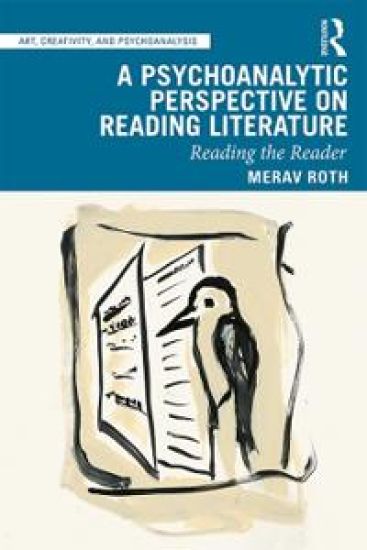
What are the unconscious processes involved in reading literature? How does literature influence our psychological development and existential challenges? A Psychoanalytic Perspective on Reading Literature offers a unique glimpse into the unconscious psychic processes and development involved in reading. The author listens to the 'free associations' of various literary characters, in numerous scenarios where the characters are themselves reading literature, thus revealing the mysterious ways in which reading literature helps us and contributes to our development. The book offers an introduction both to classic literature (Poe, Proust, Sartre, Semprún, Pessoa, Agnon and more) and to the major psychoanalytic concepts that can be used in reading it – all described and widely explained before being used as tools for interpreting the literary illustrations. The book thus offers a rich lexical psychoanalytic source, alongside its main aim in analysing the reader’s psychological mechanisms and development. Psychoanalytic interpretation of those literary readers opens three main avenues to the reader’s experience: the transference relations toward the literary characters;the literary work as means to transcend beyond the reader’s self-identity and existential boundaries; andmobilization of internal dialectic tensions towards new integration and psychic equilibrium. An Epilogue concludes by emphasising the transformational power embedded in reading literature.The fascinating dialogue between literature and psychoanalysis illuminates hitherto concealed aspects of each discipline and contributes to new insights in both fields. A Psychoanalytic Perspective on Reading Literature will be of great interest not only to psychoanalytic-psychotherapists and literature scholars, but also to a wider readership beyond these areas of study.
What are the unconscious processes involved in reading literature? How does literature influence our psychological development and existential challenges? A Psychoanalytic Perspective on Reading Literature offers a unique glimpse into the unconscious psychic processes and development involved in reading. The author listens to the 'free associations' of various literary characters, in numerous scenarios where the characters are themselves reading literature, thus revealing the mysterious ways in which reading literature helps us and contributes to our development. The book offers an introduction both to classic literature (Poe, Proust, Sartre, Semprún, Pessoa, Agnon and more) and to the major psychoanalytic concepts that can be used in reading it – all described and widely explained before being used as tools for interpreting the literary illustrations. The book thus offers a rich lexical psychoanalytic source, alongside its main aim in analysing the reader’s psychological mechanisms and development. Psychoanalytic interpretation of those literary readers opens three main avenues to the reader’s experience: the transference relations toward the literary characters;the literary work as means to transcend beyond the reader’s self-identity and existential boundaries; andmobilization of internal dialectic tensions towards new integration and psychic equilibrium. An Epilogue concludes by emphasising the transformational power embedded in reading literature.The fascinating dialogue between literature and psychoanalysis illuminates hitherto concealed aspects of each discipline and contributes to new insights in both fields. A Psychoanalytic Perspective on Reading Literature will be of great interest not only to psychoanalytic-psychotherapists and literature scholars, but also to a wider readership beyond these areas of study.
"Si Daniel pleure sans arr t et que c'est pour cela qu'on s'en occupe, alors moi aussi je sais pleurer C'est moi qui ai invent les pleurs. Je pleurais m me avant qu'il naisse " "Quelqu'un a pris ma place" donne au grand fr re une possibilit de s'identifier. Ce livre n'embellit pas la r alit , ni ne se cache derri re des th mes. A notre g n ration, lorsque les enfants sont tellement d velopp s et intelligents, il est n cessaire de confronter l'enfant au quotidien tel quel. A c t des difficult s qui interviennent au cours de l'histoire, sont pr sent es des solutions ainsi que des id es cr atives afin de faire face au sujet. Le march des livres pour enfants ne pr sente pas assez de livres qui s'adressent l'enfant lui-m me, en tenant compte de son intelligence. Le pr sent livre, ainsi que les prochains livres de la s rie, pr sentent l'enfant le monde r el et sans masques, et ouvrent ainsi une fen tre vers ses d sirs int rieurs.
A new baby is born? "If Mummy and Daddy go to Michael every time he cries, I can cry too I invented crying. I cried even before he was born " "Someone has taken my place " gives the older sibling their voice. This book doesn't glamorize reality or hide behind clich s. In the current generation, children's development is more advanced, so daily experiences need to be presented to them directly. The story integrates solutions and creative ideas to help older children deal with the difficulties they face when a new baby arrives. The children's storybook market lacks books that speak to children at their own level without insulting their intelligence. This book, and future books in this series, exposes the child's own world, without any cover-ups, and provides an outlet for their deepest feelings.
The Oxford Textbook of Health Protection: Principles and Practice is a comprehensive guide to this important field, addressing all key domains, from communicable disease control and emergency preparedness to environmental public health. Written by leading practitioners and specialists in the field, the book is rooted in a practice-led and evidence-based, all-hazards approach, which facilitates easy access to real-world practice and application of health protection and health security principles. This second edition has been fully revised and expanded to meet the needs of an ever-evolving audience and now sits within the authoritative Oxford Textbooks in Public Health series. This second edition includes 12 new chapters, covering new and emerging topics such as COVID-19 pandemics, genomics epidemiology, non-pharmaceutical interventions, and concepts and framework for future pandemic preparedness. The chapters are arranged into six distinct sections. Each chapter provides trustworthy evidence and a wealth of practical advice, including case studies in community and hospital settings, and practical scenarios. The real-life scenarios provide topic-specific information, explore a wide range of responses using the 'what if' questions that are supported by tools of the trade to encourage reflection, and reinforce consolidation of knowledge. The book also includes a unique tool of self-contained checklists (SIMCARDS) covering more than 180 common and important topics that can arise in health protection practice (including those featured in the scenario chapters), with concise and succinct stand-alone quick reference guides on how to handle them within and out-of-hours. This resource is essential reading for professionals working at all levels in public health and health protection, including those with a non-specialist background in this continually evolving and complex field of public health. 'All the editors and authors have been active in the field of health security and involved through experiential learning in the management of incidents, outbreaks, and other health protection situations for decades. All were at the forefront of the response to the COVID-19 pandemic. They are uniquely able to reflect pragmatically and personally on health security and health protection practice in a variety of situations. This book is, therefore, a practical product of the wealth of their combined experience and will support current professionals in their efforts to ensure the protection and health security of individuals and populations in the UK and internationally.' From the Foreword by Professor Dame Jenny Harries DBE DL, First Chief Executive, UK Health Security Agency (UKHSA)
The third official tie-in book to the Nationally syndicated NBC game show "Merv Griffin's Crosswords Contains 100 easy-to-hard puzzles edited by Timothy Parker
A reluctant heir. An insidious power. What is privilege when his own magic threatens to take him under?Meran Durante is distraught. An unwilling heir to a bitter and critical father, the young Durante now fears he is also the beneficiary of the oft anticipated, seldom true, seer-sight that has flickered through his mother's family for centuries.Nightly, a single tragic spectre fills his dreams, driving him to the edge of sanity, until one fateful night his plight is discovered. Acceding to his friend's unconventional distraction from his woes, Meran finds fleeting relief sheltered within the unique magic forged from the unexpected liaison.But realising his own agency is in peril, he searches out an alternative solution to fend off the dreamland's insidious call before his mind is shattered forever.When his friend goes missing, can Meran wrest control of his magic before it is too late to save either of them?Meran's Reproach is the tempestuous second book in the Legend of the Ancients - Books of Locurnia Fantasy series. If you like emotionally charged fantasy, tortured heroes and magical awakenings mixed with high heat, then you'll love Deonne Dane's tale of one young man coming into his legacy. (Approximately 50k words)
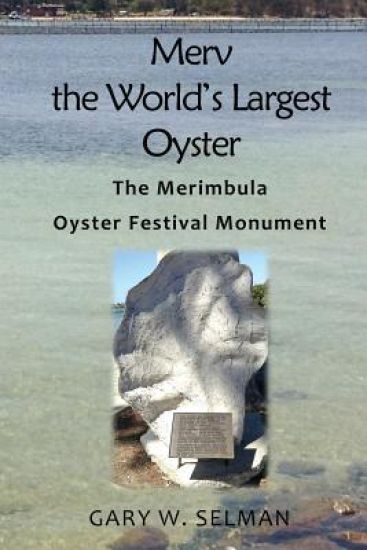
The Merimbula Oyster Festival Monument commemorates not only oyster farming and the Oyster Festivals held in recognition of that important local industry, but also commemorates an important era in the local history of Merimbula on the far south coast of New South Wales, Australia.Unfortunately, the monument's function of enabling us to always recall and remember the past, and events associated with it, is hampered by the absence of a record of those events.It is hoped that this account of the tortuous history of Merv the World's Largest Oyster, and the Oyster Festivals the monument commemorates, will arrest the diminishing contribution that the monument would otherwise have made.
Merv Griffin began his career as a big band singer, moved onto a career as a romantic movie hero and eventually rewrote the rules of the entertainment industry. He interviewed everyone, from Martin Luther King Jr to Joan Crawford and brought drag queens, revolutionaries and gay activists into the mainstream. He also created the hit gameshows Jeopardy and Wheel of Fortune. Porter's biography - the first to be published since Griffin's death in 2007 - exposes the details behind one of the richest and most notorious media moguls in entertainment history.