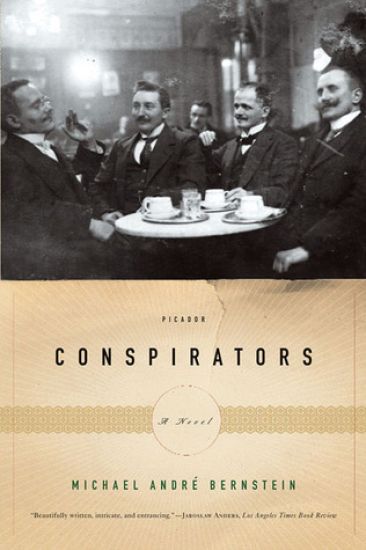
In the waning days of the Hapsburg Empire, a beleaguered count fights back against the political assassinations of his kinsman by releasing his spymaster, Jakob Tausk, a young Jew, to investigate the killings, and he becomes ensnarled in the intrigues of charismatic apocalyptic rabbi. Reprint. 25,000 first printing.
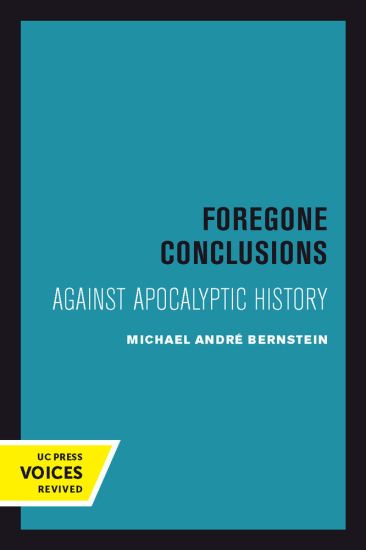
We are continually trying to make sense of our world through the stories we tell and are told, but in our search for coherence, we often sacrifice our freedom and the rich randomness of life. In this passionate and lucid book, Michael André Bernstein challenges our practice of "foreshadowing," in which we see our lives as moving toward a predetermined goal or as controlled by fate. Foreshadowing, he argues, demeans the variety and openness that exist in even the most ordinary moments of life. And it is precisely ordinary life, with its random, haphazard, and contradictory choices, that Bernstein celebrates in his call for "sideshadowing"—an alternative practice that reminds us that every present is dense with possible futures. Bernstein sees the Holocaust as the prime example of how our tendency to "foreshadow" and "backshadow" misrepresents history. He argues eloquently against politicians and theologians who posit the Holocaust as foreordained and who depict its victims as somehow complicit with a fate that they should have been able to foresee. Instead, Bernstein proposes a radically new understanding of the relationship between the Holocaust and earlier Jewish experience, transforming how we read and write both individual and communal history. Foregone Conclusions is an extraordinarily wide-ranging book, both in its scope and in its broader intellectual and moral implications. From the latest biographies of Kafka to the peace accords between Israel and the PLO, from the role of cultural diversity in universities to the Crown Heights riots, Bernstein warns us against passively accepting our identities as being shaped primarily by historical or personal victimization. His book liberates us from stereotyped patterns of understanding the relationship between our lives as individuals and as members of racial, sexual, and historic/ethnic communities. Berstein ultimately opens a powerful new way to understand the principles governing how we read and write narratives--whether historical, personal, or literary. In striking original juxtapositions and critical evaluations of Marcel Proust, Robert Musil, and Aharon Appelfeld, Bernstein sugests the need for a new literary model based on the prosaics of daily life. Bernstein speaks directly and persuasively to many of the most pressing issues in Jewish history, Holocaust studies, literary criticism, and cultural history. Foregone Conclusions is a provocative and poignant attempt to find coherence in our world without accepting either ineluctable destiny of pure coincidence. This title is part of UC Press's Voices Revived program, which commemorates University of California Press’s mission to seek out and cultivate the brightest minds and give them voice, reach, and impact. Drawing on a backlist dating to 1893, Voices Revived makes high-quality, peer-reviewed scholarship accessible once again using print-on-demand technology. This title was originally published in 1994.
We are continually trying to make sense of our world through the stories we tell and are told, but in our search for coherence, we often sacrifice our freedom and the rich randomness of life. In this passionate and lucid book, Michael André Bernstein challenges our practice of "foreshadowing," in which we see our lives as moving toward a predetermined goal or as controlled by fate. Foreshadowing, he argues, demeans the variety and openness that exist in even the most ordinary moments of life. And it is precisely ordinary life, with its random, haphazard, and contradictory choices, that Bernstein celebrates in his call for "sideshadowing"—an alternative practice that reminds us that every present is dense with possible futures. Bernstein sees the Holocaust as the prime example of how our tendency to "foreshadow" and "backshadow" misrepresents history. He argues eloquently against politicians and theologians who posit the Holocaust as foreordained and who depict its victims as somehow complicit with a fate that they should have been able to foresee. Instead, Bernstein proposes a radically new understanding of the relationship between the Holocaust and earlier Jewish experience, transforming how we read and write both individual and communal history. Foregone Conclusions is an extraordinarily wide-ranging book, both in its scope and in its broader intellectual and moral implications. From the latest biographies of Kafka to the peace accords between Israel and the PLO, from the role of cultural diversity in universities to the Crown Heights riots, Bernstein warns us against passively accepting our identities as being shaped primarily by historical or personal victimization. His book liberates us from stereotyped patterns of understanding the relationship between our lives as individuals and as members of racial, sexual, and historic/ethnic communities. Berstein ultimately opens a powerful new way to understand the principles governing how we read and write narratives--whether historical, personal, or literary. In striking original juxtapositions and critical evaluations of Marcel Proust, Robert Musil, and Aharon Appelfeld, Bernstein sugests the need for a new literary model based on the prosaics of daily life. Bernstein speaks directly and persuasively to many of the most pressing issues in Jewish history, Holocaust studies, literary criticism, and cultural history. Foregone Conclusions is a provocative and poignant attempt to find coherence in our world without accepting either ineluctable destiny of pure coincidence. This title is part of UC Press's Voices Revived program, which commemorates University of California Press’s mission to seek out and cultivate the brightest minds and give them voice, reach, and impact. Drawing on a backlist dating to 1893, Voices Revived makes high-quality, peer-reviewed scholarship accessible once again using print-on-demand technology. This title was originally published in 1994.
Michael Andre Bernstein offers a systematic analysis of the tradition of modern epic poetry--its different structural problems and their diverse but inter-related solutions, and considers issues central to contemporary literary and philosophical theory. Originally published in 1980. The Princeton Legacy Library uses the latest print-on-demand technology to again make available previously out-of-print books from the distinguished backlist of Princeton University Press. These editions preserve the original texts of these important books while presenting them in durable paperback and hardcover editions. The goal of the Princeton Legacy Library is to vastly increase access to the rich scholarly heritage found in the thousands of books published by Princeton University Press since its founding in 1905.
Michael Andre Bernstein offers a systematic analysis of the tradition of modern epic poetry--its different structural problems and their diverse but inter-related solutions, and considers issues central to contemporary literary and philosophical theory. Originally published in 1980. The Princeton Legacy Library uses the latest print-on-demand technology to again make available previously out-of-print books from the distinguished backlist of Princeton University Press. These editions preserve the original texts of these important books while presenting them in durable paperback and hardcover editions. The goal of the Princeton Legacy Library is to vastly increase access to the rich scholarly heritage found in the thousands of books published by Princeton University Press since its founding in 1905.
Mary Jane Jacob; Glenn Adamson; Svetlana Alpers; John Badlessari; Alice Bellony–rewold; Mary Bergstein; Walead Beshty; Andrea Bowers; Daniel Buren; Rochelle Feinstein; David J Getsy; Michelle Grabner; Rodney Graham; Amy Granat; Karl Haendel; Rachel Harrison; Caroline A Jones; Suzanne Lacy; Thomas Lawson; Lynn Lester Hershman; Shana Lutker; Annika Marie; Courtney Martin; Carrie Moyer; Bruce Nauman; Michael Peppiatt; David Reed; Lane Relyea; David Robbins; Judith Rodenbeck; Joe Scanlan; Brenda Schmahmann; Carolee Schneemann
The image of a tortured genius working in near isolation has long dominated our conceptions of the artist's studio. Examples are abound: think Jackson Pollock dripping resin on a cicada carcass in his shed in the Hamptons. But times have changed; ever since Andy Warhol declared his art space a 'factory', artists have begun to envision themselves as the leaders of production teams, and their sense of what it means to be in the studio has altered just as dramatically as their practices. "The Studio Reader" pulls back the curtain from the art world to reveal the real activities behind artistic production. What does it mean to be in the studio? What is the space of the studio in the artist's practice? How do studios help artists envision their agency and, beyond that, their own lives? This forward-thinking anthology features an all-star array of contributors, ranging from Svetlana Alpers, Bruce Nauman, and Robert Storr to Daniel Buren, Carolee Schneemann, and Buzz Spector, each of whom locates the studio both spatially and conceptually - at the center of an art world that careens across institutions, markets, and disciplines. A companion for anyone engaged with the spectacular sites of art at its making, "The Studio Reader" reconsiders this crucial space as an actual way of being that illuminates our understanding of both artists and the world they inhabit.
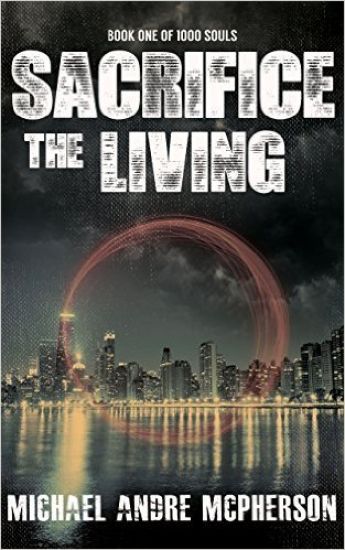
Another attacker, his unshaven face gaunt and filthy, noticed the videographer and turned toward the camera, his expression a snarl of hunger and anger. A horrific disease threatens to turn the entire human race into the stuff of nightmares in Michael Andre McPherson's heart-pounding debut novel, Sacrifice the Living. This first book in The 1,000 Souls series is an epic saga full of blood-sucking mobs, a desperate bid for survival, and a climactic showdown that changes everything. As fewer people show up for the day shift at work, the stock and housing markets crash, and the whole city of Chicago seems to emerge only at night, Bertrand Allan realizes something is very wrong. Amid rumors of vampires, he learns the horrifying truth: a disease that infects people with parasites is turning the masses into "rippers"-semihumans who must drink blood in order to feed the parasites. It's spreading by way of "Vlad the Scourge," who is determined to create a new world by infecting more than half the human population with the parasite. Building up a citizen army, Bertrand sets out to destroy "Vlad the Scourge" in a violent showdown that readers won't soon forget.